The Fear of Transformation: Embracing the New Creation
“And when Saul was come to Jerusalem, he assayed to join himself to the disciples: but they were all afraid of him, and believed not that he was a disciple.” — Acts 9:26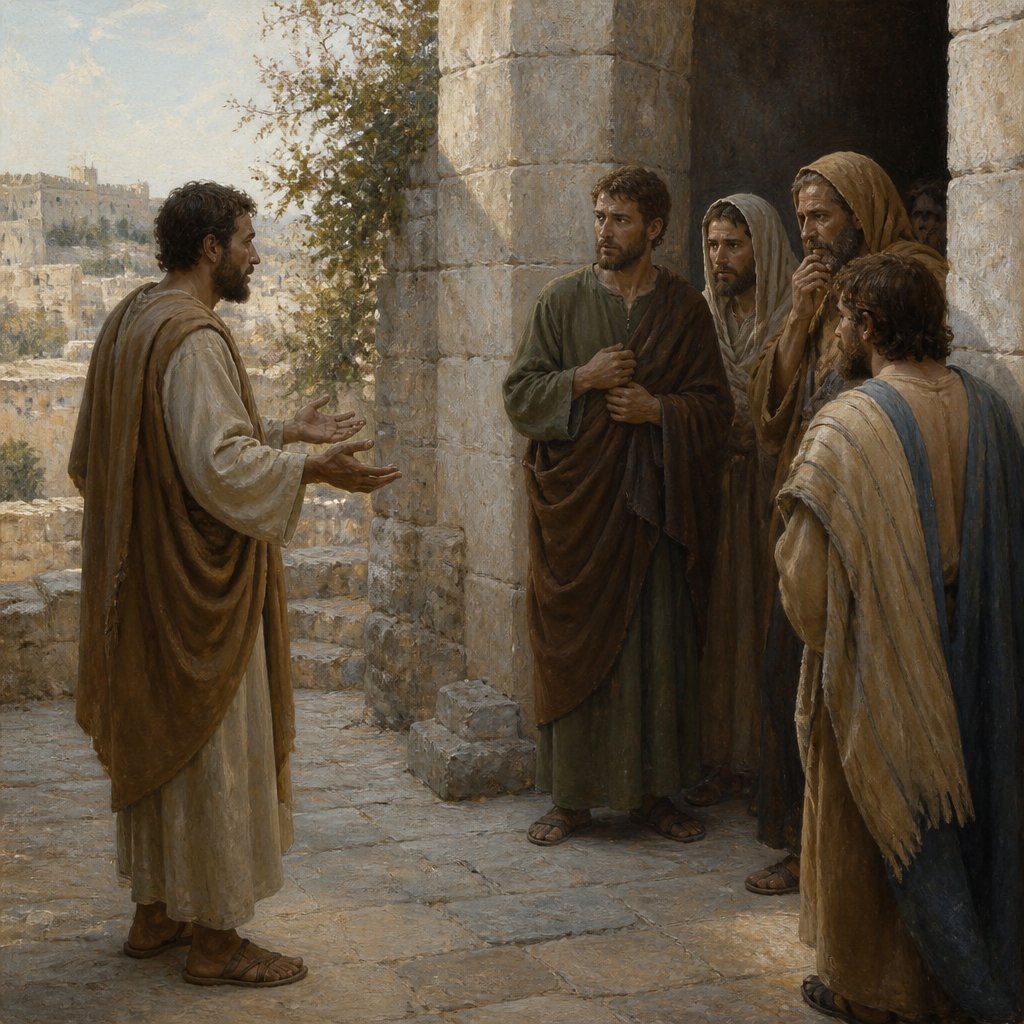
In Acts 9:26, we encounter a pivotal moment in early Christian history: "And when Saul was come to Jerusalem, he assayed to join himself to the disciples: but they were all afraid of him, and believed not that he was a disciple." This verse, while brief, poignantly encapsulates a profound moment of transformation and the challenges that often accompany it.
Saul of Tarsus, a man notorious for persecuting Christians, experiences a radical change on the road to Damascus. He encounters the risen Christ, an event that completely alters the trajectory of his life. This metamorphosis is not simply a change of heart; it is a supernatural encounter that renders him a new creation—an apostle. Yet, as he arrives in Jerusalem, intending to join the very disciples he had sought to destroy, he faces an unexpected barrier: fear.
The fear of the disciples is understandable. They knew Saul’s reputation all too well. He was the fierce adversary, a man who had been responsible for the imprisonment and death of many believers. When his intention to join them became known, the immediate response was one of fear and suspicion. This fear speaks to the deeper struggle of trust—of believing in the transformative power of God and the sincerity of a changed heart.
In our own lives, we can find parallels to the disciples’ reaction. When we consider the transformation of others—especially those we have known to be hostile or harmful—we often grapple with doubt. Can this person truly change? Have they really turned from their past? Our instinct may lead us to caution, to hold back from accepting the new identity of someone who has caused hurt. This hesitation raises significant questions about how we perceive transformation.
Notably, the disciples' fear reflects a deeper truth about human nature: we often cling to our past experiences, allowing them to shape our perception of present realities. Saul's transformation should remind us that God's grace is not limited by our human expectations. He can reach the depths of any soul and lift even the most resistant heart toward redemption and purpose. Yet, that transformation may not be immediately recognized, even by those who should know Christ best.
The story does not end with fear. In God’s providence, we see the introduction of Barnabas, a man willing to act as a bridge between Saul and the disciples. Acts 9:27 continues, "But Barnabas took him, and brought him to the apostles, and declared unto them how he had seen the Lord in the way, and that he had spoken to him, and how he had preached boldly at Damascus in the name of Jesus." Barnabas’s role exemplifies the power of advocacy and the importance of community in recognizing and accepting transformation. He steps forward to validate Saul’s experience and proves instrumental in helping others embrace Saul’s new identity.
As believers, we are called to be extensions of God’s grace. Our interactions with others, especially those who have undergone significant change, should be marked by openness rather than fear. This doesn’t mean we ignore the complexities of their past or the ramifications of their actions; rather, we approach each encounter with the understanding that God’s grace is transformative and capable of reshaping even the hardest hearts into instruments for His glory.
Practically, this means looking beyond a person's history. We must remind ourselves that every believer’s journey is intricately tied to the redemptive work of Christ. Let us become advocates of grace, like Barnabas, who was instrumental in transforming fear into community and skepticism into faith.
In conclusion, Acts 9:26 stands as a significant reminder that while transformation may be fraught with difficulties, it is essential to recognize and honor the work God accomplishes in each of us. The disciples learned to accept Saul, and in doing so, they advanced the very mission of spreading the Gospel to the nations. Let us commit to embracing and supporting transformation—both in ourselves and in others—allowing faith to triumph over fear.
Get our apps


Artwork for Acts 9:26

Acts 9:26 - "And when Saul was come to Jerusalem, he assayed to join himself to the disciples: but they were all afraid of him, and believed not that he was a disciple."
"And when Saul was come to Jerusalem, he assayed to join himself to the disciples: but they were all afraid of him, and believed not that he was a disciple." - Acts 9:26

Acts 26:9 - "I verily thought with myself, that I ought to do many things contrary to the name of Jesus of Nazareth."
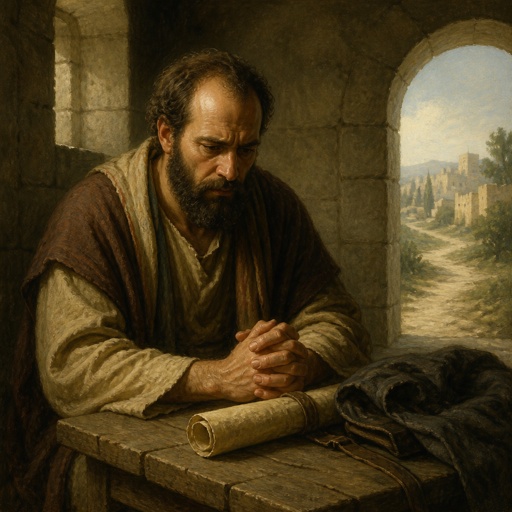
"I verily thought with myself, that I ought to do many things contrary to the name of Jesus of Nazareth." - Acts 26:9

Acts 27:26 - "Howbeit we must be cast upon a certain island."

Acts 26:26 - "For the king knoweth of these things, before whom also I speak freely: for I am persuaded that none of these things are hidden from him; for this thing was not done in a corner."

Acts 26:19 - "Whereupon, O king Agrippa, I was not disobedient unto the heavenly vision:"

Acts 26:27 - "King Agrippa, believest thou the prophets? I know that thou believest."

Acts 15:26 - "Men that have hazarded their lives for the name of our Lord Jesus Christ."

Acts 23:26 - "Claudius Lysias unto the most excellent governor Felix sendeth greeting."
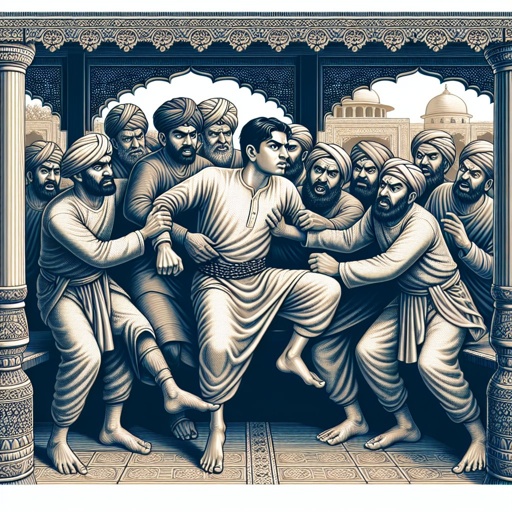
Acts 26:21 - "For these causes the Jews caught me in the temple, and went about to kill me."

Acts 26:28 - "Then Agrippa said unto Paul, Almost thou persuadest me to be a Christian."

Acts 26:12 - "Whereupon as I went to Damascus with authority and commission from the chief priests,"

Genesis 26:9

Acts 26:8 - "Why should it be thought a thing incredible with you, that God should raise the dead?"

Acts 9:9 - "And he was three days without sight, and neither did eat nor drink."

Acts 1:26 - "And they gave forth their lots; and the lot fell upon Matthias; and he was numbered with the eleven apostles."

Acts 9:1-20

Acts 9:1-20

Acts 26:6 - "And now I stand and am judged for the hope of the promise made of God unto our fathers:"

Acts 26:30 - "And when he had thus spoken, the king rose up, and the governor, and Bernice, and they that sat with them:"

Acts 10:26 - "But Peter took him up, saying, Stand up; I myself also am a man."

2 Chronicles 35:26 - "Now the rest of the acts of Josiah, and his goodness, according to that which was written in the law of the LORD,"

Acts 26:17 - "Delivering thee from the people, and from the Gentiles, unto whom now I send thee,"

2 Chronicles 25:26 - "Now the rest of the acts of Amaziah, first and last, behold, are they not written in the book of the kings of Judah and Israel?"

Acts 4:26 - "The kings of the earth stood up, and the rulers were gathered together against the Lord, and against his Christ."

Acts 26:25 - "But he said, I am not mad, most noble Festus; but speak forth the words of truth and soberness."

Acts 20:26 - "Wherefore I take you to record this day, that I am pure from the blood of all men."

2 Chronicles 26:22 - "¶ Now the rest of the acts of Uzziah, first and last, did Isaiah the prophet, the son of Amoz, write."

Acts 14:26 - "And thence sailed to Antioch, from whence they had been recommended to the grace of God for the work which they fulfilled."