The Legacy of a Life Well Spent
“Now there was at Joppa a certain disciple named Tabitha, which by interpretation is called Dorcas: this woman was full of good works and almsdeeds which she did.” — Acts 9:36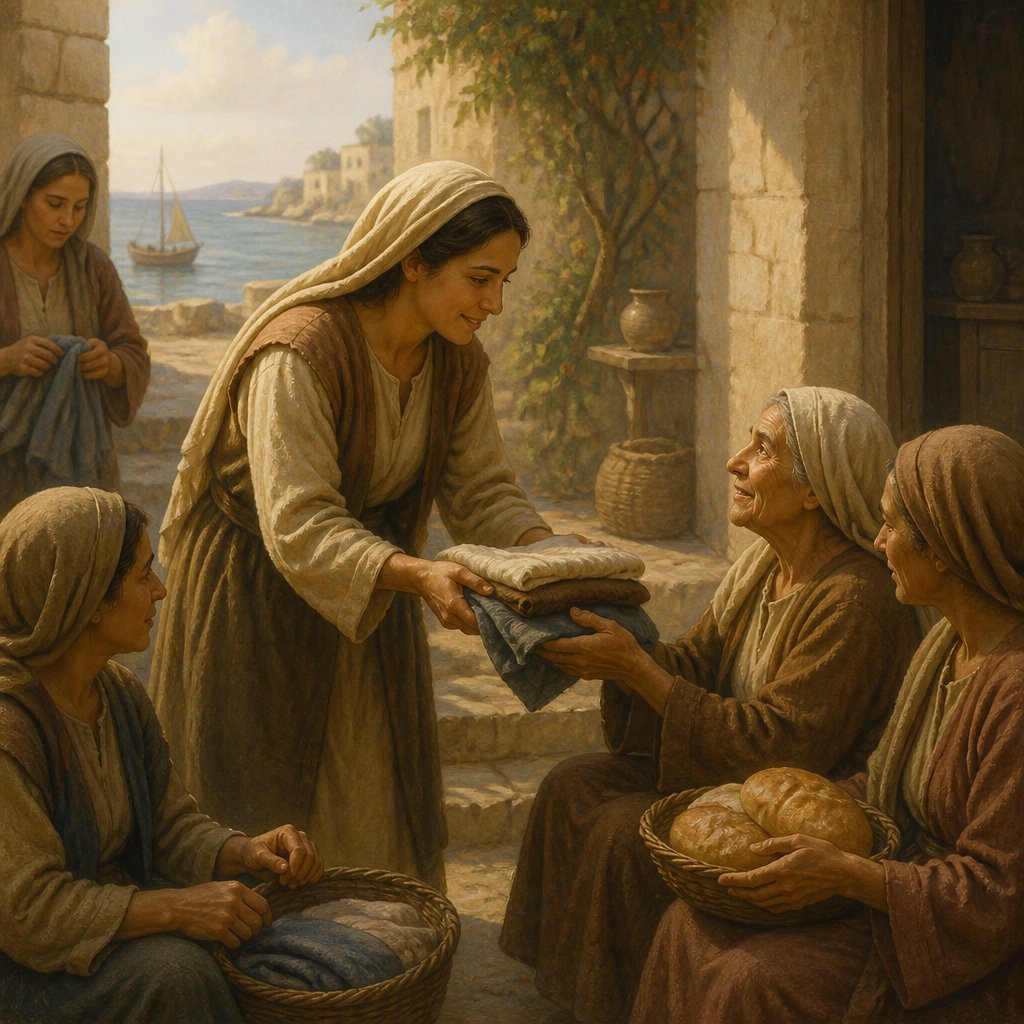
Acts 9:36 (KJV) states: "Now there was at Joppa a certain disciple named Tabitha, which by interpretation is called Dorcas: this woman was full of good works and almsdeeds which she did."
In this brief yet profound verse, we encounter the character of Tabitha, known also as Dorcas, a woman who epitomizes the essence of discipleship in her community. Her life, as described by Luke in the Book of Acts, serves as a formidable example of faith in action, leaving a lasting impact that echoes through time.
To understand the depth of Tabitha’s influence, we must first recognize the significance of her name. Tabitha, of Aramaic origin, means "gazelle," which in scripture often symbolizes grace and beauty. The Greek name Dorcas carries a similar meaning. More than her name, her identity as a disciple—"a certain disciple"—sets her apart in a society where women were often overlooked. In the patriarchal context of her time, Tabitha’s designation as a disciple emphasizes that her commitment to Christ transcended gender barriers, showcasing that the call to discipleship is personal and accessible to all.
Tabitha was not just a follower of Christ; she was a doer of good works and a mother to the needy. The phrase "full of good works and almsdeeds" paints a vivid picture of her character. As women in the church today, how often do we strive to be "full of good works"? Tabitha’s life serves as a challenge to us. Good works are not just about performing isolated acts of charity; they are part of a lifestyle that reflects the heart of Christ. Does our life exude the grace, compassion, and generosity that Tabitha demonstrated?
In the very next verses, we learn about the impact of her passing. The community mourned her deeply, demonstrating that her life was woven into the fabric of their daily existence. Her good deeds had created a legacy of love, evident in the widows who showed Peter the garments she had made for them. Are we creating legacies in our communities that prompt others to remember us fondly? Have we touched the lives of those around us in a way that compels them to honor our memory through acts of kindness?
The way the community responded to her death teaches us about the interrelation of lives within the body of Christ. Acts of service, when done genuinely and lovingly, ripple through the church family and can inspire others to continue the work. How often do we think about the lives we touch every day? Each smile, act of kindness, or word of encouragement can potentially change someone’s life as it did for the widows mourning for Tabitha.
Furthermore, Tabitha's story culminates in a miraculous resurrection by Peter, showcasing not just her worthiness, but also a reminder that God is attentive to His people and their needs. The resurrection signifies hope—a hope that embodies the belief that good works do not end with our time on earth but are celebrated in the eternal presence of God. Each life of service we lead contributes to a greater narrative that stretches beyond us.
In conclusion, as we reflect on Tabitha's life, let us be inspired to engage actively in the good works that God has prepared for us. Let us ask ourselves how we can serve our communities more fully—be it through acts of charity, kindness, or by being a source of hope. May we meditate on the question: what will our legacy be? Like Tabitha, let us strive to be known as disciples who live fully, love deeply, and serve passionately. And as we work to build the Kingdom in our everyday lives, may we always remember— every act of service resonates in the hearts of those we touch, leaving a legacy that glorifies God.
Get our apps


Artwork for Acts 9:36

Acts 9:36 - "¶ Now there was at Joppa a certain disciple named Tabitha, which by interpretation is called Dorcas: this woman was full of good works and almsdeeds which she did."

Peter raises Tabitha from the dead
"¶ Now there was at Joppa a certain disciple named Tabitha, which by interpretation is called Dorcas: this woman was full of good works and almsdeeds which she did." - Acts 9:36

Acts 9:36-39 - "In Joppa there was a disciple named Tabitha (in Greek her name is Dorcas); she was always doing good and helping the poor. About that time she became sick and died, and her body was washed and placed in an upstairs room. Lydda was near Joppa; so when the disciples heard that Peter was in Lydda, they sent two men to him and urged him, “Please come at once!” Peter went with them, and when he arrived he was taken upstairs to the room. All the widows stood around him, crying and showing him the robes and other clothing that Dorcas had made while she was still with them."
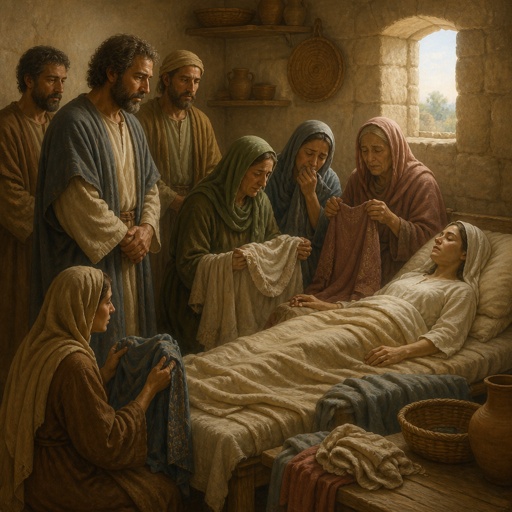
"In Joppa there was a disciple named Tabitha (in Greek her name is Dorcas); she was always doing good and helping the poor. About that time she became sick and died, and her body was washed and placed in an upstairs room. Lydda was near Joppa; so when the disciples heard that Peter was in Lydda, they sent two men to him and urged him, “Please come at once!” Peter went with them, and when he arrived he was taken upstairs to the room. All the widows stood around him, crying and showing him the robes and other clothing that Dorcas had made while she was still with them." - Acts 9:36-39

Acts 21:36 - "For the multitude of the people followed after, crying, Away with him."

Acts 27:36 - "Then were they all of good cheer, and they also took some meat."

Mark 9:36-37

Acts 20:36 - "¶ And when he had thus spoken, he kneeled down, and prayed with them all."

Acts 19:36 - "Seeing then that these things cannot be spoken against, ye ought to be quiet, and to do nothing rashly."

Acts 4:36 - "And Joses, who by the apostles was surnamed Barnabas, (which is, being interpreted, The son of consolation,) a Levite, and of the country of Cyprus,"

2 Kings 15:36 - "¶ Now the rest of the acts of Jotham, and all that he did, are they not written in the book of the chronicles of the kings of Judah?"

2 kings 9:34-36

Genesis 36:9 - "¶ And these are the generations of Esau the father of the Edomites in mount Seir:"

Acts 10:36 - "The word which God sent unto the children of Israel, preaching peace by Jesus Christ: (he is Lord of all:)"

Job 36:9 - "Then he sheweth them their work, and their transgressions that they have exceeded."

Acts 16:36 - "And the keeper of the prison told this saying to Paul, The magistrates have sent to let you go: now therefore depart, and go in peace."

Acts 8:36 - "And as they went on their way, they came unto a certain water: and the eunuch said, See, here is water; what doth hinder me to be baptized?"

"For the multitude of the people followed after, crying, Away with him." - Acts 21:36

Psalms 36:9 - "For with thee is the fountain of life: in thy light shall we see light."

Acts 13:36 - "For David, after he had served his own generation by the will of God, fell on sleep, and was laid unto his fathers, and saw corruption:"

Acts 7:36 - "He brought them out, after that he had shewed wonders and signs in the land of Egypt, and in the Red sea, and in the wilderness forty years."

1 Chronicles 9:36 - "And his firstborn son Abdon, then Zur, and Kish, and Baal, and Ner, and Nadab,"

John 9:36 - "He answered and said, Who is he, Lord, that I might believe on him?"

"Then were they all of good cheer, and they also took some meat." - Acts 27:36

Acts 2:36 - "Therefore let all the house of Israel know assuredly, that God hath made that same Jesus, whom ye have crucified, both Lord and Christ."

Acts 9:9 - "And he was three days without sight, and neither did eat nor drink."

Ezekiel 36:9 - "For, behold, I am for you, and I will turn unto you, and ye shall be tilled and sown:"

Matthew 9:36 (KJV) 36 But when he saw the multitudes, he was moved with compassion on them, because they fainted, and were scattered abroad, as sheep having no shepherd.

Acts 9:1-20