Sacrifices of Thanksgiving: A Call to Genuine Praise
“And offer a sacrifice of thanksgiving with leaven, and proclaim and publish the free offerings: for this liketh you, O ye children of Israel, saith the Lord GOD.” — Amos 4:5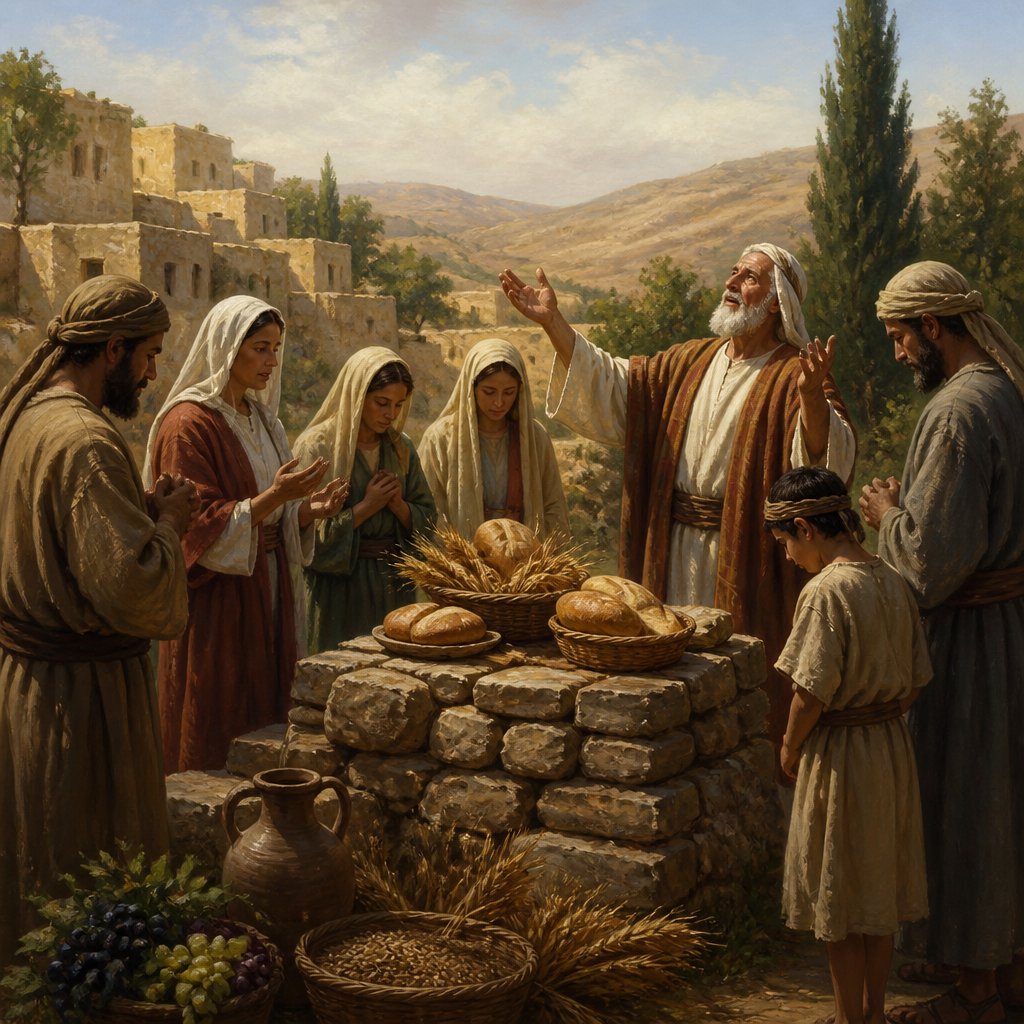
**Scriptural Basis: Amos 4:5**
"And offer a sacrifice of thanksgiving with leaven, and proclaim and publish the free offerings: for this liketh you, O ye children of Israel, saith the Lord GOD."
The book of Amos is a penetrating critique of Israel’s social injustices and spiritual failures during a time of prosperity. Amos, a shepherd turned prophet, was sent by God to deliver a message of divine displeasure, calling the people not just to accountability but to a deeper understanding of what true worship entails. The passage in Amos 4:5 is particularly striking because it emphasizes the importance of genuine expression in our lives of faith, specifically highlighting the act of giving thanks.
When we think of sacrifices in the Old Testament, they bring to mind the imagery of shedding blood and offering animal sacrifices. However, here, the focus is on the "sacrifice of thanksgiving." Thanksgiving in scripture is much more than mere gratitude; it is an acknowledgment of God’s goodness and goodness in action toward Him. It is the anticipation of His provision and mercy in our lives and the rightful response to His grace. However, there is a noteworthy element in the directive of presenting this thanksgiving with leaven. Traditionally, leaven was seen as symbolic of sin in various parts of Scripture, yet here, God invites a sacrifice accompanied by something typically seen as improper.
This leads us to explore the deeper meaning behind offering our thanks with leaven. It could signify the imperfections inherent in human life—a reminder that while our gratitude is precious, it comes from imperfect beings who are striving to live faithfully. God, through Amos, seems to be allowing room for our imperfections, not in the context of excusing sin but rather in recognizing that true worship is not about perfection but authenticity. Our gratitude need not be pristine; it can emerge from a messy life, filled with struggles and triumphs.
Furthermore, the instruction to "proclaim and publish the free offerings" underscores the notion of testifying about God’s goodness openly. Our thanksgiving should not be limited to our private prayers. It has a communal aspect, for our praises can inspire others, offer hope, and remind those around us of the Lord’s faithfulness. Just as Israel was encouraged to declare their offerings publicly, we too are called to be vocal about God’s goodness. Our worship should be infectious, drawing others into recognizing and celebrating the mercy we have received.
As we further reflect, the phrase, "for this liketh you, O ye children of Israel," reveals God’s desire for relationship. He longs for His people to engage in acts that please Him—a yearning that reflects the heart of a father toward his children. But what pleases God? It is not simply the act of worship but the sincere heart behind it. In a world filled with noise and distraction, God desires our authenticity and heartfelt offerings amidst our imperfections.
In practice, how do we cultivate a heart that offers a meaningful sacrifice of thanksgiving? First, we can develop a habit of daily gratitude, recognizing even the smallest blessings in our lives. Writing in a gratitude journal can be a profound exercise, allowing us to see God's hand through the mundane. Second, sharing our testimonies with others serves as a powerful reminder of God’s active presence in our lives. Letting our lives speak the praises of God can become our most impactful form of worship.
Finally, we must invite God into our moments of imperfection. We do not have to sanitize our worship to make it acceptable to Him; rather, we can present our raw selves—a blend of joy, sorrow, hope, and struggles—as a statement of thankfulness for His unwavering love.
In conclusion, let us heed the call of Amos 4:5, not as a rigid requirement but as an invitation to deeper communion with God. May our lives resonate with thanksgiving that reflects both our grateful hearts and our honest realities. Through our sacrifices of thanksgiving, with all our leaven and imperfections, let us proclaim the goodness of our God who delights in our authenticity.
Get our apps


Artwork for Amos 4:5

Amos 4:5 - "And offer a sacrifice of thanksgiving with leaven, and proclaim and publish the free offerings: for this liketh you, O ye children of Israel, saith the Lord GOD."
"And offer a sacrifice of thanksgiving with leaven, and proclaim and publish the free offerings: for this liketh you, O ye children of Israel, saith the Lord GOD." - Amos 4:5

Amos 5:4 - "¶ For thus saith the LORD unto the house of Israel, Seek ye me, and ye shall live:"

Amos 5:21-27
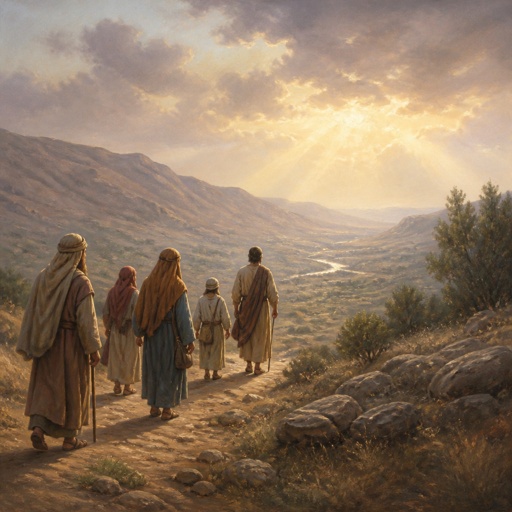
"¶ For thus saith the LORD unto the house of Israel, Seek ye me, and ye shall live:" - Amos 5:4

Amos 4:4-5 - "Go to Bethel and sin; go to Gilgal and sin yet more. Bring your sacrifices every morning, your tithes every three years. Burn leavened bread as a thank offering and brag about your freewill offerings—boast about them, you Israelites, for this is what you love to do," declares the Sovereign Lord."

Amos 5:24 - "But let judgment run down as waters, and righteousness as a mighty stream."

Amos 5:13 - "Therefore the prudent shall keep silence in that time; for it is an evil time."

Amos 5:10 - "They hate him that rebuketh in the gate, and they abhor him that speaketh uprightly."

Amos 5:20 - "Shall not the day of the LORD be darkness, and not light? even very dark, and no brightness in it?"

Amos 6:5 - "That chant to the sound of the viol, and invent to themselves instruments of musick, like David;"

Amos 5:7 - "Ye who turn judgment to wormwood, and leave off righteousness in the earth,"

Amos 2:5 - "But I will send a fire upon Judah, and it shall devour the palaces of Jerusalem."

Amos 5:17 - "And in all vineyards shall be wailing: for I will pass through thee, saith the LORD."

Amos 5:9 - "That strengtheneth the spoiled against the strong, so that the spoiled shall come against the fortress."

Amos 5:5 - "But seek not Beth-el, nor enter into Gilgal, and pass not to Beer-sheba: for Gilgal shall surely go into captivity, and Beth-el shall come to nought."

Amos 4:4 - "¶ Come to Beth-el, and transgress; at Gilgal multiply transgression; and bring your sacrifices every morning, and your tithes after three years:"
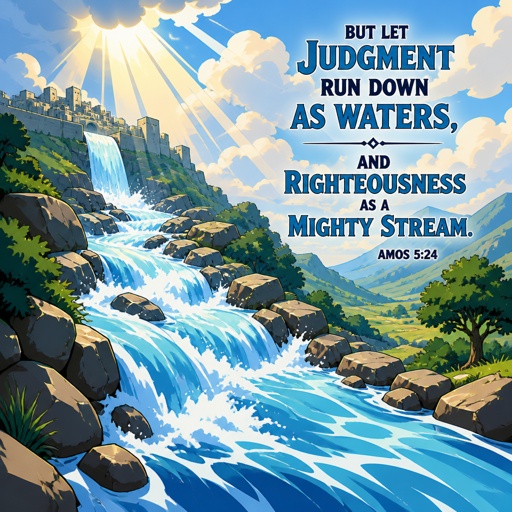
But let judgment run down as waters, and righteousness as a mighty stream. Amos 5:24

Amos 5:21 - "I hate, I despise your feast days, and I will not smell in your solemn assemblies."

Amos 8:4 - "¶ Hear this, O ye that swallow up the needy, even to make the poor of the land to fail,"

Amos 1:4 - "But I will send a fire into the house of Hazael, which shall devour the palaces of Ben-hadad."

Amos 5:25 - "Have ye offered unto me sacrifices and offerings in the wilderness forty years, O house of Israel?"

Amos 5:23 - "Take thou away from me the noise of thy songs; for I will not hear the melody of thy viols."

Amos 5:18 - "Woe unto you that desire the day of the LORD! to what end is it for you? the day of the LORD is darkness, and not light."

Amos 4:13 – "He who forms the mountains, who creates the wind, and who reveals his thoughts to mankind."

Amos 5:27 - "Therefore will I cause you to go into captivity beyond Damascus, saith the LORD, whose name is The God of hosts."

Amos 5:1 - "Hear ye this word which I take up against you, even a lamentation, O house of Israel."

Amos 5:14 - "Seek good, and not evil, that ye may live: and so the LORD, the God of hosts, shall be with you, as ye have spoken."

Amos 7:5 - "Then said I, O Lord GOD, cease, I beseech thee: by whom shall Jacob arise? for he is small."

Amos 5:15 - "Hate the evil, and love the good, and establish judgment in the gate: it may be that the LORD God of hosts will be gracious unto the remnant of Joseph."