The Wisdom of Divine Dietary Choices
"But these are they of which ye shall not eat: the eagle, and the ossifrage, and the ospray," - Deuteronomy 14:12
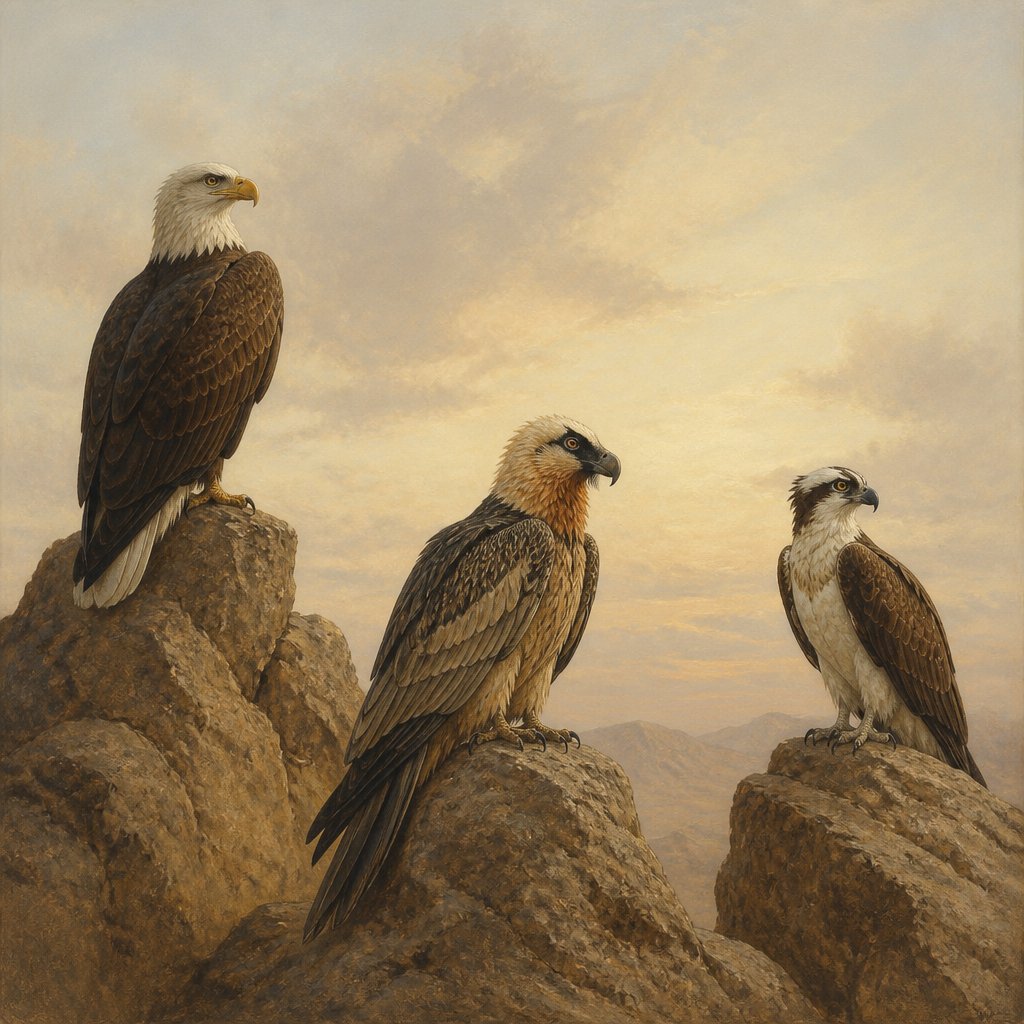
In Deuteronomy 14:12, we find a specific directive from God to the Israelites regarding dietary restrictions: "But these are they of which ye shall not eat: the eagle, and the ossifrage, and the ospray." At first glance, such a list may seem like an ancient relic, a mere remnant of a bygone era filled with customs and laws that hardly resonate with our contemporary lifestyle. However, as we delve deeper into this passage, we can uncover profound spiritual truths and lessons applicable to our daily lives.
The dietary laws set forth in the Old Testament often encompassed more than mere health guidelines. They served a higher purpose: to distinguish the people of God from the nations around them and to foster an understanding of holiness and righteousness. God's command to abstain from certain birds was not arbitrary but rather a deliberate choice designed to teach the Israelites about purity, distinction, and obedience. The eagle, for example, is a powerful symbol of strength, majesty, and freedom, yet in God’s eyes, it was deemed unclean for consumption. This can lead us to reflect on what we consider desirable and admirable in our own lives—do we sometimes place value on the things that God has declared unclean?
In a modern context, the concept of dietary law can be seen as a metaphor for what we allow into our lives—our thoughts, our influences, our friendships, and our habits. Just as the Israelites were instructed to avoid certain creatures for their spiritual health, we too must be discerning about what we consume spiritually and ethically.
Consider the eagle, ossifrage, and ospray as representations of worldly pursuits that may seem appealing on the surface but ultimately distract from our relationship with the Lord. In our quest for success, recognition, or even entertainment, do we sometimes allow toxic influences to enter our lives, ignoring the spiritual implications? The symbolic 'eagles' in our lives can be anything that drifts our focus away from God—be it pride, indulgence, or the endless pursuit of material wealth. God’s loving restrictions remind us to nurture our spirits with what uplifts and strengthens us, rather than what demeans or devalues us.
As we reflect on God's command, we can also appreciate the underlying principle of obedience. The Israelites had to trust God’s wisdom over their own preferences.
"For my thoughts are not your thoughts, neither are your ways my ways, saith the Lord" (Isaiah 55:8). In today’s culture, where relativism often reigns, God's unchanging truths serve as a reliable compass, directing us toward choices that lead to life and peace. The refusal to eat from the list of unclean animals is a practice of faith—one that cultivates trust in God’s plan. Are we willing to trust God with the details of our lives, even when His ways seem outdated or restrictive?
Moreover, these dietary laws invite us to recognize the importance of community and collective identity in faith. The Israelites lived communally; their choices reflected their unique relationship with God. Just as the community set themselves apart through dietary practices, we too are called to live in a way that bears witness to God’s goodness and grace in the world. Our choices—what we engage in, what we speak about, and how we live out our faith—can be an outward expression of our inward commitment to Christ.
In conclusion, Deuteronomy 14:12 serves as a compelling reminder of the importance of discernment in our lives. It speaks to the necessity of aligning ourselves with God’s thoughts and ways, encouraging us to evaluate what we permit into our hearts and lives. Let us seek to nourish our souls with that which brings glory to God and leads us closer to Him—abstaining from the 'eagles' of this world while embracing the divine. May our lives reflect a holy distinction, demonstrating our trust in God’s perfect wisdom and maintaining the integrity of our faith.
Want to reflect more on Deuteronomy 14:12?
Continue your spiritual journey with Bible Chat — an AI-powered tool for exploring God's Word through conversation. Ask questions, discover connections, and deepen your understanding.
Get Our Apps


Deuteronomy 14:12 Artwork

Deuteronomy 14:12 - "But these are they of which ye shall not eat: the eagle, and the ossifrage, and the ospray,"
"But these are they of which ye shall not eat: the eagle, and the ossifrage, and the ospray," - Deuteronomy 14:12
Deuteronomy 12:14 - "But in the place which the LORD shall choose in one of thy tribes, there thou shalt offer thy burnt offerings, and there thou shalt do all that I command thee."

Deuteronomy 14:14 - "And every raven after his kind,"

Deuteronomy 14:17 - "And the pelican, and the gier eagle, and the cormorant,"

"And every raven after his kind," - Deuteronomy 14:14

Deuteronomy 14:16 - "The little owl, and the great owl, and the swan,"

Deuteronomy 14:3 - "¶ Thou shalt not eat any abominable thing."

Deuteronomy 14:11 - "¶ Of all clean birds ye shall eat."

Deuteronomy 14:20 - "But of all clean fowls ye may eat."

Deuteronomy 14:13 - "And the glede, and the kite, and the vulture after his kind,"

Deuteronomy 14:18 - "And the stork, and the heron after her kind, and the lapwing, and the bat."

Deuteronomy 14:15 - "And the owl, and the night hawk, and the cuckow, and the hawk after his kind,"

Deuteronomy 29:14 - "Neither with you only do I make this covenant and this oath;"

Deuteronomy 14:4 - "These are the beasts which ye shall eat: the ox, the sheep, and the goat,"

Deuteronomy 24:12 - "And if the man be poor, thou shalt not sleep with his pledge:"

Deuteronomy 12:4 - "Ye shall not do so unto the LORD your God."

Deuteronomy 14:19 - "And every creeping thing that flieth is unclean unto you: they shall not be eaten."

Deuteronomy 25:14 - "Thou shalt not have in thine house divers measures, a great and a small."

1 cor 12:12-14

"And the pelican, and the gier eagle, and the cormorant," - Deuteronomy 14:17

Deuteronomy 27:14 - "¶ And the Levites shall speak, and say unto all the men of Israel with a loud voice,"

Deuteronomy 14:10 - "And whatsoever hath not fins and scales ye may not eat; it is unclean unto you."

Deuteronomy 14:5 - "The hart, and the roebuck, and the fallow deer, and the wild goat, and the pygarg, and the wild ox, and the chamois."

Deuteronomy 12:24 - "Thou shalt not eat it; thou shalt pour it upon the earth as water."

Deuteronomy 32:12 - "So the LORD alone did lead him, and there was no strange god with him."

Deuteronomy 33:14 - "And for the precious fruits brought forth by the sun, and for the precious things put forth by the moon,"

Deuteronomy 5:12 - "Keep the sabbath day to sanctify it, as the LORD thy God hath commanded thee."

Deuteronomy 10:14 - "Behold, the heaven and the heaven of heavens is the LORD'S thy God, the earth also, with all that therein is."

Deuteronomy 20:12 - "And if it will make no peace with thee, but will make war against thee, then thou shalt besiege it:"