The Heart of Inheritance: A Lesson from Deuteronomy 21:16
“Then it shall be, when he maketh his sons to inherit that which he hath, that he may not make the son of the beloved firstborn before the son of the hated, which is indeed the firstborn:” — Deuteronomy 21:16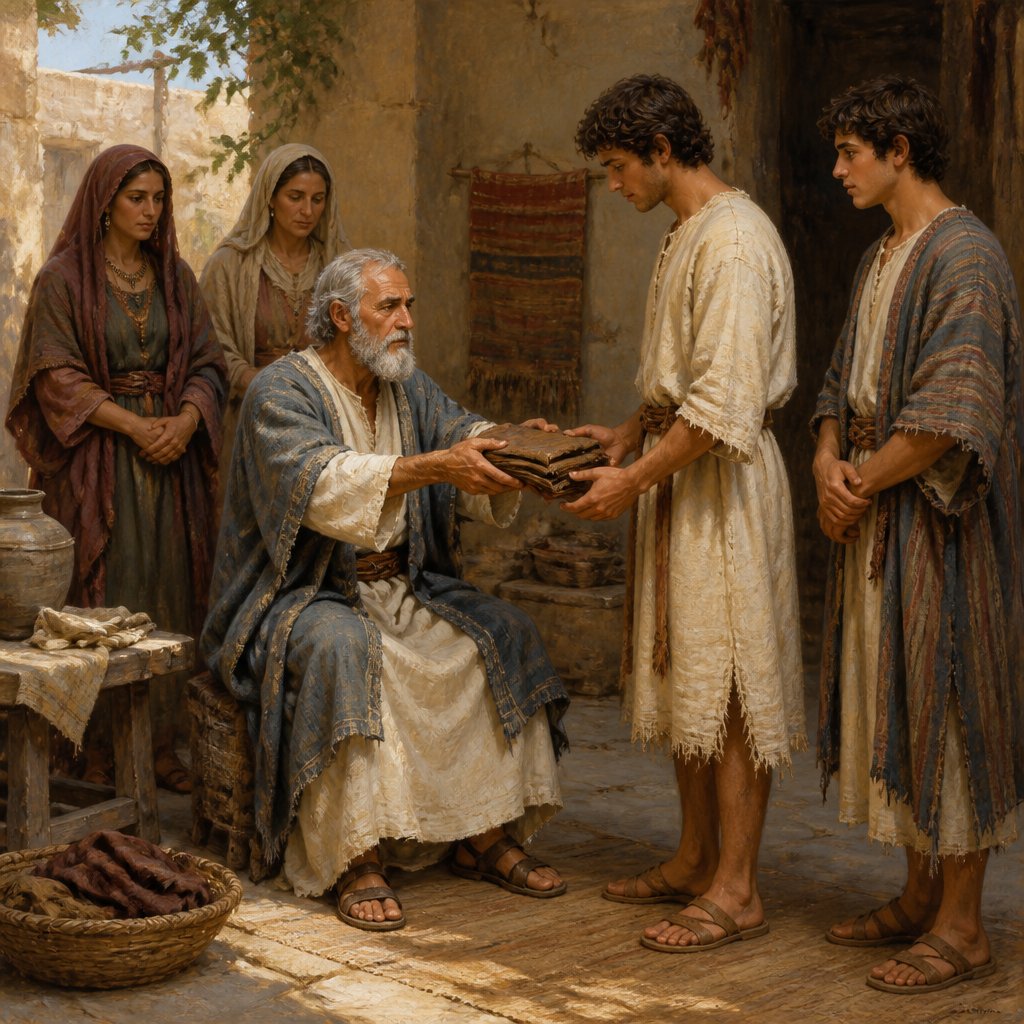
Inheritance is a deeply significant concept in the life of a family, particularly within the biblical context. In Deuteronomy 21:16, we encounter a profound directive regarding the distribution of inheritance among a father's sons. The verse states: "Then it shall be, when he maketh his sons to inherit that which he hath, that he may not make the son of the beloved firstborn before the son of the hated, which is indeed the firstborn."
At first glance, this command may seem merely like a legal stipulation relevant to the ancient Israelites; however, it holds deeper meanings worthy of our reflection. To better understand this verse, we need to consider the cultural backdrop of the time, the nature of favoritism, and the heart of a righteous inheritance.
In ancient Israel, the firstborn son typically held a special status and received a double portion of the father's inheritance. This status was not just about material blessing but also about leadership and familial honor. The father was responsible for ensuring that the inheritance passed down the proper way. However, this passage reveals a powerful truth about God’s character and our human tendencies.
We see here a prohibition against favoritism based on emotional ties. The "beloved" and "hated" descriptor doesn’t necessarily concern the inherent worth of the children but speaks to the father’s subjective feelings at the time. Maybe one son was favored because of proximity, shared interests, or some other emotional bond, while another, perhaps the firstborn, was not favored for whatever reason. In a comparable application for our lives today, how often do we see favoritism seep into our relationships?
This command also illustrates God’s justice and fairness. God was teaching a lesson about equity and- within the cultural context of the time- the divine principle that the right thing should always come first. Even if the father had personal feelings leading him to favor one son over the other, the child’s birthright and position in the family hierarchy should be honored. In doing so, we are reminded of God’s call for us to treat one another fairly and to avoid showing favoritism based on our feelings or biases.
Moreover, this passage draws our attention to the implications beyond inheritance. In families, communities, and even churches, how often do we prioritize relationships based on our preferences instead of the calling or gifts that an individual inherently possesses? Isn’t it true that our human emotions can cloud our judgment about rightful places in our circles, whether consciously or unconsciously? In every aspect of our lives, God calls us to rise above human sentiments and to administer justice.
This also serves as a reminder of our role as stewards of the blessings we receive from God. Inheritance, in a biblical sense, is not merely about material possessions; rather, it symbolizes the passing of faith, values, and purpose through generations. By ensuring that we honor the rightful inheritance based on divine principles rather than our emotional dispositions, we affirm our alignment with God’s will.
Finally, as we reflect on this verse, let us also ponder our relationship with God as our heavenly Father. He has bestowed upon us the inheritance of eternal life and all spiritual blessings through His Son, Jesus Christ. Just as in the case with the firstborn, God chose not based on preference but on purpose. Christ, being the firstborn over all creation, graciously allows us to partake in the inheritance, as His beloved children, regardless of our past, faults, or perceived worthiness.
Let us pray: "Heavenly Father, thank You for Your perfect example of equity and justice in our lives. Help us to recognize and eradicate favoritism in our dealings with others. Guide us to honor rightful positions based on Your Word and to see one another through Your loving lens. May we always remember our inheritance through Christ and strive to reflect Your justice and love in every interaction. Amen.”
In essence, Deuteronomy 21:16 isn’t just a rule for ancient Israel; it’s a timeless challenge to reevaluate our values, reminding us that how we distribute blessings and favor reflects our understanding of God’s heart.
Get our apps


Artwork for Deuteronomy 21:16

Deuteronomy 21:16 - "Then it shall be, when he maketh his sons to inherit that which he hath, that he may not make the son of the beloved firstborn before the son of the hated, which is indeed the firstborn:"
"Then it shall be, when he maketh his sons to inherit that which he hath, that he may not make the son of the beloved firstborn before the son of the hated, which is indeed the firstborn:" - Deuteronomy 21:16

Deuteronomy 16:21 - "¶ Thou shalt not plant thee a grove of any trees near unto the altar of the LORD thy God, which thou shalt make thee."

Deuteronomy 1.1-21

Deuteronomy 20:16

Deuteronomy 20:16

Deuteronomy 20:16

Deuteronomy 14:16 - "The little owl, and the great owl, and the swan,"

"¶ Thou shalt not plant thee a grove of any trees near unto the altar of the LORD thy God, which thou shalt make thee." - Deuteronomy 16:21

Deuteronomy 10:16 - "Circumcise therefore the foreskin of your heart, and be no more stiffnecked."

Deuteronomy 28:16 - "Cursed shalt thou be in the city, and cursed shalt thou be in the field."

Genesis 21-16

Deuteronomy 27:21 - "Cursed be he that lieth with any manner of beast. And all the people shall say, Amen."

Deuteronomy 32:16 - "They provoked him to jealousy with strange gods, with abominations provoked they him to anger."

Deuteronomy 21:21 - "And all the men of his city shall stone him with stones, that he die: so shalt thou put evil away from among you; and all Israel shall hear, and fear."

Deuteronomy 7:21 - "Thou shalt not be affrighted at them: for the LORD thy God is among you, a mighty God and terrible."

Deuteronomy 21:7 - "And they shall answer and say, Our hands have not shed this blood, neither have our eyes seen it."

Deuteronomy 18:21 - "And if thou say in thine heart, How shall we know the word which the LORD hath not spoken?"

Luke 2:16 - 21

Deuteronomy 6:16 - "¶ Ye shall not tempt the LORD your God, as ye tempted him in Massah."

Leviticus 21:16 - "¶ And the LORD spake unto Moses, saying,"

Deuteronomy 21:22 - "¶ And if a man have committed a sin worthy of death, and he be to be put to death, and thou hang him on a tree:"

Deuteronomy 2:21 - "A people great, and many, and tall, as the Anakims; but the LORD destroyed them before them; and they succeeded them, and dwelt in their stead:"

Deuteronomy 21:6 - "And all the elders of that city, that are next unto the slain man, shall wash their hands over the heifer that is beheaded in the valley:"

Deuteronomy 19:16 - "¶ If a false witness rise up against any man to testify against him that which is wrong;"

Deuteronomy 16:12 - "And thou shalt remember that thou wast a bondman in Egypt: and thou shalt observe and do these statutes."

Deuteronomy 12:16 - "Only ye shall not eat the blood; ye shall pour it upon the earth as water."

Deuteronomy 25:16 - "For all that do such things, and all that do unrighteously, are an abomination unto the LORD thy God."

Deuteronomy 24:21 - "When thou gatherest the grapes of thy vineyard, thou shalt not glean it afterward: it shall be for the stranger, for the fatherless, and for the widow."

Deuteronomy 21:12 - "Then thou shalt bring her home to thine house; and she shall shave her head, and pare her nails;"