Lifting Up Our Brothers: A Call to Compassion
"Thou shalt not see thy brother’s ass or his ox fall down by the way, and hide thyself from them: thou shalt surely help him to lift them up again." - Deuteronomy 22:4
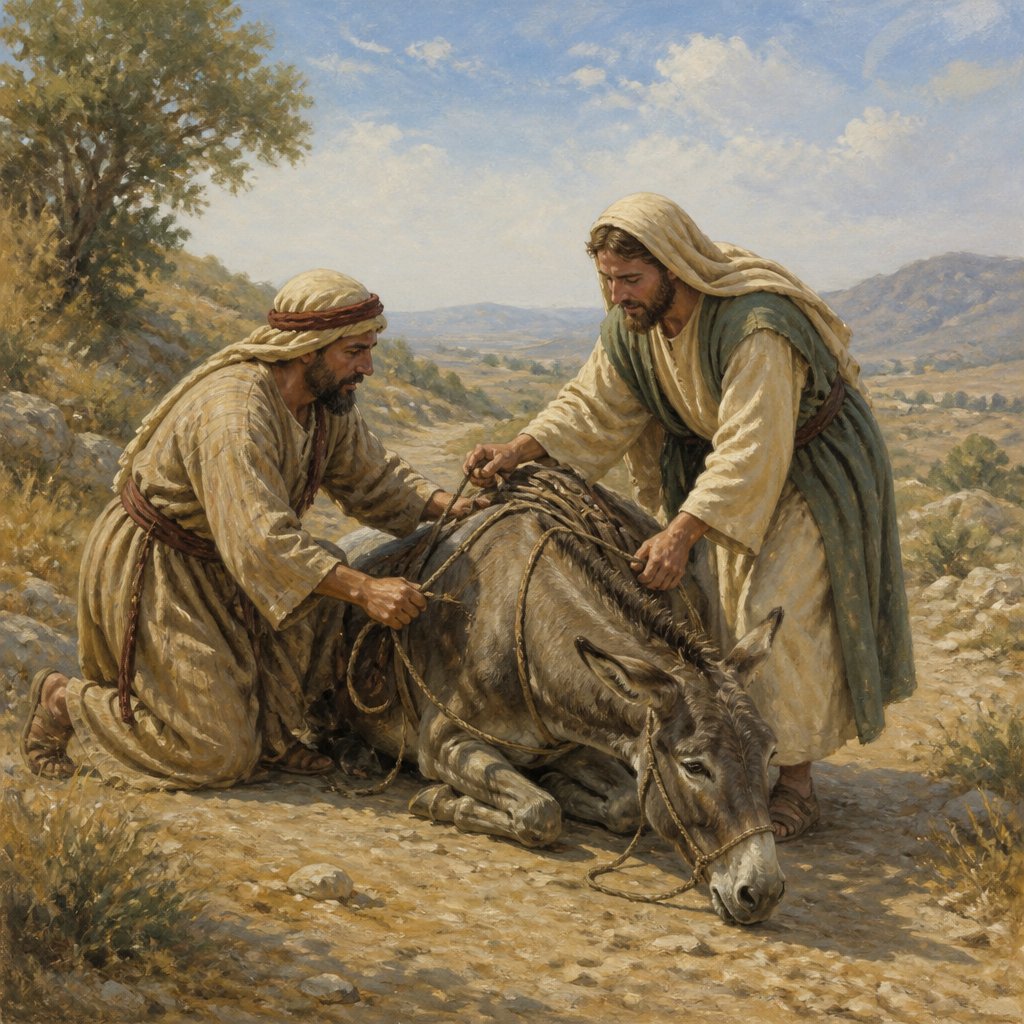
In Deuteronomy 22:4, we read, "Thou shalt not see thy brother's ass or his ox fall down by the way, and hide thyself from them: thou shalt surely help him to lift them up again." This verse, while seemingly simple and straightforward, layers profound truths about our responsibilities toward one another and our posture as members of a larger community.
To fully grasp the weight of this scripture, we must delve into the cultural context of the time. In ancient agrarian societies, animals like donkeys and oxen were invaluable. They were not merely tools; they were companions, partners in labor, and vital to the sustenance of families. If one were to see their neighbor's beast fallen, it signified more than just a temporary setback; it represented potential loss of livelihood and added burdens on the owner. Thus, by addressing this situation, God's Word reflects an ethic of solidarity and mutual responsibility that transcends time.
At the core of this verse is a call to action. God commands us not to ignore the misfortunes of others but to engage actively in alleviating their burdens. This directive invites us to consider our own hearts and instincts when faced with the suffering of those around us. How often do we witness someone’s struggles—whether they be physical, emotional, or spiritual—and choose to look away? Perhaps we feel ill-equipped to help, or we convince ourselves that it is not our concern. However, Deuteronomy 22:4 clearly states that apathy is not an option for those who desire to walk in accordance with God’s will.
"Thou shalt surely help him to lift them up again" serves as a resounding reminder of our call to service. We are not only invited to notice when others stumble but are also required to extend our hands in compassion. To lift someone up is a vivid metaphor for supporting and encouraging them. It means embodying kindness, sharing the burdens that we can, and reflecting the love of Christ in tangible ways.
Our active participation in each other’s lives serves as a testament to our faith. In Galatians 6:2, Paul echoes this sentiment: "Bear ye one another's burdens, and so fulfil the law of Christ." When we extend help, we manifest what it means to love our neighbors as ourselves. We provide support, listen with empathy, and guide our brothers and sisters back to standing firm, both literally and figuratively.
Furthermore, this call to help extends beyond communal relationships; it challenges us to reflect on our deeper inclinations toward service. Jesus, in his earthly ministry, exemplified this principle perfectly. He did not shy away from the painful realities of humanity—from the sick, the outcasts, and the sinners. Instead, He engaged deeply with them, offering healing, restoration, and the hope of a new life. If we are to be the hands and feet of Christ, then ignoring the fallen around us is simply not an option.
It is vital, however, to approach this helping spirit with humility and understanding. Sometimes, lifting someone up involves more than immediate assistance; it may require walking alongside them for a period of time through their challenges, praying with them, and helping them navigate their difficulties. Often, the feelings of inadequacy and powerlessness can deter us from acting. Yet, it is essential to remember that every small act of help counts, and sometimes just being present is the greatest support one can offer.
In conclusion, Deuteronomy 22:4 is more than a directive about livestock; it is a call to cultivate a culture of care and responsiveness. We are enjoined not to hide away from the struggles of our brethren but to step boldly into their pain with love, grace, and support. May we all seek to follow this command, lifting up not just the fallen beasts but the fallen spirits around us. Let our lives reflect the compassion of Christ as we fully engage in the hard work of being there for one another—always ready to lift another up.
Want to reflect more on Deuteronomy 22:4?
Continue your spiritual journey with Bible Chat — an AI-powered tool for exploring God's Word through conversation. Ask questions, discover connections, and deepen your understanding.
Get Our Apps


Deuteronomy 22:4 Artwork

Deuteronomy 22:4 - "¶ Thou shalt not see thy brother's ass or his ox fall down by the way, and hide thyself from them: thou shalt surely help him to lift them up again."
"¶ Thou shalt not see thy brother's ass or his ox fall down by the way, and hide thyself from them: thou shalt surely help him to lift them up again." - Deuteronomy 22:4
Deuteronomy 4:22 - "But I must die in this land, I must not go over Jordan: but ye shall go over, and possess that good land."

Deuteronomy 22:20 - "But if this thing be true, and the tokens of virginity be not found for the damsel:"

Deuteronomy 22:10 - "¶ Thou shalt not plow with an ox and an ass together."

Deuteronomy 22:18 - "And the elders of that city shall take that man and chastise him;"

Deuteronomy 23:22 - "But if thou shalt forbear to vow, it shall be no sin in thee."

"But I must die in this land, I must not go over Jordan: but ye shall go over, and possess that good land." - Deuteronomy 4:22

Deuteronomy 9:22 - "And at Taberah, and at Massah, and at Kibroth-hattaavah, ye provoked the LORD to wrath."

Deuteronomy 22:11 - "¶ Thou shalt not wear a garment of divers sorts, as of woollen and linen together."

Deuteronomy 22:13 - "¶ If any man take a wife, and go in unto her, and hate her,"

Deuteronomy 31:22 - "¶ Moses therefore wrote this song the same day, and taught it the children of Israel."

Deuteronomy 22:27 - "For he found her in the field, and the betrothed damsel cried, and there was none to save her."

Deuteronomy 26:4-10

Deuteronomy 3:22 - "Ye shall not fear them: for the LORD your God he shall fight for you."

Deuteronomy 22:23 - "¶ If a damsel that is a virgin be betrothed unto an husband, and a man find her in the city, and lie with her;"

Deuteronomy 33:22 - "¶ And of Dan he said, Dan is a lion's whelp: he shall leap from Bashan."

Deuteronomy 26:4-10

Deuteronomy 22:22 - "¶ If a man be found lying with a woman married to an husband, then they shall both of them die, both the man that lay with the woman, and the woman: so shalt thou put away evil from Israel."

Deuteronomy 22:30 - "¶ A man shall not take his father's wife, nor discover his father's skirt."

Deuteronomy 22:28 - "¶ If a man find a damsel that is a virgin, which is not betrothed, and lay hold on her, and lie with her, and they be found;"

Deuteronomy 4:4 - "But ye that did cleave unto the LORD your God are alive every one of you this day."

Deuteronomy 14:22 - "Thou shalt truly tithe all the increase of thy seed, that the field bringeth forth year by year."

Deuteronomy 16:22 - "Neither shalt thou set thee up any image; which the LORD thy God hateth."

Deuteronomy 21:22 - "¶ And if a man have committed a sin worthy of death, and he be to be put to death, and thou hang him on a tree:"

Deuteronomy 22:12 - "¶ Thou shalt make thee fringes upon the four quarters of thy vesture, wherewith thou coverest thyself."

"But if this thing be true, and the tokens of virginity be not found for the damsel:" - Deuteronomy 22:20

Deuteronomy 15:22 - "Thou shalt eat it within thy gates: the unclean and the clean person shall eat it alike, as the roebuck, and as the hart."

Deuteronomy 24:22 - "And thou shalt remember that thou wast a bondman in the land of Egypt: therefore I command thee to do this thing."

Deuteronomy 34:1-4 – Moses views the Promised Land from Mount Nebo.