Welcoming the Stranger: A Divine Invitation to Compassion
“He shall dwell with thee, even among you, in that place which he shall choose in one of thy gates, where it liketh him best: thou shalt not oppress him.” — Deuteronomy 23:16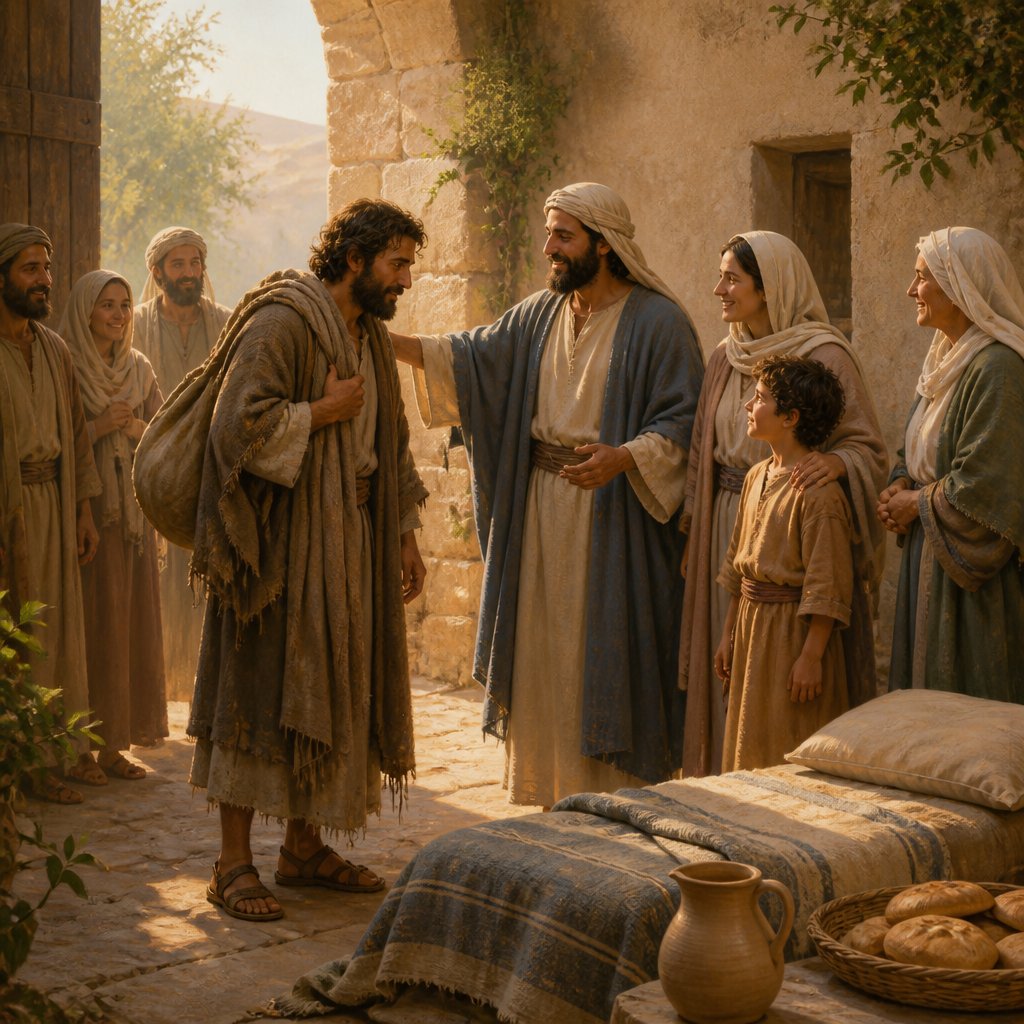
In Deuteronomy 23:16, we find a profound directive from the Lord: “He shall dwell with thee, even among you, in that place which he shall choose in one of thy gates, where it liketh him best: thou shalt not oppress him.” This verse serves as a powerful reminder of God's heart toward the marginalized and the displaced, and it brings to light the idea of hospitality as a divine commandment.
Throughout the Scriptures, God’s people are often reminded of their responsibility to treat outsiders with dignity and kindness. In Israel, the social structure was defined by tribal identities and cultural boundaries, yet in this verse, God challenges the people to expand their notions of friendship and community. The command to allow a stranger to dwell among them was not just an invitation to coexist but a divine mandate to embrace humanity's diverse fabric without discrimination.
Firstly, let’s explore what it means to dwell with someone. To dwell is to make one’s home. It signifies a deep, intimate relationship that goes beyond mere cohabitation. In the context of Deuteronomy, God is urging Israel to create a space where the oppressed—be it the foreigner, the slave, or anyone marginalized—can feel safe and accepted. This verse echoes the heart of God that seeks inclusivity, much as Jesus taught during His ministry.
Imagine a community where the gates welcome all. Each person who passes through those gates must be treated with honor. The gates signify not just physical entrances but represent thresholds of attitude and acceptance. It is here that we see a compelling truth: God desires for His followers to not only open their gates but also their hearts.
Furthermore, God specifies that we must not oppress the stranger. This commission reveals God's abhorrence for any form of injustice. Oppression, in this context, could wear many faces: discrimination, unfair treatment, or neglect. By forbidding oppression, God establishes a moral standard for His people that transcends culture and time. The inherent value of every person is grounded in their creation in God’s image. To oppress one is to deny their worth, and this is fundamentally opposed to the nature of God.
When we consider how to apply this scripture in today’s context, we are inevitably confronted with the realities of our society. Who are the strangers among us? The homeless, the refugees, the marginalized in our neighborhoods, and those different from us in culture, language, or beliefs. As Christians, we are called to cultivate a spirit of hospitality that reflects Christ’s love. It begins by recognizing that each individual, regardless of their background, has value and should be treated with respect and kindness.
This call extends beyond mere tolerance; it involves active compassion and support. It challenges us to create communities void of oppression. Imagine a local church, a gathering of believers, akin to the gates of Deuteronomy—with open arms to those in need. How might we welcome the stranger? By volunteering at shelters, advocating for social justice, extending invitations to our homes, or simply engaging in meaningful conversations that celebrate our differences.
In doing so, we live out God's command, reflecting His nature both within the church and in society at large. We mirror God's love and grace, which were ultimately showcased through Jesus—who Himself was a stranger in this world. He associated with the marginalized, healed the broken, and celebrated the outcast.
As we ponder Deuteronomy 23:16, let us take it as a call to action. Let us reflect on our attitudes toward those who dwell at our gates. Are we welcoming? Are we compassionate? Do we let them choose their place amongst us? In doing so, we honor God's desire for community—a community founded on love, respect, and the exhilarating freedom of welcoming the stranger.
May we strive to be a people who actively choose to dwell together, extending kindness and rejecting oppression in every form. After all, as Christ taught us, when we care for the least among us, we do so as unto Him.
Get our apps


Artwork for Deuteronomy 23:16

Deuteronomy 23:16 - "He shall dwell with thee, even among you, in that place which he shall choose in one of thy gates, where it liketh him best: thou shalt not oppress him."
"He shall dwell with thee, even among you, in that place which he shall choose in one of thy gates, where it liketh him best: thou shalt not oppress him." - Deuteronomy 23:16

Deuteronomy 11:23

Deuteronomy 20:16

Deuteronomy 20:16

Deuteronomy 20:16

Deuteronomy 3:23 - "And I besought the LORD at that time, saying,"

Deuteronomy 23:22 - "But if thou shalt forbear to vow, it shall be no sin in thee."

Deuteronomy 14:16 - "The little owl, and the great owl, and the swan,"

Deuteronomy 23:8 - "The children that are begotten of them shall enter into the congregation of the LORD in their third generation."

Deuteronomy 23:17 - "¶ There shall be no whore of the daughters of Israel, nor a sodomite of the sons of Israel."

Deuteronomy 23:6 - "Thou shalt not seek their peace nor their prosperity all thy days for ever."

Deuteronomy 10:16 - "Circumcise therefore the foreskin of your heart, and be no more stiffnecked."

Genesis 23-16

Deuteronomy 22:23 - "¶ If a damsel that is a virgin be betrothed unto an husband, and a man find her in the city, and lie with her;"

Deuteronomy 27:23 - "Cursed be he that lieth with his mother in law. And all the people shall say, Amen."

Deuteronomy 28:16 - "Cursed shalt thou be in the city, and cursed shalt thou be in the field."

"And I besought the LORD at that time, saying," - Deuteronomy 3:23

Deuteronomy 28:23 - "And thy heaven that is over thy head shall be brass, and the earth that is under thee shall be iron."

Deuteronomy 15:23 - "Only thou shalt not eat the blood thereof; thou shalt pour it upon the ground as water."

Deuteronomy 32:23 - "I will heap mischiefs upon them; I will spend mine arrows upon them."

Deuteronomy 1:23 - "And the saying pleased me well: and I took twelve men of you, one of a tribe:"

Deuteronomy 23:12 - "¶ Thou shalt have a place also without the camp, whither thou shalt go forth abroad:"

Deuteronomy 12:23 - "Only be sure that thou eat not the blood: for the blood is the life; and thou mayest not eat the life with the flesh."

Deuteronomy 32:16 - "They provoked him to jealousy with strange gods, with abominations provoked they him to anger."

Deuteronomy 23:23 - "That which is gone out of thy lips thou shalt keep and perform; even a freewill offering, according as thou hast vowed unto the LORD thy God, which thou hast promised with thy mouth."

Deuteronomy 23:15 - "¶ Thou shalt not deliver unto his master the servant which is escaped from his master unto thee:"

Deuteronomy 23:3 - "An Ammonite or Moabite shall not enter into the congregation of the LORD; even to their tenth generation shall they not enter into the congregation of the LORD for ever:"

Deuteronomy 23:1 - "He that is wounded in the stones, or hath his privy member cut off, shall not enter into the congregation of the LORD."

Deuteronomy 23:9 - "¶ When the host goeth forth against thine enemies, then keep thee from every wicked thing."