The Heart of Generosity: Biblical Perspectives on Lending and Usury
“Thou shalt not lend upon usury to thy brother; usury of money, usury of victuals, usury of any thing that is lent upon usury:” — Deuteronomy 23:19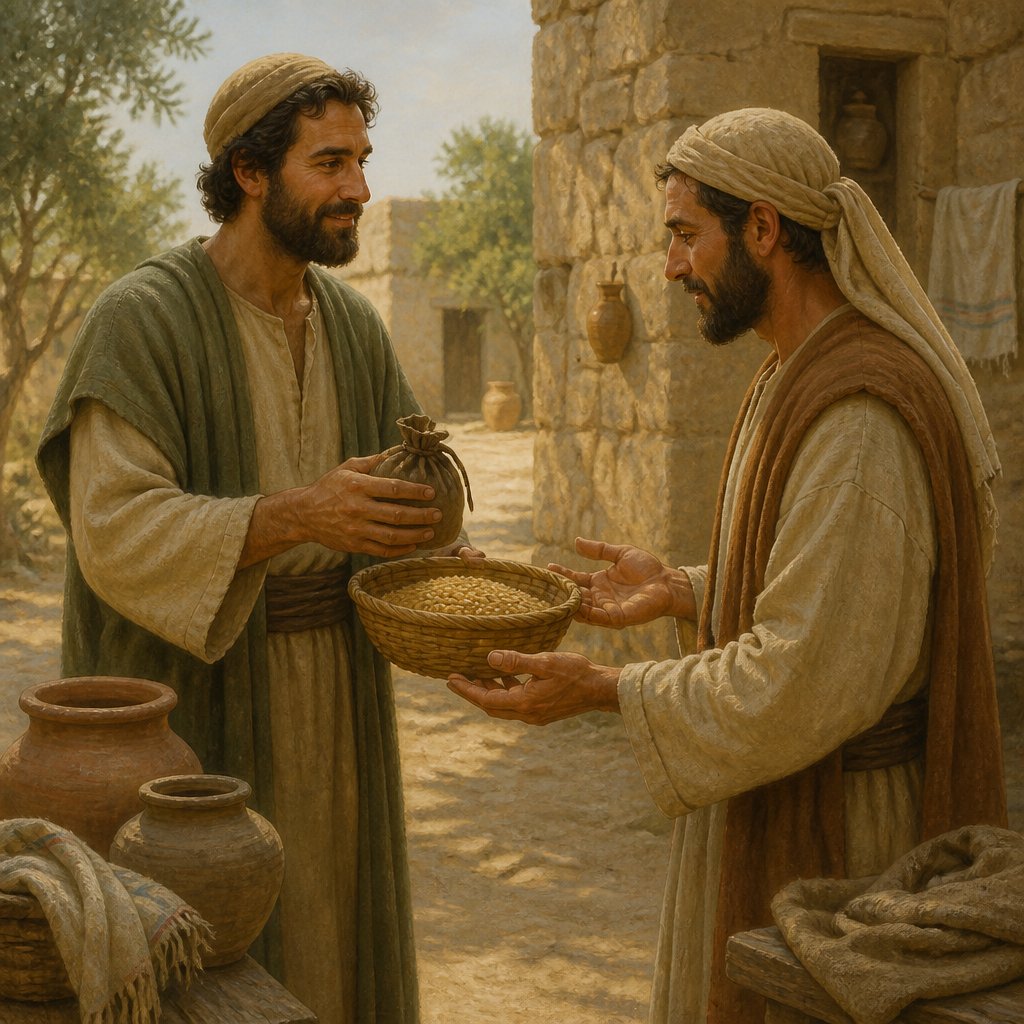
Deuteronomy 23:19 states, "Thou shalt not lend upon usury to thy brother; usury of money, usury of victuals, usury of any thing that is lent upon usury." This verse provides an important ethical guideline concerning financial dealings among the people of Israel and gives profound insight into the heart of God regarding generosity, community, and the treatment of one another's needs.
To fully grasp the impact of this commandment, one must consider the historical context in which it was given. The Israelites were emerging from centuries of slavery in Egypt and were in the process of establishing a new society. God, in His wisdom, provided these laws not just as regulations but as means of fostering a compassionate and united community. The prohibition against usury—a practice involving the lending of money at exorbitant interest rates—was meant to protect the vulnerable among them, ensuring that financial transactions did not deepen disparities but rather promote support and brotherhood.
Usury is often associated with greed and exploitation. In the ancient world, where the poor were at the mercy of the wealthy, lending money at high-interest rates could easily entrap one in a cycle of debt. When we discuss lending today, it’s essential to reflect not just on the transaction but on the relational aspect of lending. The term 'brother' used in this verse applies broadly. It encompasses not only a familial bond but a deeper connection within the community of faith. This highlights the expectation that transactions should be grounded in love and not merely in capitalism.
In the New Testament, Jesus echoed this sentiment when He taught about loving one’s neighbor, emphasizing that our relationships with each other should hold greater significance than mere profitable ventures. In Matthew 5:42, He says, "Give to him that asketh thee, and from him that would borrow of thee turn not thou away." This reinforces the idea that our willingness to lend must arise from a heart of compassion, not a desire for personal gain.
Here, the passage compels us to evaluate our motives behind financial interactions. It pushes us to ask how we can lend supportively rather than opportunistically. Are our transactions built on mutual support, or are they transactions that create burdens? God’s law ensures that generosity prevails over exploitation. It asks us to reflect on how we engage with those who ask for help. It is not just about receiving back what is due with interest, but about recognizing that sometimes we may have to lend freely, with no expectation of return, reflecting the very nature of Christ's grace towards us.
Moreover, this commandment encourages cultivating an attitude of trust in God's provision. By refraining from usury, we acknowledge that our security does not come from the wealth we amass through cautious lending, but from the God who provides for our needs and those of our brothers and sisters. The very act of lending without usury demonstrates our faith that God will supply our needs abundantly, allowing us to be a channel of blessing to others.
In light of contemporary society, where financial transactions often prioritize profit over people, this principle holds vital relevance. We are called to critically assess our financial dealings—are we participating in systems that oppress? How can we ensure that our actions reflect love and respect for others, especially those vulnerable in our community?
As we reflect on Deuteronomy 23:19, let us aspire to embody the biblical principles of generosity and compassion in all our dealings. May we approach our brothers and sisters with open hands, recognizing that every opportunity to help is a chance to reflect Christ's sacrificial love in a world so desperately in need of grace and unity. When we choose to act with kindness and understanding, we fulfill God's command and bear witness to His kingdom.
Get our apps


Artwork for Deuteronomy 23:19

Deuteronomy 23:19 - "¶ Thou shalt not lend upon usury to thy brother; usury of money, usury of victuals, usury of any thing that is lent upon usury:"
"¶ Thou shalt not lend upon usury to thy brother; usury of money, usury of victuals, usury of any thing that is lent upon usury:" - Deuteronomy 23:19

Deuteronomy 11:23

Deuteronomy 30:19:

Deuteronomy 3:23 - "And I besought the LORD at that time, saying,"

Deuteronomy 5:19 - "Neither shalt thou steal."

Genesis 23-19

Luke 19:23

Luke 19:23

Deuteronomy 23:22 - "But if thou shalt forbear to vow, it shall be no sin in thee."

Genesis 19-23

Deuteronomy 23:8 - "The children that are begotten of them shall enter into the congregation of the LORD in their third generation."

Deuteronomy 23:17 - "¶ There shall be no whore of the daughters of Israel, nor a sodomite of the sons of Israel."

Deuteronomy 23:6 - "Thou shalt not seek their peace nor their prosperity all thy days for ever."

Deuteronomy 22:23 - "¶ If a damsel that is a virgin be betrothed unto an husband, and a man find her in the city, and lie with her;"

Deuteronomy 27:23 - "Cursed be he that lieth with his mother in law. And all the people shall say, Amen."

Deuteronomy 10:19 - "Love ye therefore the stranger: for ye were strangers in the land of Egypt."

Deuteronomy 14:19 - "And every creeping thing that flieth is unclean unto you: they shall not be eaten."

"And I besought the LORD at that time, saying," - Deuteronomy 3:23

Deuteronomy 28:23 - "And thy heaven that is over thy head shall be brass, and the earth that is under thee shall be iron."

Deuteronomy 15:23 - "Only thou shalt not eat the blood thereof; thou shalt pour it upon the ground as water."

Deuteronomy 32:23 - "I will heap mischiefs upon them; I will spend mine arrows upon them."

Deuteronomy 1:23 - "And the saying pleased me well: and I took twelve men of you, one of a tribe:"

"Neither shalt thou steal." - Deuteronomy 5:19

Deuteronomy 19:7 - "Wherefore I command thee, saying, Thou shalt separate three cities for thee."

Deuteronomy 6:19 - "To cast out all thine enemies from before thee, as the LORD hath spoken."

Deuteronomy 23:12 - "¶ Thou shalt have a place also without the camp, whither thou shalt go forth abroad:"

Deuteronomy 12:23 - "Only be sure that thou eat not the blood: for the blood is the life; and thou mayest not eat the life with the flesh."
1 Samuel 8:19-23

Deuteronomy 23:23 - "That which is gone out of thy lips thou shalt keep and perform; even a freewill offering, according as thou hast vowed unto the LORD thy God, which thou hast promised with thy mouth."