Rejoicing in His Peace: The Heart of Offerings
“And thou shalt offer peace offerings, and shalt eat there, and rejoice before the LORD thy God.” — Deuteronomy 27:7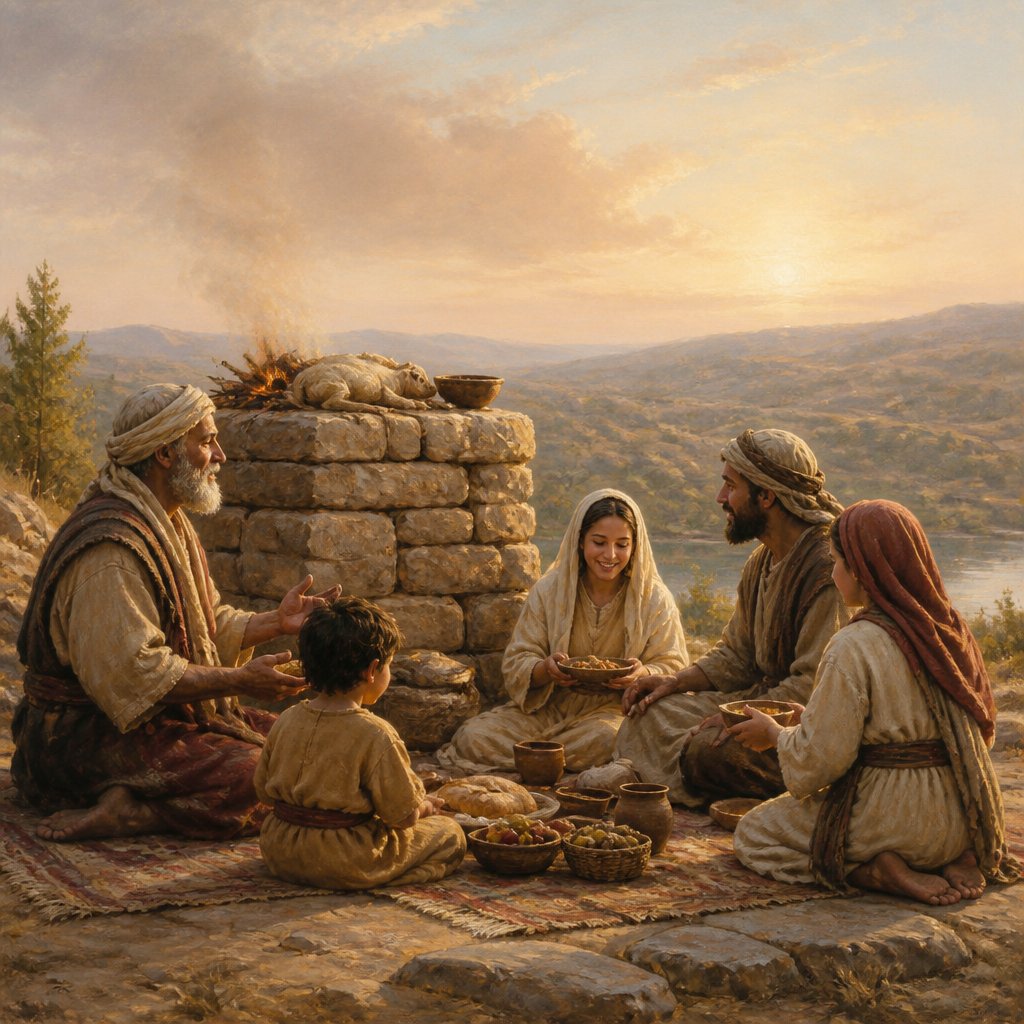
The essence of our relationship with God is inherently tied to the concepts of sacrifice, communal worship, and joyful recognition of His blessings. Deuteronomy 27:7 offers a poignant glimpse into this divine-human interaction: "And thou shalt offer peace offerings, and shalt eat there, and rejoice before the LORD thy God." Herein lies a multi-layered invitation from the Lord—spiritual acknowledgment, heartfelt community, and a celebration of peace.
**Understanding Peace Offerings**
In the sacrificial system of the Old Testament, peace offerings (or fellowship offerings) held a significant place in the mosaic of worship. Unlike sin or burnt offerings, peace offerings were intrinsically linked to fellowship and communion with God. They were a means for the Israelites to express gratitude, devotion, and a desire to share in the blessings of the covenant relationship with the Lord. The offering was not merely a ritual act but was meant to foster a deep bond with God and fellow believers. This context invites us to reflect on our own approach to God: Are our offerings—physical gifts, time, prayers—infused with a spirit of peace and gratitude?
**Eating Together, A Symbol of Community**
The command to "eat there" is a vivid reminder of the communal aspect of worship. In the ancient Israelite culture, sharing a meal was a profound expression of brotherhood and solidarity. Meals symbolize acceptance and fellowship—when we share food, we share life. By inviting the community to partake in the offering, God reminds His people that their worship is not merely an act of individual piety but a communal celebration. It beckons us toward a rich understanding of unity within the body of Christ today as we come together in worship, breaking bread in remembrance of our Lord. In doing so, we reinforce relationships and encourage each other in our spiritual journeys, rejoicing in the collective blessings bestowed upon us.
**Rejoicing Before the LORD**
The act of rejoicing before the Lord captures the very heart of biblical worship. It is an affectionate acknowledgment of the goodness, mercy, and provision of our God. To rejoice is to celebrate—to lift our spirits, engage our voices, and express our gratitude not just quietly but with exuberance. This insight beckons us to contemplate our own expressions of joy in worship. Are our hearts consistently brimming with gratitude in our worship services? Do we approach worship, whether in church or at home, with a spirit eager to celebrate all that God has done?
When we rejoice before the Lord, we enter His presence with praise. It is an act of recalling His faithfulness in our lives: the answered prayers, the moments of peace in turmoil, the simple everyday joys that often go unnoticed. God desires our rejoicing to echo from the depths of our gratitude.
**Blessings in Peace**
The structure of this verse is deliberate: offering, eating, and rejoicing. First, we offer our hearts—an act that symbolizes humility and a desire for peace with God. Next, we partake in the blessings that arise from that peace. Finally, we rejoice, not merely in silence but in the fullness of our being, acknowledging that all good things flow from our relationship with God.
In life, it is all too easy to get caught up in trials, busyness, or even mundane routines. Yet, God beckons us to step back and recognize the importance of peace offerings. This divine directive invites us into a lifestyle of giving, communal connection, and joyful acknowledgment of God’s goodness.
In conclusion, let us embody the principles of Deuteronomy 27:7. When we offer our lives—our time, resources, and love—we engage in a sacred dance with the divine. We savor and share what God has done for us, and we rejoice not just internally but outwardly, proclaiming His greatness. May our lives be marked by the peace of God, drawing others to His glorious presence, and may we always find reasons to rejoice before the Lord our God.
Get our apps


Artwork for Deuteronomy 27:7

Deuteronomy 27:7 - "And thou shalt offer peace offerings, and shalt eat there, and rejoice before the LORD thy God."
"And thou shalt offer peace offerings, and shalt eat there, and rejoice before the LORD thy God." - Deuteronomy 27:7

Deuteronomy 27:11 - "¶ And Moses charged the people the same day, saying,"

Deuteronomy 27:14 - "¶ And the Levites shall speak, and say unto all the men of Israel with a loud voice,"

Deuteronomy 27:8 - "And thou shalt write upon the stones all the words of this law very plainly."

Deuteronomy 22:27 - "For he found her in the field, and the betrothed damsel cried, and there was none to save her."

Deuteronomy 27:21 - "Cursed be he that lieth with any manner of beast. And all the people shall say, Amen."

Deuteronomy 29:27 - "And the anger of the LORD was kindled against this land, to bring upon it all the curses that are written in this book:"

Deuteronomy 27:17 - "Cursed be he that removeth his neighbour's landmark. And all the people shall say, Amen."

Deuteronomy 27:24 - "Cursed be he that smiteth his neighbour secretly. And all the people shall say, Amen."

Deuteronomy 27:23 - "Cursed be he that lieth with his mother in law. And all the people shall say, Amen."

Deuteronomy 28:27 - "The LORD will smite thee with the botch of Egypt, and with the emerods, and with the scab, and with the itch, whereof thou canst not be healed."

Deuteronomy 27:19 - "Cursed be he that perverteth the judgment of the stranger, fatherless, and widow. And all the people shall say, Amen."

Deuteronomy 11:27 - "A blessing, if ye obey the commandments of the LORD your God, which I command you this day:"

Deuteronomy 27:18 - "Cursed be he that maketh the blind to wander out of the way. And all the people shall say, Amen."

Deuteronomy 27:13 - "And these shall stand upon mount Ebal to curse; Reuben, Gad, and Asher, and Zebulun, Dan, and Naphtali."

Deuteronomy 27:25 - "Cursed be he that taketh reward to slay an innocent person. And all the people shall say, Amen."

Deuteronomy 27:26 - "Cursed be he that confirmeth not all the words of this law to do them. And all the people shall say, Amen."

Deuteronomy 27:16 - "Cursed be he that setteth light by his father or his mother. And all the people shall say, Amen."

Deuteronomy 27:1 - "And Moses with the elders of Israel commanded the people, saying, Keep all the commandments which I command you this day."

"¶ And Moses charged the people the same day, saying," - Deuteronomy 27:11

Deuteronomy 9:27 - "Remember thy servants, Abraham, Isaac, and Jacob; look not unto the stubbornness of this people, nor to their wickedness, nor to their sin:"

Deuteronomy 14:27 - "And the Levite that is within thy gates; thou shalt not forsake him; for he hath no part nor inheritance with thee."

Proverbs 7:26-27

Matthew 7:24-27

Deuteronomy 27:22 - "Cursed be he that lieth with his sister, the daughter of his father, or the daughter of his mother. And all the people shall say, Amen."

Deuteronomy 27:20 - "Cursed be he that lieth with his father's wife; because he uncovereth his father's skirt. And all the people shall say, Amen."

Nehemiah 7:27 - "The men of Anathoth, an hundred twenty and eight."

1 Kings 7:27-38

Deuteronomy 27:10 - "Thou shalt therefore obey the voice of the LORD thy God, and do his commandments and his statutes, which I command thee this day."