The Song of Moses: A Legacy of Faithfulness
“And Moses came and spake all the words of this song in the ears of the people, he, and Hoshea the son of Nun.” — Deuteronomy 32:44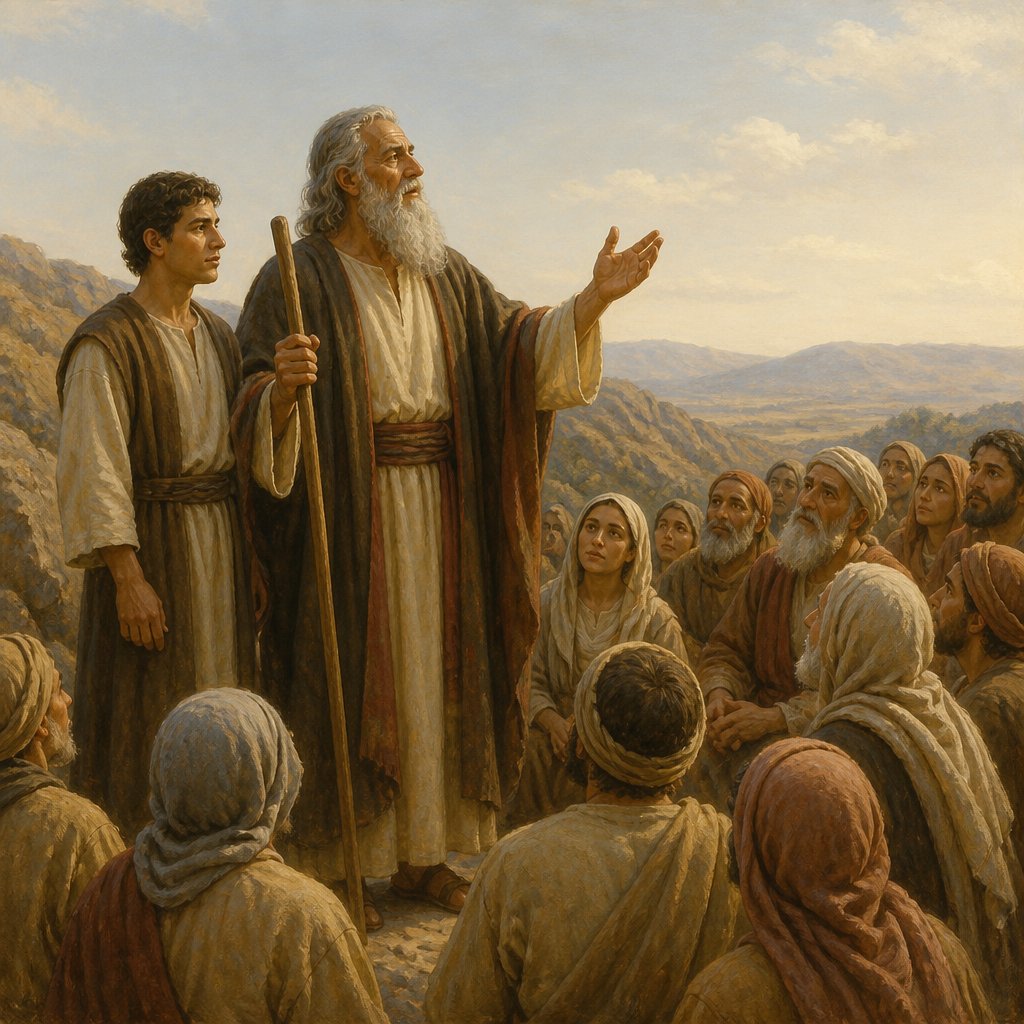
Deuteronomy 32:44 states, "And Moses came and spake all the words of this song in the ears of the people, he, and Hoshea the son of Nun." This verse encapsulates a pivotal moment in the history of the Israelites, as well as a profound reminder of the importance of remembrance and testimony that spans across generations.
Moses, as the great leader and servant of God, had spent over forty years guiding the Israelites through the wilderness. He had witnessed their struggles, their rebellions, and their transformations. As the Israelites stood on the brink of entering the Promised Land, it was imperative that they carried with them both the lessons learned and the songs of praise that defined their journey. The song referred to in this verse—often regarded as the Song of Moses—serves as a reminder of God’s faithfulness, the consequences of disobedience, and the deep love God has for His people.
The act of Moses speaking these words in the ears of the people signifies more than just a recitation of a song; it is a pivotal moment of impartation. Songs, in the biblical context, are powerful vehicles of truth and remembrance. They capture emotions, experiences, and the essence of God's character. Moses, alongside Hoshea (whom we know as Joshua), took on the responsibility of ensuring that the people would not forget their history or the redemptive work of the Almighty.
Consider how songs can linger in our consciousness and shape our identities. In the same way, the words Moses sang reinforced the covenant relationship between God and Israel. This relationship was not based merely on their obedience but on God’s unwavering love and mercy. By sharing this song, Moses was encouraging the Israelites to remember their heritage—to reflect on the faithfulness of God who had brought them out of Egypt and had sustained them through every trial.
As we read Moses' song—found in Deuteronomy 32—we find rich theological depth and poignant imagery that portrays God as both a loving father and a righteous judge. Moses exhorts the Israelites to remember God’s greatness and warns them against complacency and idolatry. He speaks of God’s justice in dealing with sin, yet embodies the hope that comes from turning back in repentance. His message is both prophetic and pastoral; it seeks to build a bridge between the past and the future of God’s people.
Moreover, there’s an aspect of community in this passage that is noteworthy. Moses spoke these words "in the ears of the people." This collective experience was crucial. In an era of individualism, it’s easy to overlook the power of shared faith and communal worship. The song had to be heard and passed on, emphasizing that our faith is not just a private affair but a shared journey. Songs sung in worship, testimonies spoken in fellowship, and prayers shared among believers bind us together in a common understanding of our God who is both near and powerful.
When we gather in church or in our homes, we carry this tradition forward. We must not only sing praises and recount what God has done for us, but we are also called to instill and communicate these truths to the next generation. Our world today, rife with distractions and turmoil, desperately needs to hear of God’s faithfulness—the assurance that He is sovereign and good.
Lastly, let us reflect on who we are in this narrative. Are we the hearers of the song, receiving the legacy of faith, or are we actively participating as leaders, champions of God's truth, ensuring that echoes of faith resonate in our communities? Just as Moses and Hoshea took on this mantle, may we be diligent in our call, singing the songs of God’s truths loudly and clearly, so future generations may also know the stories of God’s grace and His righteous ways.
Moses’ song transcends time, telling of a God who has always been present with His people. May we allow ourselves to be inspired by his faithfulness, wisdom, and courage. In doing so, we affirm our own commitment to sharing and passing on the legacy of God's faithfulness to all who would listen.
Get our apps


Artwork for Deuteronomy 32:44

Deuteronomy 32:44 - "¶ And Moses came and spake all the words of this song in the ears of the people, he, and Hoshea the son of Nun."
"¶ And Moses came and spake all the words of this song in the ears of the people, he, and Hoshea the son of Nun." - Deuteronomy 32:44

Deuteronomy 4:44 - "¶ And this is the law which Moses set before the children of Israel:"

Deuteronomy 32:42

Deuteronomy 32:41

Deuteronomy 32:43

Deuteronomy 32:43

Deuteronomy 32:32 - "For their vine is of the vine of Sodom, and of the fields of Gomorrah: their grapes are grapes of gall, their clusters are bitter:"

Deuteronomy 28:44 - "He shall lend to thee, and thou shalt not lend to him: he shall be the head, and thou shalt be the tail."

Deuteronomy 32:33 - "Their wine is the poison of dragons, and the cruel venom of asps."

Deuteronomy 32:48 - "And the LORD spake unto Moses that selfsame day, saying,"

Deuteronomy 32:28 - "For they are a nation void of counsel, neither is there any understanding in them."

Deuteronomy 32:9 - "For the LORD'S portion is his people; Jacob is the lot of his inheritance."

Deuteronomy 32:45 - "And Moses made an end of speaking all these words to all Israel:"

Deuteronomy 1:32 - "Yet in this thing ye did not believe the LORD your God,"

Deuteronomy 32:37 - "And he shall say, Where are their gods, their rock in whom they trusted,"

"¶ And this is the law which Moses set before the children of Israel:" - Deuteronomy 4:44

Deuteronomy 32:29 - "O that they were wise, that they understood this, that they would consider their latter end!"

Deuteronomy 32:31 - "For their rock is not as our Rock, even our enemies themselves being judges."

Deuteronomy 32:12 - "So the LORD alone did lead him, and there was no strange god with him."

Genesis 44:32 - "For thy servant became surety for the lad unto my father, saying, If I bring him not unto thee, then I shall bear the blame to my father for ever."

Deuteronomy 1:44 - "And the Amorites, which dwelt in that mountain, came out against you, and chased you, as bees do, and destroyed you in Seir, even unto Hormah."

Deuteronomy 32:34 - "Is not this laid up in store with me, and sealed up among my treasures?"

Deuteronomy 32:16 - "They provoked him to jealousy with strange gods, with abominations provoked they him to anger."

Deuteronomy 32:5 - "They have corrupted themselves, their spot is not the spot of his children: they are a perverse and crooked generation."

Deuteronomy 32:40 - "For I lift up my hand to heaven, and say, I live for ever."

"For their vine is of the vine of Sodom, and of the fields of Gomorrah: their grapes are grapes of gall, their clusters are bitter:" - Deuteronomy 32:32

Deuteronomy 32:18 - "Of the Rock that begat thee thou art unmindful, and hast forgotten God that formed thee."

Deuteronomy 32:3 - "Because I will publish the name of the LORD: ascribe ye greatness unto our God."

Deuteronomy 32:23 - "I will heap mischiefs upon them; I will spend mine arrows upon them."