The Breaking of the Tables: A Call to Renewal and Reflection
“And I took the two tables, and cast them out of my two hands, and brake them before your eyes.” — Deuteronomy 9:17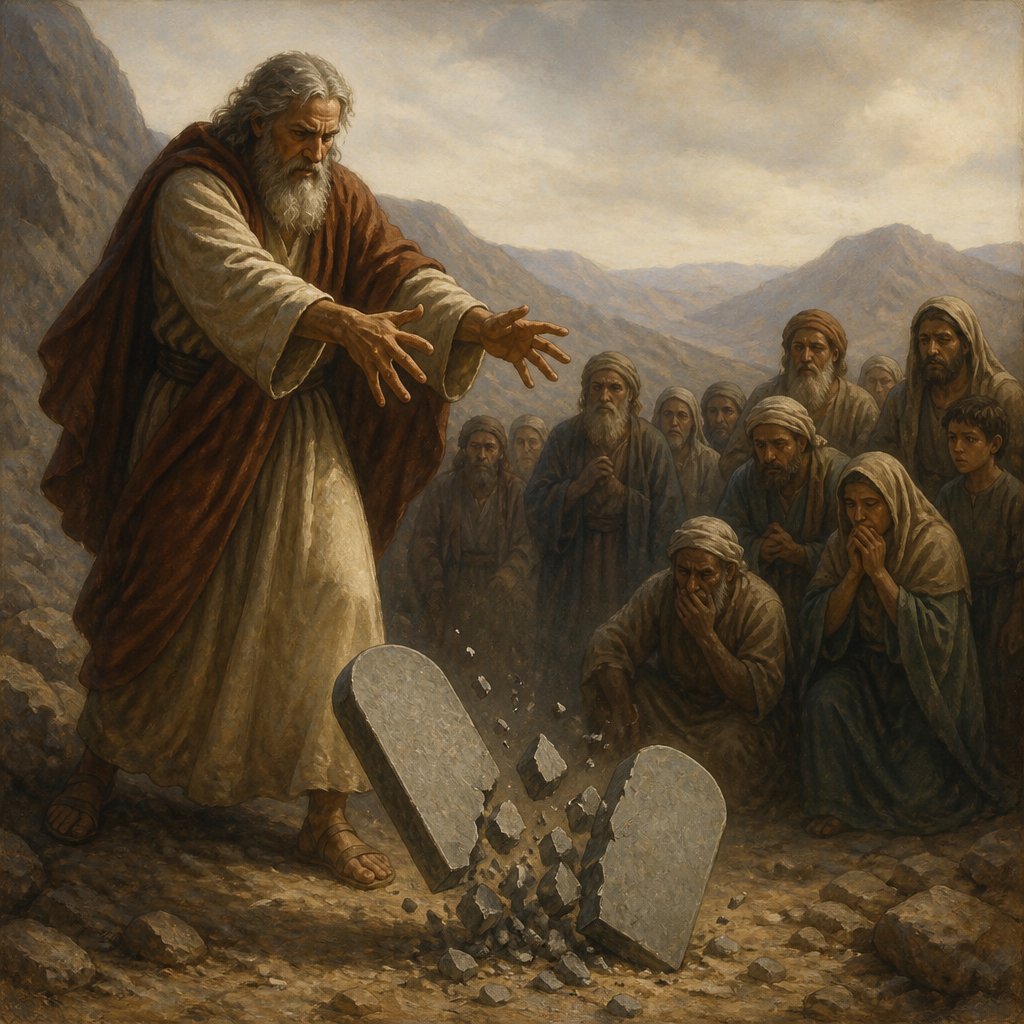
In the book of Deuteronomy, we encounter a powerful moment in the history of Israel, where Moses, the great leader and prophet, recalls the events that transpired after receiving the Ten Commandments on Mount Sinai. The verse we're focusing on today, Deuteronomy 9:17 (KJV), states: "And I took the two tables, and cast them out of my two hands, and brake them before your eyes." This moment is not merely a historical account; it carries deep spiritual significance and offers us profound lessons relevant to our lives today.
At this pivotal juncture, Moses had just received the law from God, inscribed by His own finger on two tablets of stone. However, as he descended the mountain, he encountered a startling sight: the people of Israel had fallen into sin, worshipping a golden calf. Their actions provoked Moses’s righteous anger, leading him to shatter the tablets in frustration and sorrow. This act symbolizes a dramatic rupture in the covenant relationship between God and His people, reflecting themes of rebellion, disappointment, and the dire consequences of turning away from divine commandments.
The act of breaking the tablets serves as a reminder of the seriousness of sin. God had given the Israelites clear instructions to worship Him alone, yet they had chosen the path of idolatry. In our own lives, we often face similar temptations, drawn away by the allure of modern-day idols—materialism, success, relationships, and self-gratification. Like the Israelites, we can quickly forget the greatness of our God and veer off the path of righteousness. The breaking of the tablets urges us to reflect on our own hearts. Are there spiritual “tablets” in our lives that we may be ignoring or breaking through our actions?
Moreover, this moment speaks to the fragility of our relationship with God. The tablets represented the covenant—the sacred agreement between God and the Israelites. By breaking them, Moses demonstrated the gravity of their transgression and the brokenness of their covenantal relationship. Yet, what is profoundly encouraging is the reality that even in our failures and moments of disobedience, God remains committed to restoration. After the breaking comes the renewal, as God later provides Moses with new tablets, symbolizing His unyielding grace and mercy.
As we reflect upon this significant encounter, we are invited to examine the tablets of our own lives. What has been broken? What promises have we made to God, and how have we allowed external influences or internal struggles to lead us astray? In humility, we can turn to God, acknowledging our shortcomings and seeking his forgiveness. This verse teaches us that while the act of breaking is intense and painful, it can also serve as a catalyst for spiritual renewal.
When Moses broke the tablets, he did so in front of the people’s eyes, highlighting the communal aspect of sin and the impact our actions can have on those around us. As disciples of Christ, we are called to be aware of our influence. Our transgressions can lead others to stumble, just as the Israelites stumbled into sin. Conversely, our repentance and commitment to follow God can also inspire renewal and restoration within our communities. As we witness each other’s struggles, let us encourage one another toward righteousness instead of judgment.
Thus, as we meditate on Deuteronomy 9:17, let us remember that our God is a God of second chances. He invites us to bring our brokenness before Him, knowing that He can restore what was shattered. May we approach Him with contrite hearts, ready to embrace His forgiveness and to start afresh.
In conclusion, while Moses’s act of breaking the tablets serves as a very solemn reminder of the consequences of disobedience, it also illuminates the path toward renewal. Let us ponder how we can move forward after our own acts of rebellion, allowing God to mend our brokenness into something beautiful and useful in His kingdom.
Get our apps


Artwork for Deuteronomy 9:17

Deuteronomy 9:17 - "And I took the two tables, and cast them out of my two hands, and brake them before your eyes."
"And I took the two tables, and cast them out of my two hands, and brake them before your eyes." - Deuteronomy 9:17

Deuteronomy 17:9 - "And thou shalt come unto the priests the Levites, and unto the judge that shall be in those days, and enquire; and they shall shew thee the sentence of judgment:"

Deuteronomy 5:17 - "Thou shalt not kill."

Deuteronomy 14:17 - "And the pelican, and the gier eagle, and the cormorant,"

Deuteronomy 2:17 - "That the LORD spake unto me, saying,"

Deuteronomy 28:17 - "Cursed shall be thy basket and thy store."
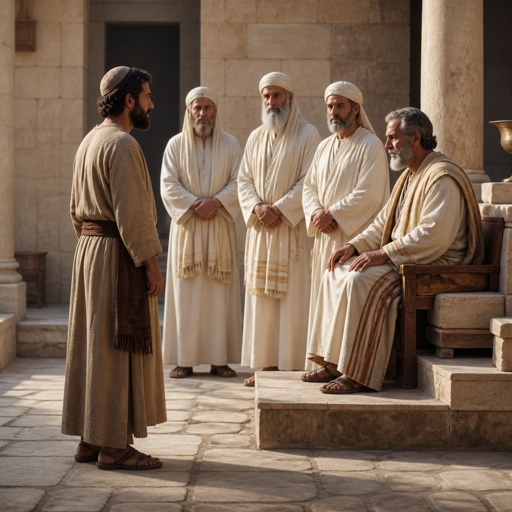
"And thou shalt come unto the priests the Levites, and unto the judge that shall be in those days, and enquire; and they shall shew thee the sentence of judgment:" - Deuteronomy 17:9

"Thou shalt not kill." - Deuteronomy 5:17

Deuteronomy 23:17 - "¶ There shall be no whore of the daughters of Israel, nor a sodomite of the sons of Israel."

Deuteronomy 17:13 - "And all the people shall hear, and fear, and do no more presumptuously."

Deuteronomy 17:17 - "Neither shall he multiply wives to himself, that his heart turn not away: neither shall he greatly multiply to himself silver and gold."

Deuteronomy 4:17 - "The likeness of any beast that is on the earth, the likeness of any winged fowl that flieth in the air,"

"And the pelican, and the gier eagle, and the cormorant," - Deuteronomy 14:17

Deuteronomy 18:17 - "And the LORD said unto me, They have well spoken that which they have spoken."

Deuteronomy 27:17 - "Cursed be he that removeth his neighbour's landmark. And all the people shall say, Amen."

Deuteronomy 32:9 - "For the LORD'S portion is his people; Jacob is the lot of his inheritance."

Deuteronomy 3:9 - "(Which Hermon the Sidonians call Sirion; and the Amorites call it Shenir;)"

Deuteronomy 9:22 - "And at Taberah, and at Massah, and at Kibroth-hattaavah, ye provoked the LORD to wrath."

Rev 9:17

"That the LORD spake unto me, saying," - Deuteronomy 2:17

Deuteronomy 24:17 - "¶ Thou shalt not pervert the judgment of the stranger, nor of the fatherless; nor take a widow's raiment to pledge:"

Genesis 17:9

Deuteronomy 29:17 - "And ye have seen their abominations, and their idols, wood and stone, silver and gold, which were among them:)"

Deuteronomy 8:17 - "And thou say in thine heart, My power and the might of mine hand hath gotten me this wealth."

Deuteronomy 25:17 - "¶ Remember what Amalek did unto thee by the way, when ye were come forth out of Egypt;"

Deuteronomy 6:9 - "And thou shalt write them upon the posts of thy house, and on thy gates."

Deuteronomy 7:17 - "If thou shalt say in thine heart, These nations are more than I; how can I dispossess them?"

Deuteronomy 17:4 - "And it be told thee, and thou hast heard of it, and enquired diligently, and, behold, it be true, and the thing certain, that such abomination is wrought in Israel:"

"Cursed shall be thy basket and thy store." - Deuteronomy 28:17