Wisdom for Leadership: The Perils of Childish Rule
“Woe to thee, O land, when thy king is a child, and thy princes eat in the morning!” — Ecclesiastes 10:16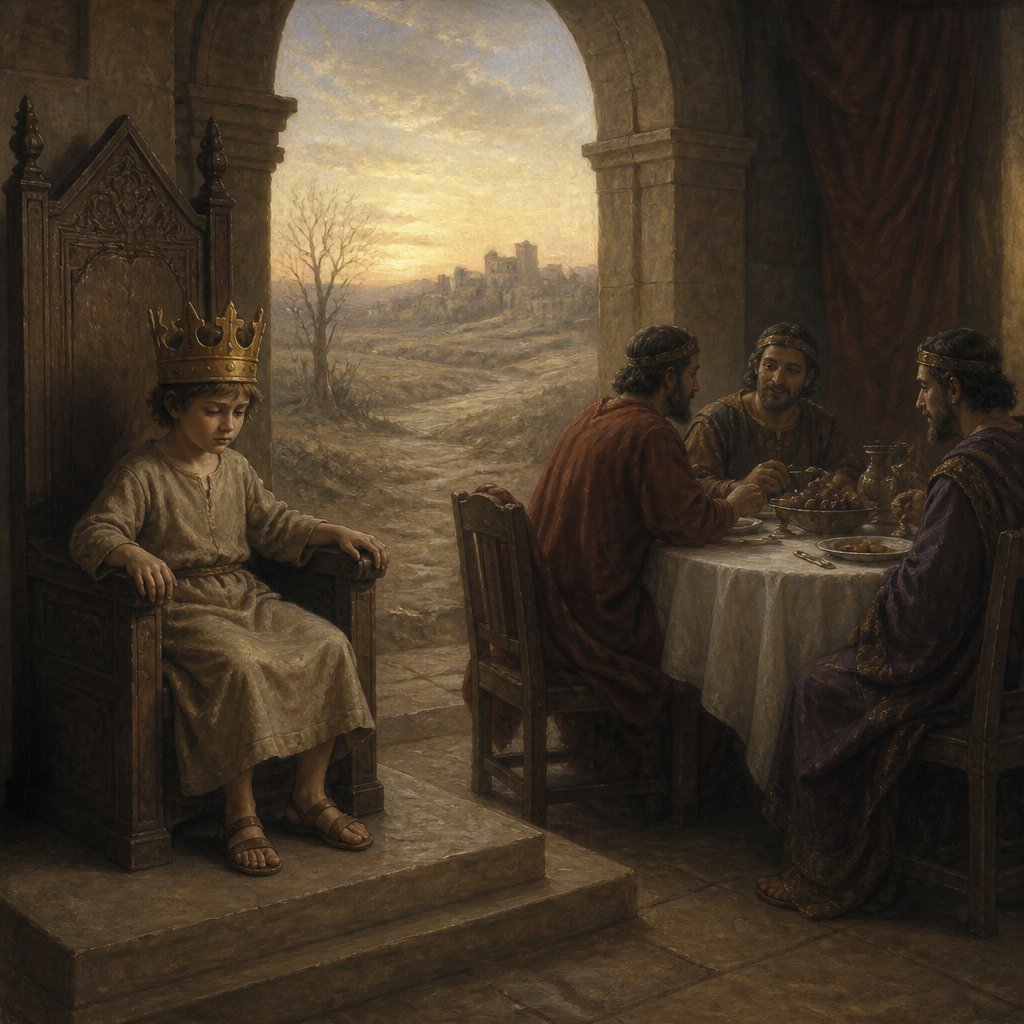
The book of Ecclesiastes, attributed to the great King Solomon, presents to us a somber view of life under the sun, highlighting the vanity of human endeavors and the ultimate meaninglessness of existence without God. In chapter 10, verse 16, we encounter a stark warning: "Woe to thee, O land, when thy king is a child, and thy princes eat in the morning!" This verse captures profound truths about leadership, maturity, and the consequences of folly in governance.
To fully understand this verse, we must first consider what it means for a king to be a "child". In this context, it describes a ruler who lacks wisdom, maturity, and discernment. A king governs not just for himself, but for the people of his land, and his decisions can lead to either prosperity or ruin. Solomon warns that when leaders are immature, they are unable to make wise choices that will benefit their people. Instead of navigating the complexities of governance with understanding and shrewdness, a childish king may indulge in whims and desires that serve his immediate gratification rather than the welfare of his kingdom.
The phrase "thy princes eat in the morning" further emphasizes the immaturity of the leadership. Traditionally, eating breakfast, especially for those in power, is a sign of indulgence and excess. It is suggestive of laziness and a lack of responsibility. In ancient cultures, leaders were expected to be disciplined—rising early to work for the good of their people, not indulging in lavish feasting first thing in the day. The implication here is that a king who is focused on indulgence, particularly in a time when he should be addressing the needs and concerns of his kingdom, shows a glaring lack of seriousness about leadership and its responsibilities.
In our contemporary context, this verse serves as a cautionary tale about the nature of our own leaders. We must consider the attributes that define leadership in our communities, nations, and even within our churches. Are our leaders mature, wise, and equipped to face the challenges before them? Are they committed to serving the interests of those they lead, or are they preoccupied with personal gain and gratification? The consequences of putting immature leaders in positions of authority can be devastating, leading to poor decisions that eventually bring hardship upon the people.
Yet, there’s more to this scripture than simply a critique of poor leadership; it reflects a deeper search for wisdom and discernment. In James 1:5, we’re encouraged that if we lack wisdom, we should ask God, who gives generously to all without finding fault. As believers, we must strive to be wise in our own lives and support leaders who exhibit godly wisdom and maturity. We should pray for those in authority, that they would seek divine guidance and grow in understanding.
Furthermore, there’s an application for each of us in our daily lives. Regardless of our positions, we must embody the essence of maturity—practicing patience, humility, and the pursuit of wisdom. In our own spheres of influence, cultivating these traits can create an atmosphere of conscientious leadership that impacts not only our own lives but also those around us.
As we reflect on Ecclesiastes 10:16, let us consider the state of our leadership at all levels. Let us commit to praying for our leaders, that they may lead with wisdom and integrity. And let’s hold ourselves accountable to live out our own lives with maturity, always striving to seek wisdom in our decisions and actions. For a land will flourish under leaders who embody the maturity necessary to guide it wisely, and ultimately, it is under the Lord’s guidance that we find true wisdom.
Get our apps


Artwork for Ecclesiastes 10:16

Ecclesiastes 10:16 - "¶ Woe to thee, O land, when thy king is a child, and thy princes eat in the morning!"
"¶ Woe to thee, O land, when thy king is a child, and thy princes eat in the morning!" - Ecclesiastes 10:16

Ecclesiastes 10:10 - "If the iron be blunt, and he do not whet the edge, then must he put to more strength: but wisdom is profitable to direct."

Ecclesiastes 10:6 - "Folly is set in great dignity, and the rich sit in low place."

Ecclesiastes 10:11 - "Surely the serpent will bite without enchantment; and a babbler is no better."

Ecclesiastes 3:16 - "¶ And moreover I saw under the sun the place of judgment, that wickedness was there; and the place of righteousness, that iniquity was there."

Ecclesiastes 10:18 - "¶ By much slothfulness the building decayeth; and through idleness of the hands the house droppeth through."

Ecclesiastes 10:19 - "¶ A feast is made for laughter, and wine maketh merry: but money answereth all things."

Ecclesiastes 10:12 - "The words of a wise man's mouth are gracious; but the lips of a fool will swallow up himself."

Ecclesiastes 10:13 - "The beginning of the words of his mouth is foolishness: and the end of his talk is mischievous madness."

Ecclesiastes 10:2 - "A wise man's heart is at his right hand; but a fool's heart at his left."

Ecclesiastes 7:16 - "Be not righteous over much; neither make thyself over wise: why shouldest thou destroy thyself?"

Ecclesiastes 10:5 - "There is an evil which I have seen under the sun, as an error which proceedeth from the ruler:"

Ecclesiastes 12:10 - "The preacher sought to find out acceptable words: and that which was written was upright, even words of truth."

Ecclesiastes 10:15 - "The labour of the foolish wearieth every one of them, because he knoweth not how to go to the city."

Ecclesiastes 10:7 - "I have seen servants upon horses, and princes walking as servants upon the earth."

Ecclesiastes 3:10 - "I have seen the travail, which God hath given to the sons of men to be exercised in it."

Ecclesiastes 9:16 - "Then said I, Wisdom is better than strength: nevertheless the poor man's wisdom is despised, and his words are not heard."

Ecclesiastes 5:10 - "He that loveth silver shall not be satisfied with silver; nor he that loveth abundance with increase: this is also vanity."

Ecclesiastes 10:8 - "He that diggeth a pit shall fall into it; and whoso breaketh an hedge, a serpent shall bite him."

Ecclesiastes 10:9 - "Whoso removeth stones shall be hurt therewith; and he that cleaveth wood shall be endangered thereby."

Ecclesiastes 10:4 - "If the spirit of the ruler rise up against thee, leave not thy place; for yielding pacifieth great offences."

Ecclesiastes 1:10 - "Is there any thing whereof it may be said, See, this is new? it hath been already of old time, which was before us."

Ecclesiastes 7:10 - "Say not thou, What is the cause that the former days were better than these? for thou dost not enquire wisely concerning this."

"Surely the serpent will bite without enchantment; and a babbler is no better." - Ecclesiastes 10:11

Ecclesiastes 11:10 - "Therefore remove sorrow from thy heart, and put away evil from thy flesh: for childhood and youth are vanity."

Ecclesiastes 6:10 - "That which hath been is named already, and it is known that it is man: neither may he contend with him that is mightier than he."

Ecclesiastes 5:16 - "And this also is a sore evil, that in all points as he came, so shall he go: and what profit hath he that hath laboured for the wind?"

Ecclesiastes 10:17 - "Blessed art thou, O land, when thy king is the son of nobles, and thy princes eat in due season, for strength, and not for drunkenness!"

Ecclesiastes 2:16 - "For there is no remembrance of the wise more than of the fool for ever; seeing that which now is in the days to come shall all be forgotten. And how dieth the wise man? as the fool."