The House of Our Lives: A Reflection on Ecclesiastes 12:3
“In the day when the keepers of the house shall tremble, and the strong men shall bow themselves, and the grinders cease because they are few, and those that look out of the windows be darkened,” — Ecclesiastes 12:3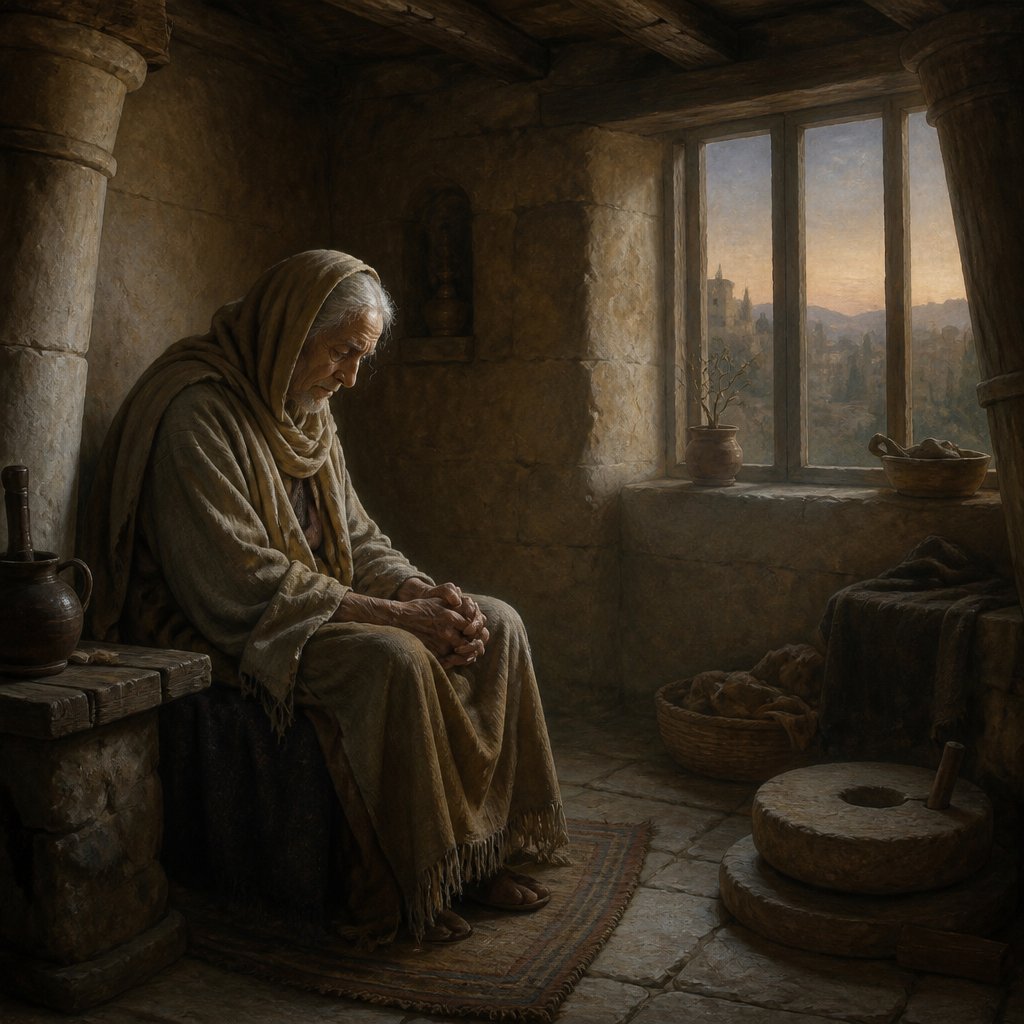
As we journey through life, we often find ourselves reflecting upon the transient nature of our existence and the gradual weariness that accompanies aging. In the poignant words of Ecclesiastes 12:3, we read: "In the day when the keepers of the house shall tremble, and the strong men shall bow themselves, and the grinders cease because they are few, and those that look out of the windows be darkened." This verse, rich in metaphor and imagery, invites us to meditate on both the inevitability of our earthly decay and the deep spiritual truths hidden within.
The phrase "the keepers of the house shall tremble" evokes the image of those who guard and nurture our lives. In a literal sense, these 'keepers' could symbolize our physical body—our flesh, bones, and senses. As we age, these keepers start to lose their strength. The tremor signifies vulnerability. We find ourselves increasingly aware of our limitations as our bodies fatigue. But more than just the physical, these keepers also represent our mental and emotional state. Anxiety, fear, and uncertainty can cloud our minds. We tremble, not only out of physical weakness but also from the realization of our finite nature. Are we prepared for what lies beyond this life?
Next, the imagery of "the strong men shall bow themselves" reflects the strength we once had, now yielding to the weight of time and circumstance. The strong men symbolize not only the physical prowess of youth but also our spiritual and emotional resoluteness. In our younger days, we may have faced life's challenges head-on, full of vigor and confidence. However, as we experience the trials of life—loss, heartache, and disillusionments—our strong facade begins to bow under the pressure. It is a humbling experience to recognize our own limitations, and in these moments, we are called to reflect on where we derive our strength. Are we leaning on our own understanding, or are we relying on the steadfastness of God?
Continuing, the verse mentions, "the grinders cease because they are few." Here, we might be reminded of the things we once took for granted. The grinders often symbolize our teeth, the tools we use to partake of life’s bounty. As they become few, it signifies a time when we can no longer enjoy the richness of food nor the sweet taste of life’s experiences. This can lead us to further contemplation about the things that once satisfied our souls and the inevitable decline of vitality. What are we feasting on? Are we consuming life in its fullness, or have we allowed a spirit of resignation to overshadow our joy?
Furthermore, the phrase "those that look out of the windows be darkened" carries profound implications. The windows of our lives represent our vision and perception. When we gaze out at the world, we hope to see light, possibility, and hope. However, as we age and face the realities of life, those windows can become clouded and darkened. We may begin to view the world through a lens of despair, focusing on the limitations rather than the blessings. In our darkest moments, we must seek God’s light to clear our vision. In Isaiah 60:1, we are reminded to "Arise, shine; for thy light is come, and the glory of the Lord is risen upon thee." There is hope beyond the aging process; there is illumination to be found.
Ultimately, Ecclesiastes 12:3 urges us to consider the delicate nature of life and the inevitability of aging, but it does not call us to despair. Instead, it invites introspection and reassessment of where we place our trust. Life's seasons will change, and we will face vulnerability, but we are promised strength in our weakness (2 Corinthians 12:9). May we learn to embrace our life’s journey with grace, finding hope in the steadfast love of God that anchors us in every season. As we age and our keepers tremble and our strong men bow, let us not forget that we have a divine source of hope and strength that will never fade.
Get our apps


Artwork for Ecclesiastes 12:3

Ecclesiastes 12:3 - "In the day when the keepers of the house shall tremble, and the strong men shall bow themselves, and the grinders cease because they are few, and those that look out of the windows be darkened,"
"In the day when the keepers of the house shall tremble, and the strong men shall bow themselves, and the grinders cease because they are few, and those that look out of the windows be darkened," - Ecclesiastes 12:3

Ecclesiastes 3:12 - "I know that there is no good in them, but for a man to rejoice, and to do good in his life."

"I know that there is no good in them, but for a man to rejoice, and to do good in his life." - Ecclesiastes 3:12

ecclesiastes 12:1

ecclesiastes 12:1

Ecclesiastes 3:12-13 - "I know that there is nothing better for people than to be happy and to do good while they live. That each of them may eat and drink, and find satisfaction in all their toil—this is the gift of God."

ecclesiastes 12:1

ecclesiastes 12:1-8

ecclesiastes 12:2-6

ecclesiastes 12:1-8

ecclesiastes 12:1-8

ecclesiastes 12:1-8

ecclesiastes 12:1-8

Ecclesiastes 3:1

Ecclesiastes 1:12 - "¶ I the Preacher was king over Israel in Jerusalem."

Ecclesiastes 12:8 - "¶ Vanity of vanities, saith the preacher; all is vanity."

Ecclesiastes 12:12 - "And further, by these, my son, be admonished: of making many books there is no end; and much study is a weariness of the flesh."

Ecclesiastes 3:3 - "A time to kill, and a time to heal; a time to break down, and a time to build up;"

Ecclesiastes 3:7-8
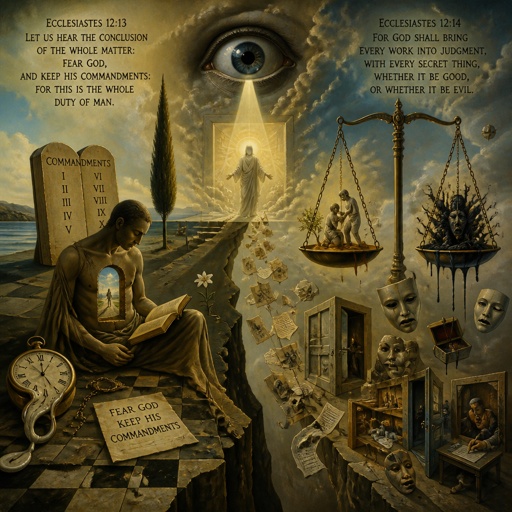
Ecclesiastes 12:13 Let us hear the conclusion of the whole matter: Fear God, and keep his commandments: for this is the whole duty of man. Ecclesiastes 12:14 For God shall bring every work into judgment, with every secret thing, whether it be good, or whether it be evil.
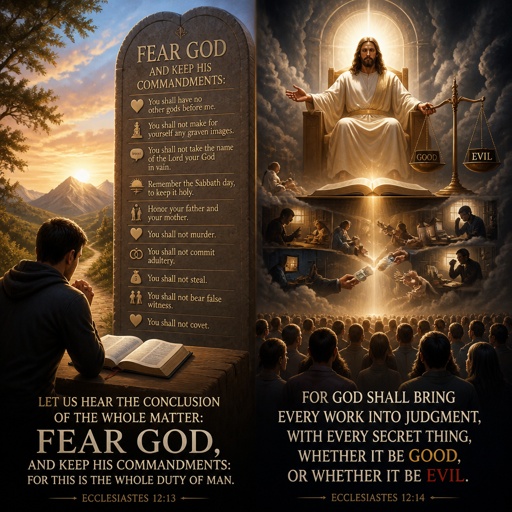
Ecclesiastes 12:13 Let us hear the conclusion of the whole matter: Fear God, and keep his commandments: for this is the whole duty of man. Ecclesiastes 12:14 For God shall bring every work into judgment, with every secret thing, whether it be good, or whether it be evil.

Ecclesiastes 3:1 – "There is a time for everything, and a season for every activity under the heavens."

Ecclesiastes 3:1 - "To every thing there is a season, and a time to every purpose under the heaven:"

Ecclesiastes 3:9 - "What profit hath he that worketh in that wherein he laboureth?"

Ecclesiastes 3:4 - "A time to weep, and a time to laugh; a time to mourn, and a time to dance;"

Ecclesiastes 3:8 - "A time to love, and a time to hate; a time of war, and a time of peace."

Ecclesiastes 12:7 - "Then shall the dust return to the earth as it was: and the spirit shall return unto God who gave it."

Ecclesiastes 10:12 - "The words of a wise man's mouth are gracious; but the lips of a fool will swallow up himself."

Ecclesiastes 3:6 - "A time to get, and a time to lose; a time to keep, and a time to cast away;"