The Weight of Labor: Finding Purpose Beyond the Pursuit of Legacy
“Yea, I hated all my labour which I had taken under the sun: because I should leave it unto the man that shall be after me.” — Ecclesiastes 2:18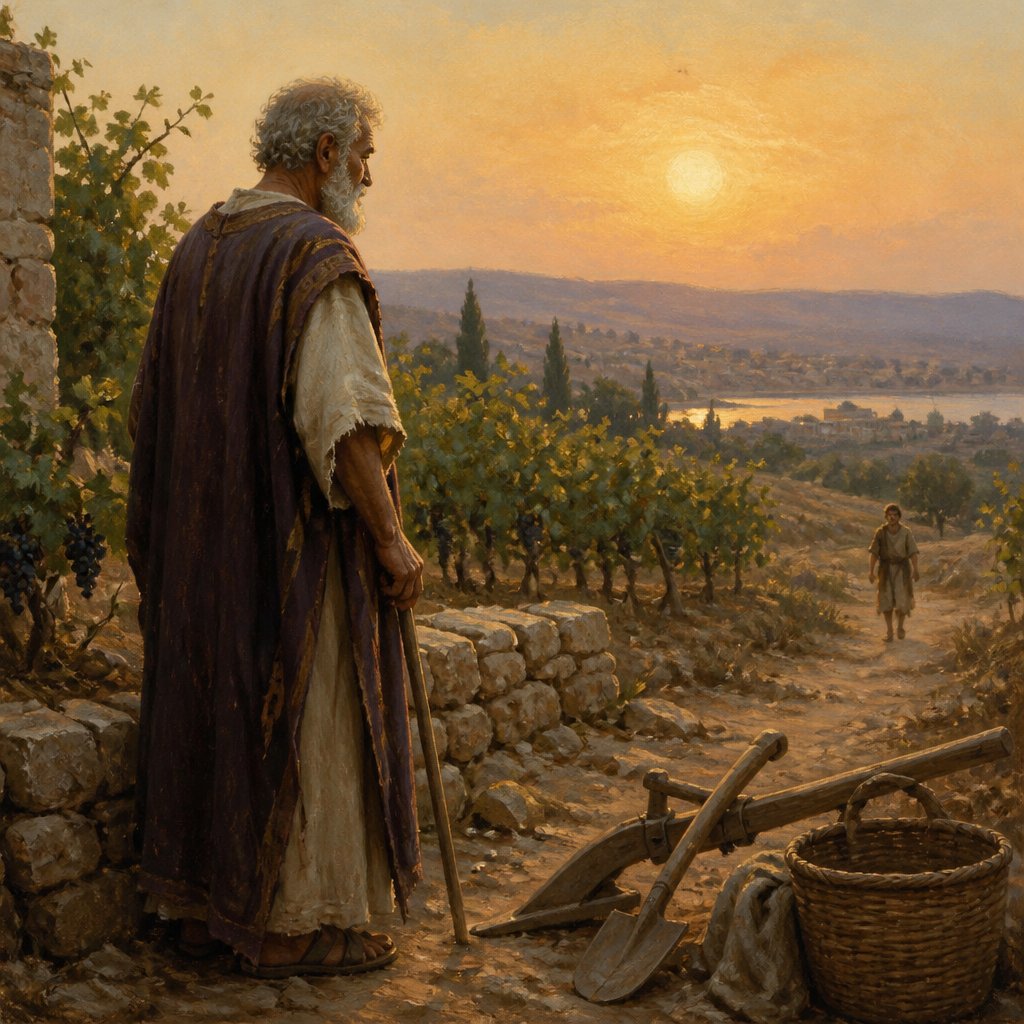
In the quiet moments of reflection, the words of Ecclesiastes 2:18 echo profoundly: "Yea, I hated all my labour which I had taken under the sun: because I should leave it unto the man that shall be after me." These words are not mere expressions of regret but revelations of the human condition and the weight of our endeavors. The writer, traditionally identified as King Solomon, confronts the futility of labor when viewed solely through the lens of material gain and legacy.
As we traverse through life, it is easy to become consumed by our daily struggles, the relentless pursuit of success, and the accumulation of wealth and status. In the modern world, where productivity often defines worth, the relentless grind can lead to a sense of emptiness. Solomon, a man of vast wisdom and resources, finds that despite his significant achievements, there lies a greater truth — that our labor may ultimately be unfulfilling and fleeting.
This stark realization invites us to ponder the very nature of our work. What drives us in our endeavors? Is it the desire to build a legacy that will be carried on by those who come after us? Solomon’s lament reflects a deep existential concern: will our hard work truly matter if it is ultimately passed into the hands of another? The answer lies not just in the pursuit itself, but in the greater purpose behind it.
To labor "under the sun" suggests that we often operate within a limited scope, focusing merely on what is tangible and immediately gratifying. Ecclesiastes challenges us to rise above this earthly perspective. Our culture often measures success through the lens of wealth and recognition, but the consequences of this mentality lead to despair when we consider that our lives are temporary, and our accomplishments can be lost or forgotten. Solomon’s reflection is a powerful reminder that what we chase after can become our greatest source of frustration if divorced from a higher calling.
In contemplating Solomon’s angst, we can derive an important lesson: meaningful labor must transcend the fleeting. Indeed, most of what we achieve in life is destined to be inherited or forgotten. However, the pressure to leave a legacy can stifle our peace and joy in our current endeavors. Instead, if we reframe our understanding of labor, we could approach our work with a sense of God-given purpose — one that finds satisfaction in the process rather than the end results.
The phrase "under the sun" recurs throughout Ecclesiastes, indicating his focus on worldly pursuits. We are invited to challenge this notion by seeking a divine perspective. What if our labor was not merely a means to an end, but a pathway to worship? Colossians 3:23 encourages us, "And whatsoever ye do, do it heartily, as to the Lord, and not unto men." This verse reminds us that the true value of our work is not in its recognition or legacy, but in the devotion behind it — a devotion that honors God.
As we labor, we should maintain an eternal perspective, recognizing that our time on this Earth is fleeting. Our work can become an avenue for service, for relating to others, and for glorifying God. It is within this frame that we find true purpose and fulfillment. When we come to understand that our labor has intrinsic value that is seen and cherished by the Father, we are set free from the burden of fearing the future or what is to come after us.
In light of this, let us embrace our labor, transforming it from a source of frustration into a joyful offering. Let us remind ourselves that even when our actions seem invisible or inconsequential, they are part of a greater tapestry — a divine plan that far exceeds our comprehension. May we come to recognize that our identity is not in what we build or leave behind but in our relationship with God as we live out our days seeking to honor Him in every effort. Thus, we can fulfill the calling to labor with confidence and contentment, creating an everlasting impact through our faithfulness, rather than through our accolades.
Get our apps


Artwork for Ecclesiastes 2:18

Ecclesiastes 2:18 - "¶ Yea, I hated all my labour which I had taken under the sun: because I should leave it unto the man that shall be after me."
"¶ Yea, I hated all my labour which I had taken under the sun: because I should leave it unto the man that shall be after me." - Ecclesiastes 2:18

Ecclesiastes 1:18 - "For in much wisdom is much grief: and he that increaseth knowledge increaseth sorrow."

Ecclesiastes 10:18 - "¶ By much slothfulness the building decayeth; and through idleness of the hands the house droppeth through."

Ecclesiastes 9:18 - "Wisdom is better than weapons of war: but one sinner destroyeth much good."

Ecclesiastes 2:2 - "I said of laughter, It is mad: and of mirth, What doeth it?"

ecclesiastes 12:2-6

Ecclesiastes 3:18 - "I said in mine heart concerning the estate of the sons of men, that God might manifest them, and that they might see that they themselves are beasts."

Ecclesiastes 7:18 - "It is good that thou shouldest take hold of this; yea, also from this withdraw not thine hand: for he that feareth God shall come forth of them all."

Ecclesiastes 1:2 - "Vanity of vanities, saith the Preacher, vanity of vanities; all is vanity."

"For in much wisdom is much grief: and he that increaseth knowledge increaseth sorrow." - Ecclesiastes 1:18

Ecclesiastes 2:13 - "Then I saw that wisdom excelleth folly, as far as light excelleth darkness."

Ecclesiastes 8:2 - "I counsel thee to keep the king's commandment, and that in regard of the oath of God."

"¶ By much slothfulness the building decayeth; and through idleness of the hands the house droppeth through." - Ecclesiastes 10:18

"Wisdom is better than weapons of war: but one sinner destroyeth much good." - Ecclesiastes 9:18

Ecclesiastes 3:2 - "A time to be born, and a time to die; a time to plant, and a time to pluck up that which is planted;"

Ecclesiastes 2:25 - "For who can eat, or who else can hasten hereunto, more than I?"

Ecclesiastes 10:2 - "A wise man's heart is at his right hand; but a fool's heart at his left."

"I said of laughter, It is mad: and of mirth, What doeth it?" - Ecclesiastes 2:2

Ecclesiastes 2:5 - "I made me gardens and orchards, and I planted trees in them of all kind of fruits:"

Ecclesiastes 2:6 - "I made me pools of water, to water therewith the wood that bringeth forth trees:"

"While the sun, or the light, or the moon, or the stars, be not darkened, nor the clouds return after the rain:" - Ecclesiastes 12:2

Ecclesiastes 12:2 - "While the sun, or the light, or the moon, or the stars, be not darkened, nor the clouds return after the rain:"

Ecclesiastes 2:4 - "I made me great works; I builded me houses; I planted me vineyards:"

Ecclesiastes 4:2 - "Wherefore I praised the dead which are already dead more than the living which are yet alive."

Ecclesiastes 11:2 - "Give a portion to seven, and also to eight; for thou knowest not what evil shall be upon the earth."

Ecclesiastes 2:22 - "For what hath man of all his labour, and of the vexation of his heart, wherein he hath laboured under the sun?"

Ecclesiastes 2:20 - "Therefore I went about to cause my heart to despair of all the labour which I took under the sun."

Ecclesiastes 5:18 - "¶ Behold that which I have seen: it is good and comely for one to eat and to drink, and to enjoy the good of all his labour that he taketh under the sun all the days of his life, which God giveth him: for it is his portion."

Ecclesiastes 2:1 - "I said in mine heart, Go to now, I will prove thee with mirth, therefore enjoy pleasure: and, behold, this also is vanity."