The Vanity of Our Labor: A Reflection on Ecclesiastes 2:19
"And who knoweth whether he shall be a wise man or a fool? yet shall he have rule over all my labour wherein I have laboured, and wherein I have shewed myself wise under the sun. This is also vanity." - Ecclesiastes 2:19
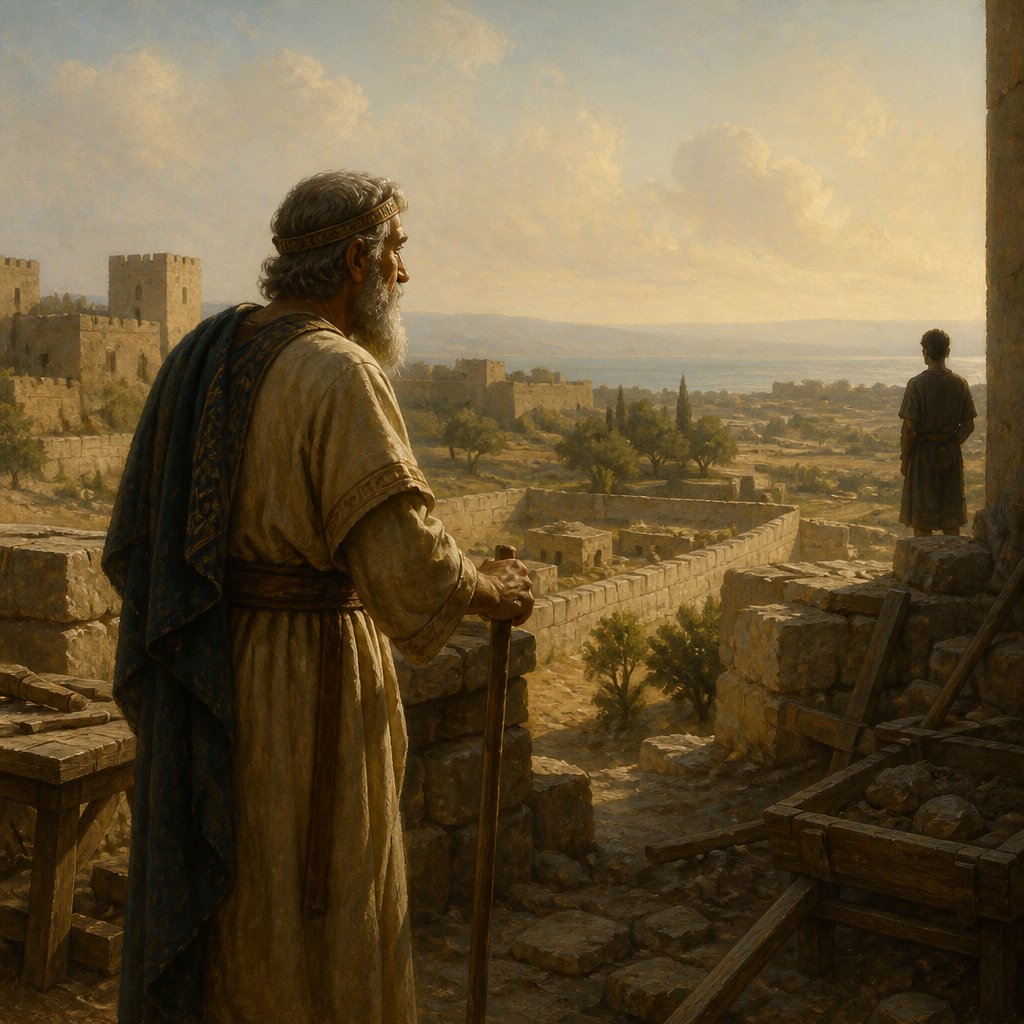
As we turn our gaze to the words of Ecclesiastes 2:19, we are reminded of the fleeting nature of life and the uncertainty that accompanies our earthly endeavors. The verse states: "And who knoweth whether he shall be a wise man or a fool? yet shall he have rule over all my labour wherein I have laboured, and wherein I have shewed myself wise under the sun. This is also vanity." In this powerful statement, Solomon, the writer of Ecclesiastes, wrestles with the perplexities of wisdom, labor, and the ultimate fruitlessness of human toil.
Solomon’s inquiry into the unknown—whether the one who will take over his work will be wise or foolish—echoes through the ages. As we grasp the significance of these words, let us first recognize the context in which they were written. Solomon, the man renowned for his wisdom, wealth, and achievements, reflects upon the vanity of life and the futility that often accompanies our hard work. In this chaotic world, we invest so much time, energy, and passion into our labors, believing that we are cultivating a legacy—a tangible outcome of our efforts. Yet, in the end, we realize that control over our outcomes is an illusion.
Who among us, after investing years into a career or a project, has not pondered this very question? We put our heart and soul into what we create, but the reality remains: we often have no say over who comes after us. The next steward of our hard work might be wise and continue our legacy or perhaps be a fool who squanders it all. This uncertainty breeds anxiety and frustration, leading us to question whether our efforts are worth the trouble. In the grand tapestry of life, we see a thread that suggests the apparent futility of our striving.
In recognizing this vanity, we must also confront our motivations. Are we laboring to make a name for ourselves? To secure our place in the annals of history? Or are we working for a higher purpose that transcends our personal legacy? Paul writes in 1 Corinthians 3:13-14 (KJV), "Every man's work shall be made manifest: for the day shall declare it, because it shall be revealed by fire; and the fire shall try every man's work of what sort it is. If any man's work abide which he hath built thereupon, he shall receive a reward." This perspective encourages us to view our labor through an eternal lens.
When Solomon calls this striving “vanity,” he does not suggest that our work has no value. Rather, he beckons us to understand its nature: temporal and transient. Our earthly labor has significance, but it should not be the sole foundation of our identity or purpose. Instead, we should seek to invest in things that endure—relationships, service, and a heart aligned with God's will. Our labor should stem from a desire to glorify Him in all things. Colossians 3:23 (KJV) reminds us, "And whatsoever ye do, do it heartily, as to the Lord, and not unto men."
Moreover, embracing the truth of Ecclesiastes 2:19 encourages us to shift our perspective on wisdom itself. The wisdom we cultivate can often lead us toward peace, understanding, and a deeper walk with God. While we may not be able to choose the hands that will take over our labor, we can choose to leave a legacy of love, faith, and righteousness that surpasses the measures of success defined by the world.
In conclusion, as we labor beneath the sun, let us do so with humble hearts, recognizing the temporality of our endeavors. May we find comfort in knowing that even if our earthly works are one day taken up by fools, our eternal reward lies in faithfully serving God. Therefore, let us labor not for the accolades of men but for the glory of God, knowing that our efforts are not in vain in His kingdom.
Want to reflect more on Ecclesiastes 2:19?
Continue your spiritual journey with Bible Chat — an AI-powered tool for exploring God's Word through conversation. Ask questions, discover connections, and deepen your understanding.
Get Our Apps


Ecclesiastes 2:19 Artwork

Ecclesiastes 2:19 - "And who knoweth whether he shall be a wise man or a fool? yet shall he have rule over all my labour wherein I have laboured, and wherein I have shewed myself wise under the sun. This is also vanity."
"And who knoweth whether he shall be a wise man or a fool? yet shall he have rule over all my labour wherein I have laboured, and wherein I have shewed myself wise under the sun. This is also vanity." - Ecclesiastes 2:19

Ecclesiastes 10:19 - "¶ A feast is made for laughter, and wine maketh merry: but money answereth all things."

Ecclesiastes 7:19 - "Wisdom strengtheneth the wise more than ten mighty men which are in the city."

Ecclesiastes 2:2 - "I said of laughter, It is mad: and of mirth, What doeth it?"

ecclesiastes 12:2-6

Ecclesiastes 1:2 - "Vanity of vanities, saith the Preacher, vanity of vanities; all is vanity."

Ecclesiastes 2:13 - "Then I saw that wisdom excelleth folly, as far as light excelleth darkness."

Ecclesiastes 8:2 - "I counsel thee to keep the king's commandment, and that in regard of the oath of God."

"Wisdom strengtheneth the wise more than ten mighty men which are in the city." - Ecclesiastes 7:19
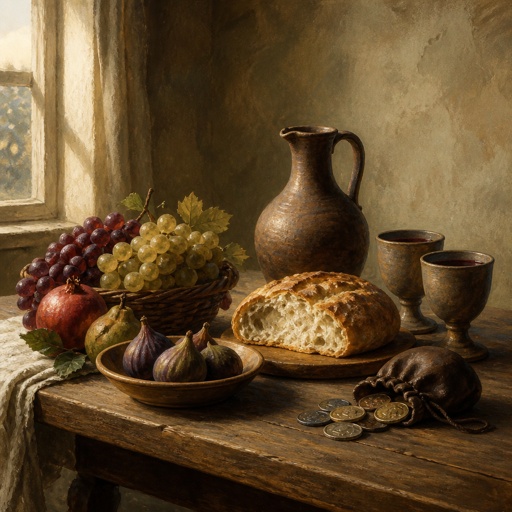
"¶ A feast is made for laughter, and wine maketh merry: but money answereth all things." - Ecclesiastes 10:19

Ecclesiastes 5:19 - "Every man also to whom God hath given riches and wealth, and hath given him power to eat thereof, and to take his portion, and to rejoice in his labour; this is the gift of God."

Ecclesiastes 3:2 - "A time to be born, and a time to die; a time to plant, and a time to pluck up that which is planted;"

Ecclesiastes 2:25 - "For who can eat, or who else can hasten hereunto, more than I?"

Ecclesiastes 10:2 - "A wise man's heart is at his right hand; but a fool's heart at his left."

"I said of laughter, It is mad: and of mirth, What doeth it?" - Ecclesiastes 2:2

Ecclesiastes 2:5 - "I made me gardens and orchards, and I planted trees in them of all kind of fruits:"

Ecclesiastes 2:6 - "I made me pools of water, to water therewith the wood that bringeth forth trees:"

"While the sun, or the light, or the moon, or the stars, be not darkened, nor the clouds return after the rain:" - Ecclesiastes 12:2

Ecclesiastes 12:2 - "While the sun, or the light, or the moon, or the stars, be not darkened, nor the clouds return after the rain:"

Ecclesiastes 2:4 - "I made me great works; I builded me houses; I planted me vineyards:"

Ecclesiastes 4:2 - "Wherefore I praised the dead which are already dead more than the living which are yet alive."

Ecclesiastes 11:2 - "Give a portion to seven, and also to eight; for thou knowest not what evil shall be upon the earth."

Ecclesiastes 2:22 - "For what hath man of all his labour, and of the vexation of his heart, wherein he hath laboured under the sun?"

Ecclesiastes 2:20 - "Therefore I went about to cause my heart to despair of all the labour which I took under the sun."

Ecclesiastes 3:19 - "For that which befalleth the sons of men befalleth beasts; even one thing befalleth them: as the one dieth, so dieth the other; yea, they have all one breath; so that a man hath no preeminence above a beast: for all is vanity."

Ecclesiastes 2:1 - "I said in mine heart, Go to now, I will prove thee with mirth, therefore enjoy pleasure: and, behold, this also is vanity."

Ecclesiastes 7:2 - "¶ It is better to go to the house of mourning, than to go to the house of feasting: for that is the end of all men; and the living will lay it to his heart."

Ecclesiastes 2:23 - "For all his days are sorrows, and his travail grief; yea, his heart taketh not rest in the night. This is also vanity."

Ecclesiastes 2:14 - "The wise man's eyes are in his head; but the fool walketh in darkness: and I myself perceived also that one event happeneth to them all."