Strength in Togetherness: The Power of Fellowship
"For if they fall, the one will lift up his fellow: but woe to him that is alone when he falleth; for he hath not another to help him up." - Ecclesiastes 4:10

Ecclesiastes 4:10 states, "For if they fall, the one will lift up his fellow: but woe to him that is alone when he falleth; for he hath not another to help him up." This verse is a poignant reminder of the profound importance of companionship, support, and unity within our Christian walk and life in general. As the writer of Ecclesiastes muses over the meaning of life, he emphasizes that our existence is not meant to be lived in isolation; rather, it is best celebrated and navigated through relationships.
To grasp the depth of this passage, we must first appreciate the context in which it is written. Ecclesiastes, attributed to King Solomon, is a book steeped in wisdom and reflection, examining the futility of life under the sun when separated from the divine. Amidst the existential observations, Solomon highlights the vital role that relationships play in our lives. Life is filled with trials, tribulations, and unforeseen circumstances; hence, the significance of standing together cannot be overstated.
The imagery of falling and lifting up conveys not only the reality of human struggle but also the divine design for community. The truth is, we all face moments of weakness—moments when we stumble, doubt, or feel overwhelmed. In these vulnerable times, it is the presence of others that can help us overcome the challenges we encounter. This scripture challenges the notion of self-sufficiency. The contemporary culture often champions independence, self-reliance, and autonomy. Yet, the insight of Solomon is that isolation can lead to despair, especially when we face the inevitable trials of life. "Woe to him that is alone when he falleth!" serves as a warning that those who choose to navigate life in solitude may find themselves without aid when they need it the most.
Reflecting on personal experiences illustrates the truth of this verse. Many of us have encountered seasons where the collective strength of friends or family proved vital. Whether dealing with grief, personal failure, or spiritual battles, having someone beside us—someone to lift us up—transforms our experience from one of despair to one of hope and healing. In the New Testament, the Church is described as the body of Christ, emphasizing how individual believers function interdependently. Each member, as Paul writes in 1 Corinthians 12, is part of a greater whole, designed to support and uplift one another—"that there should be no schism in the body; but that the members should have the same care one for another."
In practicing this 'lifting up,' we fulfill the command of Christ to love one another (John 13:34). As we reflect on our lives, we should ask ourselves: how are we lifting others up? Do we actively seek to encourage and support our brothers and sisters in Christ? Are we vulnerable enough to let them lift us when we falter? The beauty of fellowship lies in the openness and humility that we bring into relationships, acknowledging our individual weaknesses while fostering an environment of grace and understanding.
Additionally, as we lean on one another, we enable one another to fulfill God's purpose in our lives. The body of Christ functions best when each part is active; your story of support can be the strength that someone else needs. This notion extends beyond our immediate circles; it invites us to be catalysts for change in our communities, showing God's love through our actions and ensuring that no one has to face life alone.
As we move through our days, let us not forget the admonition of Ecclesiastes 4:10. Let us strive to be a friend who lifts up others, rejoicing in the power and beauty of togetherness. In doing so, we not only live out our faith authentically--we also strengthen the fabric of community that allows each individual to thrive. So be encouraged today, reach out, and extend your hand to someone who may be in need; for in unity, we find that we are never truly alone.
Want to reflect more on Ecclesiastes 4:10?
Continue your spiritual journey with Bible Chat — an AI-powered tool for exploring God's Word through conversation. Ask questions, discover connections, and deepen your understanding.
Get Our Apps


Ecclesiastes 4:10 Artwork

Ecclesiastes 4:10 - "For if they fall, the one will lift up his fellow: but woe to him that is alone when he falleth; for he hath not another to help him up."

"For if they fall, the one will lift up his fellow: but woe to him that is alone when he falleth; for he hath not another to help him up." - Ecclesiastes 4:10

Ecclesiastes 10:4 - "If the spirit of the ruler rise up against thee, leave not thy place; for yielding pacifieth great offences."

"Two are better than one, because they have a good return for their labor: If either of them falls down, one can help the other up. But pity anyone who falls and has no one to help them up." - Ecclesiastes 4:9-10

Ecclesiastes 4:9-10 - "Two are better than one, because they have a good return for their labor: If either of them falls down, one can help the other up. But pity anyone who falls and has no one to help them up."
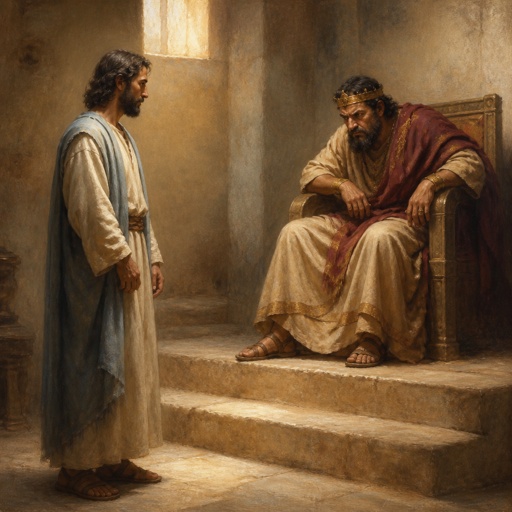
"If the spirit of the ruler rise up against thee, leave not thy place; for yielding pacifieth great offences." - Ecclesiastes 10:4

Ecclesiastes 10:10 - "If the iron be blunt, and he do not whet the edge, then must he put to more strength: but wisdom is profitable to direct."

Ecclesiastes 10:6 - "Folly is set in great dignity, and the rich sit in low place."

Ecclesiastes 10:11 - "Surely the serpent will bite without enchantment; and a babbler is no better."

Ecclesiastes 4:7 - "Then I returned, and I saw vanity under the sun."

Ecclesiastes 10:18 - "¶ By much slothfulness the building decayeth; and through idleness of the hands the house droppeth through."

Ecclesiastes 10:19 - "¶ A feast is made for laughter, and wine maketh merry: but money answereth all things."

Ecclesiastes 3:4 - "A time to weep, and a time to laugh; a time to mourn, and a time to dance;"

Ecclesiastes 4:4 - "¶ Again, I considered all travail, and every right work, that for this a man is envied of his neighbour. This is also vanity and vexation of spirit."

Ecclesiastes 10:12 - "The words of a wise man's mouth are gracious; but the lips of a fool will swallow up himself."

Ecclesiastes 10:13 - "The beginning of the words of his mouth is foolishness: and the end of his talk is mischievous madness."

Ecclesiastes 10:2 - "A wise man's heart is at his right hand; but a fool's heart at his left."

Ecclesiastes 7:4 - "The heart of the wise is in the house of mourning; but the heart of fools is in the house of mirth."

Ecclesiastes 4:5 - "The fool foldeth his hands together, and eateth his own flesh."

Ecclesiastes 10:5 - "There is an evil which I have seen under the sun, as an error which proceedeth from the ruler:"

Ecclesiastes 12:10 - "The preacher sought to find out acceptable words: and that which was written was upright, even words of truth."

Ecclesiastes 10:15 - "The labour of the foolish wearieth every one of them, because he knoweth not how to go to the city."

Ecclesiastes 10:7 - "I have seen servants upon horses, and princes walking as servants upon the earth."

Ecclesiastes 3:10 - "I have seen the travail, which God hath given to the sons of men to be exercised in it."

Ecclesiastes 4:9 - "¶ Two are better than one; because they have a good reward for their labour."

Ecclesiastes 6:4 - "For he cometh in with vanity, and departeth in darkness, and his name shall be covered with darkness."

Ecclesiastes 1:4 - "One generation passeth away, and another generation cometh: but the earth abideth for ever."

Ecclesiastes 5:10 - "He that loveth silver shall not be satisfied with silver; nor he that loveth abundance with increase: this is also vanity."

Ecclesiastes 10:16 - "¶ Woe to thee, O land, when thy king is a child, and thy princes eat in the morning!"

Ecclesiastes 10:8 - "He that diggeth a pit shall fall into it; and whoso breaketh an hedge, a serpent shall bite him."