The Peace of Contentment: A Divine Invitation to Simplicity
“Better is an handful with quietness, than both the hands full with travail and vexation of spirit.” — Ecclesiastes 4:6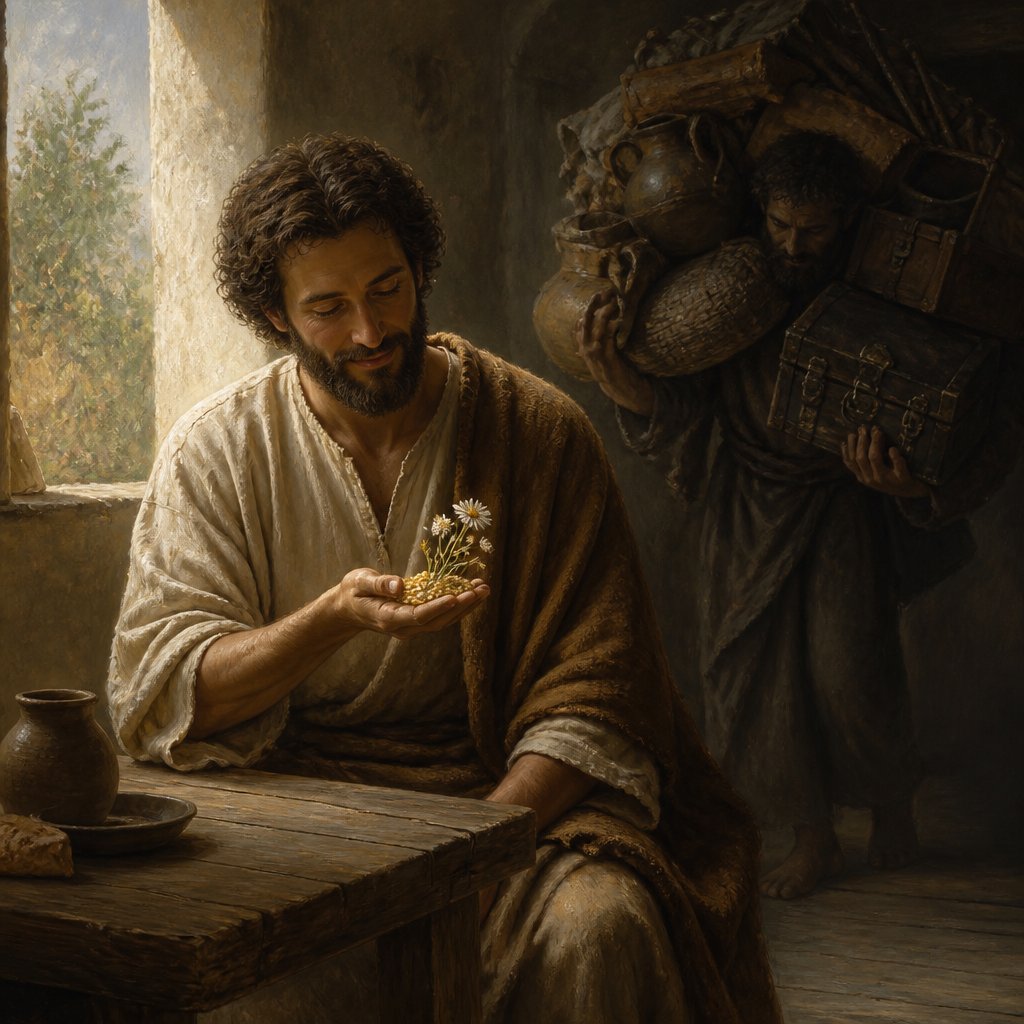
In a world that constantly urges us to strive for more — more possessions, more achievements, more recognition — the words of Ecclesiastes 4:6 stand as a serene counterbalance to human ambition. The verse states, "Better is an handful with quietness, than both the hands full with travail and vexation of spirit." This profound observation, articulated by the wise King Solomon, invites us into a deeper understanding of what true fulfillment looks like.
To grasp the essence of this verse, it is helpful to consider the imagery it presents. Solomon contrasts two scenarios: one of having only a handful, but coupled with peace, versus having both hands filled to overflowing, yet accompanied by distress and unresolved struggle. What a striking juxtaposition! Here, the notion of fullness directly opposes the experience of inner tranquility. The modern reader may find this perspective revolutionary, for it directly challenges the societal norms that equate success with accumulation and busyness.
In our fast-paced lives, we often equate quantity with value. We are conditioned to believe that more wealth, more responsibilities, and more social engagements are signs of a successful life. However, Solomon’s statement beckons us to reevaluate this assumption. It reminds us that, at the core of our existence, quietness and peace hold far greater significance than a plethora of material gains soaked in anxiety and strife.
The call to seek "a handful with quietness" suggests an invitation to embrace simplicity. In embracing simplicity, we not only find rest but also an opportunity to become more attuned to God’s presence in our lives. Jesus Himself exemplified this peace amidst chaos during His life on earth. In Mark 4:39, He calms the raging storm with a gentle rebuke, exemplifying that peace can exist even in tumultuous circumstances. Similarly, we are encouraged to find our peace in Him amidst the noise of life.
This devotional passage dares us to ask ourselves some important questions: Are we filling our hands with endless distractions, laden with worry and frustration? Or are we willing to let go of the need for excess and embrace the joy that comes from a quieter, simpler life? Furthermore, how can we cultivate a spirit of contentment, recognizing that our value is not derived from our possessions or achievements, but from our relationship with God?
In Philippians 4:11-13, Paul speaks on contentment, saying, “Not that I speak in respect of want: for I have learned, in whatsoever state I am, therewith to be content.” Paul had encountered plenty and scarcity alike, yet his contentment lay in his reliance on Christ rather than fluctuating circumstances. This attitude aligns perfectly with Ecclesiastes 4:6 — it is not the amount of our possessions that should define our happiness, but rather our ability to embrace God’s provision with hearts that are thankful and at peace.
Choosing 'quietness' in a world filled with noise means intentionally disconnecting from toxic ambitions and societal pressures. It may require altering our priorities, slowing down our pace, and simplifying our lives. It may call us into solitude, reflection, and prayer, allowing God’s voice to penetrate the chaos that surrounds us.
In conclusion, let us heed the wisdom of Ecclesiastes 4:6. A handful of peace holds immeasurable value in contrast to the temporary satisfaction that comes from filled hands weighed down by toil and worry. In seeking quietness, we open ourselves to a fuller understanding of God’s grace and a deeper relationship with Him. Let our hearts rest in this truth: that sometimes, less truly is more, and in the embrace of simplicity, we find a divine invitation to experience true joy and contentment.
Get our apps


Artwork for Ecclesiastes 4:6

Ecclesiastes 4:6 - "Better is an handful with quietness, than both the hands full with travail and vexation of spirit."
"Better is an handful with quietness, than both the hands full with travail and vexation of spirit." - Ecclesiastes 4:6

Ecclesiastes 6:4 - "For he cometh in with vanity, and departeth in darkness, and his name shall be covered with darkness."
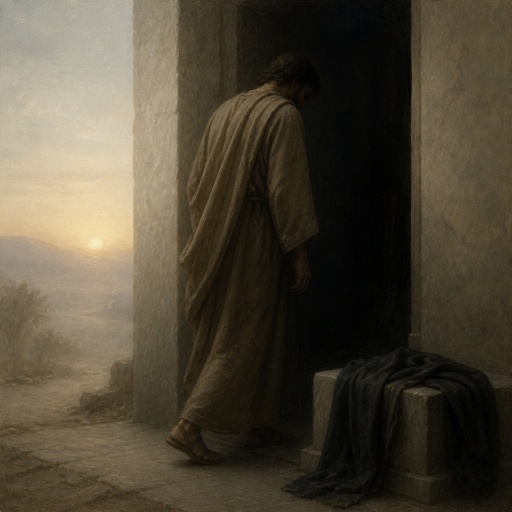
"For he cometh in with vanity, and departeth in darkness, and his name shall be covered with darkness." - Ecclesiastes 6:4

ecclesiastes 12:2-6

Ecclesiastes 10:6 - "Folly is set in great dignity, and the rich sit in low place."

Ecclesiastes 6:7 - "All the labour of man is for his mouth, and yet the appetite is not filled."

Ecclesiastes 4:7 - "Then I returned, and I saw vanity under the sun."

Ecclesiastes 3:6 - "A time to get, and a time to lose; a time to keep, and a time to cast away;"

Ecclesiastes 6:11 - "¶ Seeing there be many things that increase vanity, what is man the better?"

Ecclesiastes 3:4 - "A time to weep, and a time to laugh; a time to mourn, and a time to dance;"

Ecclesiastes 6:9 - "¶ Better is the sight of the eyes than the wandering of the desire: this is also vanity and vexation of spirit."

Ecclesiastes 6:1 - "There is an evil which I have seen under the sun, and it is common among men:"

Ecclesiastes 7:6 - "For as the crackling of thorns under a pot, so is the laughter of the fool: this also is vanity."

Ecclesiastes 4:4 - "¶ Again, I considered all travail, and every right work, that for this a man is envied of his neighbour. This is also vanity and vexation of spirit."

Ecclesiastes 4:5 - "The fool foldeth his hands together, and eateth his own flesh."

Ecclesiastes 7:4 - "The heart of the wise is in the house of mourning; but the heart of fools is in the house of mirth."

Ecclesiastes 8:6 - "¶ Because to every purpose there is time and judgment, therefore the misery of man is great upon him."

Ecclesiastes 6:6 - "¶ Yea, though he live a thousand years twice told, yet hath he seen no good: do not all go to one place?"

Ecclesiastes 1:4 - "One generation passeth away, and another generation cometh: but the earth abideth for ever."

Ecclesiastes 4:9 - "¶ Two are better than one; because they have a good reward for their labour."

Ecclesiastes 2:6 - "I made me pools of water, to water therewith the wood that bringeth forth trees:"

Ecclesiastes 9:4 - "¶ For to him that is joined to all the living there is hope: for a living dog is better than a dead lion."

Ecclesiastes 11:4 - "He that observeth the wind shall not sow; and he that regardeth the clouds shall not reap."

Ecclesiastes 8:4 - "Where the word of a king is, there is power: and who may say unto him, What doest thou?"

Ecclesiastes 4:12 - "And if one prevail against him, two shall withstand him; and a threefold cord is not quickly broken."

Ecclesiastes 4:13 - "¶ Better is a poor and a wise child than an old and foolish king, who will no more be admonished."

Ecclesiastes 4:11 - "Again, if two lie together, then they have heat: but how can one be warm alone?"

Ecclesiastes 12:6 - "Or ever the silver cord be loosed, or the golden bowl be broken, or the pitcher be broken at the fountain, or the wheel broken at the cistern."

Ecclesiastes 6:8 - "For what hath the wise more than the fool? what hath the poor, that knoweth to walk before the living?"