The Futility of Pursuing Wind
“And this also is a sore evil, that in all points as he came, so shall he go: and what profit hath he that hath laboured for the wind?” — Ecclesiastes 5:16
**Scripture:** Ecclesiastes 5:16 (KJV) - "And this also is a sore evil, that in all points as he came, so shall he go: and what profit hath he that hath laboured for the wind?"
In the grand narrative of Ecclesiastes, Solomon takes us on a profound journey through the complexities of human existence. He was the wisest man to ever live, and yet he often found himself questioning the very nature of life itself. The verse we explore today shines a somber light on a reality that many of us wrestle with—yes, we labor, we strive, we chase after goals and dreams, but to what end? Solomon points to a deep-seated disappointment that has plagued humanity throughout the ages: the ephemeral nature of our endeavors.
As we examine this verse, we must first understand what it means to "labor for the wind." Solomon is stark in his assessment. He paints a picture of a person who pours their efforts into something utterly insubstantial. Imagine a laborer toiling tirelessly, pouring sweat and tears into a field of wheat, only to discover that the harvest has mysteriously vanished, leaving nothing behind. This imagery echoes in every corner of our lives today, as many of us chase after success, wealth, fame, or even relationships, often believing that these pursuits will yield lasting fulfillment.
In doing so, we can lose sight of what truly matters. Think for a moment about your own life. What are the things you have devoted time and energy to? Have you been pursuing something that, in the end, could be likened to grasping at wind? The promotions at work, the accolades, the wealth—do they truly provide lasting satisfaction? Solomon warns us here of the inevitable reality: just as we enter the world with nothing, so we leave with nothing. The possessions we accumulate cannot accompany us into eternity, and ultimately, the question arises as to whether they were worth the effort.
Through this lens, we may be tempted to despair. However, this verse serves not only as a warning but also as an invitation—a call to evaluate our motivations and pursuits. We must ask ourselves: what does truly fulfill the human soul? Is it not communion with God, love for others, and the treasures we lay up in heaven (Matthew 6:19-21)? It is in recognizing the temporary nature of worldly achievements that we are nudged towards seeking what is lasting.
In moments of reflection, consider what “wind” you may be chasing in your life. Do you work long hours in a job that leaves you feeling empty? Are you prioritizing financial gain over the richness of relationships? Are you pursuing prestige over purpose? Taking stock of these pursuits can be physically and spiritually exhausting, but it is essential. It helps us discern what honors God and enriches our lives.
As believers, we must embrace our identity in Christ, who assures us that our labor is not in vain (1 Corinthians 15:58). We are called to invest our lives in what truly matters—love, kindness, sharing the Gospel, and fostering authentic relationships built on the foundation of God’s truth. It is through these pursuits that we find fulfillment that surpasses earthly achievements.
So, as we ruminate upon Ecclesiastes 5:16, let’s begin to realign our priorities. Let every action and decision be viewed through the lens of eternity. When faced with choices, let us ask, "Does this profit my spirit or those around me, or am I simply laboring for the wind?" In doing so, we take Solomon's words to heart, embracing a life filled with purpose, one where our toil bears fruit and glorifies the God we serve. By choosing to labor not for the transient but for the eternal, we find our true wealth—an abundant life anchored in Christ.
Get our apps


Artwork for Ecclesiastes 5:16

Ecclesiastes 5:16 - "And this also is a sore evil, that in all points as he came, so shall he go: and what profit hath he that hath laboured for the wind?"
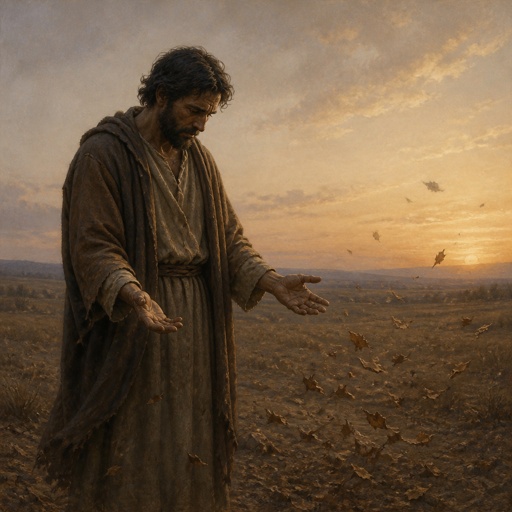
"And this also is a sore evil, that in all points as he came, so shall he go: and what profit hath he that hath laboured for the wind?" - Ecclesiastes 5:16

Ecclesiastes 5:5 - "Better is it that thou shouldest not vow, than that thou shouldest vow and not pay."

Ecclesiastes 3:16 - "¶ And moreover I saw under the sun the place of judgment, that wickedness was there; and the place of righteousness, that iniquity was there."

Ecclesiastes 5:9 - "¶ Moreover the profit of the earth is for all: the king himself is served by the field."

Ecclesiastes 4:5 - "The fool foldeth his hands together, and eateth his own flesh."

Ecclesiastes 10:16 - "¶ Woe to thee, O land, when thy king is a child, and thy princes eat in the morning!"

Ecclesiastes 7:5 - "It is better to hear the rebuke of the wise, than for a man to hear the song of fools."

Ecclesiastes 5:7 - "For in the multitude of dreams and many words there are also divers vanities: but fear thou God."

Ecclesiastes 7:16 - "Be not righteous over much; neither make thyself over wise: why shouldest thou destroy thyself?"

Ecclesiastes 5:3 - "For a dream cometh through the multitude of business; and a fool's voice is known by multitude of words."

Ecclesiastes 9:16 - "Then said I, Wisdom is better than strength: nevertheless the poor man's wisdom is despised, and his words are not heard."

Ecclesiastes 5:14 - "But those riches perish by evil travail: and he begetteth a son, and there is nothing in his hand."

Ecclesiastes 10:5 - "There is an evil which I have seen under the sun, as an error which proceedeth from the ruler:"

Ecclesiastes 2:5 - "I made me gardens and orchards, and I planted trees in them of all kind of fruits:"

"Better is it that thou shouldest not vow, than that thou shouldest vow and not pay." - Ecclesiastes 5:5

Ecclesiastes 1:5 - "The sun also ariseth, and the sun goeth down, and hasteth to his place where he arose."

Ecclesiastes 5:10 - "He that loveth silver shall not be satisfied with silver; nor he that loveth abundance with increase: this is also vanity."

Ecclesiastes 5:13 - "There is a sore evil which I have seen under the sun, namely, riches kept for the owners thereof to their hurt."

Ecclesiastes 5:17 - "All his days also he eateth in darkness, and he hath much sorrow and wrath with his sickness."

Ecclesiastes 5:11 - "When goods increase, they are increased that eat them: and what good is there to the owners thereof, saving the beholding of them with their eyes?"

Ecclesiastes 3:5 - "A time to cast away stones, and a time to gather stones together; a time to embrace, and a time to refrain from embracing;"

Ecclesiastes 8:5 - "Whoso keepeth the commandment shall feel no evil thing: and a wise man's heart discerneth both time and judgment."

Ecclesiastes 5:20 - "For he shall not much remember the days of his life; because God answereth him in the joy of his heart."

Ecclesiastes 6:5 - "Moreover he hath not seen the sun, nor known any thing: this hath more rest than the other."

Ecclesiastes 5:12 - "The sleep of a labouring man is sweet, whether he eat little or much: but the abundance of the rich will not suffer him to sleep."

Ecclesiastes 2:16 - "For there is no remembrance of the wise more than of the fool for ever; seeing that which now is in the days to come shall all be forgotten. And how dieth the wise man? as the fool."

Ecclesiastes 9:5 - "For the living know that they shall die: but the dead know not any thing, neither have they any more a reward; for the memory of them is forgotten."

Ecclesiastes 4:16 - "There is no end of all the people, even of all that have been before them: they also that come after shall not rejoice in him. Surely this also is vanity and vexation of spirit."

Ecclesiastes 5:1 - "Keep thy foot when thou goest to the house of God, and be more ready to hear, than to give the sacrifice of fools: for they consider not that they do evil."