The Weight of a Life Un-lived
"¶ If a man beget an hundred children, and live many years, so that the days of his years be many, and his soul be not filled with good, and also that he have no burial; I say, that an untimely birth is better than he." - Ecclesiastes 6:3
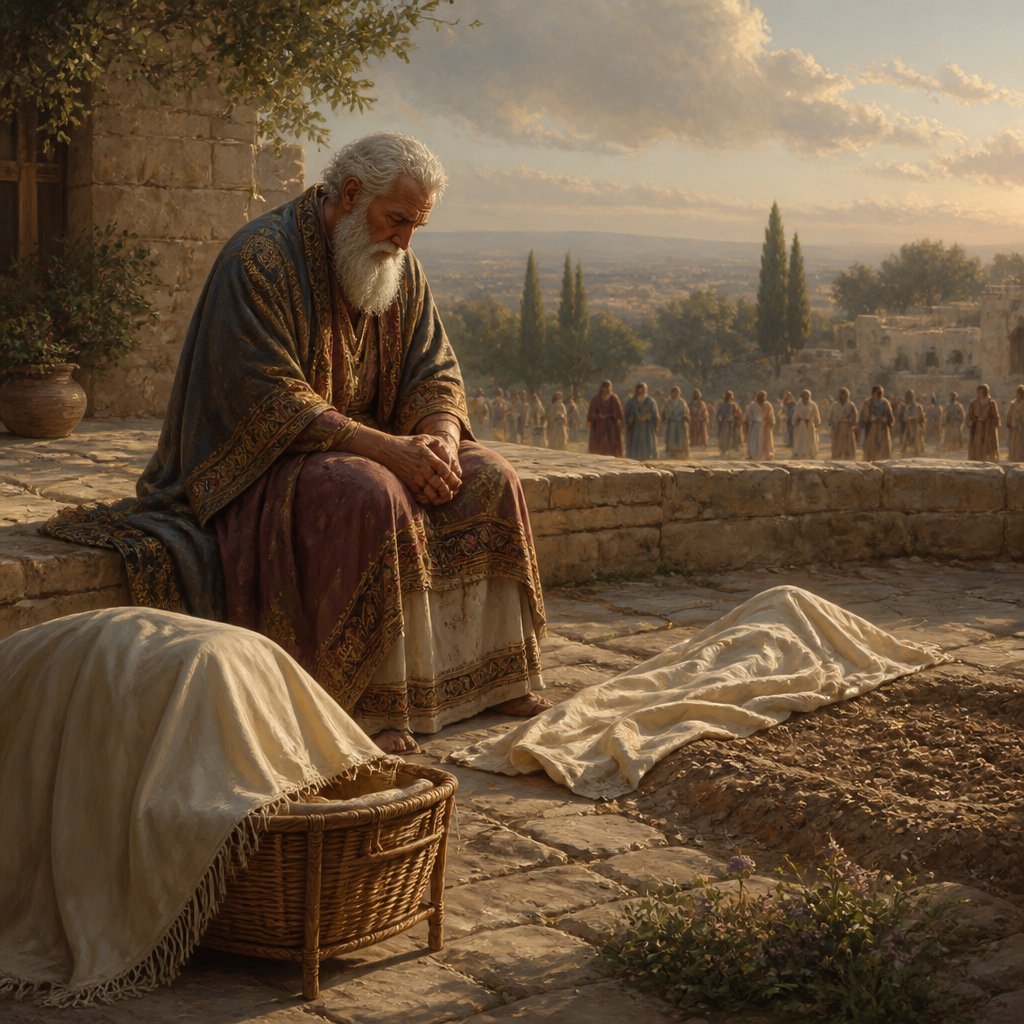
Ecclesiastes 6:3 (KJV) declares, "If a man beget an hundred children, and live many years, so that the days of his years be many, and his soul be not filled with good, and also that he have no burial; I say, that an untimely birth is better than he." This striking verse invites us to ponder the significance of our lives and what truly constitutes a life well-lived.
At first glance, this scripture may seem harsh, suggesting that a person who leads a long life filled with children—an outward symbol of success—may, in fact, have wasted their life if they fail to find fulfillment or goodness in their days. Here, Solomon, the wise author of Ecclesiastes, challenges our notion of success and happiness. What good is longevity or prosperity if one’s soul is left unfulfilled?
In the world today, success is frequently measured by outward appearances: wealth, fame, and achievements. A man with a hundred children might be seen as blessed or prosperous. However, Solomon turns this idea on its head by suggesting that mere numbers do not equate to fulfillment in one's soul. This wisdom resonates in our time, where the emptiness of excess is often ignored. We are reminded that a life without a sense of purpose or connection to goodness can ultimately lead to despair, regardless of material success.
The phrase, "that he have no burial" signifies not just the lack of physical burial but the implication that his influence and legacy are equally non-existent. To be forgotten scorns the very essence of what it means to be human. Connection to others, love, and the impact we have on the world around us are paramount. In antiquity, a burial was also a rite of passage that signified respect and honor; to die without this is to die without acknowledgment.
In contrast, Solomon states that "an untimely birth is better than he." This comparison can lead us to a profound contemplation. An untimely birth, although tragic, represents innocence and potential yet unblemished by the complexities of life. It indicates a life that, while not fully lived, can still evoke sympathy and hope. It may seem counterintuitive, but the verse suggests that a brief existence that is pure, innocent, and untouched by the corruption of worldly pursuits may, in the grand scheme of things, be more admirable than a life spent in the pursuit of hollow accolades.
So then, how do we measure our own lives? Are we caught up in the race for achievement, power, or quantity? This verse forces us to reflect on the quality of our existence. Are we nurturing goodness in our hearts, fostering relationships, and leaving a legacy that reflects compassion and love? A life given to selfish desires will find satisfaction elusive, while a life spent in service to others, in love and goodness, will reap rewards that extend beyond our mortal years.
Let us examine our choices: how do they fill our souls? Are we living intentionally, pursuing what is good and right? The parable of Ecclesiastes serves as a wake-up call. Each day provides an opportunity to embrace goodness—to fill our souls with acts of kindness, love, and service. Instead of merely focusing on the achievements that may lead us to a hollow existence, let us strive for a life rich in purpose and goodness.
In conclusion, Ecclesiastes 6:3 is a powerful exhortation that may feel uncomfortable but serves as a necessary reminder to align our lives with what truly matters. As we navigate our days, let us seek the substance of goodness and live each day not just for ourselves, but for the benefit of those around us. May our lives reflect the richness of shared love, community, and purpose, ensuring that at the end of our journey, our souls will be filled with good.
Want to reflect more on Ecclesiastes 6:3?
Continue your spiritual journey with Bible Chat — an AI-powered tool for exploring God's Word through conversation. Ask questions, discover connections, and deepen your understanding.
Get Our Apps


Ecclesiastes 6:3 Artwork

Ecclesiastes 6:3 - "¶ If a man beget an hundred children, and live many years, so that the days of his years be many, and his soul be not filled with good, and also that he have no burial; I say, that an untimely birth is better than he."
"¶ If a man beget an hundred children, and live many years, so that the days of his years be many, and his soul be not filled with good, and also that he have no burial; I say, that an untimely birth is better than he." - Ecclesiastes 6:3

Ecclesiastes 3:6 - "A time to get, and a time to lose; a time to keep, and a time to cast away;"

"A time to get, and a time to lose; a time to keep, and a time to cast away;" - Ecclesiastes 3:6

Ecclesiastes 3:1

ecclesiastes 12:2-6

Ecclesiastes 3:3 - "A time to kill, and a time to heal; a time to break down, and a time to build up;"

Ecclesiastes 3:7-8

Ecclesiastes 3:1 – "There is a time for everything, and a season for every activity under the heavens."

Ecclesiastes 10:6 - "Folly is set in great dignity, and the rich sit in low place."

Ecclesiastes 6:7 - "All the labour of man is for his mouth, and yet the appetite is not filled."

Ecclesiastes 6:11 - "¶ Seeing there be many things that increase vanity, what is man the better?"

Ecclesiastes 3:1 - "To every thing there is a season, and a time to every purpose under the heaven:"

Ecclesiastes 3:9 - "What profit hath he that worketh in that wherein he laboureth?"

Ecclesiastes 3:4 - "A time to weep, and a time to laugh; a time to mourn, and a time to dance;"

Ecclesiastes 3:8 - "A time to love, and a time to hate; a time of war, and a time of peace."

Ecclesiastes 6:9 - "¶ Better is the sight of the eyes than the wandering of the desire: this is also vanity and vexation of spirit."

Ecclesiastes 6:1 - "There is an evil which I have seen under the sun, and it is common among men:"

Ecclesiastes 6:4 - "For he cometh in with vanity, and departeth in darkness, and his name shall be covered with darkness."

Ecclesiastes 7:6 - "For as the crackling of thorns under a pot, so is the laughter of the fool: this also is vanity."

Ecclesiastes 7:3 - "Sorrow is better than laughter: for by the sadness of the countenance the heart is made better."

Ecclesiastes 8:6 - "¶ Because to every purpose there is time and judgment, therefore the misery of man is great upon him."

Ecclesiastes 4:6 - "Better is an handful with quietness, than both the hands full with travail and vexation of spirit."

Ecclesiastes 6:6 - "¶ Yea, though he live a thousand years twice told, yet hath he seen no good: do not all go to one place?"

Ecclesiastes 3:7 - "A time to rend, and a time to sew; a time to keep silence, and a time to speak;"

Ecclesiastes 2:6 - "I made me pools of water, to water therewith the wood that bringeth forth trees:"

Ecclesiastes 3:21 - "Who knoweth the spirit of man that goeth upward, and the spirit of the beast that goeth downward to the earth?"

Ecclesiastes 3:2 - "A time to be born, and a time to die; a time to plant, and a time to pluck up that which is planted;"

Ecclesiastes 3:16 - "¶ And moreover I saw under the sun the place of judgment, that wickedness was there; and the place of righteousness, that iniquity was there."

Ecclesiastes 3:20 - "All go unto one place; all are of the dust, and all turn to dust again."