Righteousness Amidst the Shadows: Understanding Ecclesiastes 7:15
“All things have I seen in the days of my vanity: there is a just man that perisheth in his righteousness, and there is a wicked man that prolongeth his life in his wickedness.” — Ecclesiastes 7:15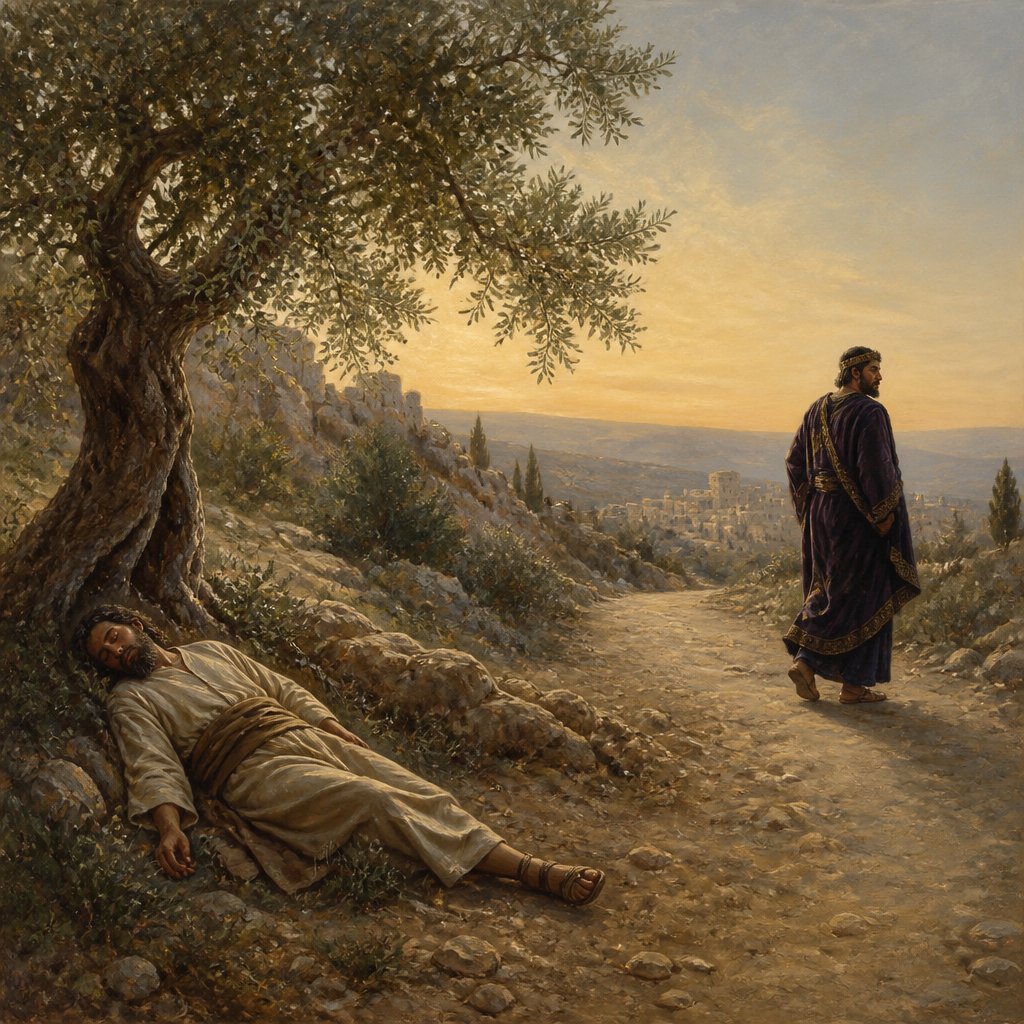
Ecclesiastes 7:15 (KJV) states, "All things have I seen in the days of my vanity: there is a just man that perisheth in his righteousness, and there is a wicked man that prolongeth his life in his wickedness." This profound verse from Ecclesiastes raises a significant tension within the human experience—where the inequities of life can often overshadow the just and the wicked, and where true righteousness seems to yield no apparent rewards.
As we delve into the context of Ecclesiastes, it is essential to understand that the author, traditionally believed to be King Solomon, reflects on the perplexities of life from a vantage point steeped in wisdom yet fraught with disillusionment. This book, often regarded as a meditation on the meaning of life, explores the futility of worldly pursuits, leading us to grapple with the complexities of justice and morality in our existence.
At first glance, the verse can evoke a feeling of despair. How is it that a just man—the embodiment of righteousness, integrity, and virtue—can suffer and perish? And conversely, how can a wicked man thrive and prolong his life, seemingly reveling in his malevolence? This contradiction can lead to frustration and even doubt in the overall justice of God. Why do the righteous suffer while the wicked prosper? It prompts a vital inquiry into the nature of God’s justice, the temporal vs. the eternal, and the overarching plan that remains often concealed from our eyes.
This reality can be especially difficult for those familiar with the teachings found throughout Scripture, which declare that God is just, and that He rewards righteousness (Psalm 1:6, Proverbs 11:31). We must acknowledge that the perspective of Ecclesiastes is deeply realistic; it recognizes that life doesn’t always conform to our ideals. The world is broken, and we live amidst a chaos where righteousness may not seem directly rewarded, and wickedness unchecked often flourishes.
Yet, in this tension lies an invitation to shift our focus from immediate outcomes to a broader, divine perspective. The writer of Ecclesiastes understood vanity—life’s fleeting nature and the inevitability of death, where earthly gains and losses ultimately become meaningless in facing death's certainty. Therefore, much of what defines our experiences on earth is tangled with this vanity, compelling us to reflect on the nature of true life and faith.
Notably, righteousness holds intrinsic worth that transcends immediate circumstances. The just man, who perishes despite living rightly, embodies the essence of faithful endurance amid trials. Hebrews 11 recounts the stories of heroes of faith, including people who suffered and died for their beliefs, reminding us that their ultimate reward is found not in this life but in eternity. God’s economy of justice is supernatural and often paradoxical, revealing itself in a different dimension than we perceive.
In contrast, the wicked man’s fleeting prosperity is evidence of a deceptive sense of security. What appears as success is often rooted in temporal victories devoid of lasting significance. As believers, we are called to view life through an eternal lens. Jesus reassures us that though we may face trials, the true riches and rewards in our life come from our relationship with Him and our obedience to God—choices that redirect our gaze from worldly fortunes to eternal promises (Matthew 6:19-20).
In conclusion, Ecclesiastes 7:15 challenges us to grapple with the complexities of righteousness and wickedness. As we navigate our path, let us seek God's wisdom, reminding ourselves that while the justice of God’s timing can perplex us, we trust in His ultimate sovereignty. Righteousness is not without its rewards; sometimes, they scout far beyond this earthly life into the eternal realms of promise. Let us, therefore, walk in faith—embracing the virtue of righteousness, comforted by the knowledge that our lives matter to God, and our struggles are not in vain.
Get our apps


Artwork for Ecclesiastes 7:15

Ecclesiastes 7:15 - "All things have I seen in the days of my vanity: there is a just man that perisheth in his righteousness, and there is a wicked man that prolongeth his life in his wickedness."
"All things have I seen in the days of my vanity: there is a just man that perisheth in his righteousness, and there is a wicked man that prolongeth his life in his wickedness." - Ecclesiastes 7:15

Ecclesiastes 7:7 - "¶ Surely oppression maketh a wise man mad; and a gift destroyeth the heart."

Ecclesiastes 3:7-8

Ecclesiastes 1:15 - "That which is crooked cannot be made straight: and that which is wanting cannot be numbered."

Ecclesiastes 7:11 - "¶ Wisdom is good with an inheritance: and by it there is profit to them that see the sun."

Ecclesiastes 4:7 - "Then I returned, and I saw vanity under the sun."

Ecclesiastes 7:9 - "Be not hasty in thy spirit to be angry: for anger resteth in the bosom of fools."

Ecclesiastes 6:7 - "All the labour of man is for his mouth, and yet the appetite is not filled."

Ecclesiastes 7:20 - "For there is not a just man upon earth, that doeth good, and sinneth not."

Ecclesiastes 7:3 - "Sorrow is better than laughter: for by the sadness of the countenance the heart is made better."

Ecclesiastes 1:15 What is crooked cannot be made straight, and what is lacking cannot be counted.

Ecclesiastes 1:15 What is crooked cannot be made straight, and what is lacking cannot be counted.

Ecclesiastes 10:15 - "The labour of the foolish wearieth every one of them, because he knoweth not how to go to the city."

Ecclesiastes 3:15 - "That which hath been is now; and that which is to be hath already been; and God requireth that which is past."

Ecclesiastes 11:7 - "¶ Truly the light is sweet, and a pleasant thing it is for the eyes to behold the sun:"

Ecclesiastes 7:4 - "The heart of the wise is in the house of mourning; but the heart of fools is in the house of mirth."

Ecclesiastes 8:7 - "For he knoweth not that which shall be: for who can tell him when it shall be?"

Ecclesiastes 5:7 - "For in the multitude of dreams and many words there are also divers vanities: but fear thou God."

Ecclesiastes 7:19 - "Wisdom strengtheneth the wise more than ten mighty men which are in the city."

Ecclesiastes 1:15 What is crooked cannot be made straight, and what is lacking cannot be counted.

Ecclesiastes 3:7 - "A time to rend, and a time to sew; a time to keep silence, and a time to speak;"

Ecclesiastes 7:24 - "That which is far off, and exceeding deep, who can find it out?"

Ecclesiastes 7:6 - "For as the crackling of thorns under a pot, so is the laughter of the fool: this also is vanity."

Ecclesiastes 7:5 - "It is better to hear the rebuke of the wise, than for a man to hear the song of fools."

Ecclesiastes 1:15 What is crooked cannot be made straight, and what is lacking cannot be counted.

Ecclesiastes 12:7 - "Then shall the dust return to the earth as it was: and the spirit shall return unto God who gave it."
![[NRSVUE]
Ecclesiastes 1:15
15 What is crooked cannot be made straight,
and what is lacking cannot be counted.](https://media.bible.art/15df6472-8856-4b1a-ba72-91e73096565e-thumbnail.jpg)
[NRSVUE] Ecclesiastes 1:15 15 What is crooked cannot be made straight, and what is lacking cannot be counted.

Ecclesiastes 1:15 What is crooked cannot be made straight, and what is lacking cannot be counted.
![[NRSVUE]
Ecclesiastes 1:15
15 What is crooked cannot be made straight,
and what is lacking cannot be counted.](https://media.bible.art/6f182873-2ddf-4166-a947-60a35703d2a9-thumbnail.jpg)
[NRSVUE] Ecclesiastes 1:15 15 What is crooked cannot be made straight, and what is lacking cannot be counted.