The Power of Wisdom Over Destruction
"Wisdom is better than weapons of war: but one sinner destroyeth much good." - Ecclesiastes 9:18
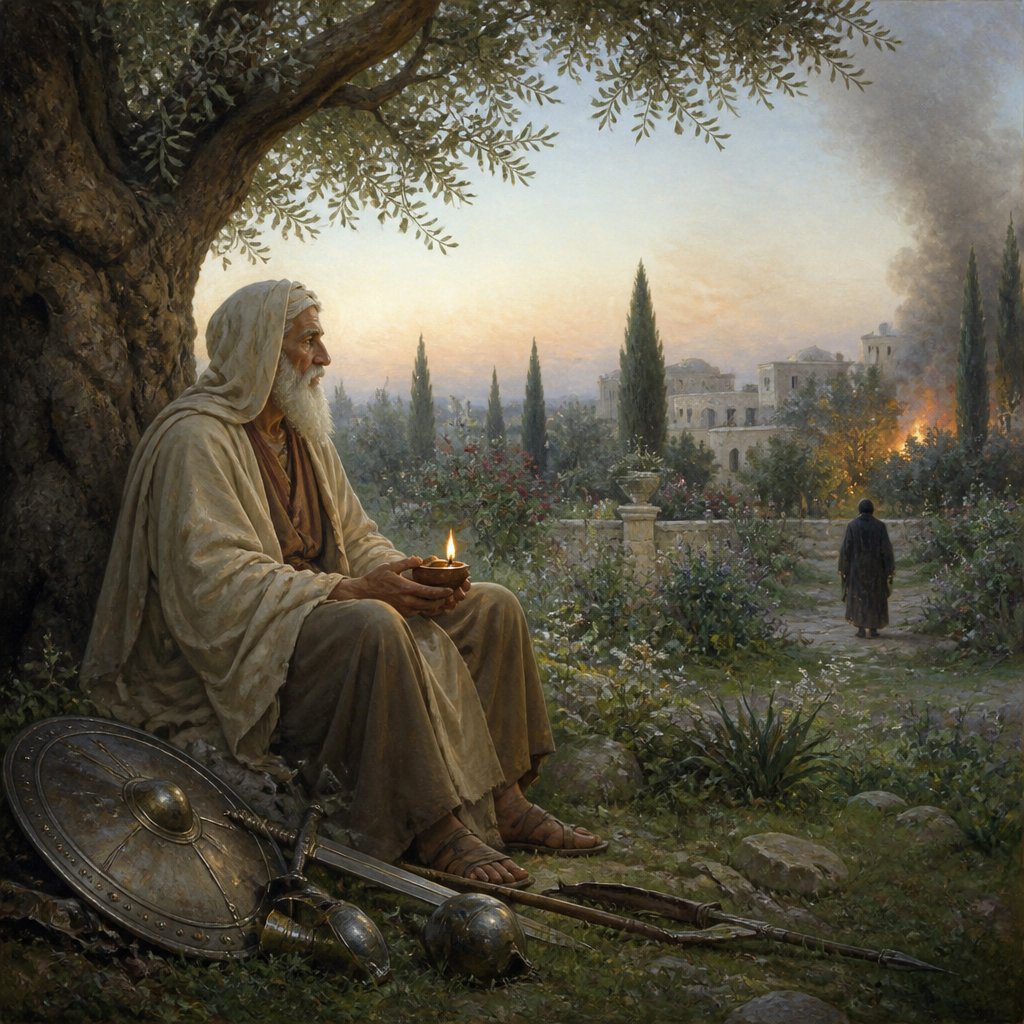
The book of Ecclesiastes, often attributed to King Solomon, is a reflective journey through the complexities of life. In Ecclesiastes 9:18, we find a profound insight that resonates through the ages, stating, "Wisdom is better than weapons of war: but one sinner destroyeth much good." This verse encapsulates a fundamental truth about the human experience—one that emphasizes the superiority of wisdom over brute strength and highlights the tragic impact that one corrupt individual can have on the community.
In our pursuit of success and safety, it is tempting to rely on the tools of power and dominance; might often seems to make right in our world. However, Solomon, with his unparalleled wisdom, reminds us that even the greatest arsenal of weapons pales in comparison to the enduring power of wisdom. Why is wisdom so valuable? Unlike weapons, which can provide temporary solutions through coercion or fear, wisdom seeks to cultivate understanding, promote peace, and foster healthy relationships.
Wisdom allows us to navigate the complexities of life with discernment. It is the foundation upon which sound decisions are built. In our personal lives, we are often faced with choices that require more than just instinct or strength. Whether in family matters, professional environments, or community engagement, the ability to pause and seek wisdom transforms conflict into resolution, chaos into order.
Consider the many stories throughout the Bible where wisdom triumphed over the sword. In 1 Kings 3, we read about Solomon's encounter with two women claiming to be the mother of the same child. Rather than resorting to violence or judgment, wisdom led Solomon to propose a shocking solution: dividing the child in two. This act prompted the true mother to reveal herself, demonstrating that wisdom, guided by compassion, surpassed the power of a king’s decree or the might of a military army. This narrative illustrates the immense capacity of wisdom to bring life and restoration, whereas conflict often leads to devastation.
Solomon’s second assertion, "but one sinner destroyeth much good," starkly contrasts with the preceding thought. Here, he speaks to the devastating potential one person can bear, a reminder of the destructive power of sin and folly. It is a warning to be vigilant in our actions; the ripple effects of one individual’s poor choices can undermine the good achieved by many. Throughout history, we witness how the malfeasance of a singular figure can lead to widespread havoc, whether it be in families, organizations, or nations. One deceitful act can unravel trust, one act of greed can ignite chaos, and one moment of anger can lead to lasting hurt.
As believers, we are called to be purveyors of wisdom in a world that often succumbs to folly. We must be swift to examine our own lives, rooting out the sin that may lie beneath the surface. This introspection allows us to cultivate an atmosphere of wisdom around us, compelling others to seek the peace that accompanies it. Our personal integrity, driven by a desire for Godly wisdom, acts as a shield, protecting not only ourselves but also those in our circle from the destructive forces of sin.
As we meditate on Ecclesiastes 9:18, let us commit ourselves to pursue wisdom diligently. Let us also strive to embody it, creating an environment that fosters understanding and encourages the good that can flourish in community. In doing so, we not only become vessels of God’s truth but also contributors to a legacy of goodness that overcomes the shadows of sin and destruction.
In conclusion, let us pray for wisdom—to recognize its value, to cherish it in our hearts, and to wield it in our interactions with one another. Let us be aware of the weight our choices carry, committing to actions that build up rather than tear down. In a world often filled with strife, may we embody the truth that wisdom is a far greater weapon than anything forged for war, and may we be diligent to avoid becoming the sinner who destroys much good.
Want to reflect more on Ecclesiastes 9:18?
Continue your spiritual journey with Bible Chat — an AI-powered tool for exploring God's Word through conversation. Ask questions, discover connections, and deepen your understanding.
Get Our Apps


Ecclesiastes 9:18 Artwork

Ecclesiastes 9:18 - "Wisdom is better than weapons of war: but one sinner destroyeth much good."

"Wisdom is better than weapons of war: but one sinner destroyeth much good." - Ecclesiastes 9:18

Ecclesiastes 1:18 - "For in much wisdom is much grief: and he that increaseth knowledge increaseth sorrow."

Ecclesiastes 10:18 - "¶ By much slothfulness the building decayeth; and through idleness of the hands the house droppeth through."

Ecclesiastes 3:9 - "What profit hath he that worketh in that wherein he laboureth?"

Ecclesiastes 7:9 - "Be not hasty in thy spirit to be angry: for anger resteth in the bosom of fools."

Ecclesiastes 5:9 - "¶ Moreover the profit of the earth is for all: the king himself is served by the field."

Ecclesiastes 6:9 - "¶ Better is the sight of the eyes than the wandering of the desire: this is also vanity and vexation of spirit."

Ecclesiastes 4:9 - "¶ Two are better than one; because they have a good reward for their labour."

Ecclesiastes 9:4 - "¶ For to him that is joined to all the living there is hope: for a living dog is better than a dead lion."

Ecclesiastes 9:8 - "Let thy garments be always white; and let thy head lack no ointment."

Ecclesiastes 9:13 - "¶ This wisdom have I seen also under the sun, and it seemed great unto me:"

Ecclesiastes 3:18 - "I said in mine heart concerning the estate of the sons of men, that God might manifest them, and that they might see that they themselves are beasts."

Ecclesiastes 10:9 - "Whoso removeth stones shall be hurt therewith; and he that cleaveth wood shall be endangered thereby."

Ecclesiastes 9:17 - "The words of wise men are heard in quiet more than the cry of him that ruleth among fools."

Ecclesiastes 1:9 - "The thing that hath been, it is that which shall be; and that which is done is that which shall be done: and there is no new thing under the sun."

Ecclesiastes 9:14 - "There was a little city, and few men within it; and there came a great king against it, and besieged it, and built great bulwarks against it:"

Ecclesiastes 9:16 - "Then said I, Wisdom is better than strength: nevertheless the poor man's wisdom is despised, and his words are not heard."

Ecclesiastes 7:18 - "It is good that thou shouldest take hold of this; yea, also from this withdraw not thine hand: for he that feareth God shall come forth of them all."

"For in much wisdom is much grief: and he that increaseth knowledge increaseth sorrow." - Ecclesiastes 1:18

Ecclesiastes 9:15 - "Now there was found in it a poor wise man, and he by his wisdom delivered the city; yet no man remembered that same poor man."

Ecclesiastes 2:9 - "So I was great, and increased more than all that were before me in Jerusalem: also my wisdom remained with me."

Ecclesiastes 9:5 - "For the living know that they shall die: but the dead know not any thing, neither have they any more a reward; for the memory of them is forgotten."

"Be not hasty in thy spirit to be angry: for anger resteth in the bosom of fools." - Ecclesiastes 7:9

Ecclesiastes 9:6 - "Also their love, and their hatred, and their envy, is now perished; neither have they any more a portion for ever in any thing that is done under the sun."

Ecclesiastes 9:7 - "¶ Go thy way, eat thy bread with joy, and drink thy wine with a merry heart; for God now accepteth thy works."

Ecclesiastes 2:18 - "¶ Yea, I hated all my labour which I had taken under the sun: because I should leave it unto the man that shall be after me."

Ecclesiastes 9:10 - "Whatsoever thy hand findeth to do, do it with thy might; for there is no work, nor device, nor knowledge, nor wisdom, in the grave, whither thou goest."

"¶ By much slothfulness the building decayeth; and through idleness of the hands the house droppeth through." - Ecclesiastes 10:18

"¶ Moreover the profit of the earth is for all: the king himself is served by the field." - Ecclesiastes 5:9