The Cost of Contempt: Lessons from Queen Vashti
“Likewise shall the ladies of Persia and Media say this day unto all the king’s princes, which have heard of the deed of the queen. Thus shall there arise too much contempt and wrath.” — Esther 1:18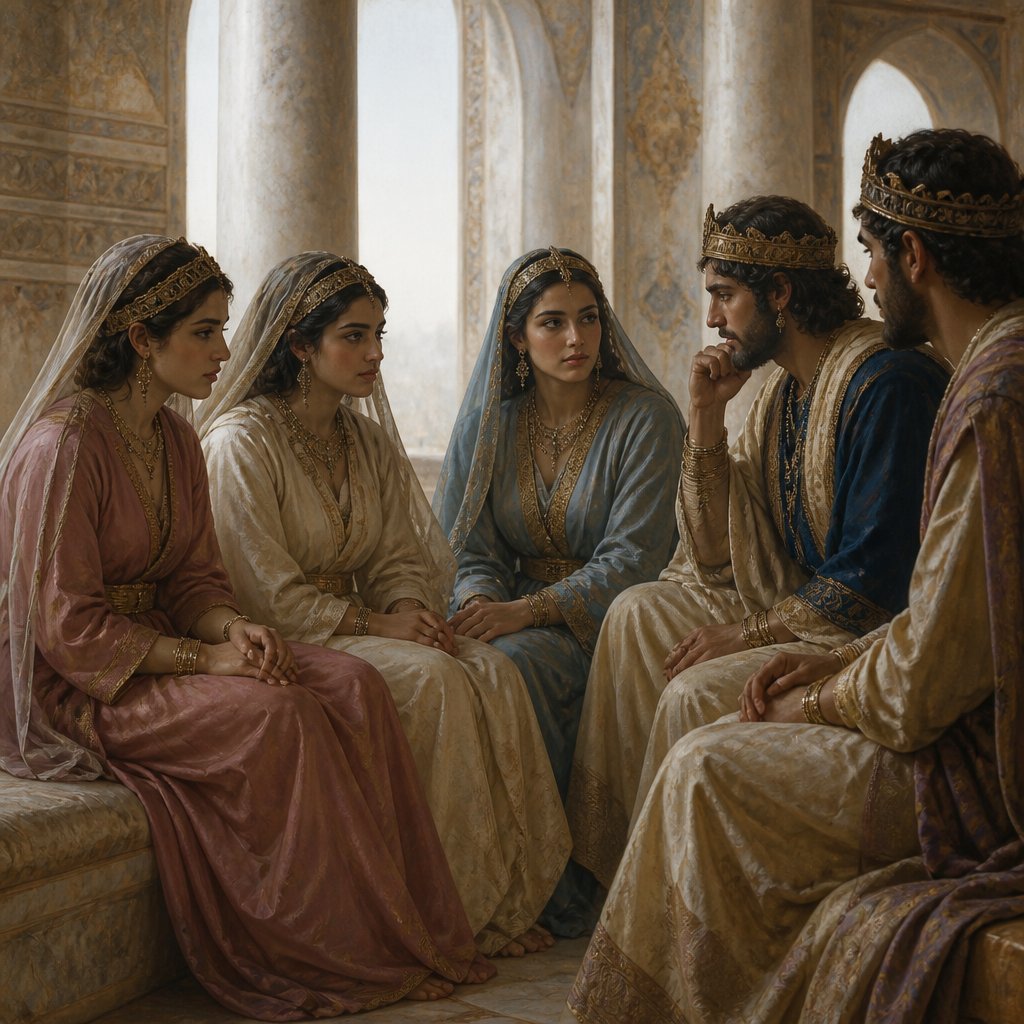
When we reflect upon the events in Esther 1:18, we enter into a narrative saturated with social dynamics, courage, and the consequences of choices. The verse states: "Likewise shall the ladies of Persia and Media say this day unto all the king's princes, which have heard of the deed of the queen. Thus shall there arise too much contempt and wrath.” In this verse lies a powerful commentary not just on the actions of Queen Vashti but on the rippling effects of her decision that echoed throughout the palace and beyond.
To fully grasp the weight of what Vashti’s refusal meant, we need to understand her context. She was the queen of Persia, a position that commanded respect and power, but she was also an object of the king’s entertainment - showcased at his banquets like a prized possession meant to impress the guests. The king, King Ahasuerus, ordered her to come before him and show off her beauty at a feast, but she declined. This pivotal act of defiance inspired a chilling chain of events that would not only redefine her own destiny but also the social standards for women in the kingdom.
Vashti's decision to stand against King Ahasuerus' directive was monumental. It reflected a deeper struggle that many, especially women, grapple with: the tension between authority and personal integrity. She was placed in a position where she could either comply — thereby reinforcing the objectification of herself — or assert her dignity, even at great personal risk. In refusing to submit, she likely realized that her actions would not be met with applause, but rather disdain and possible repercussions. The very language of the verse suggests that her stand was viewed with contempt. It insinuates that her bravery would not elevate her but provoke anger and condemnation from those around her, revealing the societal expectations of women in that era.
Yet, we must ponder: could it be that Vashti’s defiance sparked a necessary dialogue about the roles of women and their rights in a patriarchal society? Her refusal was more than simple disobedience; it was a submission to a higher calling of self-respect and personal boundaries. For many women throughout history, her story resonates as one of empowerment, heralding the idea that one can stand firm against unjust demands, regardless of the prevailing cultural norms.
The consequences of Vashti's stand were indeed severe; she was dethroned and replaced, but her legacy of courage set a precedent. Sometimes, standing for truth and integrity may lead us into unpredictable situations. We might feel ostracized, misunderstood, or even condemned by society, particularly when that truth challenges the status quo. Yet, scripture reminds us in Matthew 5:10-12, "Blessed are they which are persecuted for righteousness' sake: for theirs is the kingdom of heaven."
In our lives, we may find ourselves in situations where the modern Ahasueruses demand our compliance to requirements that compromise our character, values, or dignity. Whether in workplace ethics, relationships, or other societal structures, standing up might invoke contempt from peers, employers, or even friends. But our model in Queen Vashti teaches us this vital lesson: that our integrity is more valuable than human approval.
As we meditate on this, we must ask ourselves: Are we willing to uphold our values, even when faced with the threat of wrath or contempt? Are we prepared to champion the cause of dignity over compliance? In moments of struggle and decision, may we draw courage from Vashti’s story and embrace our rightful place as women and men of God who fearlessly embody our convictions, trusting that true honor comes from within and from the One above.
Get our apps


Artwork for Esther 1:18

Esther 1:18 - "Likewise shall the ladies of Persia and Media say this day unto all the king's princes, which have heard of the deed of the queen. Thus shall there arise too much contempt and wrath."
"Likewise shall the ladies of Persia and Media say this day unto all the king's princes, which have heard of the deed of the queen. Thus shall there arise too much contempt and wrath." - Esther 1:18

Esther 7:1 - "So the king and Haman came to banquet with Esther the queen."

Esther 1:17

Esther 8:1 - "On that day did the king Ahasuerus give the house of Haman the Jews' enemy unto Esther the queen. And Mordecai came before the king; for Esther had told what he was unto her."

Esther 1:8 - "And the drinking was according to the law; none did compel: for so the king had appointed to all the officers of his house, that they should do according to every man's pleasure."

Esther, the courageous queen

"So the king and Haman came to banquet with Esther the queen." - Esther 7:1

Esther 1:6
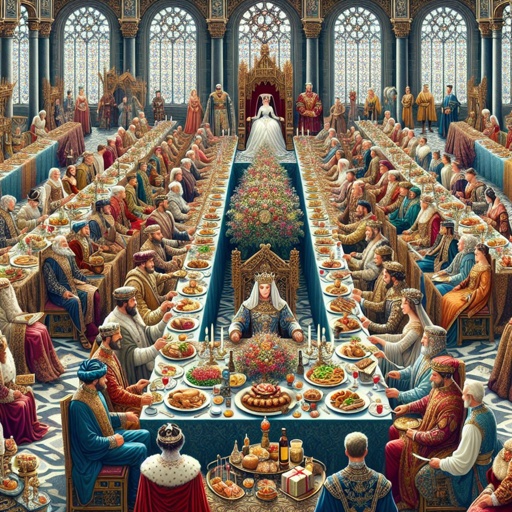
Esther 2:18 - "Then the king made a great feast unto all his princes and his servants, even Esther's feast; and he made a release to the provinces, and gave gifts, according to the state of the king."

Esther 9:18 - "But the Jews that were at Shushan assembled together on the thirteenth day thereof, and on the fourteenth thereof; and on the fifteenth day of the same they rested, and made it a day of feasting and gladness."

Esther 10:1 - "And the king Ahasuerus laid a tribute upon the land, and upon the isles of the sea."

"On that day did the king Ahasuerus give the house of Haman the Jews' enemy unto Esther the queen. And Mordecai came before the king; for Esther had told what he was unto her." - Esther 8:1

Esther 1:21 - "And the saying pleased the king and the princes; and the king did according to the word of Memucan:"

Esther 5:1 - "Now it came to pass on the third day, that Esther put on her royal apparel, and stood in the inner court of the king's house, over against the king's house: and the king sat upon his royal throne in the royal house, over against the gate of the house."

Esther 1:2 - "That in those days, when the king Ahasuerus sat on the throne of his kingdom, which was in Shushan the palace,"

Esther 1:9 - "Also Vashti the queen made a feast for the women in the royal house which belonged to king Ahasuerus."
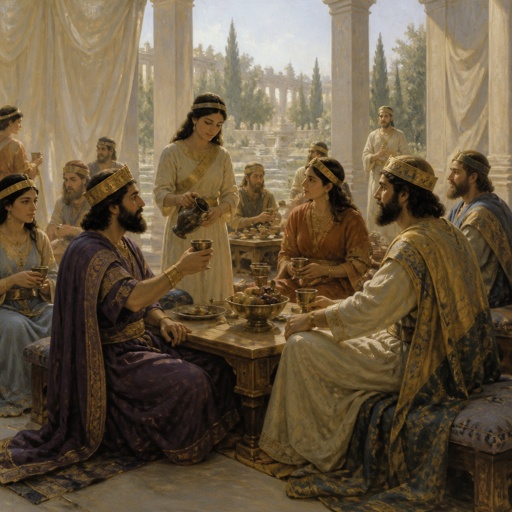
"And the drinking was according to the law; none did compel: for so the king had appointed to all the officers of his house, that they should do according to every man's pleasure." - Esther 1:8

Esther 1:1 - "Now it came to pass in the days of Ahasuerus, (this is Ahasuerus which reigned, from India even unto Ethiopia, over an hundred and seven and twenty provinces:)"

Esther 6:1 - "On that night could not the king sleep, and he commanded to bring the book of records of the chronicles; and they were read before the king."

Esther 1:11 - "To bring Vashti the queen before the king with the crown royal, to shew the people and the princes her beauty: for she was fair to look on."
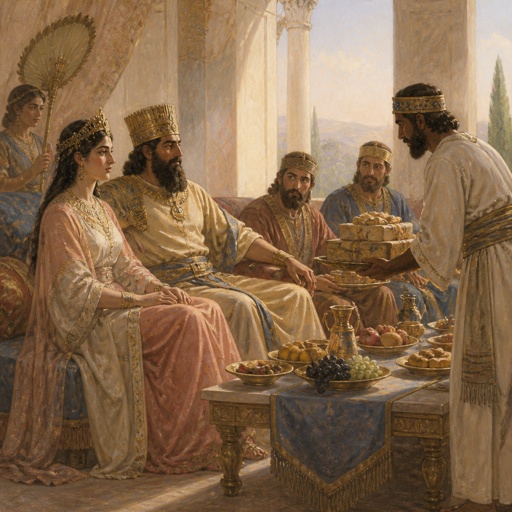
"Then the king made a great feast unto all his princes and his servants, even Esther's feast; and he made a release to the provinces, and gave gifts, according to the state of the king." - Esther 2:18

Esther 1:13 - "¶ Then the king said to the wise men, which knew the times, (for so was the king's manner toward all that knew law and judgment:"

Esther 1:7 - "And they gave them drink in vessels of gold, (the vessels being diverse one from another,) and royal wine in abundance, according to the state of the king."

Esther 1:4 - "When he shewed the riches of his glorious kingdom and the honour of his excellent majesty many days, even an hundred and fourscore days."

Esther 1:12 - "But the queen Vashti refused to come at the king's commandment by his chamberlains: therefore was the king very wroth, and his anger burned in him."

Esther 2:1 - "After these things, when the wrath of king Ahasuerus was appeased, he remembered Vashti, and what she had done, and what was decreed against her."

Esther 1:15 - "What shall we do unto the queen Vashti according to law, because she hath not performed the commandment of the king Ahasuerus by the chamberlains?"

Esther 4:1 - "When Mordecai perceived all that was done, Mordecai rent his clothes, and put on sackcloth with ashes, and went out into the midst of the city, and cried with a loud and a bitter cry;"

Esther 3:1 - "After these things did king Ahasuerus promote Haman the son of Hammedatha the Agagite, and advanced him, and set his seat above all the princes that were with him."