The Majesty of the King: A Reflection on True Greatness
“When he shewed the riches of his glorious kingdom and the honour of his excellent majesty many days, even an hundred and fourscore days.” — Esther 1:4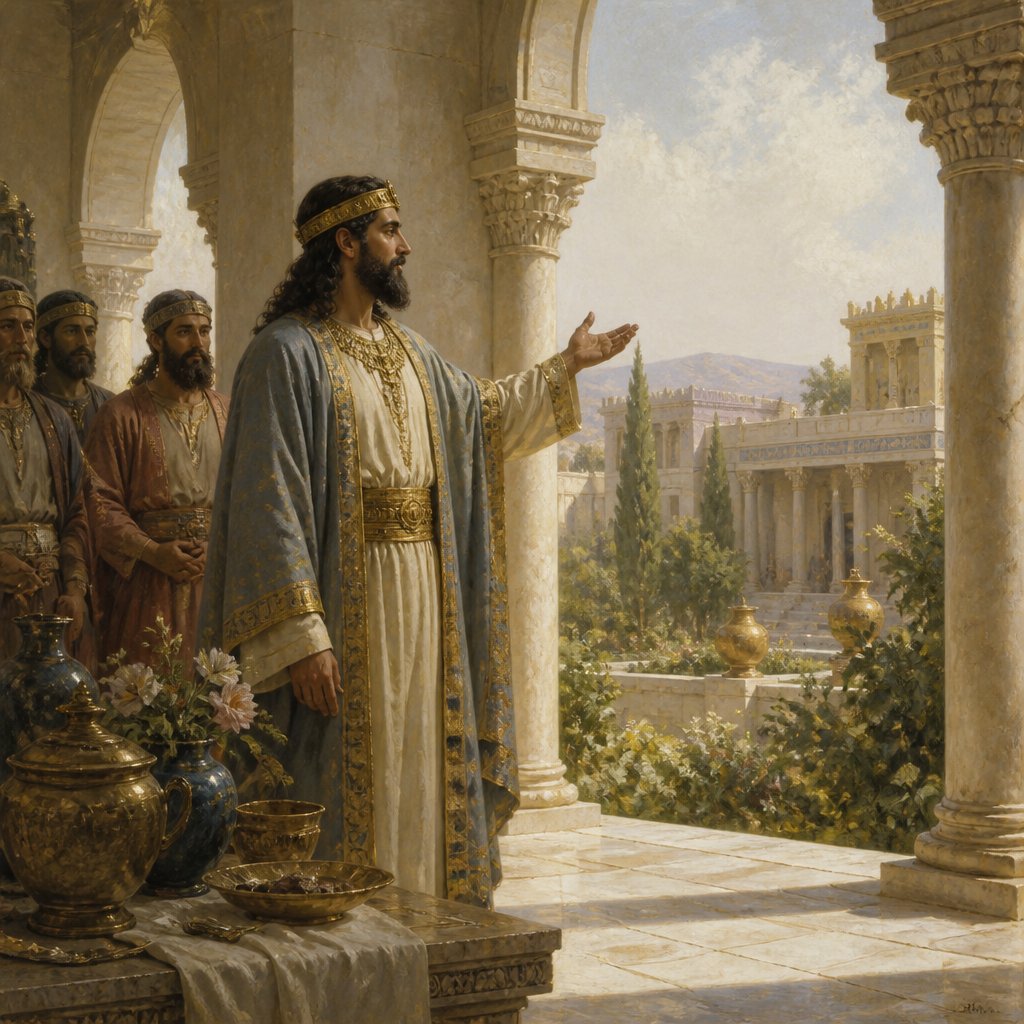
The Book of Esther opens with a stunning image of wealth and power, encapsulated in Esther 1:4: "When he shewed the riches of his glorious kingdom and the honour of his excellent majesty many days, even an hundred and fourscore days." This verse sits as a prelude to the story of empowerment, peril, and providence. It is a reminder that while earthly kingdoms may display grandeur, the true essence of greatness lies deeper than material splendor.
In this magnificent display by King Ahasuerus, we witness the core of human nature—our desire for recognition and acknowledgment of our achievements. The king's extravagance speaks volumes of the pride and power he wields as he flaunts the riches of his realm. For 180 days, he entertains dignitaries and officials, pulling them into his world of luxury, sparking envy and admiration. Yet, within this grand spectacle lies a stark contrast to the ideals of the Kingdom of God.
The riches and honour presented in Ahasuerus’ court might dazzle the eyes, but we must ask ourselves what such glory ultimately signifies. In the Gospel of Matthew, Jesus warns us against laying up treasures on Earth, where moth and rust corrupt and where thieves break in and steal (Matthew 6:19). His call directs us to invest in eternal wealth—love, kindness, and service toward others—while Ahasuerus’ banquet reflects only the temporary allure of worldly possessions. The underlying question we should ponder is: what is the legacy we seek to create, and how do we understand true majesty?
When reflecting on Ahasuerus, we should remember that his reign, full of grand displays, ended in selfishness and moral failure, as evidenced later by his impulsive decisions through the tale. In contrast, when we consider Jesus, who demonstrated the true essence of kingship, we see humility paired with servitude. Jesus, the King of Kings, had no palace, no riches to show, and yet He exhibited a majesty that changes lives and hearts. His entire narrative pivots on servitude, sacrifice, and unfailing love—qualities that stand stark against the backdrop of earthly power.
As believers, we are called to reflect the character of our King, Jesus Christ. The glory we exhibit should not be in the wealth of the world but rather in the depth of our relationships and our willingness to serve others. Consider how Paul admonishes us in 1 Corinthians 4:20, saying, "For the kingdom of God is not in word, but in power." The power of Christ’s love, shown through us, should draw others to the invisible majesty of His kingdom.
Moreover, the verse speaks to the duration of this display, "many days, even an hundred and fourscore days." This impressive timeline indicates a prolonged exhibition of pride—a stark reminder that what can extend too long may lead to spiritual numbness. In our own lives, are we caught up in demonstrations of worldly success that overshadow our spiritual fruitfulness? As our lives progress, let us continually assess what we exhibit day in and day out. A rich life in Christ surpasses what can be grasped by the eyes: it is about grace, humility, and love.
In conclusion, Esther 1:4 serves as more than just a historical context; it is an invitation to inspect our own lives for echoes of Ahasuerus’ path. Let us seek to barter the fleeting glory of earthly riches for the everlasting treasure birthed from our relationship with Christ. Reflect on what it means to truly reign in His spirit—may our pursuits emulate Christ's character, showcasing that true greatness is not in what we display but in who we serve and love.
Get our apps


Artwork for Esther 1:4

Esther 1:4 - "When he shewed the riches of his glorious kingdom and the honour of his excellent majesty many days, even an hundred and fourscore days."
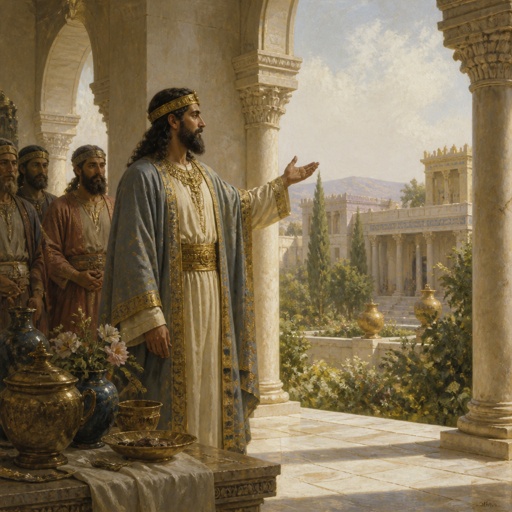
"When he shewed the riches of his glorious kingdom and the honour of his excellent majesty many days, even an hundred and fourscore days." - Esther 1:4

Esther 8:4 - "Then the king held out the golden sceptre toward Esther. So Esther arose, and stood before the king,"

Esther 4:15 - "¶ Then Esther bade them return Mordecai this answer,"

Esther 4:9 - "And Hatach came and told Esther the words of Mordecai."

Esther 4:10 - "¶ Again Esther spake unto Hatach, and gave him commandment unto Mordecai;"

Esther 4:17 - "So Mordecai went his way, and did according to all that Esther had commanded him."

Esther 8:4

Esther 4:12 - "And they told to Mordecai Esther's words."

"And Hatach came and told Esther the words of Mordecai." - Esther 4:9

"¶ Then Esther bade them return Mordecai this answer," - Esther 4:15

Esther 4:13 - "Then Mordecai commanded to answer Esther, Think not with thyself that thou shalt escape in the king's house, more than all the Jews."

Esther 5:4 - "And Esther answered, If it seem good unto the king, let the king and Haman come this day unto the banquet that I have prepared for him."

Esther 7:1 - "So the king and Haman came to banquet with Esther the queen."

Esther 4:1 - "When Mordecai perceived all that was done, Mordecai rent his clothes, and put on sackcloth with ashes, and went out into the midst of the city, and cried with a loud and a bitter cry;"

"Then the king held out the golden sceptre toward Esther. So Esther arose, and stood before the king," - Esther 8:4

Esther 4:5 - "Then called Esther for Hatach, one of the king's chamberlains, whom he had appointed to attend upon her, and gave him a commandment to Mordecai, to know what it was, and why it was."

Esther 1:17

Esther 8:1 - "On that day did the king Ahasuerus give the house of Haman the Jews' enemy unto Esther the queen. And Mordecai came before the king; for Esther had told what he was unto her."

"¶ Again Esther spake unto Hatach, and gave him commandment unto Mordecai;" - Esther 4:10
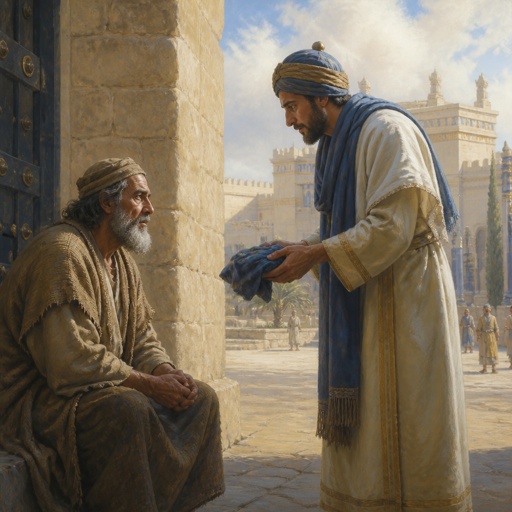
"And they told to Mordecai Esther's words." - Esther 4:12

Esther, the courageous queen

"So the king and Haman came to banquet with Esther the queen." - Esther 7:1

Esther 1:6

"So Mordecai went his way, and did according to all that Esther had commanded him." - Esther 4:17
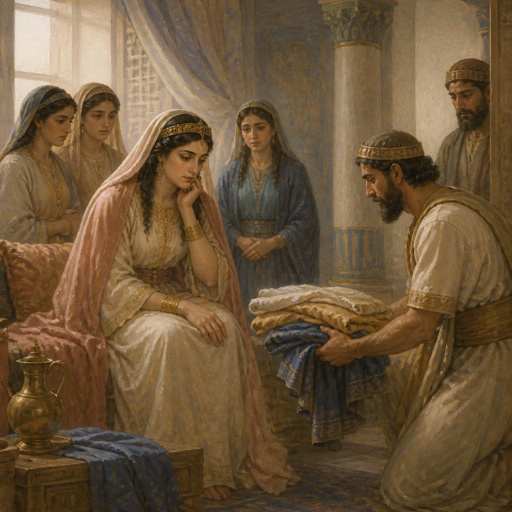
"¶ So Esther's maids and her chamberlains came and told it her. Then was the queen exceedingly grieved; and she sent raiment to clothe Mordecai, and to take away his sackcloth from him: but he received it not." - Esther 4:4

Esther 4:6 - "So Hatach went forth to Mordecai unto the street of the city, which was before the king's gate."

Esther 4:4 - "¶ So Esther's maids and her chamberlains came and told it her. Then was the queen exceedingly grieved; and she sent raiment to clothe Mordecai, and to take away his sackcloth from him: but he received it not."

Esther 4:2 - "And came even before the king's gate: for none might enter into the king's gate clothed with sackcloth."

Esther 4:8 - "Also he gave him the copy of the writing of the decree that was given at Shushan to destroy them, to shew it unto Esther, and to declare it unto her, and to charge her that she should go in unto the king, to make supplication unto him, and to make request before him for her people."