The Strength of Feminine Grace: Lessons from Queen Vashti
“Also Vashti the queen made a feast for the women in the royal house which belonged to king Ahasuerus.” — Esther 1:9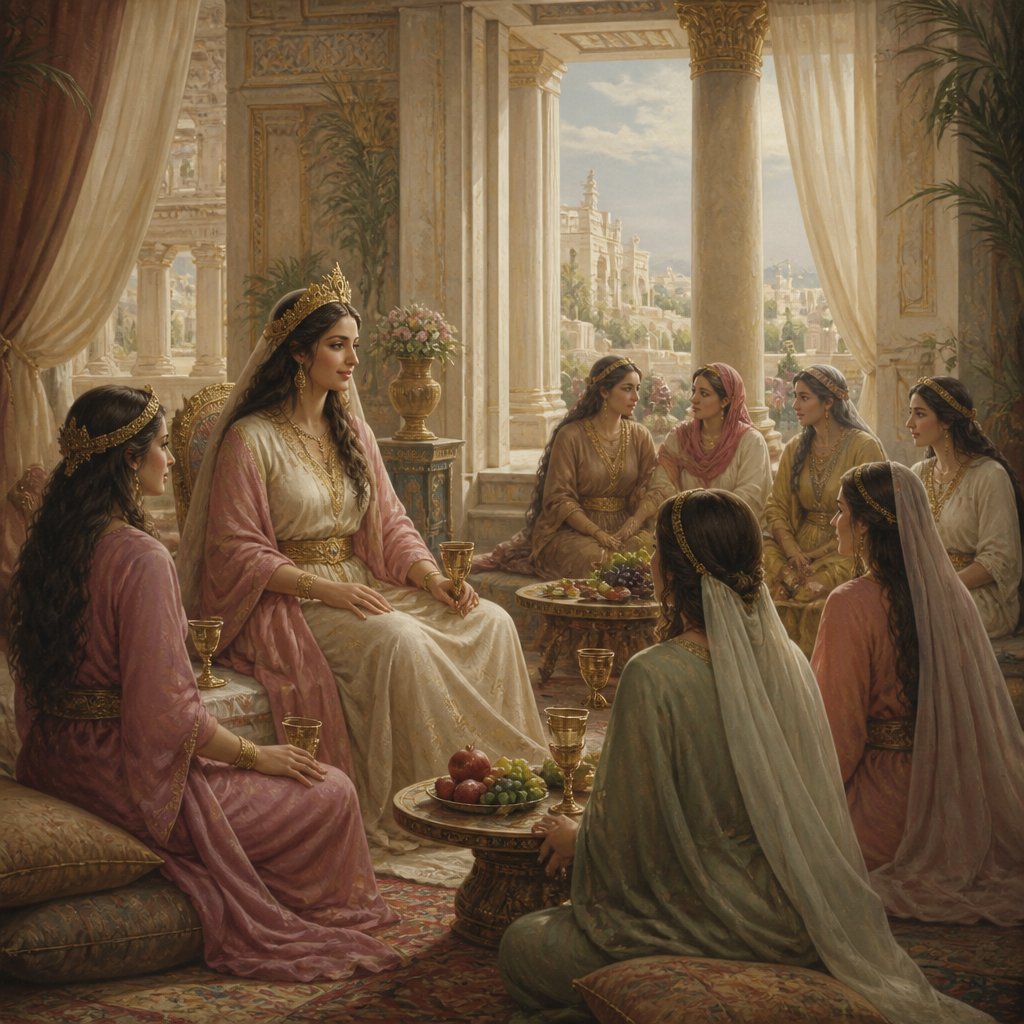
In the book of Esther, we are introduced to a remarkable figure not often celebrated in traditional exegesis—Queen Vashti. The verse from Esther 1:9 proclaims, "Also Vashti the queen made a feast for the women in the royal house which belonged to king Ahasuerus." At first glance, this verse may seem merely descriptive, but within it lies a profound truth about identity, dignity, and the strength of women that is still relevant for today.
Vashti's decision to host a feast for the women speaks volumes about her character and agency. In a culture that often subjugated women, she exercises her right to gather and nurture community among her peers. It indicates her role as a leader, not just by virtue of her title but as someone who understood the importance of fellowship and hospitality. In many ways, she epitomizes the strength found in nurturing relationships and creating spaces where women can find support and encouragement.
However, Vashti's story doesn't conclude with mere camaraderie. As we continue reading, we find that her refusal to comply with King Ahasuerus's request to appear before the men at his feast becomes a significant turning point. This act of defiance speaks to her personal convictions and boundaries. She chooses not to objectify herself for the entertainment of others, recognizing the inherent dignity bestowed upon her as a queen. This decision requires great courage; it reflects a profound understanding of self-worth that transcends royal title.
The implications of her actions open a broader conversation about dignity and respect in both ancient and modern contexts. How often do we find ourselves in situations where we feel pressured to compromise our values? Vashti's choice encourages us to stand firm in our beliefs, regardless of the consequences. It requires us to ask ourselves—what would we prioritize in a moment of vulnerability? Comfort and acceptance, or integrity and authenticity?
In the broader narrative, Vashti's refusal has consequences; she is dethroned and replaced. Yet, it’s critical to note that her story does not end in shame. Instead, it sets the stage for Esther’s rise, showcasing how one woman’s stand for dignity can create ripples leading to redemption. Herein lies a quintessential lesson: standing for what is right may not always result in societal approval or immediate reward, but it can catalyze change and inspire future generations.
Moreover, Vashti's feast symbolizes a sanctuary where women come together, emphasizing the nurturing power of community. In today’s fast-paced and often isolating world, this calls for us to create spaces where we can support one another. It’s a reminder of the importance of gathering, be it through formal meetings, social groups, or simply sharing meals with one another. Like Vashti, we too can become catalysts for encouragement and empowerment among women.
In reflecting on Vashti’s actions, we are invited to consider our own lives and how we can honor our dignity while also supporting those around us. Will we foster environments that uplift each other? How do we respond when our values are tested? Vashti’s legacy challenges us to rise to these occasions with grace, courage, and integrity.
As we meditate on Esther 1:9, let us celebrate the essence of feminine strength that Vashti embodies. May we be inspired to take a stand when it matters, to create bonds of sisterhood, and to live out our convictions in ways that reflect the deep values of our faith. In a world that often overlooks women’s contributions, let Vashti be a beacon of strength, resilience, and dignity for us all.
Get our apps


Artwork for Esther 1:9

Esther 1:9 - "Also Vashti the queen made a feast for the women in the royal house which belonged to king Ahasuerus."
"Also Vashti the queen made a feast for the women in the royal house which belonged to king Ahasuerus." - Esther 1:9

Esther 4:9 - "And Hatach came and told Esther the words of Mordecai."

Esther 9:32 - "And the decree of Esther confirmed these matters of Purim; and it was written in the book."

Esther 9:9 - "And Parmashta, and Arisai, and Aridai, and Vajezatha,"

Esther 9:29 - "Then Esther the queen, the daughter of Abihail, and Mordecai the Jew, wrote with all authority, to confirm this second letter of Purim."

"And Hatach came and told Esther the words of Mordecai." - Esther 4:9

Esther 9:8 - "And Poratha, and Adalia, and Aridatha,"

Esther 9:7 - "And Parshandatha, and Dalphon, and Aspatha,"

"And the decree of Esther confirmed these matters of Purim; and it was written in the book." - Esther 9:32
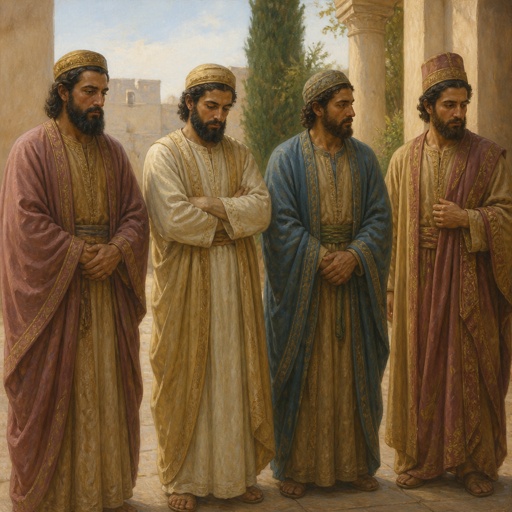
"And Parmashta, and Arisai, and Aridai, and Vajezatha," - Esther 9:9

Esther 7:1 - "So the king and Haman came to banquet with Esther the queen."

Esther 9:31 - "To confirm these days of Purim in their times appointed, according as Mordecai the Jew and Esther the queen had enjoined them, and as they had decreed for themselves and for their seed, the matters of the fastings and their cry."

Esther 9:13 - "Then said Esther, If it please the king, let it be granted to the Jews which are in Shushan to do to morrow also according unto this day's decree, and let Haman's ten sons be hanged upon the gallows."
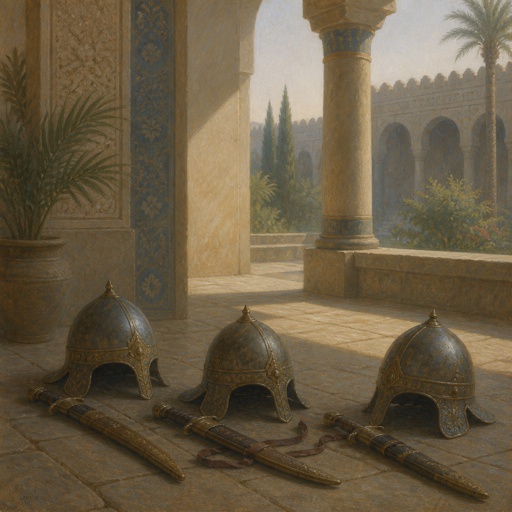
"And Parshandatha, and Dalphon, and Aspatha," - Esther 9:7
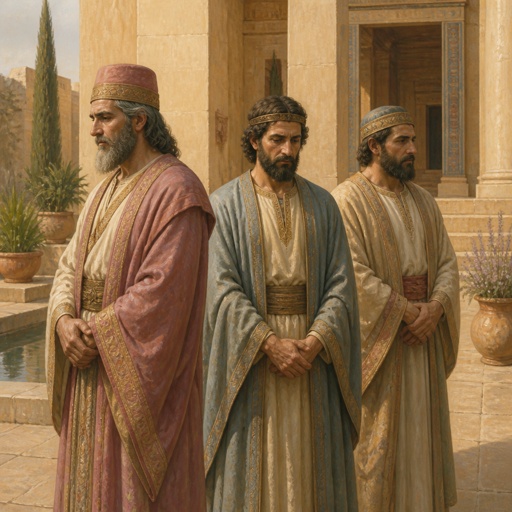
"And Poratha, and Adalia, and Aridatha," - Esther 9:8

Esther 1:17

Esther 9:6 - "And in Shushan the palace the Jews slew and destroyed five hundred men."

Esther 8:1 - "On that day did the king Ahasuerus give the house of Haman the Jews' enemy unto Esther the queen. And Mordecai came before the king; for Esther had told what he was unto her."

Esther 9:25 - "But when Esther came before the king, he commanded by letters that his wicked device, which he devised against the Jews, should return upon his own head, and that he and his sons should be hanged on the gallows."

Esther 9:10 - "The ten sons of Haman the son of Hammedatha, the enemy of the Jews, slew they; but on the spoil laid they not their hand."

Esther 9:11 - "On that day the number of those that were slain in Shushan the palace was brought before the king."

Esther 9:23 - "And the Jews undertook to do as they had begun, and as Mordecai had written unto them;"
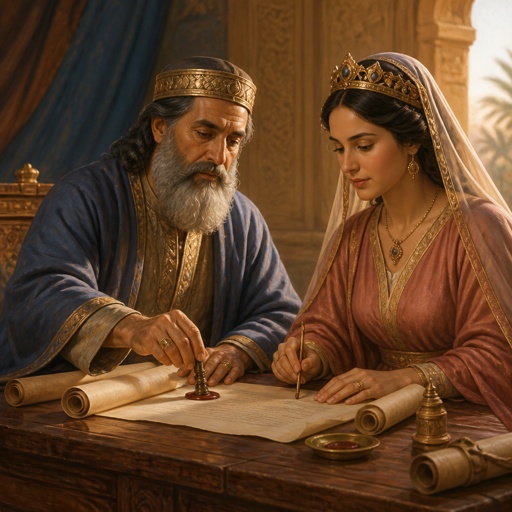
"Then Esther the queen, the daughter of Abihail, and Mordecai the Jew, wrote with all authority, to confirm this second letter of Purim." - Esther 9:29

Esther, the courageous queen

"So the king and Haman came to banquet with Esther the queen." - Esther 7:1

Esther 1:6

Esther 9:17 - "On the thirteenth day of the month Adar; and on the fourteenth day of the same rested they, and made it a day of feasting and gladness."

Esther 9:14 - "And the king commanded it so to be done: and the decree was given at Shushan; and they hanged Haman's ten sons."

Esther 9:21 - "To stablish this among them, that they should keep the fourteenth day of the month Adar, and the fifteenth day of the same, yearly,"