Sitting at the King's Gate: The Subtle Sovereignty of God
“And when the virgins were gathered together the second time, then Mordecai sat in the king’s gate.” — Esther 2:19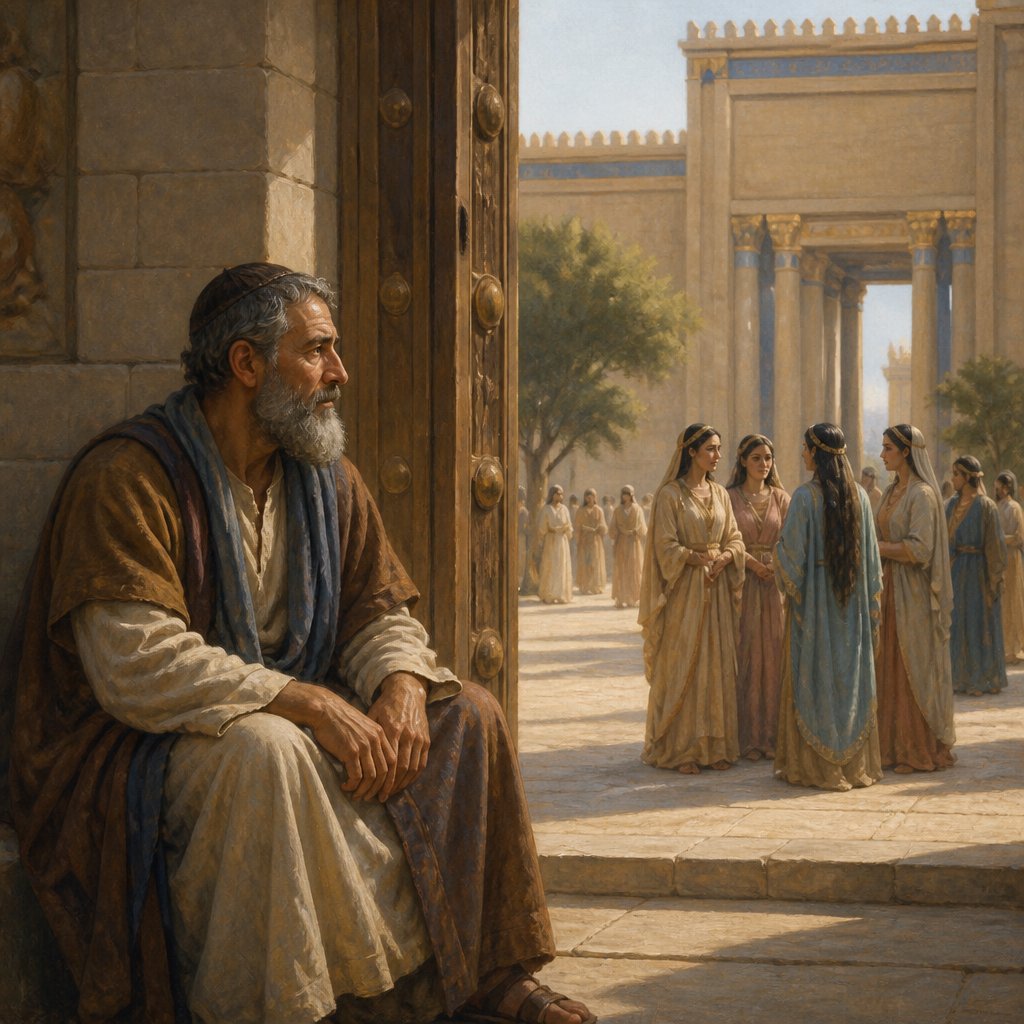
The book of Esther is a beautiful tapestry of God's unseen hand at work in the lives of His people. It is a narrative woven with courage, faith, and the profound realization that even in the most secular of settings, God maintains His authority. Esther 2:19 states, "And when the virgins were gathered together the second time, then Mordecai sat in the king's gate." This passage, while seemingly straightforward, invites us to delve deeper into its meanings and implications.
In the context of the narrative, we find ourselves observing a young Jewish woman, Esther, who is raised in a perilous time within the Persian Empire. Her cousin Mordecai, a man of wisdom and integrity, plays a critical role in her life and the unfolding events that will ultimately determine the fate of the Jewish people. When we read that Mordecai is sitting at the king's gate, we must realize that this is much more than a mere occupation of space—it signifies a position of influence and authority.
### The Significance of the King's Gate
The king's gate in ancient Persia was not just an entry point; it was a location bustling with activity and a hub of political maneuvering. It was here that decisions were made, news was disseminated, and justice was administered. By mentioning that Mordecai sat at the king's gate, Scripture highlights his strategic involvement in the affairs of the empire. It suggests that while he may not have the religious authority of a priest or prophet, he holds a vital position in the secular realm, one that allows him to watch over Esther and protect her.
Mordecai's presence at the gate exemplifies how God’s people are called to be involved in society. We may not always work in explicitly Christian environments, but like Mordecai, we are tasked with representing God's values in all areas of life. His actions at the gate remind us of the importance of being present where decisions are made and cultural narratives are shaped. Mordecai is not hiding his identity or withdrawing into isolation; he is right in the middle of the action, demonstrating that God's sovereignty operates in both sacred and secular spheres.
### A Lesson in Patience and Providence
Though the focus of this verse is on Mordecai, it also serves as a precursor to the unfolding of God’s providence. At this pivotal moment, he sits waiting, perhaps watching and praying. There is a lesson in waiting—Mordecai knows that God’s timing is of utmost importance. Just as he patiently waits at the gate, we too must be patient with our circumstances. In our waiting, God is often preparing a great work. He orchestrates events and expands His plans; we merely need to remain faithful.
Moreover, the gathering of the virgins a second time alludes to the fluctuating fortunes of those involved in the king's court. It serves as a reminder that earthly positions are transient and that the true stability comes from God alone. This realization should encourage us not to put our trust in human systems or positions. God has a plan that transcends the chaos of royal courts and personal ambitions.
### Conclusion: Trusting the Sovereign God
As we reflect on Esther 2:19, let us remember that God’s sovereignty is present even in moments that seem mundane. Mordecai’s placement at the king's gate was crucial for the safety of the Jewish people and the eventual elevating of Esther to her role as queen. In our lives, we often overlook the significance of where we are and the impact we can have. Like Mordecai, we must be vigilant, active, and faithful in our responsibilities while trusting that God is slowly but surely working out His divine plan. Let us strive to sit at our own ‘king’s gates’—our workplaces, families, and communities—with the same level of intention and integrity, ensuring we are conduits of His light and love in all that we do.
Get our apps


Artwork for Esther 2:19

Esther 2:19 - "And when the virgins were gathered together the second time, then Mordecai sat in the king's gate."
"And when the virgins were gathered together the second time, then Mordecai sat in the king's gate." - Esther 2:19

Esther 2:22 - "And the thing was known to Mordecai, who told it unto Esther the queen; and Esther certified the king thereof in Mordecai's name."

Esther 5:2 - "And it was so, when the king saw Esther the queen standing in the court, that she obtained favour in his sight: and the king held out to Esther the golden sceptre that was in his hand. So Esther drew near, and touched the top of the sceptre."

Esther 7:2 - "And the king said again unto Esther on the second day at the banquet of wine, What is thy petition, queen Esther? and it shall be granted thee: and what is thy request? and it shall be performed, even to the half of the kingdom."

Esther 2:20 - "Esther had not yet shewed her kindred nor her people; as Mordecai had charged her: for Esther did the commandment of Mordecai, like as when she was brought up with him."

Esther 5:2

Esther 5:2

Esther 5:2

Esther 2:11 - "And Mordecai walked every day before the court of the women's house, to know how Esther did, and what should become of her."

Esther 2:10 - "Esther had not shewed her people nor her kindred: for Mordecai had charged her that she should not shew it."

Esther 5:2 - "And it was so, when the king saw Esther the queen standing in the court, that she obtained favour in his sight: and the king held out to Esther the golden sceptre that was in his hand. So Esther drew near, and touched the top of the sceptre."

"And the thing was known to Mordecai, who told it unto Esther the queen; and Esther certified the king thereof in Mordecai's name." - Esther 2:22

Esther 2:16 - "So Esther was taken unto king Ahasuerus into his house royal in the tenth month, which is the month Tebeth, in the seventh year of his reign."

Esther 8:2 - "And the king took off his ring, which he had taken from Haman, and gave it unto Mordecai. And Esther set Mordecai over the house of Haman."
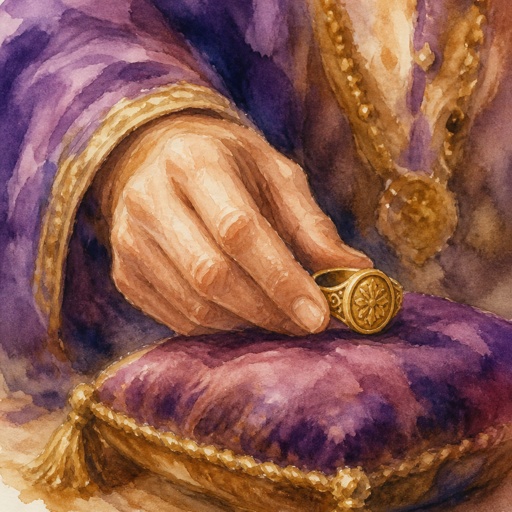
Esther 8:2 focus on the ring

Esther 2:15 - "¶ Now when the turn of Esther, the daughter of Abihail the uncle of Mordecai, who had taken her for his daughter, was come to go in unto the king, she required nothing but what Hegai the king's chamberlain, the keeper of the women, appointed. And Esther obtained favour in the sight of all them that looked upon her."

Esther 2:2 - "Then said the king's servants that ministered unto him, Let there be fair young virgins sought for the king:"

Esther 9:19 - "Therefore the Jews of the villages, that dwelt in the unwalled towns, made the fourteenth day of the month Adar a day of gladness and feasting, and a good day, and of sending portions one to another."

Esther 2:17 - "And the king loved Esther above all the women, and she obtained grace and favour in his sight more than all the virgins; so that he set the royal crown upon her head, and made her queen instead of Vashti."

Esther 2:7 - "And he brought up Hadassah, that is, Esther, his uncle's daughter: for she had neither father nor mother, and the maid was fair and beautiful; whom Mordecai, when her father and mother were dead, took for his own daughter."
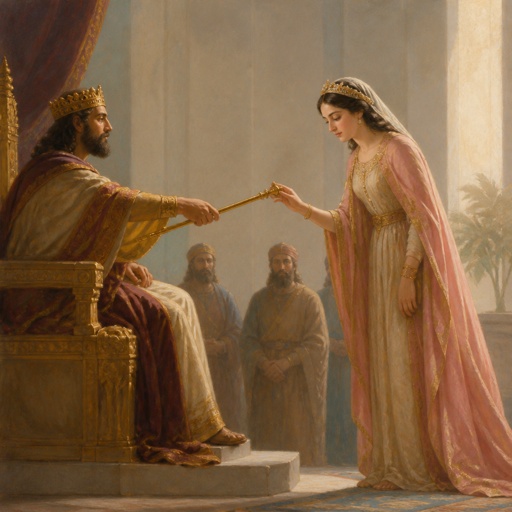
"And it was so, when the king saw Esther the queen standing in the court, that she obtained favour in his sight: and the king held out to Esther the golden sceptre that was in his hand. So Esther drew near, and touched the top of the sceptre." - Esther 5:2

Esther 2:8 - "¶ So it came to pass, when the king's commandment and his decree was heard, and when many maidens were gathered together unto Shushan the palace, to the custody of Hegai, that Esther was brought also unto the king's house, to the custody of Hegai, keeper of the women."

Esther 1:2 - "That in those days, when the king Ahasuerus sat on the throne of his kingdom, which was in Shushan the palace,"
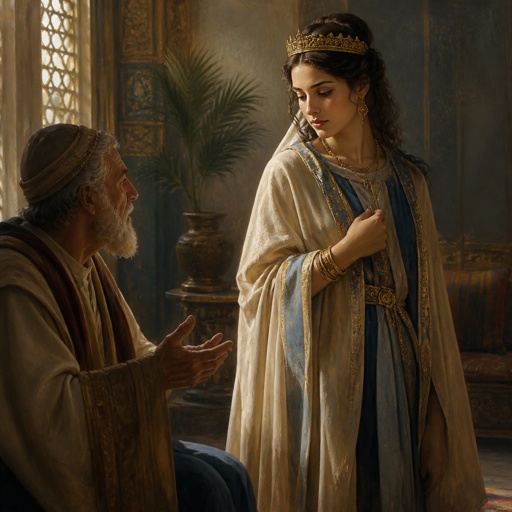
"Esther had not yet shewed her kindred nor her people; as Mordecai had charged her: for Esther did the commandment of Mordecai, like as when she was brought up with him." - Esther 2:20

Esther 4:2 - "And came even before the king's gate: for none might enter into the king's gate clothed with sackcloth."
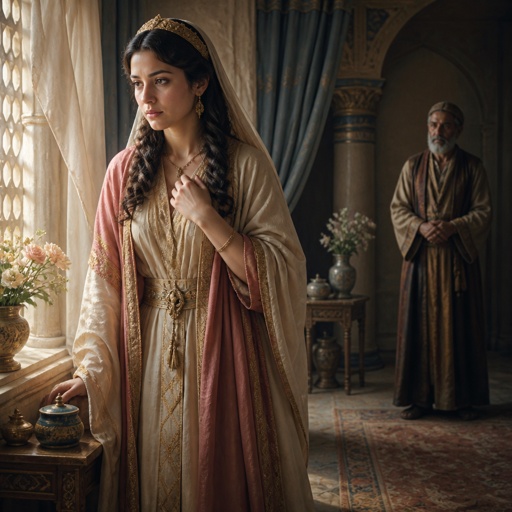
"Esther had not shewed her people nor her kindred: for Mordecai had charged her that she should not shew it." - Esther 2:10
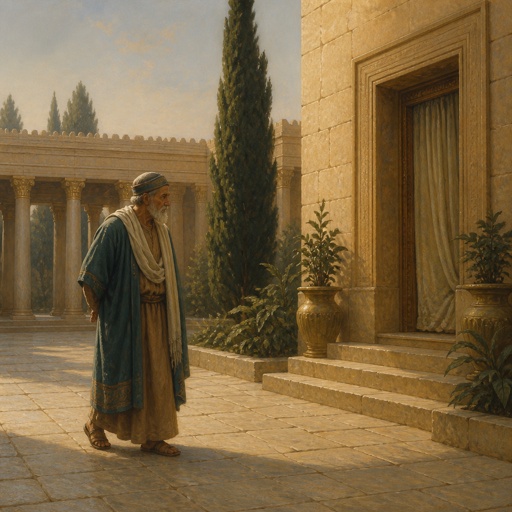
"And Mordecai walked every day before the court of the women's house, to know how Esther did, and what should become of her." - Esther 2:11
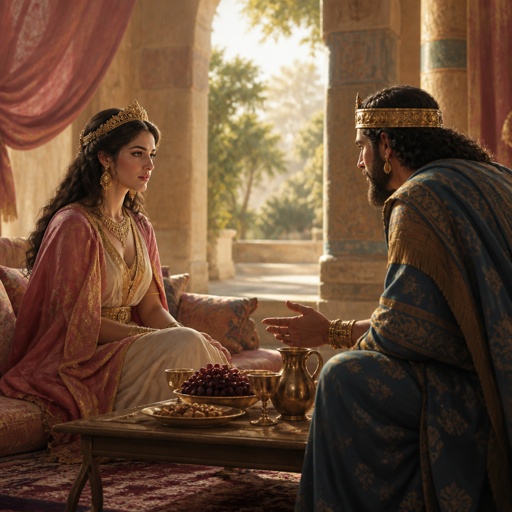
"And the king said again unto Esther on the second day at the banquet of wine, What is thy petition, queen Esther? and it shall be granted thee: and what is thy request? and it shall be performed, even to the half of the kingdom." - Esther 7:2

Esther 2:4 - "And let the maiden which pleaseth the king be queen instead of Vashti. And the thing pleased the king; and he did so."