Chosen for a Purpose: The Beauty of Divine Selection
“Then said the king’s servants that ministered unto him, Let there be fair young virgins sought for the king:” — Esther 2:2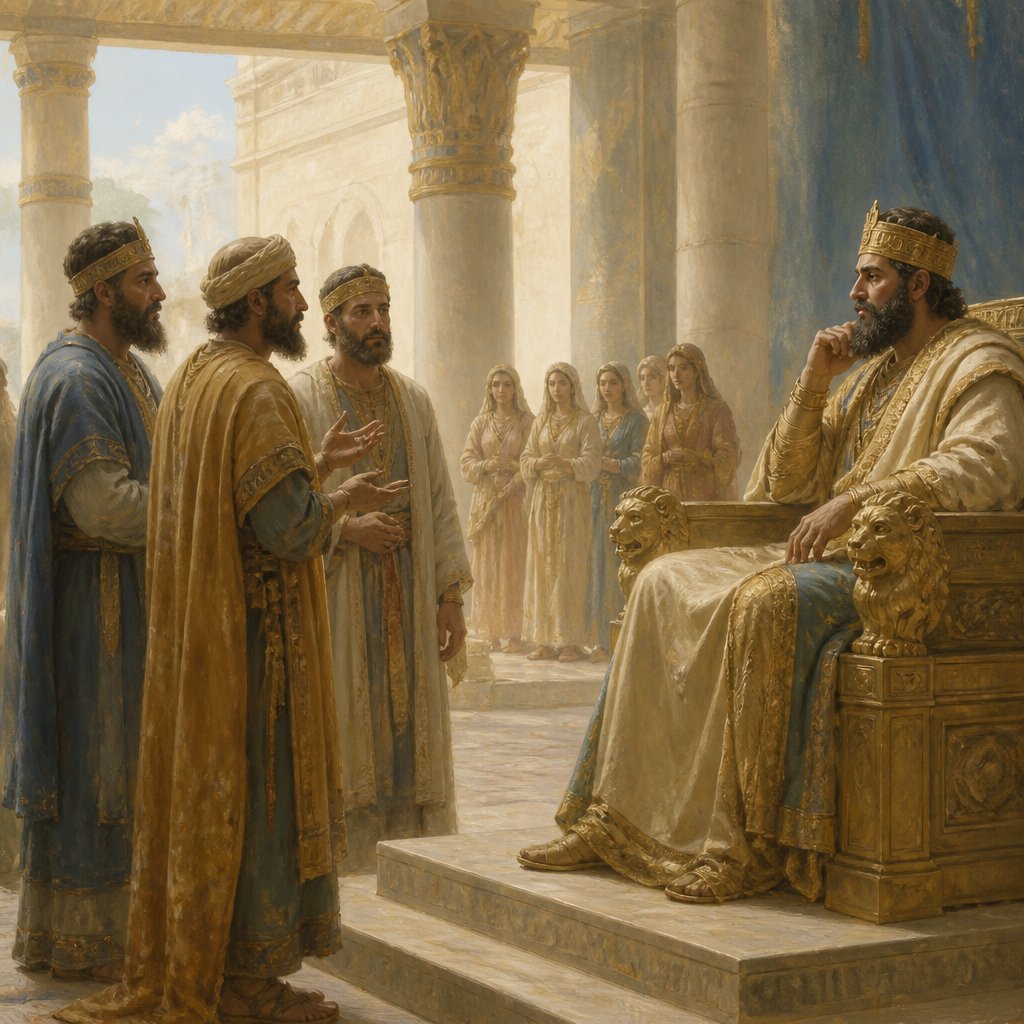
As we delve into the story of Esther as presented in Esther 2:2, we encounter a pivotal moment in the narrative that is rich with meaning and significance. The verse reads, "Then said the king's servants that ministered unto him, Let there be fair young virgins sought for the king" (Esther 2:2, KJV). This simple command from the king’s servants sets into motion a series of events that will have far-reaching consequences for an entire nation.
The background of this verse is crucial. The king, Ahasuerus, had just dismissed his former queen, Vashti. As a ruler, he needed a new queen, and who better to fulfil that role than a young woman of beauty and virtue? The king's servants recognize the importance of their task, as they are not merely searching for women to serve a king’s desire for beauty but for a person destined to rise to a position of influence and responsibility.
In this moment, we witness God's providence. The process of seeking the fairest young virgins is not merely an arbitrary selection; it is a divine orchestrating of events. God had a purpose for Esther, a Jewish girl who would not have seemed significant in a land that did not know her people or their God. Yet, in this selection process, we see God's hand preparing Esther for her destiny.
When we talk about being 'fair' and 'young', it’s easy to get caught up in the societal emphasis on physical beauty. However, we must remind ourselves that God's concerns reach far deeper than outward appearances. The search for fair young virgins also symbolizes purity and humility—qualities that God desires in anyone He chooses to fulfill His plans. Purity goes beyond physical modesty; it signifies a heart that is devoted to the Lord and set apart for His purpose.
Esther's journey begins here and leads her to a place of not just beauty but of immense responsibility. She would need to navigate the challenges of her new role as queen and ultimately emerge as a courageous leader for her people in a time of peril. This leads us to reflect on our own preparations and the ways God shapes us for our destiny.
Each of us has a calling in our lives, albeit unique and different from Esther's. However, just like her, we are often called to step into roles that require bravery, wisdom, and faith in God’s plan. When we face the challenge of feeling insignificant or unequipped, we can remember that God chooses us not based on our abilities or outward appearances, but according to His divine will and purpose.
Moreover, the community around Esther—represented by the king’s servants—is also noteworthy. Their role in selecting the fair virgins illustrates the importance of supportive relationships in our lives. God often works through others to guide us, to prepare us to step into our calling. Let us look around and be mindful of those who encourage us, who see potential in us that we may overlook in ourselves. Are we being those supportive voices for others? Are we helping to uncover the hidden gifts and purposes within those around us?
As we embrace our personal journeys and respond to God's calling, let's remember Esther's story reminds us of the divine purpose in our lives. No matter how ordinary or unworthy we may feel, God's selection is based on His perfect plan, and He elevates those who are willing to submit to His will.
In this season of uncertainty, let us lean into God's guidance, trusting that He is at work in our lives, preparing us for our moment in the spotlight—our moment to impact the world for His glory. May we find strength and courage in His selection, walking forward in faith, knowing that we are fair and precious in His sight.
Get our apps


Artwork for Esther 2:2

Esther 2:2 - "Then said the king's servants that ministered unto him, Let there be fair young virgins sought for the king:"
"Then said the king's servants that ministered unto him, Let there be fair young virgins sought for the king:" - Esther 2:2

Esther 2:22 - "And the thing was known to Mordecai, who told it unto Esther the queen; and Esther certified the king thereof in Mordecai's name."

Esther 5:2

Esther 5:2

Esther 5:2

Esther 5:2 - "And it was so, when the king saw Esther the queen standing in the court, that she obtained favour in his sight: and the king held out to Esther the golden sceptre that was in his hand. So Esther drew near, and touched the top of the sceptre."

Esther 2:11 - "And Mordecai walked every day before the court of the women's house, to know how Esther did, and what should become of her."

Esther 2:20 - "Esther had not yet shewed her kindred nor her people; as Mordecai had charged her: for Esther did the commandment of Mordecai, like as when she was brought up with him."

Esther 2:10 - "Esther had not shewed her people nor her kindred: for Mordecai had charged her that she should not shew it."

Esther 7:2 - "And the king said again unto Esther on the second day at the banquet of wine, What is thy petition, queen Esther? and it shall be granted thee: and what is thy request? and it shall be performed, even to the half of the kingdom."
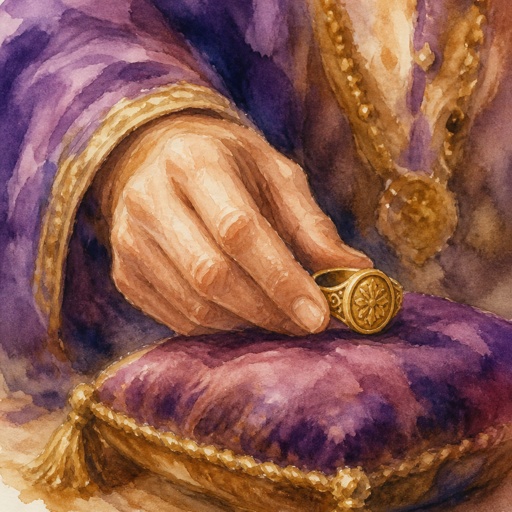
Esther 8:2 focus on the ring

Esther 2:16 - "So Esther was taken unto king Ahasuerus into his house royal in the tenth month, which is the month Tebeth, in the seventh year of his reign."

Esther 8:2 - "And the king took off his ring, which he had taken from Haman, and gave it unto Mordecai. And Esther set Mordecai over the house of Haman."

Esther 5:2 - "And it was so, when the king saw Esther the queen standing in the court, that she obtained favour in his sight: and the king held out to Esther the golden sceptre that was in his hand. So Esther drew near, and touched the top of the sceptre."

"And the thing was known to Mordecai, who told it unto Esther the queen; and Esther certified the king thereof in Mordecai's name." - Esther 2:22

Esther 2:15 - "¶ Now when the turn of Esther, the daughter of Abihail the uncle of Mordecai, who had taken her for his daughter, was come to go in unto the king, she required nothing but what Hegai the king's chamberlain, the keeper of the women, appointed. And Esther obtained favour in the sight of all them that looked upon her."

Esther 2:19 - "And when the virgins were gathered together the second time, then Mordecai sat in the king's gate."

Esther 1:2 - "That in those days, when the king Ahasuerus sat on the throne of his kingdom, which was in Shushan the palace,"

Esther 4:2 - "And came even before the king's gate: for none might enter into the king's gate clothed with sackcloth."

Esther 2:7 - "And he brought up Hadassah, that is, Esther, his uncle's daughter: for she had neither father nor mother, and the maid was fair and beautiful; whom Mordecai, when her father and mother were dead, took for his own daughter."

Esther 2:17 - "And the king loved Esther above all the women, and she obtained grace and favour in his sight more than all the virgins; so that he set the royal crown upon her head, and made her queen instead of Vashti."

Esther 2:8 - "¶ So it came to pass, when the king's commandment and his decree was heard, and when many maidens were gathered together unto Shushan the palace, to the custody of Hegai, that Esther was brought also unto the king's house, to the custody of Hegai, keeper of the women."

Esther 2:4 - "And let the maiden which pleaseth the king be queen instead of Vashti. And the thing pleased the king; and he did so."

Esther 2:5 - "¶ Now in Shushan the palace there was a certain Jew, whose name was Mordecai, the son of Jair, the son of Shimei, the son of Kish, a Benjamite;"

Esther 2:23 - "And when inquisition was made of the matter, it was found out; therefore they were both hanged on a tree: and it was written in the book of the chronicles before the king."
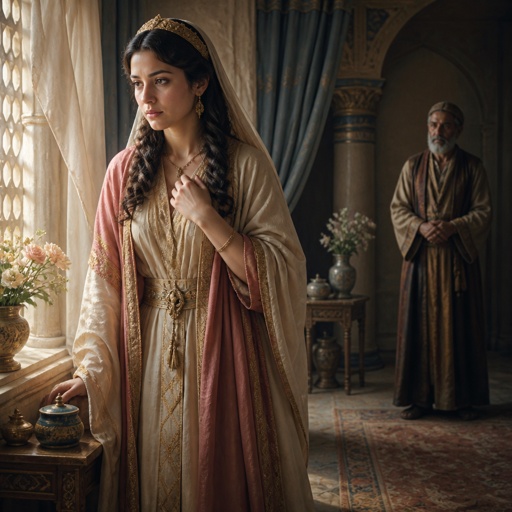
"Esther had not shewed her people nor her kindred: for Mordecai had charged her that she should not shew it." - Esther 2:10

Esther 2:1 - "After these things, when the wrath of king Ahasuerus was appeased, he remembered Vashti, and what she had done, and what was decreed against her."
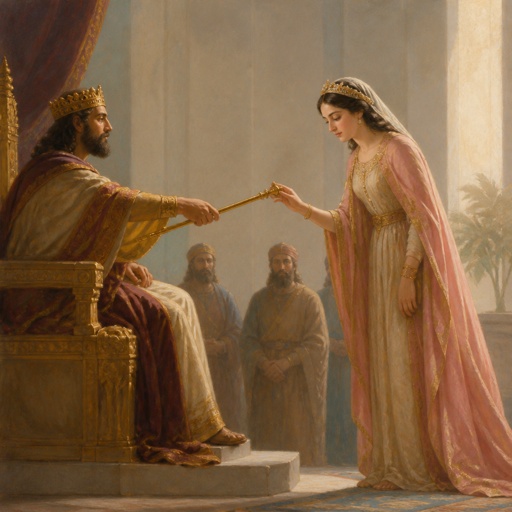
"And it was so, when the king saw Esther the queen standing in the court, that she obtained favour in his sight: and the king held out to Esther the golden sceptre that was in his hand. So Esther drew near, and touched the top of the sceptre." - Esther 5:2
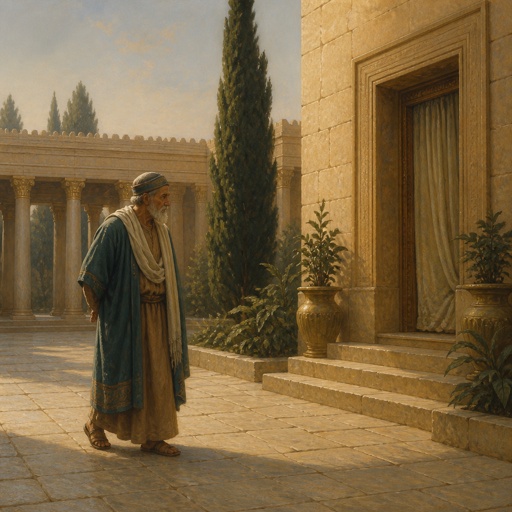
"And Mordecai walked every day before the court of the women's house, to know how Esther did, and what should become of her." - Esther 2:11