The Quiet Faithfulness in the King's Gate
“In those days, while Mordecai sat in the king’s gate, two of the king’s chamberlains, Bigthan and Teresh, of those which kept the door, were wroth, and sought to lay hand on the king Ahasuerus.” — Esther 2:21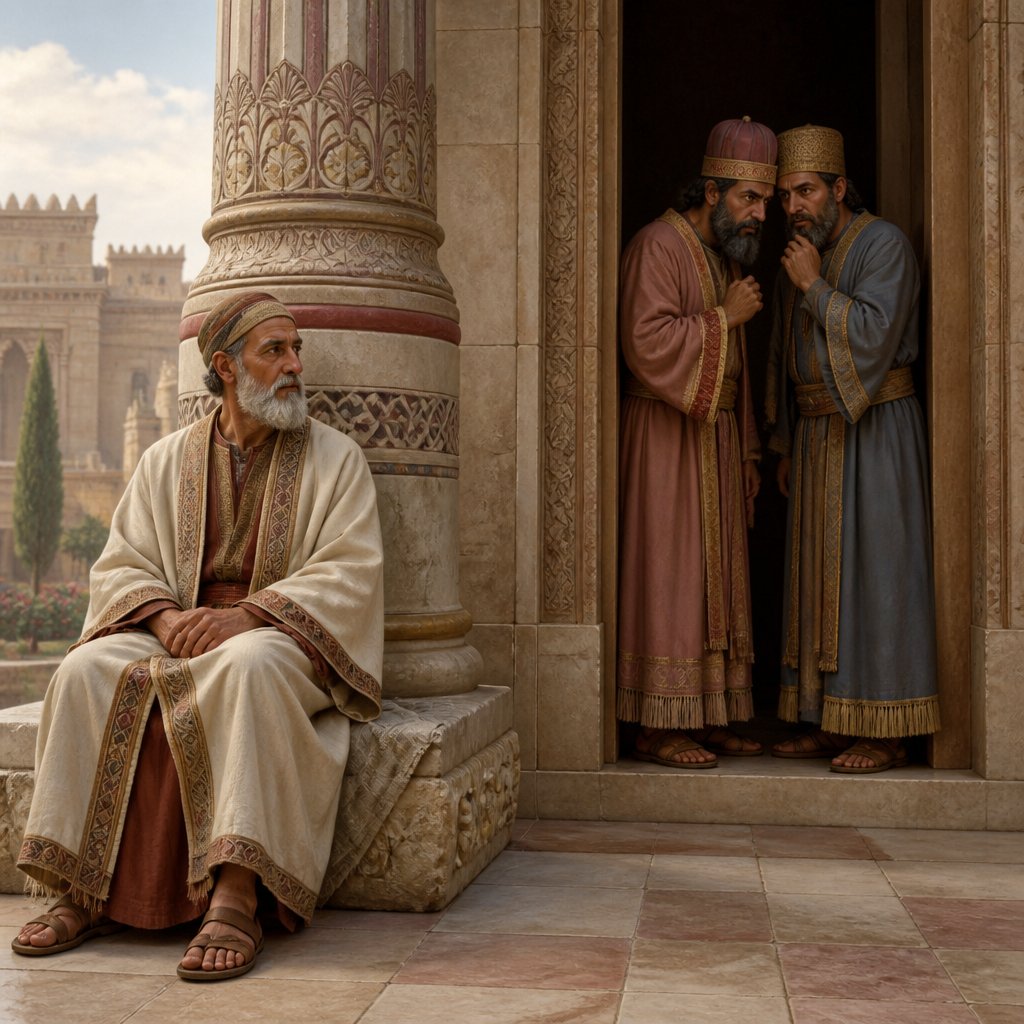
Esther 2:21 states, "In those days, while Mordecai sat in the king's gate, two of the king's chamberlains, Bigthan and Teresh, of those which kept the door, were wroth, and sought to lay hand on the king Ahasuerus." At first glance, this scripture appears to be a simple historical account, a mere footnote in the unfolding drama of the Book of Esther. However, upon deeper reflection, it reveals profound truths about vigilance, duty, and the providence of God.
Mordecai, a faithful Jew in a foreign land, found himself in a critical position at the king's gate. This place was not merely a physical location; it was symbolic of his role in the affairs of the kingdom and, ultimately, in God’s divine plan. Sitting at the gate indicated that Mordecai was of significant importance, perhaps even a counselor to the king. In this space—an intersection of power and influence—Mordecai exemplifies what it means to be a faithful servant, a role model for us today.
The story of Mordecai is vital in understanding the importance of remaining faithful even when circumstances are challenging. Mordecai’s position was not one of prominence in the way the world often values status, but his dedication to his duty was unwavering. He did not seek to elevate himself through political maneuvering or manipulation. Instead, he stayed true to his responsibilities, embodying the quiet conviction of serving God where he had been placed.
"In those days," signifies that life had a series of challenges and confrontations. For Mordecai, it was not just about watching over the king but actively engaging in the spiritual battle against those who sought destruction. The plot by the two chamberlains, Bigthan and Teresh, reminds us of the malevolent forces that exist in our world—forces that contrary to God's will. Yet, rather than surrendering to fear, Mordecai’s character shines through his steadfastness.
Mordecai overheard a plot against the king’s life. This moment illustrates the significance of being alert in our spiritual walk. How often do we become complacent, absorbed in our personal lives, detached from the burdens and battles of those around us? Mordecai’s attentiveness not only saved Ahasuerus’s life but also placed him firmly in the hand of God’s providence. We must remember that God often uses our everyday encounters to orchestrate His plans. Our seemingly mundane duties may serve as the very foundation for a miracle.
In these times of uncertainty, we might feel overshadowed or insignificant, yet Mordecai’s story reminds us that the Lord’s purposes are rarely apparent at first glance. The faithful act of reporting the conspiracy would later lead to Mordecai’s exaltation. God’s timing is perfect, and as Mordecai remained faithful, he found himself at the heart of the unfolding redemption of his people.
Additionally, this passage teaches us about the importance of moral courage. Mordecai could have chosen to remain silent, to ignore the plot against Ahasuerus for fear of the repercussions it might bring. Instead, he took a stand. In a world wrestling with ethical dilemmas, the reminder of standing up for what is right is paramount. The act of exposing a conspiracy took courage, and for us today, standing up for truth in our everyday lives requires the same bravery.
Ultimately, as we meditate on Esther 2:21, let us reflect on where God has positioned us in our lives. Are we faithfully carrying out our duties in our homes, workplaces, and communities? Are there moments wherein God is calling us to speak up or take action against injustices? In faithfulness, let us strive to reflect the steadfastness of Mordecai, trusting that every act, no matter how small, can be a part of God's grand design to fulfill His promises. Let us be reminded that in the kingdom of God, every moment counts, and every opportunity is a chance to shine His light.
Get our apps


Artwork for Esther 2:21

Esther 2:21 - "¶ In those days, while Mordecai sat in the king's gate, two of the king's chamberlains, Bigthan and Teresh, of those which kept the door, were wroth, and sought to lay hand on the king Ahasuerus."
"¶ In those days, while Mordecai sat in the king's gate, two of the king's chamberlains, Bigthan and Teresh, of those which kept the door, were wroth, and sought to lay hand on the king Ahasuerus." - Esther 2:21

Esther 2:22 - "And the thing was known to Mordecai, who told it unto Esther the queen; and Esther certified the king thereof in Mordecai's name."

Esther 2:1 - "After these things, when the wrath of king Ahasuerus was appeased, he remembered Vashti, and what she had done, and what was decreed against her."

Esther 1:21 - "And the saying pleased the king and the princes; and the king did according to the word of Memucan:"

Esther 5:2 - "And it was so, when the king saw Esther the queen standing in the court, that she obtained favour in his sight: and the king held out to Esther the golden sceptre that was in his hand. So Esther drew near, and touched the top of the sceptre."

Esther 7:2 - "And the king said again unto Esther on the second day at the banquet of wine, What is thy petition, queen Esther? and it shall be granted thee: and what is thy request? and it shall be performed, even to the half of the kingdom."

Esther 2:20 - "Esther had not yet shewed her kindred nor her people; as Mordecai had charged her: for Esther did the commandment of Mordecai, like as when she was brought up with him."

Esther 5:2

Esther 5:2

Esther 5:2

Esther 2:11 - "And Mordecai walked every day before the court of the women's house, to know how Esther did, and what should become of her."

Esther 9:21 - "To stablish this among them, that they should keep the fourteenth day of the month Adar, and the fifteenth day of the same, yearly,"

Esther 2:10 - "Esther had not shewed her people nor her kindred: for Mordecai had charged her that she should not shew it."

Esther 5:2 - "And it was so, when the king saw Esther the queen standing in the court, that she obtained favour in his sight: and the king held out to Esther the golden sceptre that was in his hand. So Esther drew near, and touched the top of the sceptre."

"And the thing was known to Mordecai, who told it unto Esther the queen; and Esther certified the king thereof in Mordecai's name." - Esther 2:22

Esther 2:16 - "So Esther was taken unto king Ahasuerus into his house royal in the tenth month, which is the month Tebeth, in the seventh year of his reign."

Esther 8:2 - "And the king took off his ring, which he had taken from Haman, and gave it unto Mordecai. And Esther set Mordecai over the house of Haman."
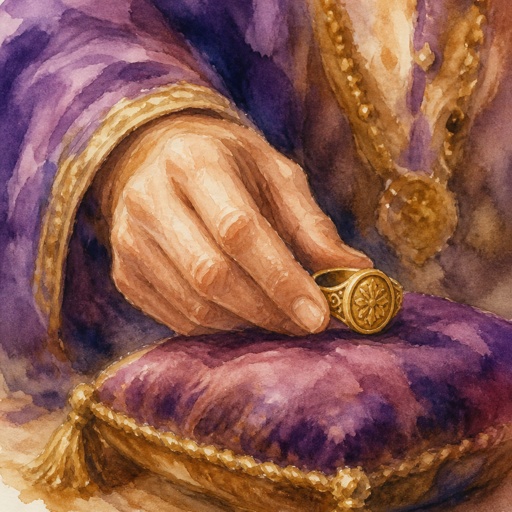
Esther 8:2 focus on the ring

Esther 2:15 - "¶ Now when the turn of Esther, the daughter of Abihail the uncle of Mordecai, who had taken her for his daughter, was come to go in unto the king, she required nothing but what Hegai the king's chamberlain, the keeper of the women, appointed. And Esther obtained favour in the sight of all them that looked upon her."

Esther 2:2 - "Then said the king's servants that ministered unto him, Let there be fair young virgins sought for the king:"
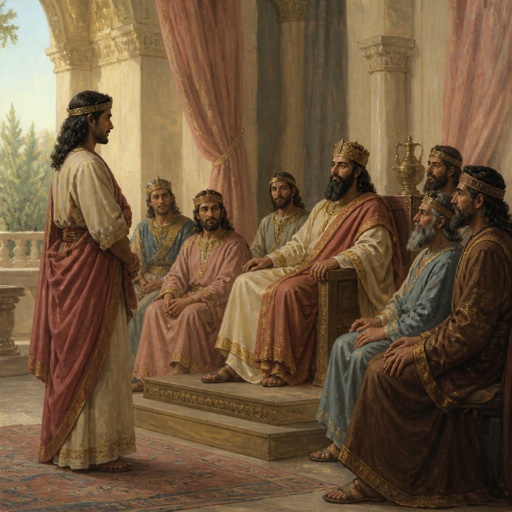
"And the saying pleased the king and the princes; and the king did according to the word of Memucan:" - Esther 1:21
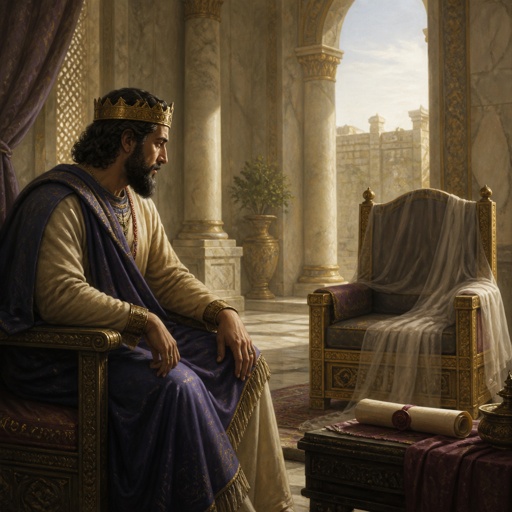
"After these things, when the wrath of king Ahasuerus was appeased, he remembered Vashti, and what she had done, and what was decreed against her." - Esther 2:1

Esther 2:17 - "And the king loved Esther above all the women, and she obtained grace and favour in his sight more than all the virgins; so that he set the royal crown upon her head, and made her queen instead of Vashti."

Esther 2:7 - "And he brought up Hadassah, that is, Esther, his uncle's daughter: for she had neither father nor mother, and the maid was fair and beautiful; whom Mordecai, when her father and mother were dead, took for his own daughter."
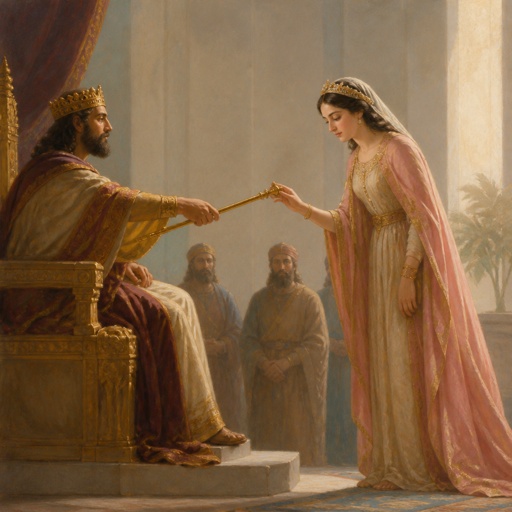
"And it was so, when the king saw Esther the queen standing in the court, that she obtained favour in his sight: and the king held out to Esther the golden sceptre that was in his hand. So Esther drew near, and touched the top of the sceptre." - Esther 5:2

Esther 2:8 - "¶ So it came to pass, when the king's commandment and his decree was heard, and when many maidens were gathered together unto Shushan the palace, to the custody of Hegai, that Esther was brought also unto the king's house, to the custody of Hegai, keeper of the women."

Esther 2:19 - "And when the virgins were gathered together the second time, then Mordecai sat in the king's gate."

Esther 1:2 - "That in those days, when the king Ahasuerus sat on the throne of his kingdom, which was in Shushan the palace,"
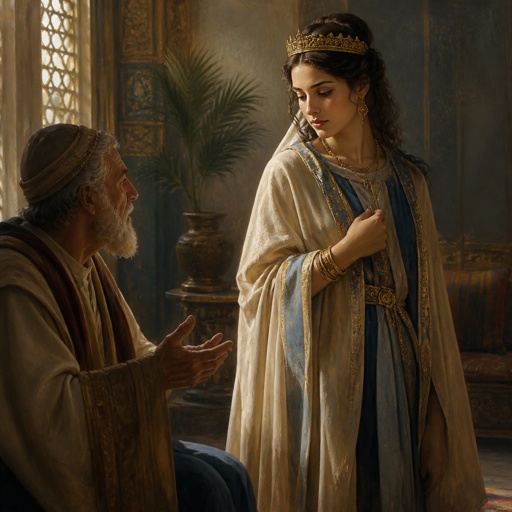
"Esther had not yet shewed her kindred nor her people; as Mordecai had charged her: for Esther did the commandment of Mordecai, like as when she was brought up with him." - Esther 2:20