Resolute Faith: The Legacy of Mordecai
“Now in Shushan the palace there was a certain Jew, whose name was Mordecai, the son of Jair, the son of Shimei, the son of Kish, a Benjamite;” — Esther 2:5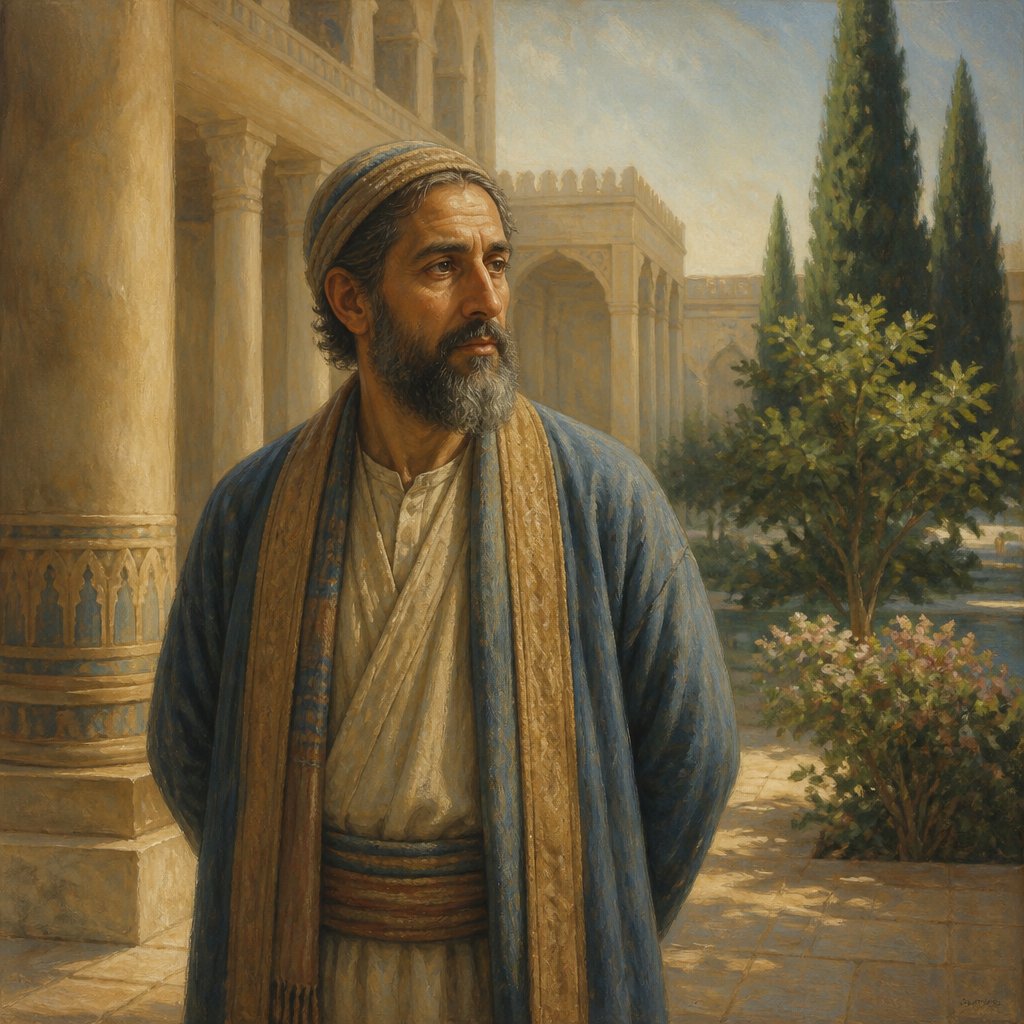
The story of Esther is one of divine providence interwoven with human responsibility, and at the heart of this narrative stands Mordecai—a figure often heralded as the archetype of faithfulness and wisdom. In Esther 2:5, we read, "Now in Shushan the palace there was a certain Jew, whose name was Mordecai, the son of Jair, the son of Shimei, the son of Kish, a Benjamite" (KJV). This passage sets the stage for a dramatic account that showcases how one man's integrity and steadfastness can sway the tides of history.
Mordecai's identity as a Jew is significant—not only because it places him among a people chosen by God but also because it foreshadows the challenges and opposition he and his people will face. Living in the Persian Empire, Mordecai was not just another noble; he was part of a persecuted minority, entrusted with the remnant of a great lineage. The genealogy that begins this verse is not merely a formality but a reminder of Mordecai's roots, his survival from previous exiles, and the legacy he carries.
As we delve deeper into the life of Mordecai, we begin to see how his character reflects a profound commitment to his faith and people. He is portrayed as caring and protective, particularly of his cousin Esther, whom he raises as his own daughter after her parents' demise. The challenge before Mordecai is twofold: to preserve his own Jewish identity in a foreign land while ensuring the safety of Esther, who would later become the Jewish queen of Persia. Here we see the first lesson in Mordecai's story: steadfastness in faith may often involve sacrifice and care for others. Mordecai exemplifies the role of a spiritual guardian, leading by example and instilling in Esther the core values of her heritage.
Mordecai’s position at the palace allows him to influence events in a way he may not have fully understood at first. When the decree to annihilate the Jews later emerges from the wicked Haman, it is Mordecai's unwavering faith that galvanizes Esther into action. He urges her to recognize her royal position as an opportunity—a divine placement, if you will. This leads to another profound lesson: our positions, whatever they may be, are not coincidences but rather providences wherein God can use us for His purpose.
Mordecai’s courage is highlighted when he disobeys Haman’s commands to bow down, boldly standing against injustice. This act of defiance is rooted in his faithfulness to God and his heritage. Rather than succumbing to the pressures of the moment, Mordecai exemplifies how standing firm in one's convictions is often the hardest yet most crucial aspect of our faith journey. His actions serve as a testament to the fact that real faith manifests not just in belief but also in behavior. Mordecai understood that faith can involve risk and consequence, yet he remained resolute.
Moreover, Mordecai’s story encourages us to examine our own lives. Are we wearing our identity as followers of Christ with pride? Are we standing firm against the Haman-like forces of our time—such as materialism, injustice, or societal pressures? It’s easy to blend into the culture around us, but Mordecai teaches us that our faith can and should be a source of strength and courage.
Finally, the resolution of Mordecai's story reveals that God's purposes prevail, not just through Esther's bravery but also through the quiet resolve of faithful individuals. Mordecai is eventually honored for his pivotal role in saving his people, reminding us that God sees and rewards faithfulness. At times our actions may seem small, but in God's hands, they can lead to monumental changes not just for our lives, but for many others.
As we reflect on Mordecai’s life, may we be inspired to embody his faith, recognizing our mission to stand firm, protect our loved ones, and act courageously in our given positions of influence, all while trusting in the divine plan that God orchestrates even through our ordinary actions. May our journey reflect the indelible legacy of faith demonstrated through Mordecai.
Get our apps


Artwork for Esther 2:5

Esther 2:5 - "¶ Now in Shushan the palace there was a certain Jew, whose name was Mordecai, the son of Jair, the son of Shimei, the son of Kish, a Benjamite;"
"¶ Now in Shushan the palace there was a certain Jew, whose name was Mordecai, the son of Jair, the son of Shimei, the son of Kish, a Benjamite;" - Esther 2:5

Esther 5:2

Esther 5:2

Esther 5:2

Esther 5:2 - "And it was so, when the king saw Esther the queen standing in the court, that she obtained favour in his sight: and the king held out to Esther the golden sceptre that was in his hand. So Esther drew near, and touched the top of the sceptre."

Esther 5:2 - "And it was so, when the king saw Esther the queen standing in the court, that she obtained favour in his sight: and the king held out to Esther the golden sceptre that was in his hand. So Esther drew near, and touched the top of the sceptre."

Esther 5:5 - "Then the king said, Cause Haman to make haste, that he may do as Esther hath said. So the king and Haman came to the banquet that Esther had prepared."

Esther 5:7 - "Then answered Esther, and said, My petition and my request is;"

Esther 2:22 - "And the thing was known to Mordecai, who told it unto Esther the queen; and Esther certified the king thereof in Mordecai's name."
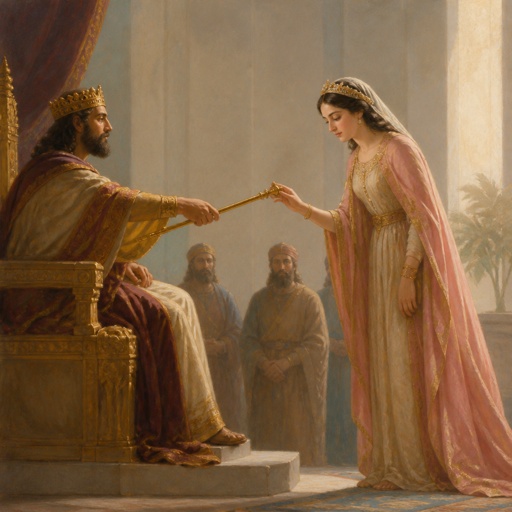
"And it was so, when the king saw Esther the queen standing in the court, that she obtained favour in his sight: and the king held out to Esther the golden sceptre that was in his hand. So Esther drew near, and touched the top of the sceptre." - Esther 5:2

Esther 5:4 - "And Esther answered, If it seem good unto the king, let the king and Haman come this day unto the banquet that I have prepared for him."
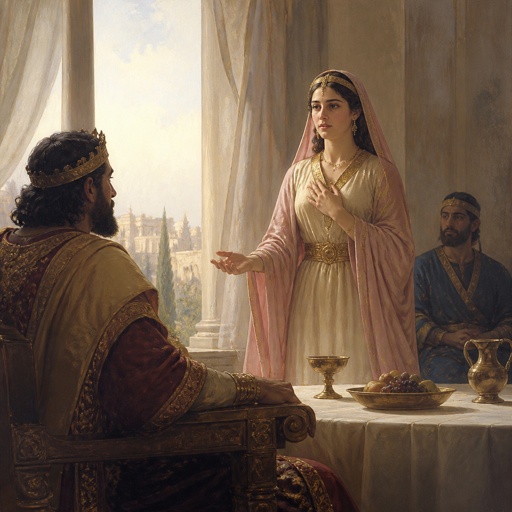
"Then answered Esther, and said, My petition and my request is;" - Esther 5:7

Esther 5:3 - "Then said the king unto her, What wilt thou, queen Esther? and what is thy request? it shall be even given thee to the half of the kingdom."

Esther 7:5 - "¶ Then the king Ahasuerus answered and said unto Esther the queen, Who is he, and where is he, that durst presume in his heart to do so?"
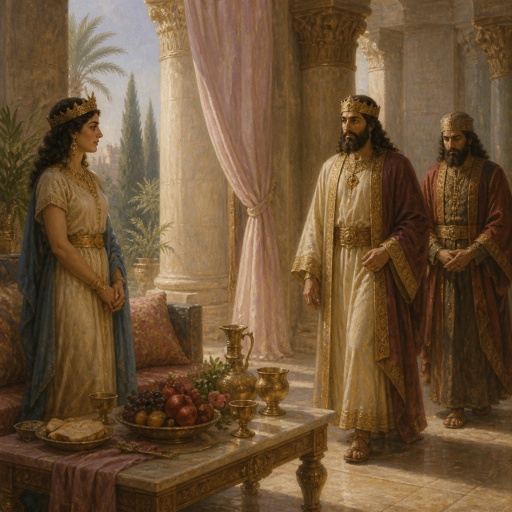
"Then the king said, Cause Haman to make haste, that he may do as Esther hath said. So the king and Haman came to the banquet that Esther had prepared." - Esther 5:5

Esther 4:5 - "Then called Esther for Hatach, one of the king's chamberlains, whom he had appointed to attend upon her, and gave him a commandment to Mordecai, to know what it was, and why it was."

Esther 5:6 - "¶ And the king said unto Esther at the banquet of wine, What is thy petition? and it shall be granted thee: and what is thy request? even to the half of the kingdom it shall be performed."

Esther 7:2 - "And the king said again unto Esther on the second day at the banquet of wine, What is thy petition, queen Esther? and it shall be granted thee: and what is thy request? and it shall be performed, even to the half of the kingdom."

Esther 2:20 - "Esther had not yet shewed her kindred nor her people; as Mordecai had charged her: for Esther did the commandment of Mordecai, like as when she was brought up with him."

Esther 2:11 - "And Mordecai walked every day before the court of the women's house, to know how Esther did, and what should become of her."

Esther 2:10 - "Esther had not shewed her people nor her kindred: for Mordecai had charged her that she should not shew it."

Esther 5:12 - "Haman said moreover, Yea, Esther the queen did let no man come in with the king unto the banquet that she had prepared but myself; and to morrow am I invited unto her also with the king."

"And the thing was known to Mordecai, who told it unto Esther the queen; and Esther certified the king thereof in Mordecai's name." - Esther 2:22

Esther 2:16 - "So Esther was taken unto king Ahasuerus into his house royal in the tenth month, which is the month Tebeth, in the seventh year of his reign."

Esther 8:2 - "And the king took off his ring, which he had taken from Haman, and gave it unto Mordecai. And Esther set Mordecai over the house of Haman."

Esther 3:5 - "And when Haman saw that Mordecai bowed not, nor did him reverence, then was Haman full of wrath."

Esther 5:1 - "Now it came to pass on the third day, that Esther put on her royal apparel, and stood in the inner court of the king's house, over against the king's house: and the king sat upon his royal throne in the royal house, over against the gate of the house."
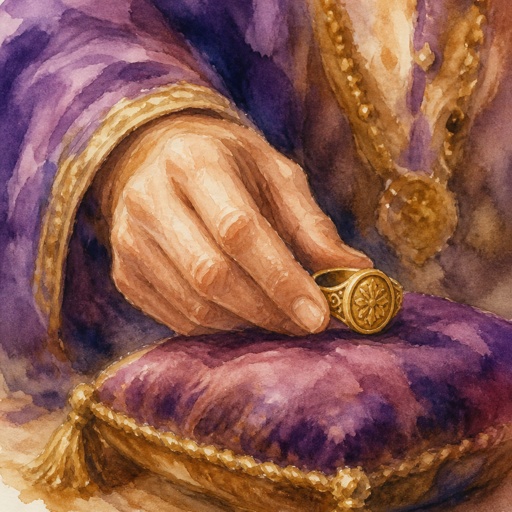
Esther 8:2 focus on the ring

Esther 2:15 - "¶ Now when the turn of Esther, the daughter of Abihail the uncle of Mordecai, who had taken her for his daughter, was come to go in unto the king, she required nothing but what Hegai the king's chamberlain, the keeper of the women, appointed. And Esther obtained favour in the sight of all them that looked upon her."