The Weight of a Decree: Finding Courage in Perplexity
“The posts went out, being hastened by the king’s commandment, and the decree was given in Shushan the palace. And the king and Haman sat down to drink; but the city Shushan was perplexed.” — Esther 3:15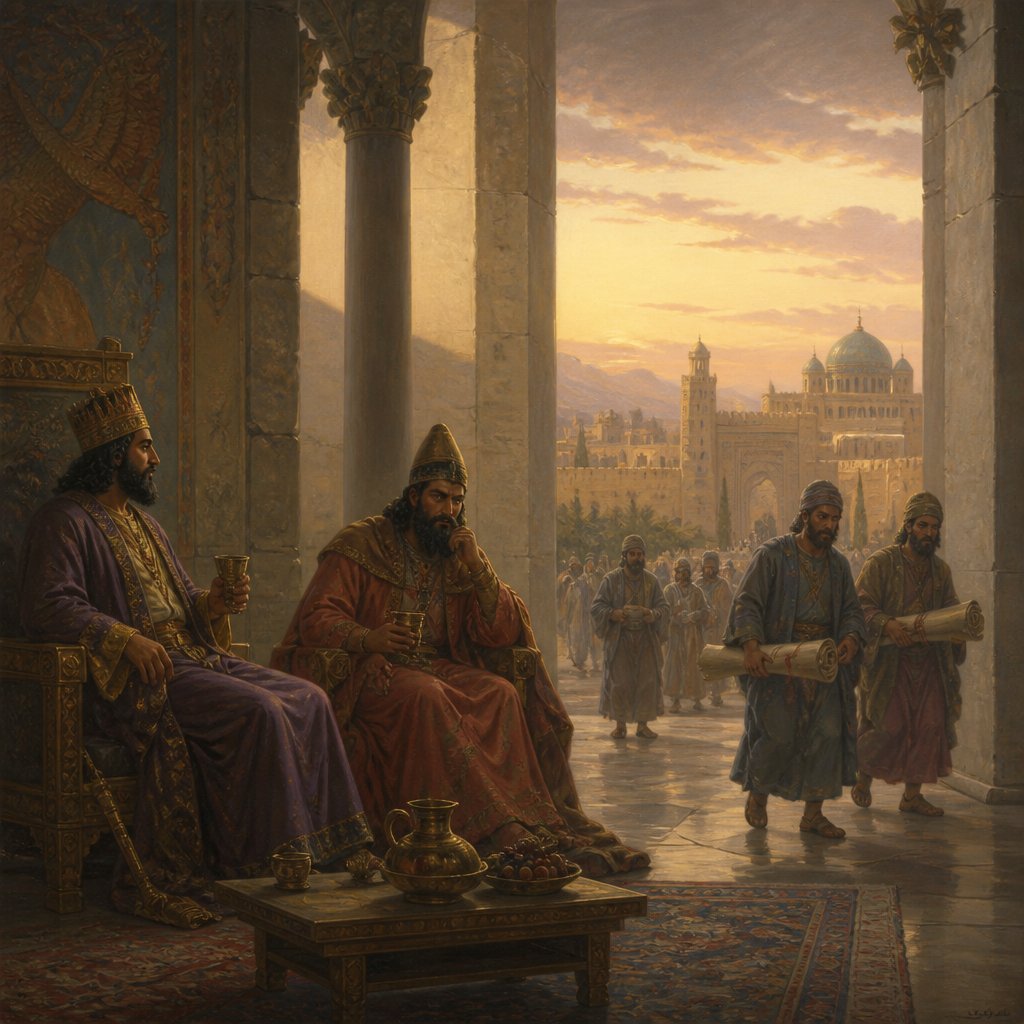
The Book of Esther is a captivating narrative of courage and divine providence. In the heart of this sacred story lies a moment charged with tension and fear. Esther 3:15 recounts, "The posts went out, being hastened by the king's commandment, and the decree was given in Shushan the palace. And the king and Haman sat down to drink; but the city Shushan was perplexed."
In this verse, we witness a pivotal moment where Haman's malicious plans unfold. The king’s commandment, hastened by the urgency of Haman’s persuasive rhetoric and manipulation, leads to a decree that threatens the lives of an entire people. The juxtaposition of the king and Haman's careless leisure—sitting down to drink—against the backdrop of the city's tumultuous turmoil is striking. While they indulge in revelry, the hearts of the people are gripped by confusion and despair.
As we reflect on this situation, we can draw parallels to our own lives. How often do we find ourselves in moments of chaos where it seems the world around us is in disarray, yet those in positions of authority appear indifferent? It is easy to feel perplexed when faced with decrees of despair, whether they come in the forms of medical diagnoses, financial turmoil, or relational strife. Such moments can lead us to doubt God's sovereignty and remind us of the human tendency to seek comfort in untruths.
The perplexity of Shushan speaks to the confusion that arises in our lives when we confront seemingly insurmountable obstacles. The people of Shushan were caught in a web of panic—the impending decree weighed heavily upon them. It is appropriate to acknowledge our perplexity in situations that don’t seem to align with the promises of God. The weight of these moments can forge a deep-seated turmoil that, if not navigated carefully, can pull us away from faith and into despair.
Yet, in perplexity, we have an opportunity to choose our response. The king and Haman could drink while the city suffered, but we have a model of a different kind of response in Esther herself. It is in the crucible of difficult moments that our character is forged. Esther’s story later reveals that courage can indeed rise from a place of concern and compassion. Rather than succumbing to fear, she takes on the mantle of leadership, empowering and uniting her people.
Let us gather deeper insights from Esther’s courage. Faced with the fate of her people, she does not act in haste; rather, she seeks divine guidance. During times of perplexity, as God’s children, we must simultaneously acknowledge our feelings of confusion while cultivating our relationship with the Lord through prayer and fasting. This is how we transition from perplexity to purpose.
Turning to God, we can reclaim our perspective and see beyond the decree placed before us. As we encounter life's injustices, we are positioned to partner with God in bringing about His will—in redemption, healing, and justice. The narrative does not end with a decree; it unfolds into the heart of God's redemptive story. Even when the world seems indifferent to our suffering, God calls us to act justly, love mercy, and walk humbly with Him.
Finally, take comfort that out of this perplexity, God can and will weave a tapestry of hope. As we reflect on our personal challenges, let us remember that we are never alone. God is in the midst of our trials, inviting us into His presence and encouraging us to rise in faith. May we be inspired by Esther to confront our trials, not with fear but with a spirit empowered by God’s promises. In the midst of uncertainty, let us choose to trust—knowing that He works all things for our good and His glory.
Get our apps


Artwork for Esther 3:15

Esther 3:15 - "The posts went out, being hastened by the king's commandment, and the decree was given in Shushan the palace. And the king and Haman sat down to drink; but the city Shushan was perplexed."
"The posts went out, being hastened by the king's commandment, and the decree was given in Shushan the palace. And the king and Haman sat down to drink; but the city Shushan was perplexed." - Esther 3:15

Esther 4:15 - "¶ Then Esther bade them return Mordecai this answer,"

"¶ Then Esther bade them return Mordecai this answer," - Esther 4:15

Esther 5:3 - "Then said the king unto her, What wilt thou, queen Esther? and what is thy request? it shall be even given thee to the half of the kingdom."

Esther 2:15 - "¶ Now when the turn of Esther, the daughter of Abihail the uncle of Mordecai, who had taken her for his daughter, was come to go in unto the king, she required nothing but what Hegai the king's chamberlain, the keeper of the women, appointed. And Esther obtained favour in the sight of all them that looked upon her."
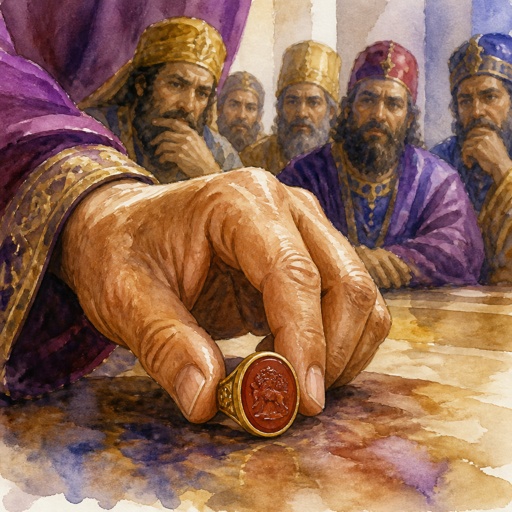
Esther 3:10 focus on ring

Esther 3:3 - "Then the king's servants, which were in the king's gate, said unto Mordecai, Why transgressest thou the king's commandment?"

Esther 8:3 - "¶ And Esther spake yet again before the king, and fell down at his feet, and besought him with tears to put away the mischief of Haman the Agagite, and his device that he had devised against the Jews."

Esther 7:3 - "Then Esther the queen answered and said, If I have found favour in thy sight, O king, and if it please the king, let my life be given me at my petition, and my people at my request:"

Esther 3:5 - "And when Haman saw that Mordecai bowed not, nor did him reverence, then was Haman full of wrath."

Esther 1:15 - "What shall we do unto the queen Vashti according to law, because she hath not performed the commandment of the king Ahasuerus by the chamberlains?"

Esther 9:3 - "And all the rulers of the provinces, and the lieutenants, and the deputies, and officers of the king, helped the Jews; because the fear of Mordecai fell upon them."

Esther 3:14 - "The copy of the writing for a commandment to be given in every province was published unto all people, that they should be ready against that day."

Esther 3:11 - "And the king said unto Haman, The silver is given to thee, the people also, to do with them as it seemeth good to thee."

Esther 9:15 - "For the Jews that were in Shushan gathered themselves together on the fourteenth day also of the month Adar, and slew three hundred men at Shushan; but on the prey they laid not their hand."

Esther 3:10 - "And the king took his ring from his hand, and gave it unto Haman the son of Hammedatha the Agagite, the Jews' enemy."

Esther 8:15 - "¶ And Mordecai went out from the presence of the king in royal apparel of blue and white, and with a great crown of gold, and with a garment of fine linen and purple: and the city of Shushan rejoiced and was glad."
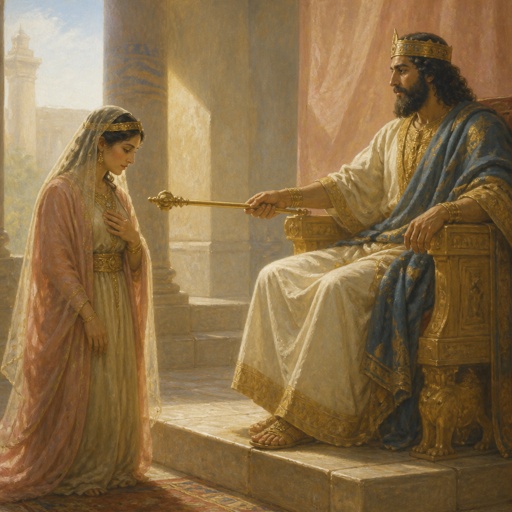
"Then said the king unto her, What wilt thou, queen Esther? and what is thy request? it shall be even given thee to the half of the kingdom." - Esther 5:3

Esther 6:3 - "And the king said, What honour and dignity hath been done to Mordecai for this? Then said the king's servants that ministered unto him, There is nothing done for him."

Esther 3:1 - "After these things did king Ahasuerus promote Haman the son of Hammedatha the Agagite, and advanced him, and set his seat above all the princes that were with him."

Esther 4:3 - "And in every province, whithersoever the king's commandment and his decree came, there was great mourning among the Jews, and fasting, and weeping, and wailing; and many lay in sackcloth and ashes."
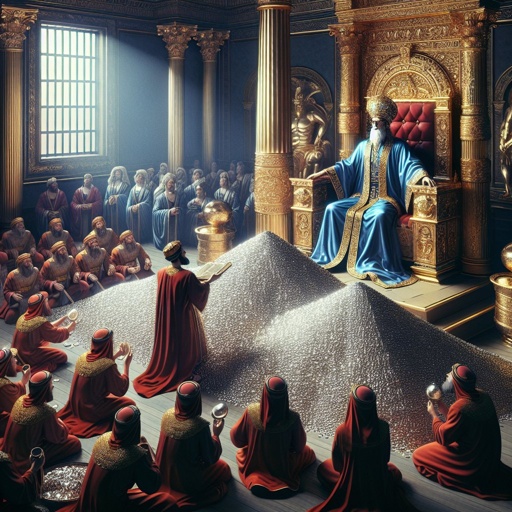
Esther 3:9 - "If it please the king, let it be written that they may be destroyed: and I will pay ten thousand talents of silver to the hands of those that have the charge of the business, to bring it into the king's treasuries."
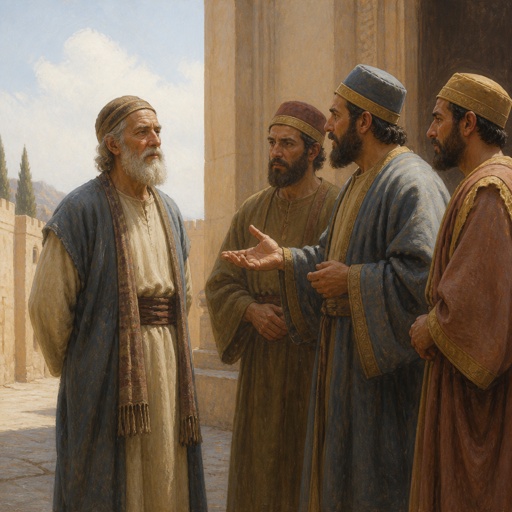
"Then the king's servants, which were in the king's gate, said unto Mordecai, Why transgressest thou the king's commandment?" - Esther 3:3

Esther 10:3 - "For Mordecai the Jew was next unto king Ahasuerus, and great among the Jews, and accepted of the multitude of his brethren, seeking the wealth of his people, and speaking peace to all his seed."

Esther 3:2 - "And all the king's servants, that were in the king's gate, bowed, and reverenced Haman: for the king had so commanded concerning him. But Mordecai bowed not, nor did him reverence."

Esther 3:7 - "¶ In the first month, that is, the month Nisan, in the twelfth year of king Ahasuerus, they cast Pur, that is, the lot, before Haman from day to day, and from month to month, to the twelfth month, that is, the month Adar."

Esther 1:3 - "In the third year of his reign, he made a feast unto all his princes and his servants; the power of Persia and Media, the nobles and princes of the provinces, being before him:"
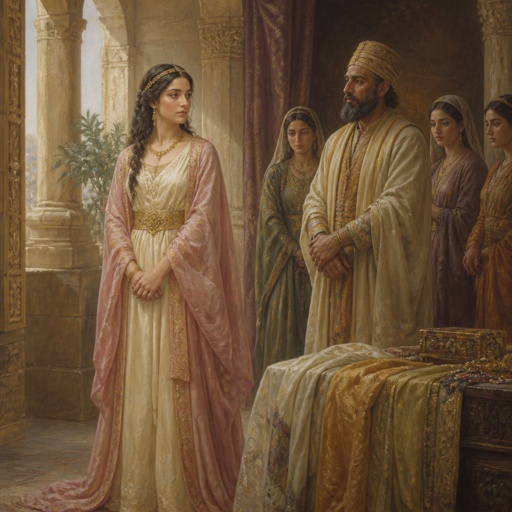
"¶ Now when the turn of Esther, the daughter of Abihail the uncle of Mordecai, who had taken her for his daughter, was come to go in unto the king, she required nothing but what Hegai the king's chamberlain, the keeper of the women, appointed. And Esther obtained favour in the sight of all them that looked upon her." - Esther 2:15

Esther 3:4 - "Now it came to pass, when they spake daily unto him, and he hearkened not unto them, that they told Haman, to see whether Mordecai's matters would stand: for he had told them that he was a Jew."