The Cry of Desperation: A Call to Sacred Mourning
“When Mordecai perceived all that was done, Mordecai rent his clothes, and put on sackcloth with ashes, and went out into the midst of the city, and cried with a loud and a bitter cry;” — Esther 4:1
In the book of Esther, Chapter 4, verse 1, we encounter a gripping moment of anguish and despair: "When Mordecai perceived all that was done, Mordecai rent his clothes, and put on sackcloth with ashes, and went out into the midst of the city, and cried with a loud and a bitter cry" (KJV). This scene unfolds a story of profound sorrow and desperate intercession, setting the stage for a remarkable act of divine intervention.
Mordecai's reaction to the decree of annihilation against the Jews is one of visceral pain. The act of rending one’s clothes, a powerful expression of mourning in Biblical times, signifies not just a personal tragedy but a collective crisis. This was not merely a private grief; Mordecai felt the weight of injustice not only for himself but for his entire people. As he donned sackcloth and covered himself in ashes, he symbolized the depths of mourning—a visual of sorrow that all those around him could witness.
What drove Mordecai to such an extreme response? His understanding of the situation stemmed from the realization of the gravity of the threat that hung over the Jewish people. The decree by Haman had sent ripples of fear throughout the kingdom, and Mordecai’s heart was deeply troubled by the impending doom. His loud and bitter cry resonated with the anguish of a people facing annihilation. In his grief, we see not just an emotional response but a spiritual one—a call to God for deliverance.
In our own lives, we may not face decrees like those of Haman, yet we encounter situations that evoke deep sorrow and despair. Perhaps it’s the loss of a loved one, a devastating diagnosis, broken relationships, or the weight of world events that clamors for our attention. In moments like these, we may feel compelled to cry out in desperation. It is in that sacred mourning, however, that we often draw closer to God, who understands our struggles and hears our cries.
Mordecai’s actions remind us of the importance of solemnity in times of struggle. In a world that often rushes past sorrow—distracted by entertainment and numbed by busyness—there is something spiritual and powerful in pausing to grieve. Ecclesiastes 3:4 (KJV) reminds us that there is “a time to weep, and a time to laugh; a time to mourn, and a time to dance.” Mourning allows us to acknowledge our pain, to process our losses, and to prepare our hearts for God’s work in our lives.
Moreover, Mordecai didn’t mourn in isolation; he went out into the midst of the city. There is strength in communal mourning—it draws us together as we collectively confront our pain and seek solace in God. Just as Mordecai called out, we, too, are invited to voice our hurts and disappointments. It encourages those around us to stand in solidarity and also seek the Lord in these turbulent times.
This verse also serves as a precursor to Esther's pivotal decision to approach the king on behalf of her people. In this shared anguish, God mobilizes His people. Through Mordecai’s desperate cry, God stirs up Esther and calls forth courage for action. It speaks to the transformative power of deep sorrow that eventually leads to salvation.
As we reflect on this powerful moment of distress, let us remember that it is in our own cries of desperation where God often prepares a pathway for revival and restoration. May we, like Mordecai, be unafraid to express our sorrow before God and seek His deliverance. Let us not shy away from mourning but embrace it as a sacred act, trusting that our cries reach the ears of a compassionate God who longs to heal and redeem.
Get our apps


Artwork for Esther 4:1

Esther 4:1 - "When Mordecai perceived all that was done, Mordecai rent his clothes, and put on sackcloth with ashes, and went out into the midst of the city, and cried with a loud and a bitter cry;"

"When Mordecai perceived all that was done, Mordecai rent his clothes, and put on sackcloth with ashes, and went out into the midst of the city, and cried with a loud and a bitter cry;" - Esther 4:1

Esther 8:4 - "Then the king held out the golden sceptre toward Esther. So Esther arose, and stood before the king,"

Esther 4:15 - "¶ Then Esther bade them return Mordecai this answer,"

Esther 4:9 - "And Hatach came and told Esther the words of Mordecai."

Esther 4:10 - "¶ Again Esther spake unto Hatach, and gave him commandment unto Mordecai;"

Esther 4:17 - "So Mordecai went his way, and did according to all that Esther had commanded him."

Esther 8:4

Esther 4:12 - "And they told to Mordecai Esther's words."

Esther 1:4 - "When he shewed the riches of his glorious kingdom and the honour of his excellent majesty many days, even an hundred and fourscore days."

"And Hatach came and told Esther the words of Mordecai." - Esther 4:9

"¶ Then Esther bade them return Mordecai this answer," - Esther 4:15

Esther 4:13 - "Then Mordecai commanded to answer Esther, Think not with thyself that thou shalt escape in the king's house, more than all the Jews."

Esther 5:4 - "And Esther answered, If it seem good unto the king, let the king and Haman come this day unto the banquet that I have prepared for him."

Esther 7:1 - "So the king and Haman came to banquet with Esther the queen."

"Then the king held out the golden sceptre toward Esther. So Esther arose, and stood before the king," - Esther 8:4

Esther 4:5 - "Then called Esther for Hatach, one of the king's chamberlains, whom he had appointed to attend upon her, and gave him a commandment to Mordecai, to know what it was, and why it was."

Esther 1:17

Esther 8:1 - "On that day did the king Ahasuerus give the house of Haman the Jews' enemy unto Esther the queen. And Mordecai came before the king; for Esther had told what he was unto her."

"¶ Again Esther spake unto Hatach, and gave him commandment unto Mordecai;" - Esther 4:10
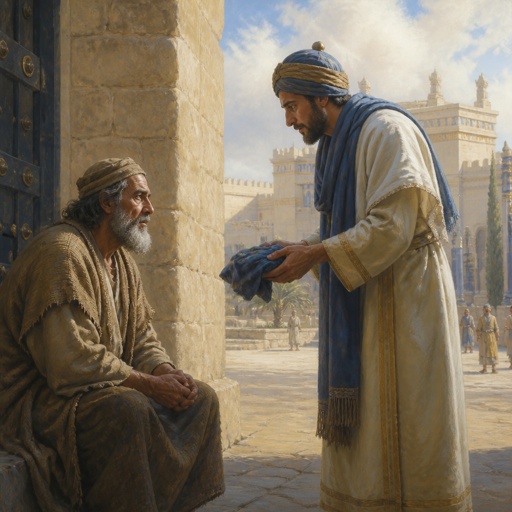
"And they told to Mordecai Esther's words." - Esther 4:12

Esther, the courageous queen

"So the king and Haman came to banquet with Esther the queen." - Esther 7:1

Esther 1:6

"So Mordecai went his way, and did according to all that Esther had commanded him." - Esther 4:17
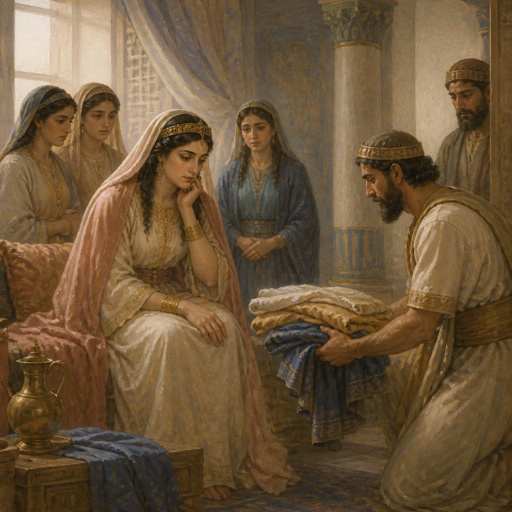
"¶ So Esther's maids and her chamberlains came and told it her. Then was the queen exceedingly grieved; and she sent raiment to clothe Mordecai, and to take away his sackcloth from him: but he received it not." - Esther 4:4

Esther 4:6 - "So Hatach went forth to Mordecai unto the street of the city, which was before the king's gate."

Esther 4:4 - "¶ So Esther's maids and her chamberlains came and told it her. Then was the queen exceedingly grieved; and she sent raiment to clothe Mordecai, and to take away his sackcloth from him: but he received it not."

Esther 4:2 - "And came even before the king's gate: for none might enter into the king's gate clothed with sackcloth."

Esther 4:8 - "Also he gave him the copy of the writing of the decree that was given at Shushan to destroy them, to shew it unto Esther, and to declare it unto her, and to charge her that she should go in unto the king, to make supplication unto him, and to make request before him for her people."