The Unmasking of Pride: Lessons from Haman
“Nevertheless Haman refrained himself: and when he came home, he sent and called for his friends, and Zeresh his wife.” — Esther 5:10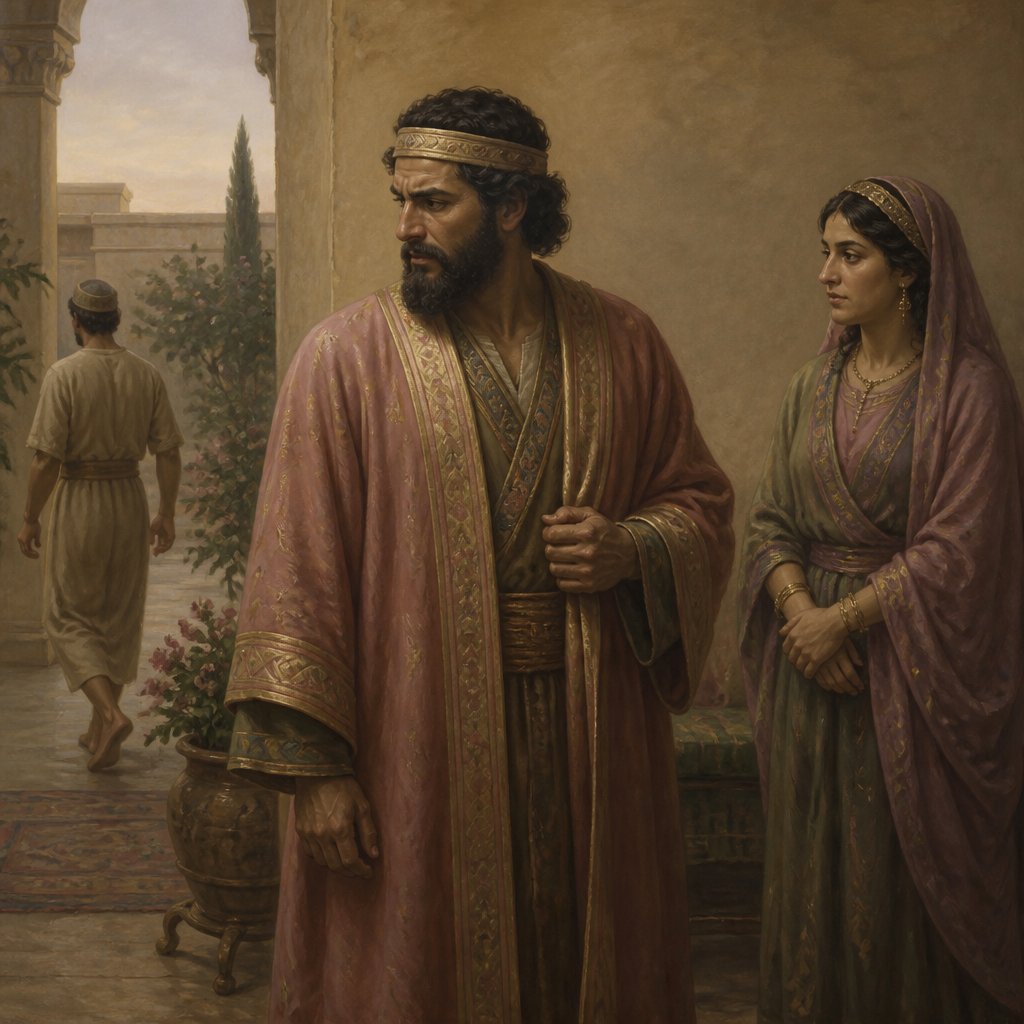
In the narrative of the Book of Esther, we encounter many complex characters, but very few are as compellingly flawed as Haman. One verse that draws us into the depth of Haman’s character is Esther 5:10: "Nevertheless Haman refrained himself: and when he came home, he sent and called for his friends, and Zeresh his wife." This verse captures a pivotal moment where Haman grapples with his emotions and pride, ultimately showcasing the duality of his persona—one of outward grandeur and inner turmoil.
Haman, the highest-ranking official in the Persian Empire, is at the height of his power when he faces a piercing humiliation. He had just dined with Queen Esther and King Ahasuerus, basking in his own glory, yet he walks away troubled by one man—Mordecai, a Jewish exile who refuses to bow before him. Instead of openly confronting his feelings or dealing with the offense, Haman chooses a path of restraint, which we can interpret both positively and negatively. On one hand, refraining oneself can speak to self-control; on the other, it's a way to hide and avoid necessary confrontation.
Haman's decision to contain his wrath is a telling sign of a man deeply consumed by pride, but pride that doesn't know how to adequately express itself. In calling his friends and wife, Zeresh, he seeks affirmation for his grievances rather than solutions or accountability. This dynamic, often observed in our own lives, reminds us of the damaging nature of unchecked pride. Instead of addressing the issues at hand, Haman retreats into his echo chamber, reinforcing his grievances and sharpening his resolve against Mordecai.
In our modern lives, we can often find ourselves playing the role of Haman. Have you ever been slighted or feel that your worth is questioned by someone? Instead of dealing with the offense constructively, do you find solace in confiding in friends who validate your indignation? This natural inclination to surround ourselves with like-minded individuals may provide temporary relief but ultimately leads to a more profound root of bitterness and pride growing in our hearts.
Pride, as demonstrated in this passage, fosters an environment where individuals seek to enhance their image rather than take responsibility for their actions. Haman's response to his inner conflict speaks volumes about the conflict we all face when our dignity feels threatened.
As he returns home, calling upon his friends and Zeresh, he embraces a worldview shaped not by humility but by the need for affirmation of his hurt. However, when we respond to our challenges with pride and self-pity, we open doors to greater folly. The danger lies in how Haman's pride and vengeance ultimately lead not to his vindication, but to his downfall.
When we are hurt, as Haman was, the call to reach out is not inherently wrong. But we must be mindful of who we choose as our source of counsel. Do your friends encourage you to lash out, or do they challenge you to seek truth and grace? Are we collecting allies to fuel our pride or mentors to foster growth and humility?
Reflecting on Haman’s fate, we must choose to engage in self-examination rather than self-pity. Humility invites closure and healing while pride invites ruin. As believers, let us crucify our pride and seek the heart of God in our responses to hurt. Let us learn from Haman's misstep to foster relationships that build us up toward Christlikeness rather than drag us into the abyss of bitterness and destruction.
Get our apps


Artwork for Esther 5:10

Esther 5:10 - "Nevertheless Haman refrained himself: and when he came home, he sent and called for his friends, and Zeresh his wife."
"Nevertheless Haman refrained himself: and when he came home, he sent and called for his friends, and Zeresh his wife." - Esther 5:10

Esther 5:5 - "Then the king said, Cause Haman to make haste, that he may do as Esther hath said. So the king and Haman came to the banquet that Esther had prepared."

Esther 5:7 - "Then answered Esther, and said, My petition and my request is;"

Esther 4:10 - "¶ Again Esther spake unto Hatach, and gave him commandment unto Mordecai;"

Esther 5:2

Esther 5:2 - "And it was so, when the king saw Esther the queen standing in the court, that she obtained favour in his sight: and the king held out to Esther the golden sceptre that was in his hand. So Esther drew near, and touched the top of the sceptre."

Esther 5:2

Esther 5:2

Esther 2:10 - "Esther had not shewed her people nor her kindred: for Mordecai had charged her that she should not shew it."

Esther 5:4 - "And Esther answered, If it seem good unto the king, let the king and Haman come this day unto the banquet that I have prepared for him."
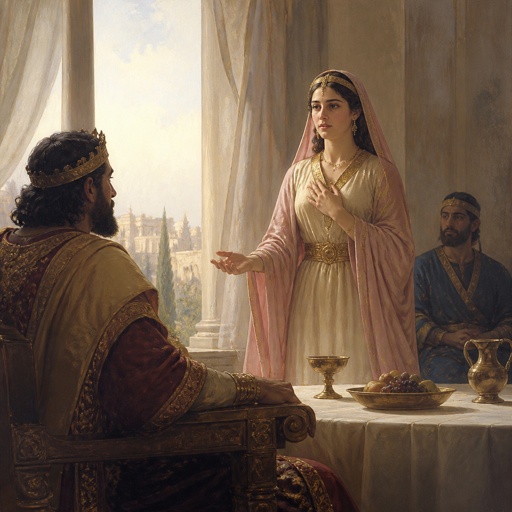
"Then answered Esther, and said, My petition and my request is;" - Esther 5:7

Esther 5:3 - "Then said the king unto her, What wilt thou, queen Esther? and what is thy request? it shall be even given thee to the half of the kingdom."

Esther 7:5 - "¶ Then the king Ahasuerus answered and said unto Esther the queen, Who is he, and where is he, that durst presume in his heart to do so?"

Esther 5:2 - "And it was so, when the king saw Esther the queen standing in the court, that she obtained favour in his sight: and the king held out to Esther the golden sceptre that was in his hand. So Esther drew near, and touched the top of the sceptre."
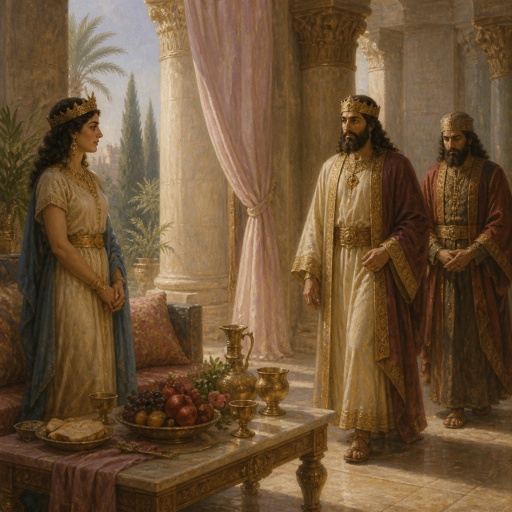
"Then the king said, Cause Haman to make haste, that he may do as Esther hath said. So the king and Haman came to the banquet that Esther had prepared." - Esther 5:5
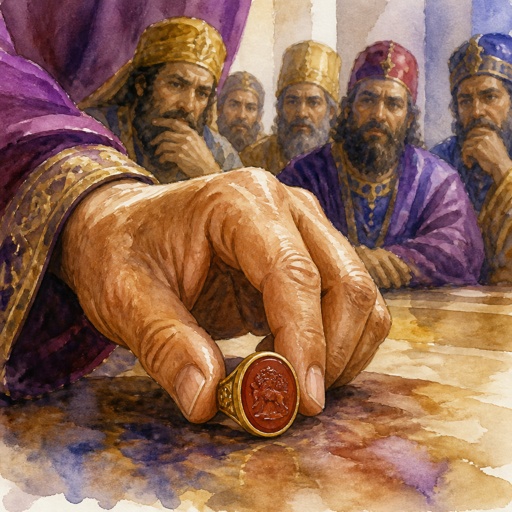
Esther 3:10 focus on ring

Esther 4:5 - "Then called Esther for Hatach, one of the king's chamberlains, whom he had appointed to attend upon her, and gave him a commandment to Mordecai, to know what it was, and why it was."

Esther 5:6 - "¶ And the king said unto Esther at the banquet of wine, What is thy petition? and it shall be granted thee: and what is thy request? even to the half of the kingdom it shall be performed."

"¶ Again Esther spake unto Hatach, and gave him commandment unto Mordecai;" - Esther 4:10

Esther 10:1 - "And the king Ahasuerus laid a tribute upon the land, and upon the isles of the sea."

Esther 5:12 - "Haman said moreover, Yea, Esther the queen did let no man come in with the king unto the banquet that she had prepared but myself; and to morrow am I invited unto her also with the king."

Esther 9:10 - "The ten sons of Haman the son of Hammedatha, the enemy of the Jews, slew they; but on the spoil laid they not their hand."

Esther 7:10 - "So they hanged Haman on the gallows that he had prepared for Mordecai. Then was the king's wrath pacified."

Esther 3:5 - "And when Haman saw that Mordecai bowed not, nor did him reverence, then was Haman full of wrath."

Esther 5:1 - "Now it came to pass on the third day, that Esther put on her royal apparel, and stood in the inner court of the king's house, over against the king's house: and the king sat upon his royal throne in the royal house, over against the gate of the house."
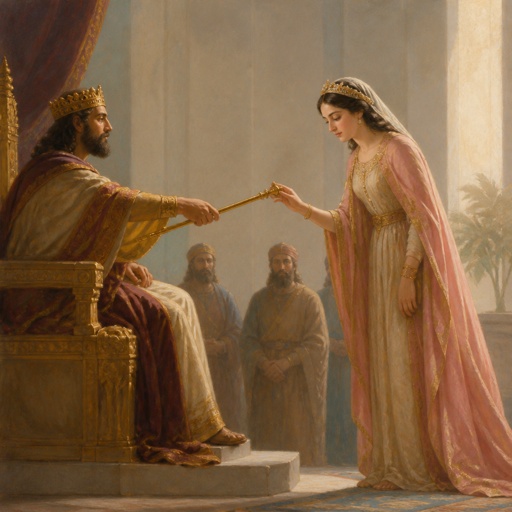
"And it was so, when the king saw Esther the queen standing in the court, that she obtained favour in his sight: and the king held out to Esther the golden sceptre that was in his hand. So Esther drew near, and touched the top of the sceptre." - Esther 5:2

Esther 6:5 - "And the king's servants said unto him, Behold, Haman standeth in the court. And the king said, Let him come in."

Esther 5:13 - "Yet all this availeth me nothing, so long as I see Mordecai the Jew sitting at the king's gate."

"Esther had not shewed her people nor her kindred: for Mordecai had charged her that she should not shew it." - Esther 2:10