The Weight of Unforgiveness: A Journey Through Esther 5:13
“Yet all this availeth me nothing, so long as I see Mordecai the Jew sitting at the king’s gate.” — Esther 5:13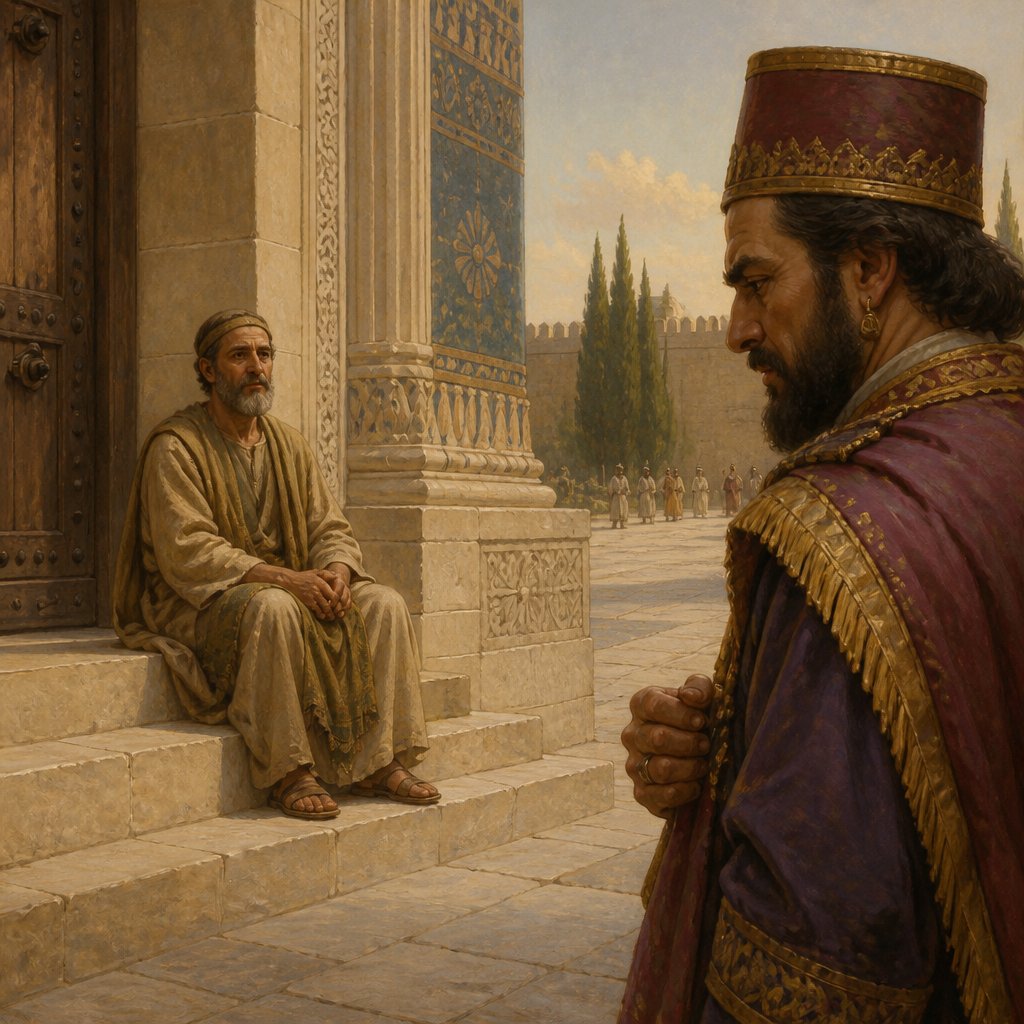
In the Book of Esther, we encounter a powerful narrative that revolves around courage, identity, and divine intervention. It is a story where God’s providence operates quietly behind the scenes, yet dramatically shapes the fate of His people. In Esther 5:13, we find a striking statement made by Haman: "Yet all this availeth me nothing, so long as I see Mordecai the Jew sitting at the king's gate." This verse encapsulates profound truths about pride, resentment, and the desperate search for validation in the eyes of others.
Haman, elevated to the second highest position in the kingdom, is celebrated among the nobility and is given unprecedented power to decree the extermination of the Jews. Despite his accomplishments and the accolades he receives, Haman acknowledges that he is not at peace as long as Mordecai, a Jew, refuses to bow before him. This sentiment is laden with implications about the human heart and its tendency to cling to grudges, allowing them to overshadow all other blessings.
Firstly, we must consider Haman's identity and how it was tied to the validation he sought from others. In our daily lives, we often find our self-worth connected to external approval—whether through job titles, relationships, or social standing. Haman had it all; wealth, power, and influence, yet he remained profoundly unhappy because of one man’s refusal to acknowledge his greatness. His discontent was rooted in a place of pride; he believed it was his right to demand respect and submission.
Haman’s fixation on Mordecai demonstrates that unchecked anger and pride can consume a life, leading to self-destruction. His fixation on a single man’s choice to stand firm in his beliefs caused him to overlook the multitude of blessings in his life. It is a testament to how unforgiveness can cloud our judgment and prevent us from appreciating the good around us. Haman's words invite us to reflect: Are we allowing the actions of others to diminish the joy of our own accomplishments? Are we so focused on the few who do not see our worth that we ignore the many who appreciate and love us?
Moreover, this verse prompts us to evaluate the cost of harboring bitterness in our hearts. Haman's disdain for Mordecai eventually led him down a path of destruction. His life story serves as a cautionary tale about the dangers of succumbing to resentment—how it can drive one to irrationality and can quickly spiral into actions that have grave consequences.
As believers, we are called to a higher standard. In Matthew 6:14-15, we are reminded, "For if ye forgive men their trespasses, your heavenly Father will also forgive you: But if ye forgive not men their trespasses, neither will your Father forgive your trespasses." The call to forgive is central to our faith; it liberates us from the chains of bitterness. God understands the pain that comes from being wronged, yet forgiveness is a divine opportunity to rise above our circumstances and release any claims on our hearts that steal our joy.
As we meditate on Esther 5:13, let us ask ourselves: What are the things in our lives that overshadow our blessings? Who are the Mordecais at our gates, and why do we let them hold power over our emotions and happiness?
May we find the courage, like Esther, to choose faith over fear and to extend grace, even to those we feel have wronged us. Let us release the hold of unforgiveness and recognize that it takes more strength to forgive than to hold a grudge. In doing so, we might discover not only our peace but also the richness of God’s blessings. Ultimately, true fulfillment comes not from the applause of the world but from a heart of obedience to God’s call to love and forgive.
Get our apps


Artwork for Esther 5:13

Esther 5:13 - "Yet all this availeth me nothing, so long as I see Mordecai the Jew sitting at the king's gate."
"Yet all this availeth me nothing, so long as I see Mordecai the Jew sitting at the king's gate." - Esther 5:13

Esther 5:5 - "Then the king said, Cause Haman to make haste, that he may do as Esther hath said. So the king and Haman came to the banquet that Esther had prepared."

Esther 5:7 - "Then answered Esther, and said, My petition and my request is;"

Esther 5:2

Esther 5:2 - "And it was so, when the king saw Esther the queen standing in the court, that she obtained favour in his sight: and the king held out to Esther the golden sceptre that was in his hand. So Esther drew near, and touched the top of the sceptre."

Esther 5:2

Esther 5:2

Esther 4:13 - "Then Mordecai commanded to answer Esther, Think not with thyself that thou shalt escape in the king's house, more than all the Jews."

Esther 5:4 - "And Esther answered, If it seem good unto the king, let the king and Haman come this day unto the banquet that I have prepared for him."
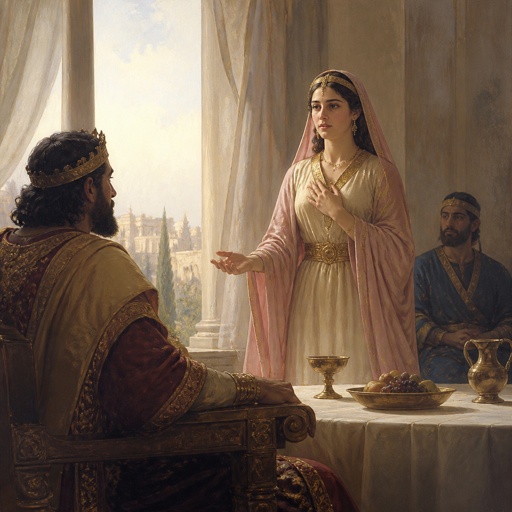
"Then answered Esther, and said, My petition and my request is;" - Esther 5:7

Esther 5:9-13 - "Esther 5:9-13: Then Haman went out that day joyful and with a glad heart; but when Haman saw Mordecai in the king’s gate, and that he did not stand or tremble before him, he was filled with indignation against Mordecai. Nevertheless Haman restrained himself and went home, and he sent and called for his friends and his wife Zeresh. Then Haman told them of his great riches, the multitude of his children, everything in which the king had promoted him, and how he had advanced him above the officials and servants of the king. Moreover Haman said, “Besides, Queen Esther invited no one but me to come in with the king to the banquet that she prepared; and tomorrow I am again invited by her, along with the king. Yet all this avails me nothing, so long as I see Mordecai the Jew sitting at the king’s gate.”"

Esther 5:3 - "Then said the king unto her, What wilt thou, queen Esther? and what is thy request? it shall be even given thee to the half of the kingdom."

Esther 7:5 - "¶ Then the king Ahasuerus answered and said unto Esther the queen, Who is he, and where is he, that durst presume in his heart to do so?"

Esther 5:2 - "And it was so, when the king saw Esther the queen standing in the court, that she obtained favour in his sight: and the king held out to Esther the golden sceptre that was in his hand. So Esther drew near, and touched the top of the sceptre."
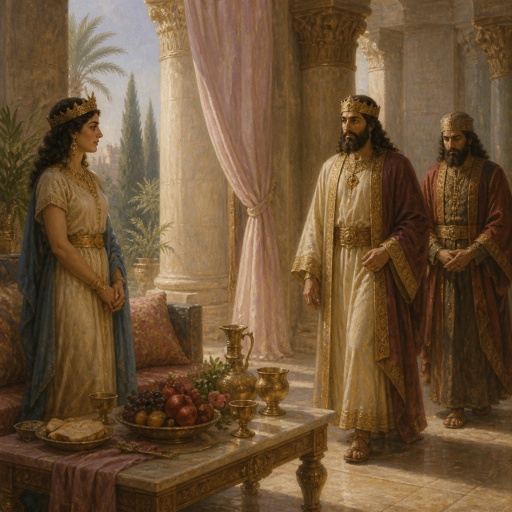
"Then the king said, Cause Haman to make haste, that he may do as Esther hath said. So the king and Haman came to the banquet that Esther had prepared." - Esther 5:5

Esther 9:13 - "Then said Esther, If it please the king, let it be granted to the Jews which are in Shushan to do to morrow also according unto this day's decree, and let Haman's ten sons be hanged upon the gallows."

Esther 4:5 - "Then called Esther for Hatach, one of the king's chamberlains, whom he had appointed to attend upon her, and gave him a commandment to Mordecai, to know what it was, and why it was."

Esther 5:6 - "¶ And the king said unto Esther at the banquet of wine, What is thy petition? and it shall be granted thee: and what is thy request? even to the half of the kingdom it shall be performed."

Esther 5:12 - "Haman said moreover, Yea, Esther the queen did let no man come in with the king unto the banquet that she had prepared but myself; and to morrow am I invited unto her also with the king."

Esther 3:5 - "And when Haman saw that Mordecai bowed not, nor did him reverence, then was Haman full of wrath."

Esther 5:1 - "Now it came to pass on the third day, that Esther put on her royal apparel, and stood in the inner court of the king's house, over against the king's house: and the king sat upon his royal throne in the royal house, over against the gate of the house."
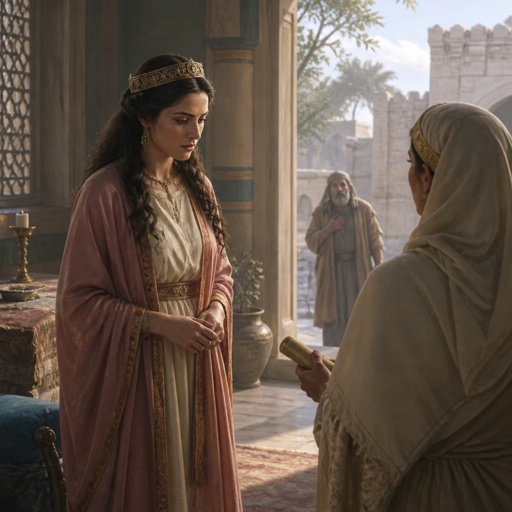
"Then Mordecai commanded to answer Esther, Think not with thyself that thou shalt escape in the king's house, more than all the Jews." - Esther 4:13
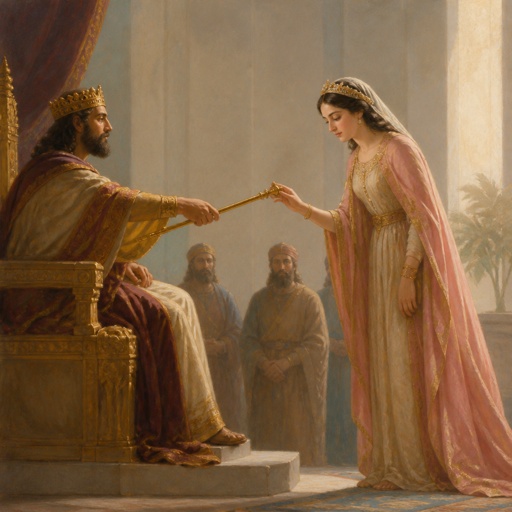
"And it was so, when the king saw Esther the queen standing in the court, that she obtained favour in his sight: and the king held out to Esther the golden sceptre that was in his hand. So Esther drew near, and touched the top of the sceptre." - Esther 5:2

Esther 6:5 - "And the king's servants said unto him, Behold, Haman standeth in the court. And the king said, Let him come in."
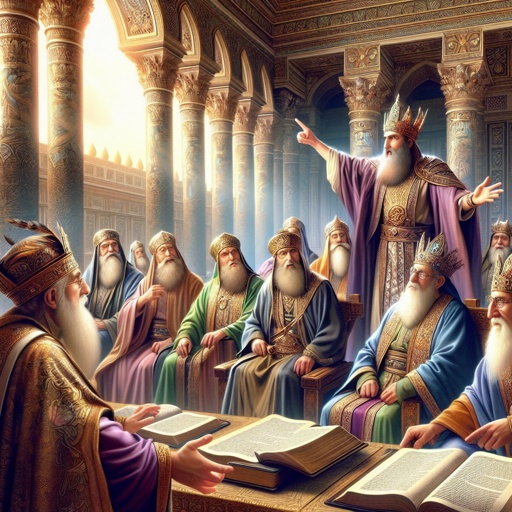
Esther 1:13 - "¶ Then the king said to the wise men, which knew the times, (for so was the king's manner toward all that knew law and judgment:"

Esther 2:5 - "¶ Now in Shushan the palace there was a certain Jew, whose name was Mordecai, the son of Jair, the son of Shimei, the son of Kish, a Benjamite;"

Esther 5:10 - "Nevertheless Haman refrained himself: and when he came home, he sent and called for his friends, and Zeresh his wife."

Esther 8:13 - "The copy of the writing for a commandment to be given in every province was published unto all people, and that the Jews should be ready against that day to avenge themselves on their enemies."

"¶ Then the king Ahasuerus answered and said unto Esther the queen, Who is he, and where is he, that durst presume in his heart to do so?" - Esther 7:5