The Boldness of Esther: A Divine Invitation
“Then said the king unto her, What wilt thou, queen Esther? and what is thy request? it shall be even given thee to the half of the kingdom.” — Esther 5:3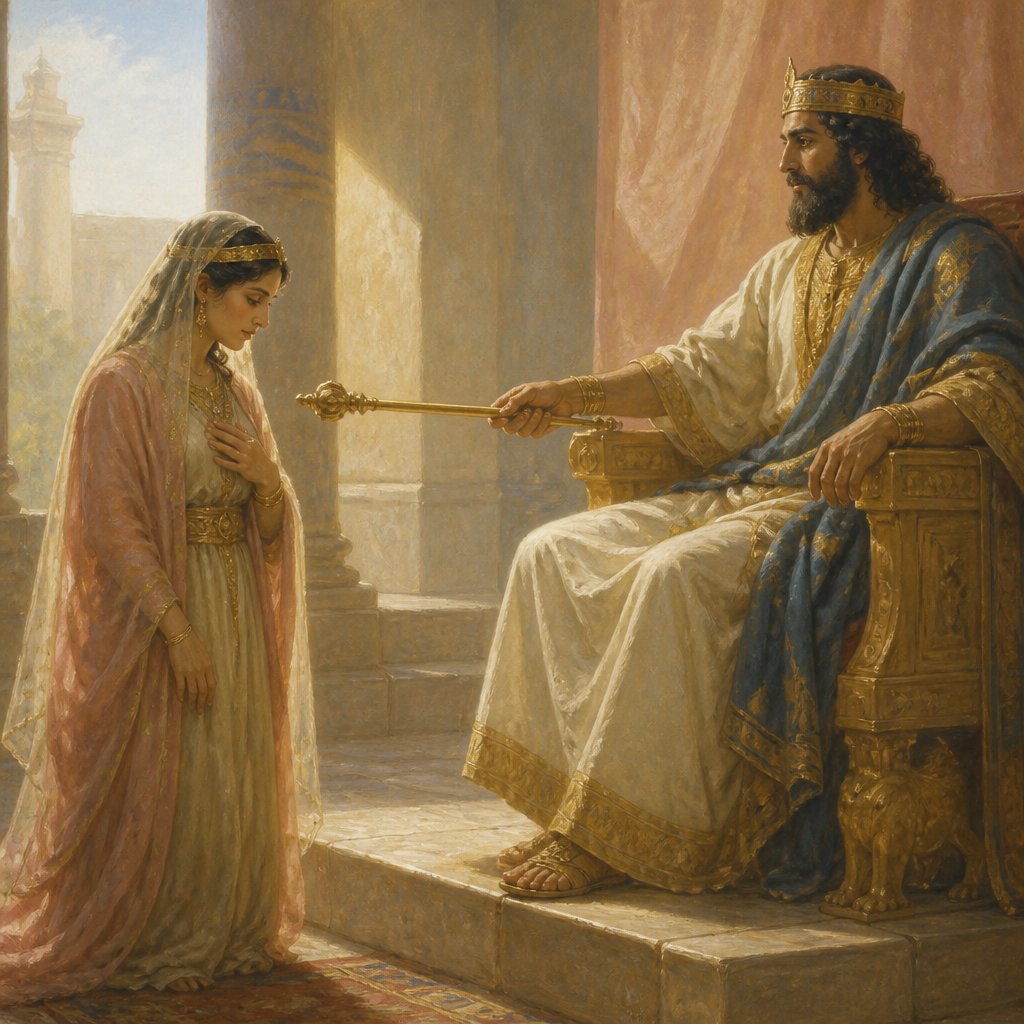
In the heart of the Book of Esther, we encounter a moment of dramatic significance and profound intimacy between Queen Esther and King Ahasuerus. Esther 5:3 reads, "Then said the king unto her, What wilt thou, queen Esther? and what is thy request? it shall be even given thee to the half of the kingdom." This verse captures not only a pivotal point in the narrative but also serves as an invitation for deeper reflection on God's providence, our boldness in approaching Him, and the power of intercession.
**Esther's Courage**
Esther, a Jewish woman hidden beneath the crown of a Persian queen, found herself in a perilous position. Her people, the Jews, were facing annihilation by a decree orchestrated by Haman, a high-ranking official who held enormous sway in the kingdom. As Esther approached the king, she did so with great risk. In the Persian court, entering the king's presence uninvited could mean death. Yet, Esther, motivated by love for her people and guided by her cousin Mordecai's wisdom, stepped forth in faith.
Her actions invite us to consider our own approach toward God in prayer. Do we come boldly before the throne as Esther did, or do we hesitate, feeling unworthy? Hebrews 4:16 encourages us, "Let us therefore come boldly unto the throne of grace, that we may obtain mercy, and find grace to help in time of need." Just as Esther had a specific need that she brought before her king, we, too, must recognize our right to approach our Heavenly Father with our requests.
**The King's Generosity**
King Ahasuerus's response to Esther is telling. His questions—"What wilt thou? and what is thy request?"—speak to his openness and willingness to grant her desires. The hyperbolic promise, "it shall be even given thee to the half of the kingdom," reveals a king's generosity. He is not only willing to listen, but he also extends an offer that conveys great power and favor.
In our relationship with God, we see this same invitation echoed. God is a generous giver who delights in providing for His children. In James 1:5, we are reminded, "If any of you lack wisdom, let him ask of God, that giveth to all men liberally, and upbraideth not; and it shall be given him." Like Esther, we must not shy away from articulating our needs, dreams, and hopes before God.
**The Importance of Timing**
Esther's approach was not only bold but also meticulously timed. Prior to her initial request, she invited the king and Haman to a banquet, a strategic move to ensure she had his ear and attention at the right moment. This teaches us that our prayers, while urgent, must also be followed with discernment and patience.
We might be eager to see immediate answers to our prayers, but there is a divine timeline at play. God is never late; His timing is perfect, and it may involve preparations we cannot yet see. The path Esther chose was one of preparation prior to the powerful request she was about to make, underscoring the importance of seeking God's timing in all our endeavors.
**A Call to Intercede**
This narrative serves as a beautiful reminder that God often positions us in places of influence, much like Esther, to stand in the gap for others. Her intercession for her people exemplifies the sacrificial love that fuels impactful prayers. In our lives, who are we called to intercede for? Is there someone within our reach who faces their own challenges, akin to the plight of Esther's people?
Ultimately, Esther’s story challenges us to approach our "king"—Christ—with confidence and to be bold in our requests. It encourages us to recognize our royal status as children of the King, ready to take up the mantle of intercession and empowerment. Let us remember Esther’s courage and the king’s readiness to respond, inspiring us to speak our hearts and lift the needs of others in prayer.
As we meditate on Esther 5:3, may we be emboldened by the promise that we have not only the right but a royal invitation to present our requests before our God, who desires to bless us abundantly.
Get our apps


Artwork for Esther 5:3

Esther 5:3 - "Then said the king unto her, What wilt thou, queen Esther? and what is thy request? it shall be even given thee to the half of the kingdom."
"Then said the king unto her, What wilt thou, queen Esther? and what is thy request? it shall be even given thee to the half of the kingdom." - Esther 5:3

Esther 3:5 - "And when Haman saw that Mordecai bowed not, nor did him reverence, then was Haman full of wrath."

Esther 5:5 - "Then the king said, Cause Haman to make haste, that he may do as Esther hath said. So the king and Haman came to the banquet that Esther had prepared."

Esther 5:7 - "Then answered Esther, and said, My petition and my request is;"

Esther 5:2

Esther 5:2 - "And it was so, when the king saw Esther the queen standing in the court, that she obtained favour in his sight: and the king held out to Esther the golden sceptre that was in his hand. So Esther drew near, and touched the top of the sceptre."

Esther 5:2

Esther 5:2

Esther 5:4 - "And Esther answered, If it seem good unto the king, let the king and Haman come this day unto the banquet that I have prepared for him."
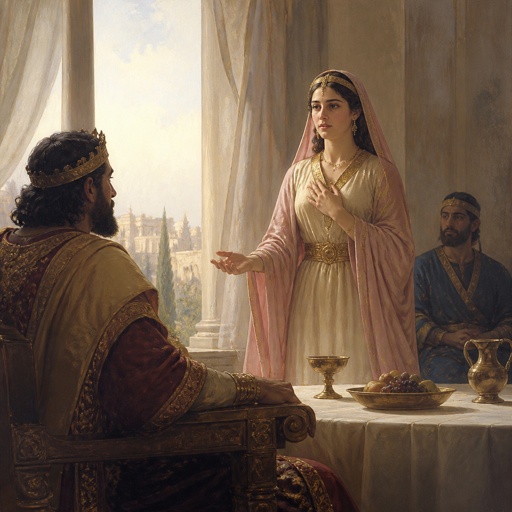
"Then answered Esther, and said, My petition and my request is;" - Esther 5:7

Esther 7:5 - "¶ Then the king Ahasuerus answered and said unto Esther the queen, Who is he, and where is he, that durst presume in his heart to do so?"
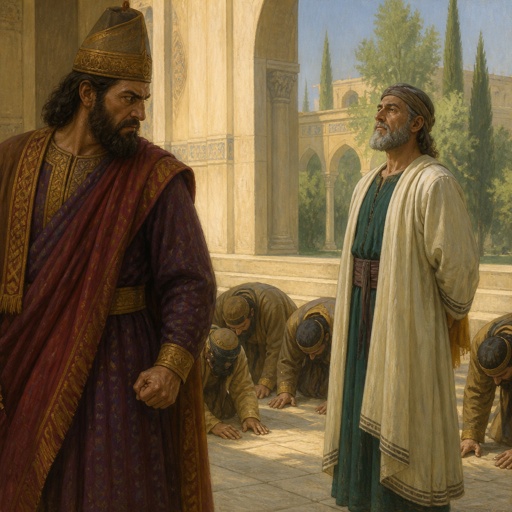
"And when Haman saw that Mordecai bowed not, nor did him reverence, then was Haman full of wrath." - Esther 3:5

Esther 5:2 - "And it was so, when the king saw Esther the queen standing in the court, that she obtained favour in his sight: and the king held out to Esther the golden sceptre that was in his hand. So Esther drew near, and touched the top of the sceptre."
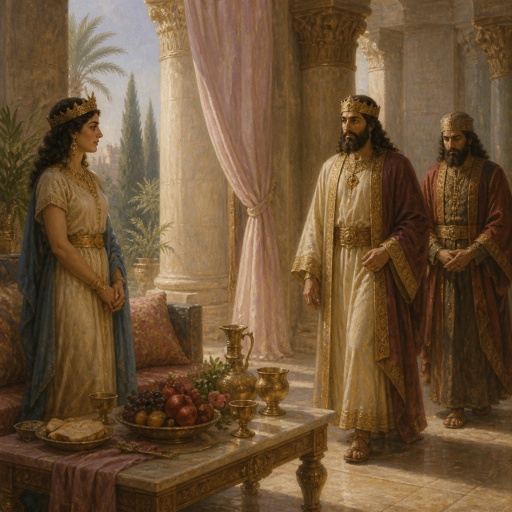
"Then the king said, Cause Haman to make haste, that he may do as Esther hath said. So the king and Haman came to the banquet that Esther had prepared." - Esther 5:5

Esther 4:5 - "Then called Esther for Hatach, one of the king's chamberlains, whom he had appointed to attend upon her, and gave him a commandment to Mordecai, to know what it was, and why it was."

Esther 5:6 - "¶ And the king said unto Esther at the banquet of wine, What is thy petition? and it shall be granted thee: and what is thy request? even to the half of the kingdom it shall be performed."
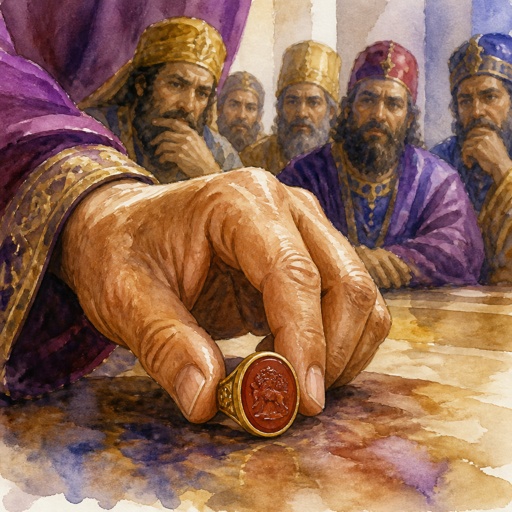
Esther 3:10 focus on ring

Est 3:5 ESV (5) And when Haman saw that Mordecai did not bow down or pay homage to him, Haman was filled with fury.

Esther 3:3 - "Then the king's servants, which were in the king's gate, said unto Mordecai, Why transgressest thou the king's commandment?"

Esther 5:12 - "Haman said moreover, Yea, Esther the queen did let no man come in with the king unto the banquet that she had prepared but myself; and to morrow am I invited unto her also with the king."

Esther 8:3 - "¶ And Esther spake yet again before the king, and fell down at his feet, and besought him with tears to put away the mischief of Haman the Agagite, and his device that he had devised against the Jews."

Esther 7:3 - "Then Esther the queen answered and said, If I have found favour in thy sight, O king, and if it please the king, let my life be given me at my petition, and my people at my request:"

Esther 5:1 - "Now it came to pass on the third day, that Esther put on her royal apparel, and stood in the inner court of the king's house, over against the king's house: and the king sat upon his royal throne in the royal house, over against the gate of the house."
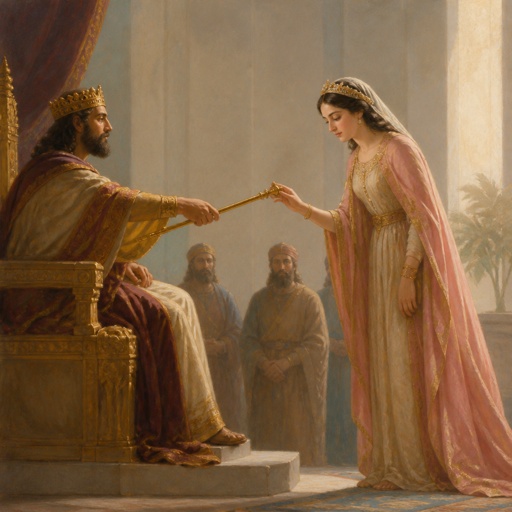
"And it was so, when the king saw Esther the queen standing in the court, that she obtained favour in his sight: and the king held out to Esther the golden sceptre that was in his hand. So Esther drew near, and touched the top of the sceptre." - Esther 5:2

Esther 6:5 - "And the king's servants said unto him, Behold, Haman standeth in the court. And the king said, Let him come in."

Esther 5:13 - "Yet all this availeth me nothing, so long as I see Mordecai the Jew sitting at the king's gate."

Esther 2:5 - "¶ Now in Shushan the palace there was a certain Jew, whose name was Mordecai, the son of Jair, the son of Shimei, the son of Kish, a Benjamite;"

Esther 5:10 - "Nevertheless Haman refrained himself: and when he came home, he sent and called for his friends, and Zeresh his wife."
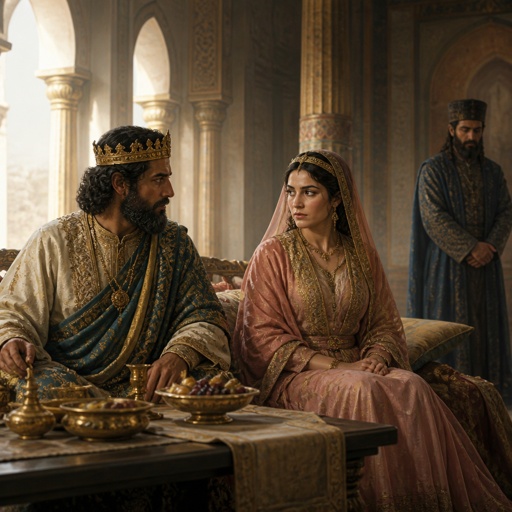
"¶ Then the king Ahasuerus answered and said unto Esther the queen, Who is he, and where is he, that durst presume in his heart to do so?" - Esther 7:5