The Divine Timing of God: When Faith Meets Favor
“Then the king said, Cause Haman to make haste, that he may do as Esther hath said. So the king and Haman came to the banquet that Esther had prepared.” — Esther 5:5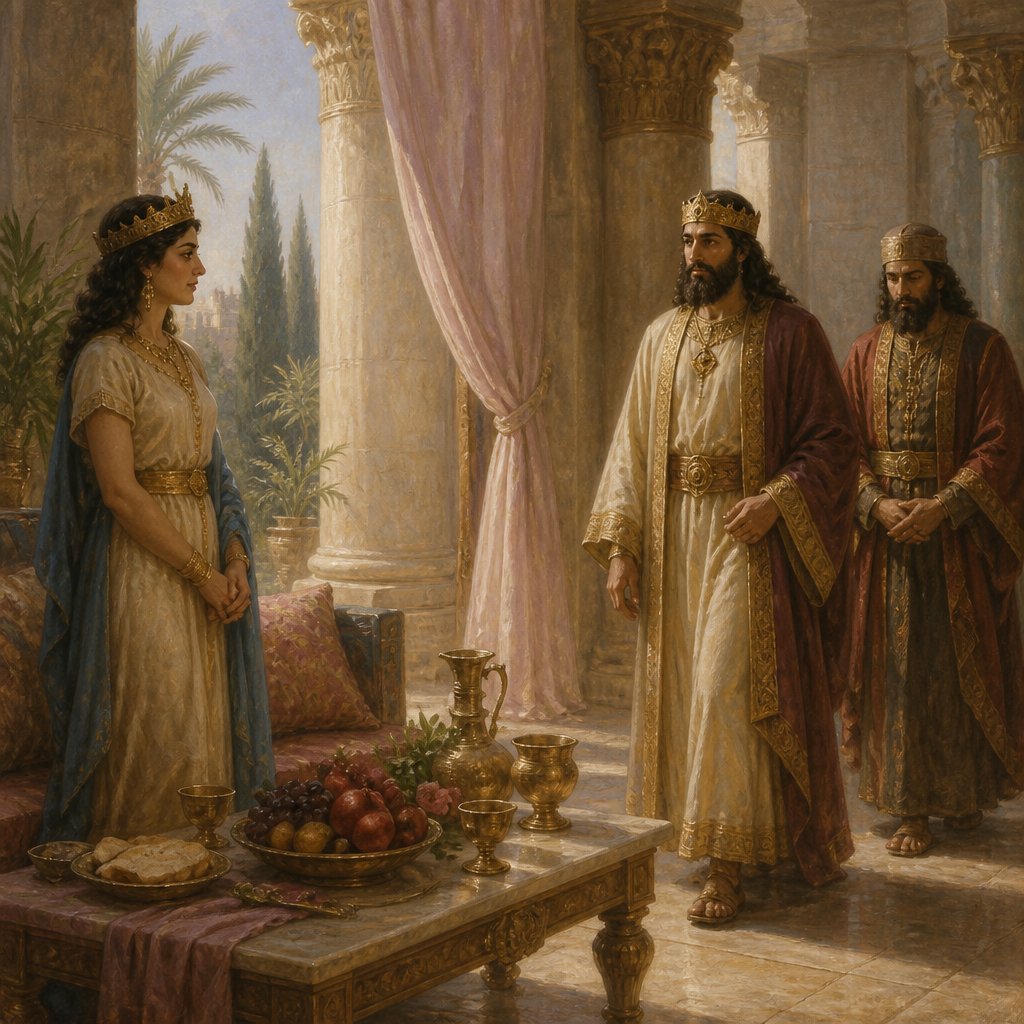
In Esther 5:5, we witness a pivotal moment in the biblical narrative: "Then the king said, Cause Haman to make haste, that he may do as Esther hath said. So the king and Haman came to the banquet that Esther had prepared." This verse encapsulates a dramatic turning point in the story of Esther, showcasing the intricate dance of divine providence, human initiative, and the manifesting power of faith.
At this juncture in the book of Esther, we see Esther rising to an occasion of great significance. With courage fueled by faith and a divine calling, she puts herself in a position to plead for her people before King Ahasuerus. The transformative nature of this moment is not merely in Esther's actions but also in the culminating effects of her preparations and the strategic timing of God.
Esther, a Jewish orphan brought into the king's palace, had already navigated the complexities of court life and the hidden perils of identity. She demonstrated a rare blend of wisdom, humility, and courage as she prepared her heart and mind to approach the king— a courageous act that could have led to her death had the king not extended his scepter to her (Esther 4:11). This verse reveals the culmination of her inner faith process, where her trust in God leads to a significant external action: inviting the king and Haman to her banquet.
The urgency in the king's directive, "Cause Haman to make haste," speaks volumes about divine intervention and the speed with which God can turn the tide in a moment. Additionally, it underscores how God harnesses even the most unlikely characters for His purposes. Haman, in his arrogance and fury, believed he was in control; yet, unbeknownst to him, he was about to play a part in fulfilling God’s plan for the salvation of the Jewish people.
What is pivotal in this situation is understanding that Esther's epic banquet isn’t merely about the food or social gathering but serves as a medium for revealing the hidden truths and for Esther to communicate her petition. Esther, in her wisdom, knew that preparation and timing were critical; she doesn’t unveil her request hastily but rather bides her time, allowing the situation to unfold to bring about the most significant impact. Her approach demonstrates the principle that God’s favor often manifests as we act in alignment with His timing.
The decision to prepare the banquet was strategic, demonstrating that God’s blessings often accompany diligent planning and prudent execution. Esther’s faith did not mean passivity. Instead, she actively engaged with her circumstances, revealing that faith without works is dead (James 2:26). Similarly, our faith should compel us to act and engage with the opportunities presented to us, preparing the groundwork for God's favor.
As Esther orchestrated the banquet, we are reminded that God often operates behind the scenes, aligning circumstances to bring about His will. In our lives, this means that while we may see chaos or unfathomable situations, God is weaving these threads together for our ultimate good and His glory (Romans 8:28). Every encounter, decision, and timing—every moment—involves God’s sovereign hand.
Today, reflect on your own life. Are you being called to step out in courage and faith? What banquets are you being asked to prepare in your life? Where is God nudging you to act with clarity of purpose, even when you can’t see the full picture? Let’s remember that just like Esther, we may find ourselves placed in moments of divine opportunity where our courageous faith can shift the narrative, honoring what we believe God is calling us to do.
In sum, Esther 5:5 invites us to embrace the reality that God orchestrates every detail of our lives. Let us step boldly into our circumstances with faith that trusts His timing and plans as we prepare our hearts and actions, ready for the banquets He has laid out for us.
Get our apps


Artwork for Esther 5:5

Esther 5:5 - "Then the king said, Cause Haman to make haste, that he may do as Esther hath said. So the king and Haman came to the banquet that Esther had prepared."
"Then the king said, Cause Haman to make haste, that he may do as Esther hath said. So the king and Haman came to the banquet that Esther had prepared." - Esther 5:5

Esther 5:7 - "Then answered Esther, and said, My petition and my request is;"

Esther 5:2

Esther 5:2

Esther 5:2

Esther 5:2 - "And it was so, when the king saw Esther the queen standing in the court, that she obtained favour in his sight: and the king held out to Esther the golden sceptre that was in his hand. So Esther drew near, and touched the top of the sceptre."
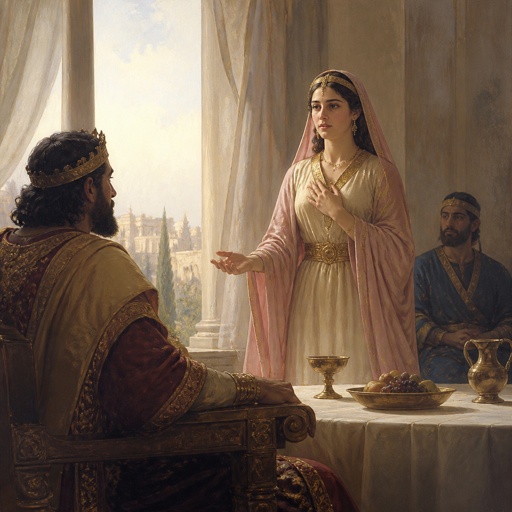
"Then answered Esther, and said, My petition and my request is;" - Esther 5:7

Esther 5:4 - "And Esther answered, If it seem good unto the king, let the king and Haman come this day unto the banquet that I have prepared for him."

Esther 7:5 - "¶ Then the king Ahasuerus answered and said unto Esther the queen, Who is he, and where is he, that durst presume in his heart to do so?"

Esther 5:3 - "Then said the king unto her, What wilt thou, queen Esther? and what is thy request? it shall be even given thee to the half of the kingdom."

Esther 4:5 - "Then called Esther for Hatach, one of the king's chamberlains, whom he had appointed to attend upon her, and gave him a commandment to Mordecai, to know what it was, and why it was."

Esther 5:6 - "¶ And the king said unto Esther at the banquet of wine, What is thy petition? and it shall be granted thee: and what is thy request? even to the half of the kingdom it shall be performed."

Esther 5:2 - "And it was so, when the king saw Esther the queen standing in the court, that she obtained favour in his sight: and the king held out to Esther the golden sceptre that was in his hand. So Esther drew near, and touched the top of the sceptre."

Esther 3:5 - "And when Haman saw that Mordecai bowed not, nor did him reverence, then was Haman full of wrath."

Esther 5:12 - "Haman said moreover, Yea, Esther the queen did let no man come in with the king unto the banquet that she had prepared but myself; and to morrow am I invited unto her also with the king."

Esther 6:5 - "And the king's servants said unto him, Behold, Haman standeth in the court. And the king said, Let him come in."

Esther 5:13 - "Yet all this availeth me nothing, so long as I see Mordecai the Jew sitting at the king's gate."

Esther 2:5 - "¶ Now in Shushan the palace there was a certain Jew, whose name was Mordecai, the son of Jair, the son of Shimei, the son of Kish, a Benjamite;"

Esther 5:10 - "Nevertheless Haman refrained himself: and when he came home, he sent and called for his friends, and Zeresh his wife."

Esther 5:1 - "Now it came to pass on the third day, that Esther put on her royal apparel, and stood in the inner court of the king's house, over against the king's house: and the king sat upon his royal throne in the royal house, over against the gate of the house."

Esther 9:5 - "Thus the Jews smote all their enemies with the stroke of the sword, and slaughter, and destruction, and did what they would unto those that hated them."

"¶ Then the king Ahasuerus answered and said unto Esther the queen, Who is he, and where is he, that durst presume in his heart to do so?" - Esther 7:5
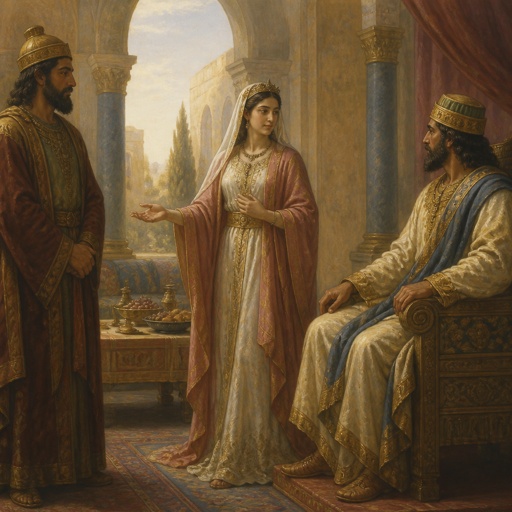
"And Esther answered, If it seem good unto the king, let the king and Haman come this day unto the banquet that I have prepared for him." - Esther 5:4
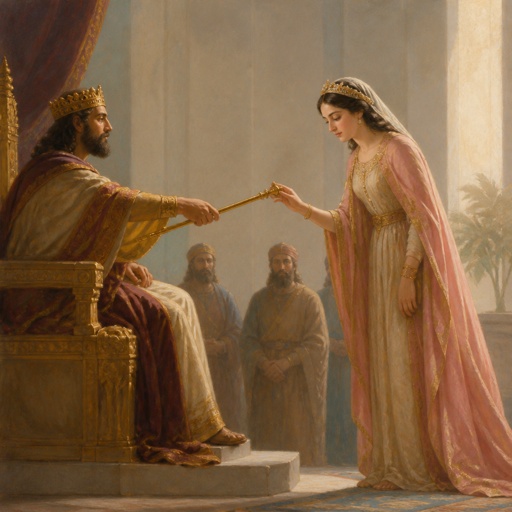
"And it was so, when the king saw Esther the queen standing in the court, that she obtained favour in his sight: and the king held out to Esther the golden sceptre that was in his hand. So Esther drew near, and touched the top of the sceptre." - Esther 5:2
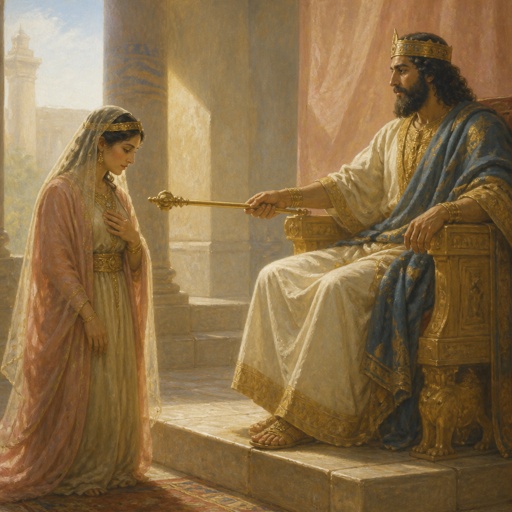
"Then said the king unto her, What wilt thou, queen Esther? and what is thy request? it shall be even given thee to the half of the kingdom." - Esther 5:3

Est 3:5 ESV (5) And when Haman saw that Mordecai did not bow down or pay homage to him, Haman was filled with fury.
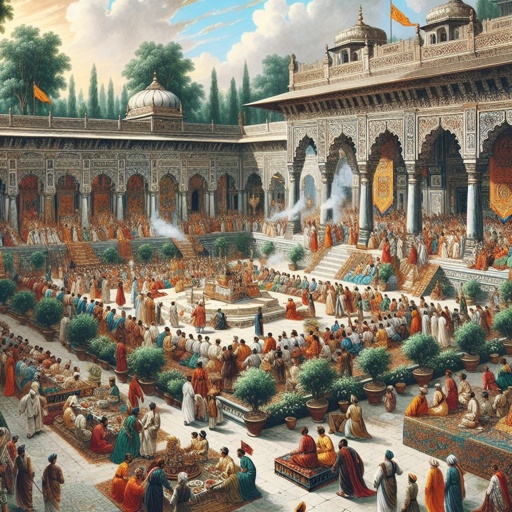
Esther 1:5 - "And when these days were expired, the king made a feast unto all the people that were present in Shushan the palace, both unto great and small, seven days, in the court of the garden of the king's palace;"

Esther 5:9 - "¶ Then went Haman forth that day joyful and with a glad heart: but when Haman saw Mordecai in the king's gate, that he stood not up, nor moved for him, he was full of indignation against Mordecai."

"Then called Esther for Hatach, one of the king's chamberlains, whom he had appointed to attend upon her, and gave him a commandment to Mordecai, to know what it was, and why it was." - Esther 4:5