The Courage of Esther: A Bold Petition and a Heart of Faith
“Then answered Esther, and said, My petition and my request is;” — Esther 5:7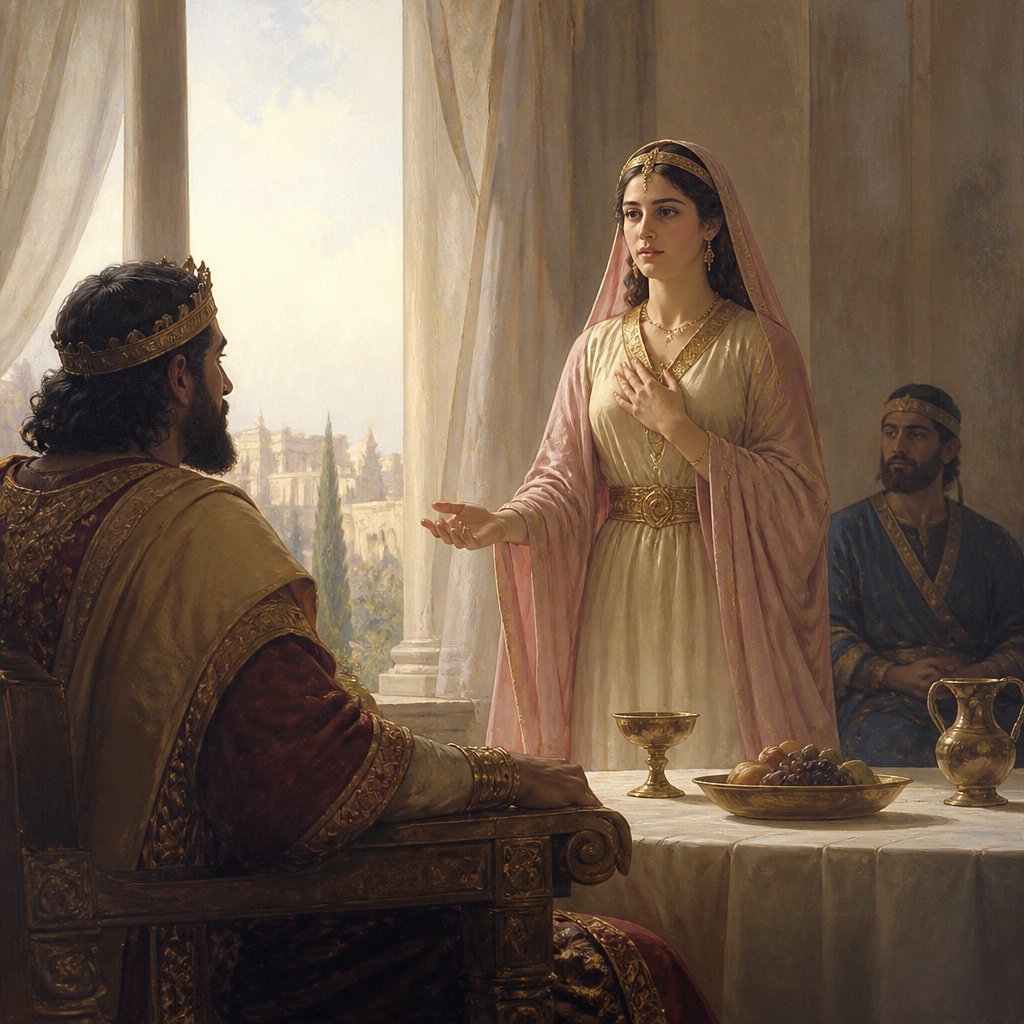
The story of Esther is a powerful narrative about faith, courage, and divine providence. In Esther 5:7, we find a pivotal moment in her journey of standing up for her people, the Jews, who are facing annihilation at the hands of Haman, the king’s advisor. The verse reads: "Then answered Esther, and said, My petition and my request is;" Herein lies a stirring account of not merely the act of asking but the deeper implications of intercession and selflessness in the face of possible ruin.
At this juncture, Esther has prepared herself to approach King Xerxes—an act fraught with potential peril, as entering the king’s presence unsummoned could lead to death. Yet, driven by her love for her people and her belief in God’s plan, Esther boldly steps forward. She represents not only a queen but a faithful servant of the Lord. Her words, "My petition and my request is;" reflect a humble yet courageous spirit.
1. **The Power of Preparation**
Before making her request, Esther fasted and prayed for three days, calling on her maidens to join her in supplication. This act of collective fasting signifies unity and a great dependence on God. The entire chapter leading up to Esther’s request is filled with divine strategy and an expectation of miraculous intervention, highlighting the importance of prayer in the life of a believer.
As we navigate the trials of our lives, we may find ourselves needing to present significant petitions before God. Are we preparing our hearts with prayer and self-examination? Esther’s preparation modeled the seriousness with which we should approach our requests—equipping ourselves with spiritual armor, much like the prayerful spirit we see in the Book of James, which reminds us, "Ye have not, because ye ask not" (James 4:2).
2. **The Transformative Nature of Courage**
When Esther revealed her Jewish identity and made her request known, it was an act that required immense bravery. The courage Esther demonstrated had transformative effects not only on her but on an entire nation. She became a beacon of hope and illustrated how one person’s willingness to stand in the gap can lead to protection and deliverance for many.
In our own lives, we may often shy away from making our needs known—be it in prayer, community, or leadership. Esther's courage teaches us that it is not merely about what we ask, but the heart from which we ask. When we advocate for others with an earnest heart, we step out of our comfort zones and into the realm of divine possibilities.
3. **The Importance of Clarity in Requests**
When Esther states, "My petition and my request is;" it is clear she is ready to articulate her needs without ambiguity. This clarity is essential in our communication with God. He urges us to be specific in our prayers—not because He lacks understanding, but because it draws us into deeper reflection and revelation of our true needs. Esther exemplifies this clarity, knowing that the essence of her requests carries the weight of her people’s future.
As we bring our burdens before God, we should be clear and precise, expressing our needs and desires honestly. It is in this candid communication that the heart of God is revealed, and we can see His power at work.
4. **The Heroine of Faith**
In conclusion, Esther becomes a hero of faith not just because she was a queen, but because she dared to intercede for her people at the risk of her own life. Her story is a timeless reminder that when we step out in faith, empowered by prayer and conviction, we can change the course of history. Like Esther, let us be encouraged to turn to God in our moments of need, asking boldly and clearly. This petitioning, grounded in faith, has the potential to ignite movements of God’s grace and mercy in our lives and the lives of those around us.
Get our apps


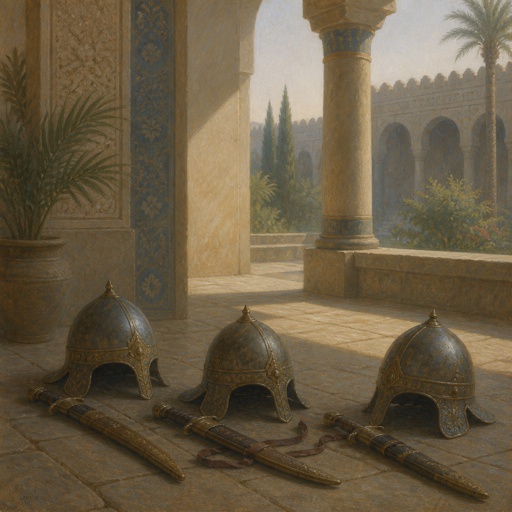
Artwork for Esther 5:7

Esther 5:7 - "Then answered Esther, and said, My petition and my request is;"
"Then answered Esther, and said, My petition and my request is;" - Esther 5:7

Esther 7:5 - "¶ Then the king Ahasuerus answered and said unto Esther the queen, Who is he, and where is he, that durst presume in his heart to do so?"

Esther 5:5 - "Then the king said, Cause Haman to make haste, that he may do as Esther hath said. So the king and Haman came to the banquet that Esther had prepared."

Esther 7:1 - "So the king and Haman came to banquet with Esther the queen."
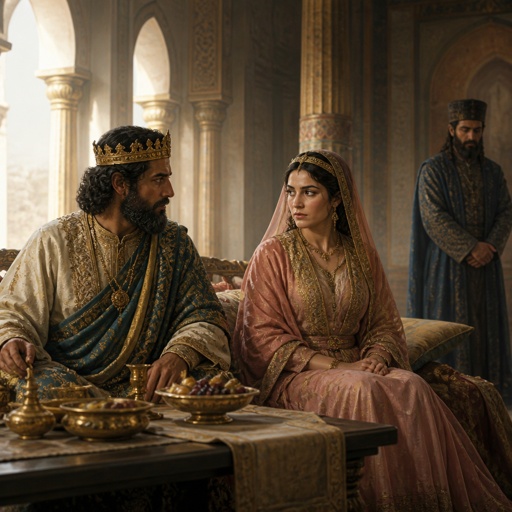
"¶ Then the king Ahasuerus answered and said unto Esther the queen, Who is he, and where is he, that durst presume in his heart to do so?" - Esther 7:5

Esther 7:6 - "And Esther said, The adversary and enemy is this wicked Haman. Then Haman was afraid before the king and the queen."

Esther 5:2

Esther 5:2 - "And it was so, when the king saw Esther the queen standing in the court, that she obtained favour in his sight: and the king held out to Esther the golden sceptre that was in his hand. So Esther drew near, and touched the top of the sceptre."

Esther 5:2

Esther 5:2

Esther 7:2 - "And the king said again unto Esther on the second day at the banquet of wine, What is thy petition, queen Esther? and it shall be granted thee: and what is thy request? and it shall be performed, even to the half of the kingdom."

Esther 7:7 - "¶ And the king arising from the banquet of wine in his wrath went into the palace garden: and Haman stood up to make request for his life to Esther the queen; for he saw that there was evil determined against him by the king."

Esther 9:7 - "And Parshandatha, and Dalphon, and Aspatha,"

"So the king and Haman came to banquet with Esther the queen." - Esther 7:1

Esther 8:7 - "¶ Then the king Ahasuerus said unto Esther the queen and to Mordecai the Jew, Behold, I have given Esther the house of Haman, and him they have hanged upon the gallows, because he laid his hand upon the Jews."

Esther 5:4 - "And Esther answered, If it seem good unto the king, let the king and Haman come this day unto the banquet that I have prepared for him."

Esther 5:3 - "Then said the king unto her, What wilt thou, queen Esther? and what is thy request? it shall be even given thee to the half of the kingdom."

Esther 5:2 - "And it was so, when the king saw Esther the queen standing in the court, that she obtained favour in his sight: and the king held out to Esther the golden sceptre that was in his hand. So Esther drew near, and touched the top of the sceptre."
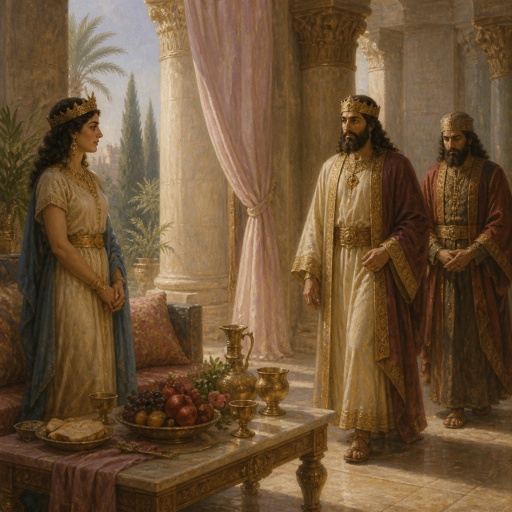
"Then the king said, Cause Haman to make haste, that he may do as Esther hath said. So the king and Haman came to the banquet that Esther had prepared." - Esther 5:5

Esther 4:5 - "Then called Esther for Hatach, one of the king's chamberlains, whom he had appointed to attend upon her, and gave him a commandment to Mordecai, to know what it was, and why it was."

Esther 5:6 - "¶ And the king said unto Esther at the banquet of wine, What is thy petition? and it shall be granted thee: and what is thy request? even to the half of the kingdom it shall be performed."
"And Parshandatha, and Dalphon, and Aspatha," - Esther 9:7

Esther 6:7 - "And Haman answered the king, For the man whom the king delighteth to honour,"

"And Esther said, The adversary and enemy is this wicked Haman. Then Haman was afraid before the king and the queen." - Esther 7:6

Esther 5:12 - "Haman said moreover, Yea, Esther the queen did let no man come in with the king unto the banquet that she had prepared but myself; and to morrow am I invited unto her also with the king."

Esther 7:3 - "Then Esther the queen answered and said, If I have found favour in thy sight, O king, and if it please the king, let my life be given me at my petition, and my people at my request:"

Esther 7:10 - "So they hanged Haman on the gallows that he had prepared for Mordecai. Then was the king's wrath pacified."

Esther 3:5 - "And when Haman saw that Mordecai bowed not, nor did him reverence, then was Haman full of wrath."

Esther 2:7 - "And he brought up Hadassah, that is, Esther, his uncle's daughter: for she had neither father nor mother, and the maid was fair and beautiful; whom Mordecai, when her father and mother were dead, took for his own daughter."