The Fall of Pride: Lessons from Haman's Misfortune
"And Haman told Zeresh his wife and all his friends every thing that had befallen him. Then said his wise men and Zeresh his wife unto him, If Mordecai be of the seed of the Jews, before whom thou hast begun to fall, thou shalt not prevail against him, but shalt surely fall before him." - Esther 6:13
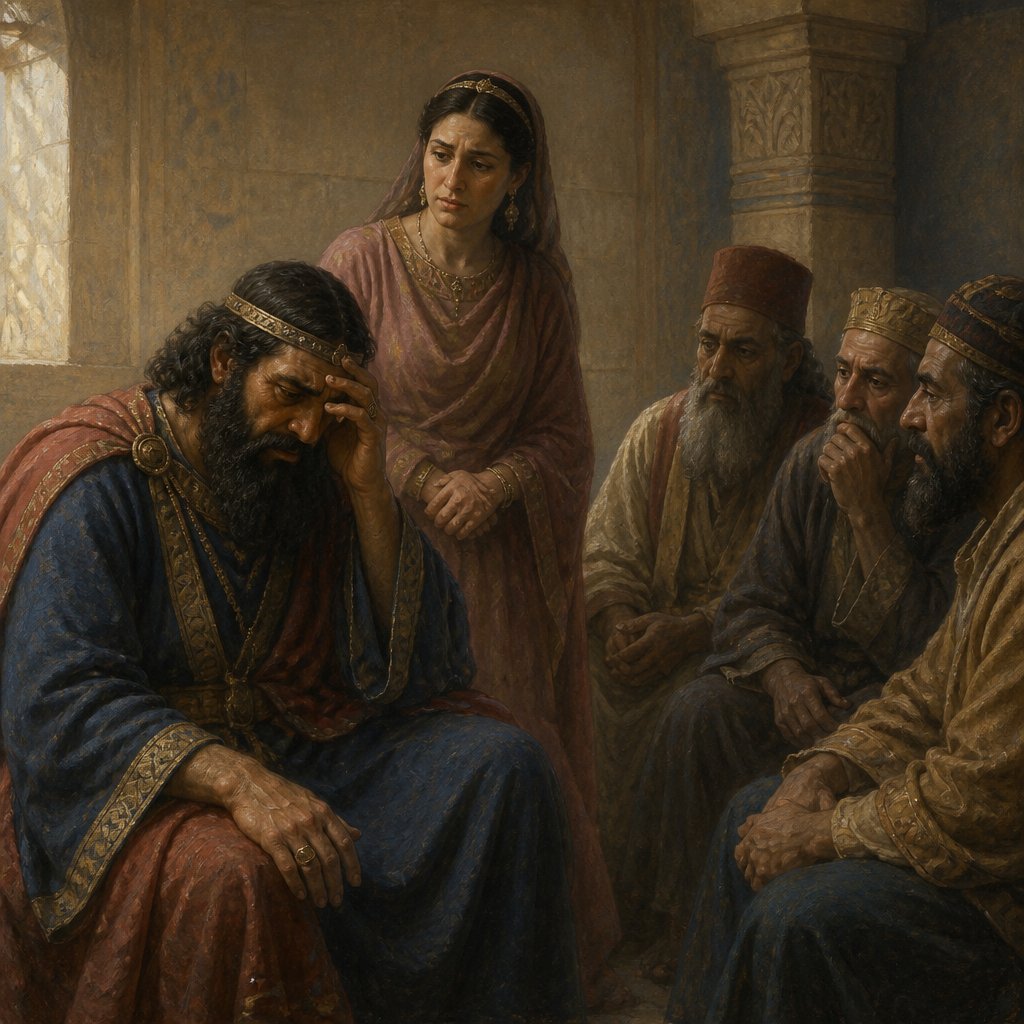
As we delve into the narrative of Esther 6:13, we are confronted with the stark realities of pride, the consequences of our actions, and the sovereignty of God. The verse reads: "And Haman told Zeresh his wife and all his friends every thing that had befallen him. Then said his wise men and Zeresh his wife unto him, If Mordecai be of the seed of the Jews, before whom thou hast begun to fall, thou shalt not prevail against him, but shalt surely fall before him."
In this passage, we encounter Haman at a moment of despair. This moment serves as a powerful reminder of how pride can lead to one's downfall. Haman's tale is one intertwined with arrogance and a desire for power. Elevated to a position of great honor, he apparently believed he was invincible. However, the very pride that lifted him high now serves as the precipice of his fall.
Haman’s story echoes the age-old principle that "pride goeth before destruction, and a haughty spirit before a fall" (Proverbs 16:18). The advice from his wise men, coupled with Zeresh's insight, serves as a sobering realization of the spiritual and moral law at play. The reference to Mordecai being of the seed of the Jews indicates not only a national identity but a covenant relationship with God. Haman's adversary, Mordecai, represents God's chosen people, imbued with divine favor that Haman underestimates severely.
As we reflect on Haman’s predicament, we must confront our own hearts and examine where pride may reside. Are there areas where we believe ourselves secure, dismissing the power of God and the unity of His people? Haman’s overconfidence blinds him to the reality of his circumstances. Haman’s friends, despite their initial encouragement to him, ultimately reveal a truth he cannot bear to acknowledge—his impending doom.
Haman’s narrative teaches us that when we strive for greatness outside of God’s design, we align ourselves with failure. Sometimes, God in His mercy allows us to face the consequences of our actions to redirect our hearts towards Him.
Haman’s fall comes as the culmination of a series of prideful actions: plotting against Mordecai, seeking the favor of the king, and ultimately setting into motion a genocide against the Jews. What started as a personal vendetta spirals into a cosmic struggle between good and evil, between God's people and those who stand against Him.
We must not overlook the presence of divine justice at play; it serves as a reminder that God ultimately prevails. While Haman sought to honor himself through the destruction of others, it was God’s people who were honored instead. This serves as the crux of our faith: when we assume we can act beyond the will of God, we misinterpret our reality. Divinity eclipses human effort and ambition.
In our own lives, we face moments similar to Haman’s. We are challenged to kill the pride within us, to avoid entering situations that would place us at odds with God’s will. When we are tempted to rely on our own understanding or when we pursue our own agendas, let us remember Mordecai, who stood firm in his faith and heritage. Let us emulate humility, remaining grounded in the knowledge that we, too, are part of a larger story woven by God’s own hand.
Haman's story culminates in tragedy, yet from it, we glean vital wisdom. It serves to remind us of the importance of humility, the necessity of aligning our hearts with God’s purpose, and the assurance that, ultimately, it is God’s plan that will prevail.
So, as we navigate our days, let us echo the sentiments of Mordecai—standing firm and confident in our position as children of the Most High, not as the builders of our own towers of Babel, but as faithful servants in the kingdom, ready to honor God through our lives.
Want to reflect more on Esther 6:13?
Continue your spiritual journey with Bible Chat — an AI-powered tool for exploring God's Word through conversation. Ask questions, discover connections, and deepen your understanding.
Get Our Apps


Esther 6:13 Artwork

Esther 6:13 - "And Haman told Zeresh his wife and all his friends every thing that had befallen him. Then said his wise men and Zeresh his wife unto him, If Mordecai be of the seed of the Jews, before whom thou hast begun to fall, thou shalt not prevail against him, but shalt surely fall before him."
"And Haman told Zeresh his wife and all his friends every thing that had befallen him. Then said his wise men and Zeresh his wife unto him, If Mordecai be of the seed of the Jews, before whom thou hast begun to fall, thou shalt not prevail against him, but shalt surely fall before him." - Esther 6:13

Esther 7:6 - "And Esther said, The adversary and enemy is this wicked Haman. Then Haman was afraid before the king and the queen."

Esther 1:6

Esther 4:13 - "Then Mordecai commanded to answer Esther, Think not with thyself that thou shalt escape in the king's house, more than all the Jews."

Esther 6:14 - "And while they were yet talking with him, came the king's chamberlains, and hasted to bring Haman unto the banquet that Esther had prepared."

Esther 9:13 - "Then said Esther, If it please the king, let it be granted to the Jews which are in Shushan to do to morrow also according unto this day's decree, and let Haman's ten sons be hanged upon the gallows."

Esther 5:6 - "¶ And the king said unto Esther at the banquet of wine, What is thy petition? and it shall be granted thee: and what is thy request? even to the half of the kingdom it shall be performed."

Esther 6:7 - "And Haman answered the king, For the man whom the king delighteth to honour,"

Esther 9:6 - "And in Shushan the palace the Jews slew and destroyed five hundred men."

"And Esther said, The adversary and enemy is this wicked Haman. Then Haman was afraid before the king and the queen." - Esther 7:6

Esther 4:6 - "So Hatach went forth to Mordecai unto the street of the city, which was before the king's gate."

Esther 5:13 - "Yet all this availeth me nothing, so long as I see Mordecai the Jew sitting at the king's gate."
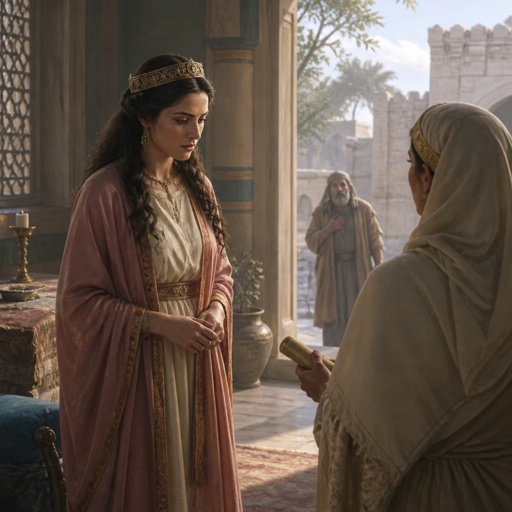
"Then Mordecai commanded to answer Esther, Think not with thyself that thou shalt escape in the king's house, more than all the Jews." - Esther 4:13

Esther 6:1 - "On that night could not the king sleep, and he commanded to bring the book of records of the chronicles; and they were read before the king."

Esther 6:5 - "And the king's servants said unto him, Behold, Haman standeth in the court. And the king said, Let him come in."

Esther 6:12 - "¶ And Mordecai came again to the king's gate. But Haman hasted to his house mourning, and having his head covered."
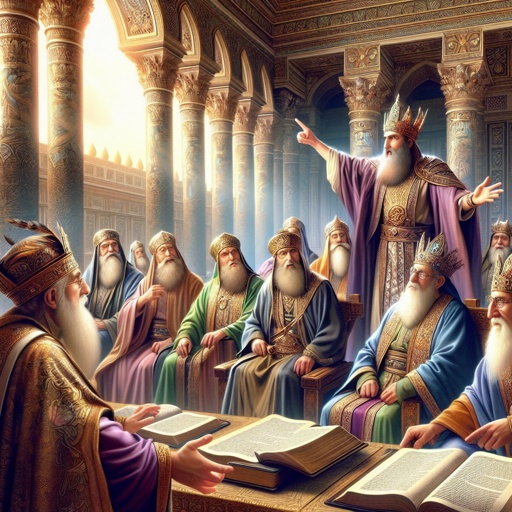
Esther 1:13 - "¶ Then the king said to the wise men, which knew the times, (for so was the king's manner toward all that knew law and judgment:"

"And while they were yet talking with him, came the king's chamberlains, and hasted to bring Haman unto the banquet that Esther had prepared." - Esther 6:14

Esther 8:13 - "The copy of the writing for a commandment to be given in every province was published unto all people, and that the Jews should be ready against that day to avenge themselves on their enemies."

Esther 2:13 - "Then thus came every maiden unto the king; whatsoever she desired was given her to go with her out of the house of the women unto the king's house."

"And Haman answered the king, For the man whom the king delighteth to honour," - Esther 6:7

Esther 8:6 - "For how can I endure to see the evil that shall come unto my people? or how can I endure to see the destruction of my kindred?"

Esther 6:8 - "Let the royal apparel be brought which the king useth to wear, and the horse that the king rideth upon, and the crown royal which is set upon his head:"

"And in Shushan the palace the Jews slew and destroyed five hundred men." - Esther 9:6

Esther 6:3 - "And the king said, What honour and dignity hath been done to Mordecai for this? Then said the king's servants that ministered unto him, There is nothing done for him."

Esther 6:2 - "And it was found written, that Mordecai had told of Bigthana and Teresh, two of the king's chamberlains, the keepers of the door, who sought to lay hand on the king Ahasuerus."

Esther 6:4 - "¶ And the king said, Who is in the court? Now Haman was come into the outward court of the king's house, to speak unto the king to hang Mordecai on the gallows that he had prepared for him."

Esther 6:6 - "So Haman came in. And the king said unto him, What shall be done unto the man whom the king delighteth to honour? Now Haman thought in his heart, To whom would the king delight to do honour more than to myself?"
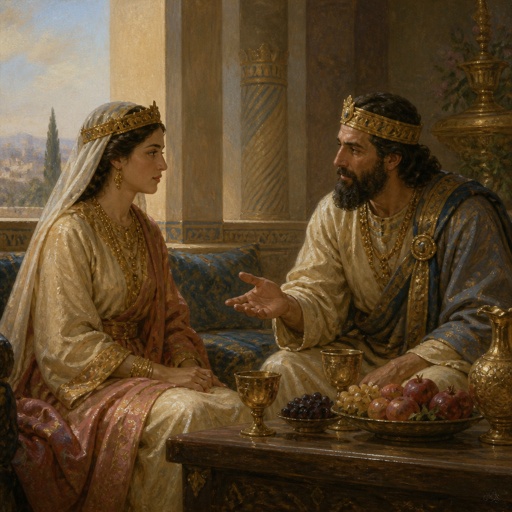
"¶ And the king said unto Esther at the banquet of wine, What is thy petition? and it shall be granted thee: and what is thy request? even to the half of the kingdom it shall be performed." - Esther 5:6