The Divine Timing of God: A Lesson from Haman's Entrance
“And the king’s servants said unto him, Behold, Haman standeth in the court. And the king said, Let him come in.” — Esther 6:5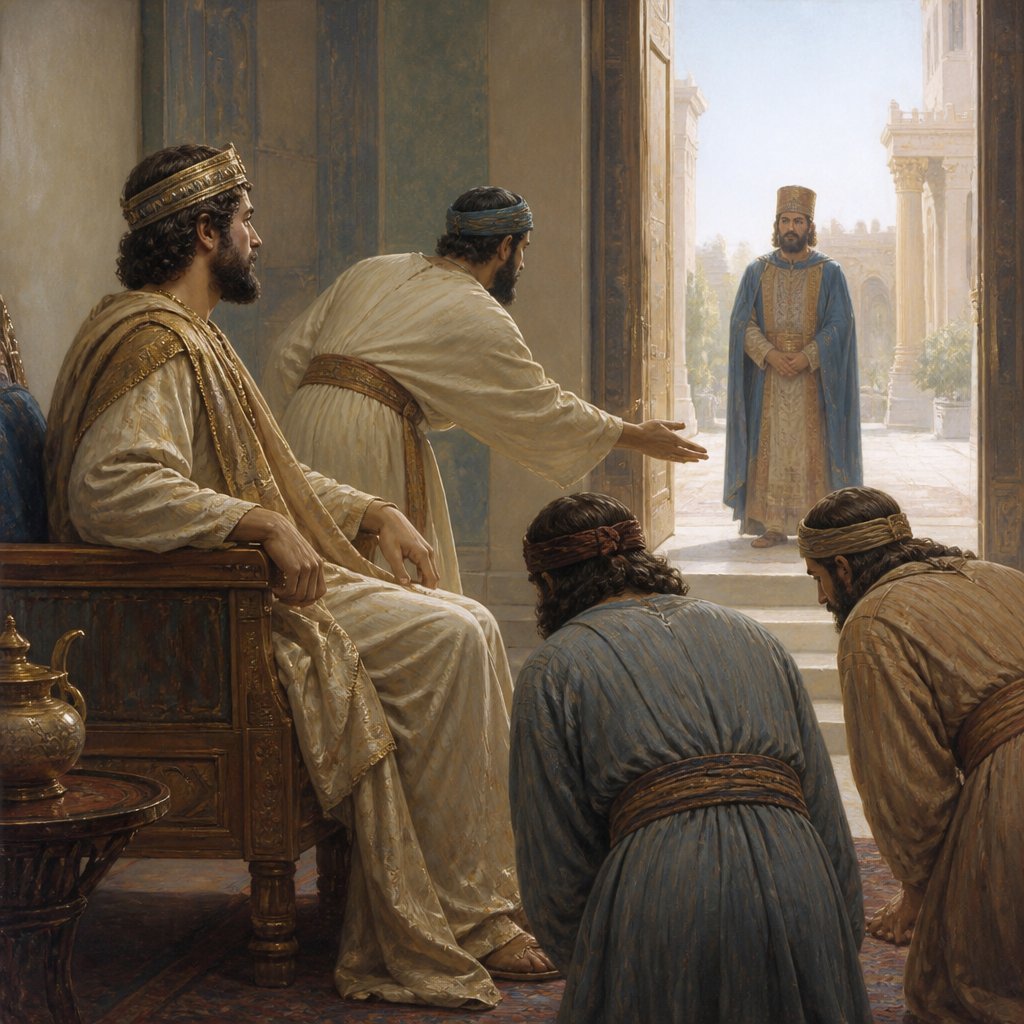
In the narrative of Esther 6:5, we encounter a pivotal moment in the saga of the Jewish people in exile. The verse reads: "And the king's servants said unto him, Behold, Haman standeth in the court. And the king said, Let him come in." This moment is laden with implications not just for the characters involved, but for us as believers today. It serves as a reminder of God’s sovereignty and the intricate tapestry of divine timing.
Haman, a figure synonymous with ambition and malice, exemplifies the archetype of the adversary. In the preceding chapters, we see how his pride and animosity towards Mordecai made him seek the destruction of an entire people. Haman had secured favor in the eyes of King Ahasuerus, but his lust for power masked an undercurrent of vulnerability. It is significant to note that God is never outmaneuvered by the cunning schemes of man. Even in the murkiest waters of our lives, His hand is guiding history towards His ultimate purpose.
The phrase, "Behold, Haman standeth in the court," serves as a stark reminder of the duality within each of us. We all possess qualities that can lead us towards righteousness or towards our own undoing. Haman represents those traits that, when left unchecked, lead to destruction—not just of one’s enemy, but of oneself. Haman stands at the precipice of fate; his next actions will set the stage for a dramatic turn in the story of Esther.
The response of the king, in saying “Let him come in,” is crucial. Ahasuerus, though unaware of Haman’s true intentions, unwittingly opens the door for a divine confrontation. God’s timing is immaculate; it often places us in scenarios where we must either confront our greatest fears or face the consequences of our actions. In this verse, we recognize that our greatest adversaries can often be instruments in the hands of a Sovereign God. The very moment when Haman sought the king’s favor for his nefarious plans, he was walking straight into the unfolding of God's redemptive story for His people.
Furthermore, this moment in Esther’s narrative compels us to reflect on the tension between human free will and divine providence. Haman exercised his free will—a decision driven by greed and vengeance—but each of his actions unknowingly contributed to the fulfillment of God’s promise to protect and deliver the Jewish people. The book of Esther emphasizes the hiddenness of God, yet reminds us of His constant presence and involvement in human affairs. Even when we do not see Him, He is orchestrating events and conversations that lead to decisive moments in our lives.
In contemplating the implications of this passage, we must ask ourselves: what adversaries stand in our own courtyards? Perhaps it is fear, doubt, or the burden of sin that hinders our walk with God. Like Haman, these adversaries may seem momentarily powerful, but they are ultimately subject to God's authority.
The invitation to learn from this verse is to maintain faith during times of uncertainty. Just as Haman approached the throne, unaware of the trap laid by his own machinations, we can find ourselves on holy ground, poised to receive God's intervention. Every event and encounter—like Haman's entrance—is imbued with potential. They are opportunities for God to reveal His glory, to reshape narratives, and to demonstrate His faithfulness to those who are called according to His purpose.
Let us then embrace the challenges and adversarial moments in our lives as divine setups for God’s intervention. God’s timing is always perfect, and like Esther, we must remain poised to act in faith, recognizing that He is always at work, weaving our stories into His grand narrative of redemption.
Get our apps


Artwork for Esther 6:5

Esther 6:5 - "And the king's servants said unto him, Behold, Haman standeth in the court. And the king said, Let him come in."
"And the king's servants said unto him, Behold, Haman standeth in the court. And the king said, Let him come in." - Esther 6:5

Esther 5:6 - "¶ And the king said unto Esther at the banquet of wine, What is thy petition? and it shall be granted thee: and what is thy request? even to the half of the kingdom it shall be performed."

Esther 5:5 - "Then the king said, Cause Haman to make haste, that he may do as Esther hath said. So the king and Haman came to the banquet that Esther had prepared."

Esther 5:7 - "Then answered Esther, and said, My petition and my request is;"

Esther 7:6 - "And Esther said, The adversary and enemy is this wicked Haman. Then Haman was afraid before the king and the queen."

Esther 5:2

Esther 5:2 - "And it was so, when the king saw Esther the queen standing in the court, that she obtained favour in his sight: and the king held out to Esther the golden sceptre that was in his hand. So Esther drew near, and touched the top of the sceptre."

Esther 5:2

Esther 5:2

Esther 1:6
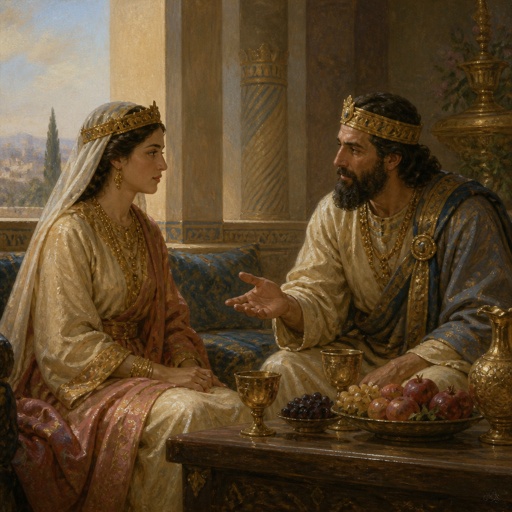
"¶ And the king said unto Esther at the banquet of wine, What is thy petition? and it shall be granted thee: and what is thy request? even to the half of the kingdom it shall be performed." - Esther 5:6

Esther 6:14 - "And while they were yet talking with him, came the king's chamberlains, and hasted to bring Haman unto the banquet that Esther had prepared."

Esther 5:4 - "And Esther answered, If it seem good unto the king, let the king and Haman come this day unto the banquet that I have prepared for him."
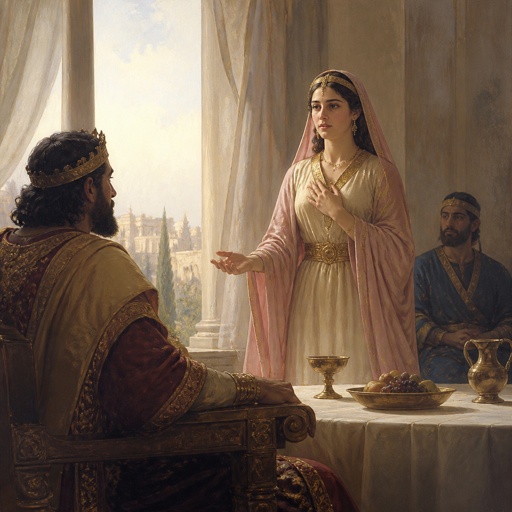
"Then answered Esther, and said, My petition and my request is;" - Esther 5:7

Esther 5:3 - "Then said the king unto her, What wilt thou, queen Esther? and what is thy request? it shall be even given thee to the half of the kingdom."

Esther 7:5 - "¶ Then the king Ahasuerus answered and said unto Esther the queen, Who is he, and where is he, that durst presume in his heart to do so?"

Esther 5:2 - "And it was so, when the king saw Esther the queen standing in the court, that she obtained favour in his sight: and the king held out to Esther the golden sceptre that was in his hand. So Esther drew near, and touched the top of the sceptre."
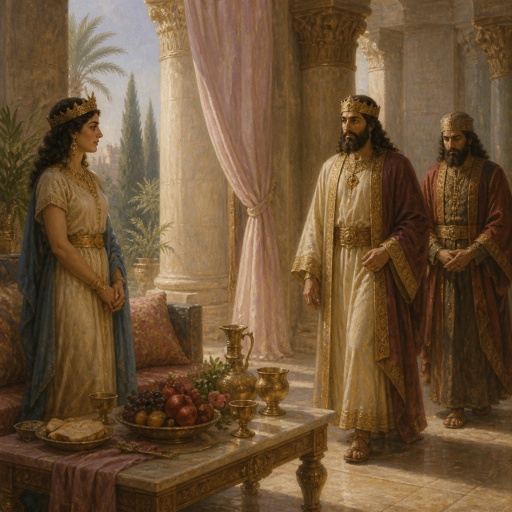
"Then the king said, Cause Haman to make haste, that he may do as Esther hath said. So the king and Haman came to the banquet that Esther had prepared." - Esther 5:5

Esther 4:5 - "Then called Esther for Hatach, one of the king's chamberlains, whom he had appointed to attend upon her, and gave him a commandment to Mordecai, to know what it was, and why it was."

Esther 6:7 - "And Haman answered the king, For the man whom the king delighteth to honour,"

Esther 9:6 - "And in Shushan the palace the Jews slew and destroyed five hundred men."

"And Esther said, The adversary and enemy is this wicked Haman. Then Haman was afraid before the king and the queen." - Esther 7:6

Esther 5:12 - "Haman said moreover, Yea, Esther the queen did let no man come in with the king unto the banquet that she had prepared but myself; and to morrow am I invited unto her also with the king."

Esther 4:6 - "So Hatach went forth to Mordecai unto the street of the city, which was before the king's gate."

Esther 3:5 - "And when Haman saw that Mordecai bowed not, nor did him reverence, then was Haman full of wrath."

Esther 5:1 - "Now it came to pass on the third day, that Esther put on her royal apparel, and stood in the inner court of the king's house, over against the king's house: and the king sat upon his royal throne in the royal house, over against the gate of the house."
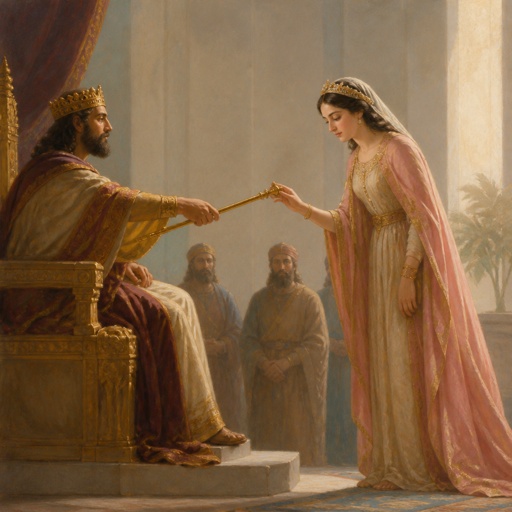
"And it was so, when the king saw Esther the queen standing in the court, that she obtained favour in his sight: and the king held out to Esther the golden sceptre that was in his hand. So Esther drew near, and touched the top of the sceptre." - Esther 5:2

Esther 6:1 - "On that night could not the king sleep, and he commanded to bring the book of records of the chronicles; and they were read before the king."

Esther 6:12 - "¶ And Mordecai came again to the king's gate. But Haman hasted to his house mourning, and having his head covered."