From Darkness to Deliverance: God's Sovereignty in the Story of Esther
“And Harbonah, one of the chamberlains, said before the king, Behold also, the gallows fifty cubits high, which Haman had made for Mordecai, who had spoken good for the king, standeth in the house of Haman. Then the king said, Hang him thereon.” — Esther 7:9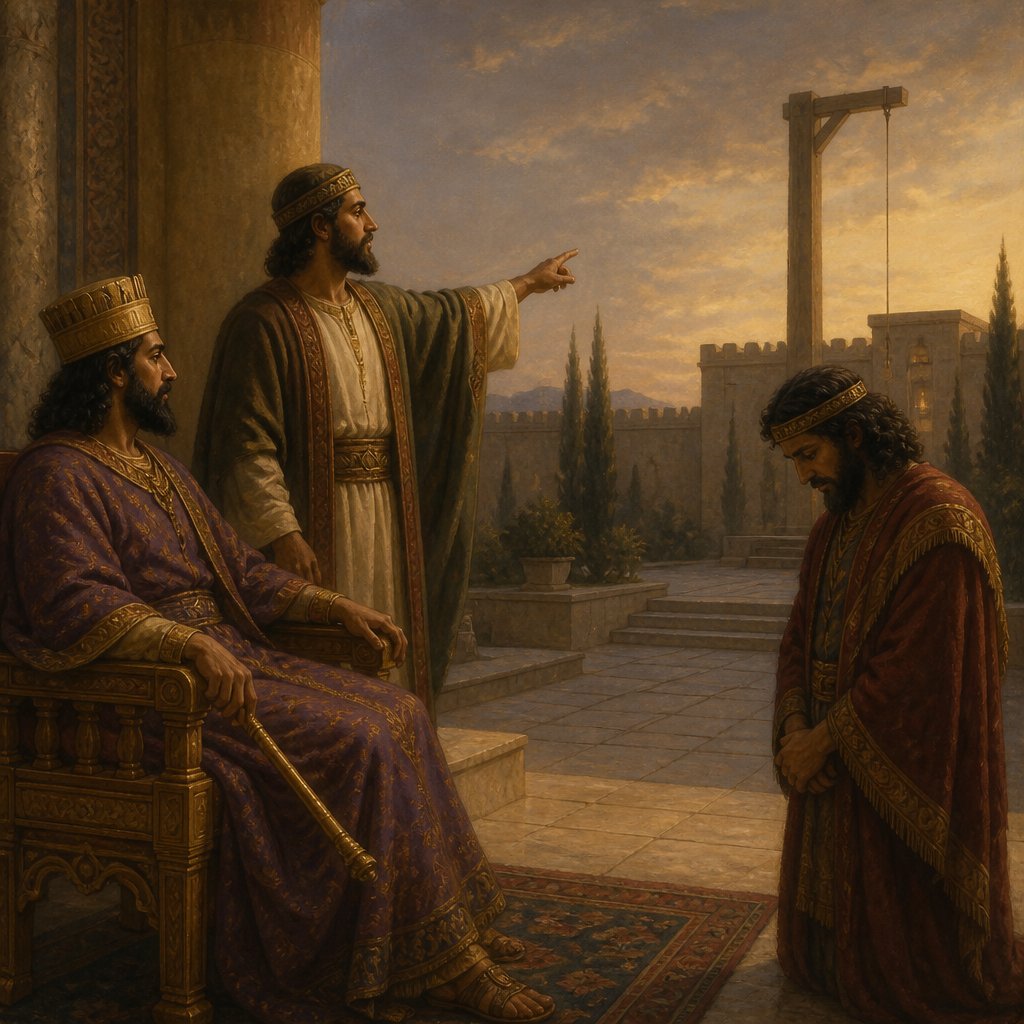
In the book of Esther, we encounter an extraordinary narrative that exemplifies the sovereignty of God and His divine ability to turn evil plans towards the good of His people. Esther 7:9 reads, "And Harbonah, one of the chamberlains, said before the king, Behold also, the gallows fifty cubits high, which Haman had made for Mordecai, who had spoken good for the king, standeth in the house of Haman. Then the king said, Hang him thereon."
This verse comes at a pivotal moment in the story. Haman, a high-ranking official, had conspired to annihilate the Jewish people, and his schemes were fueled by anger and hatred, particularly against Mordecai, who refused to bow down to him. What’s profound in this moment is how the very gallows Haman constructed for Mordecai ultimately became his own demise. This reversal of fate serves as a powerful metaphor for the overarching theme of God’s justice and righteousness throughout history.
In our lives, we may often find ourselves in situations where we feel trapped, threatened, or unjustly treated. The bitterness and the plotting against us can sometimes feel overwhelming. It’s easy to forget that our story is not just about our immediate circumstances; it involves a much larger tapestry woven by God's sovereign hand. Just as Haman's plans crumbled, we can hold on to the certainty that those who plot against us will not prevail.
The character of Harbonah is also worth noting in this narrative. As a chamberlain, he held a position of influence and was present at the height of critical decisions. His boldness in bringing the gallows to the king's attention demonstrates how God can use anyone, even those we might overlook, to bring about His purpose. Harbonah was likely a loyal servant, but in this moment, he chose to side with righteousness rather than remain silent in the face of evil. How often do we find ourselves in similar situations where we must choose between silence and speaking up for what is just?
Recognizing the gallows in our lives—those things that seem meant to bring about our demise—can establish clarity regarding our faith and trust in God's plans. Many times, we may perceive our enemies as having the upper hand. But God uses our challenges, our struggles, our opposition, to fulfill His promises and execute His will. The moment the king declares Haman's death, it reflects God's ultimate control over our circumstances, reminding us that evil will not stand and that the wicked will face justice.
Moreover, the phrase "who had spoken good for the king" in this verse implies a sense of loyalty and integrity on Mordecai's part. When the world around us seems chaotic, we must remember to stay true to who we are—people of integrity who speak truth even when it is unpopular. Mordecai’s act of speaking up for the king, despite Haman's plans to destroy him, shows that our commitment to righteousness can play a crucial role in God's unfolding narrative.
This story concludes with a significant transformation from despair to victory. As we reflect on our challenges, remember that like Mordecai, we can trust that God has a plan, and that He sees the hearts of both the innocent and the guilty. Harbonah's reminder about the gallows was not just a chance meeting; it was an instrumental part of God's plan to protect His people.
Let us meditate on the way God took Haman's wicked plot and turned it into an instrument of justice. May it inspire us to hold steadfast in faith, to remain vigilant, and to speak out against injustice—trusting that in the end, God’s justice will prevail and we will witness His glory revealed, transforming our circumstances from despair to deliverance.
Get our apps


Artwork for Esther 7:9
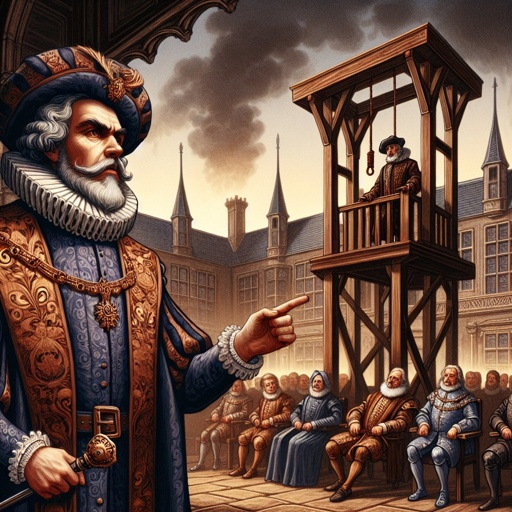
Esther 7:9 - "And Harbonah, one of the chamberlains, said before the king, Behold also, the gallows fifty cubits high, which Haman had made for Mordecai, who had spoken good for the king, standeth in the house of Haman. Then the king said, Hang him thereon."
"And Harbonah, one of the chamberlains, said before the king, Behold also, the gallows fifty cubits high, which Haman had made for Mordecai, who had spoken good for the king, standeth in the house of Haman. Then the king said, Hang him thereon." - Esther 7:9

Esther 9:7 - "And Parshandatha, and Dalphon, and Aspatha,"
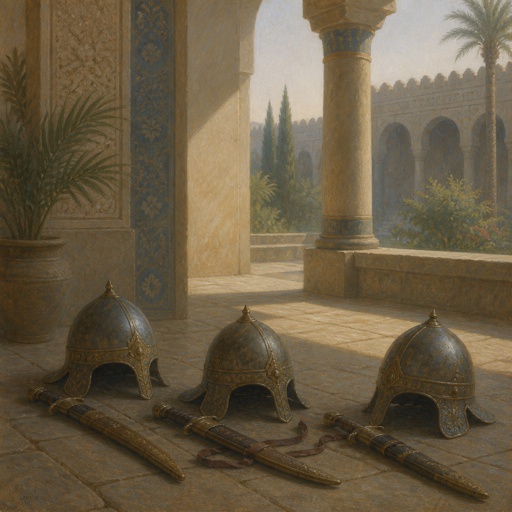
"And Parshandatha, and Dalphon, and Aspatha," - Esther 9:7

Esther 4:9 - "And Hatach came and told Esther the words of Mordecai."

Esther 9:32 - "And the decree of Esther confirmed these matters of Purim; and it was written in the book."

Esther 5:7 - "Then answered Esther, and said, My petition and my request is;"

Esther 7:1 - "So the king and Haman came to banquet with Esther the queen."

Esther 9:9 - "And Parmashta, and Arisai, and Aridai, and Vajezatha,"

Esther 7:6 - "And Esther said, The adversary and enemy is this wicked Haman. Then Haman was afraid before the king and the queen."

Esther 9:29 - "Then Esther the queen, the daughter of Abihail, and Mordecai the Jew, wrote with all authority, to confirm this second letter of Purim."

"And Hatach came and told Esther the words of Mordecai." - Esther 4:9

Esther 9:8 - "And Poratha, and Adalia, and Aridatha,"

"And the decree of Esther confirmed these matters of Purim; and it was written in the book." - Esther 9:32

Esther 7:2 - "And the king said again unto Esther on the second day at the banquet of wine, What is thy petition, queen Esther? and it shall be granted thee: and what is thy request? and it shall be performed, even to the half of the kingdom."

Esther 7:7 - "¶ And the king arising from the banquet of wine in his wrath went into the palace garden: and Haman stood up to make request for his life to Esther the queen; for he saw that there was evil determined against him by the king."
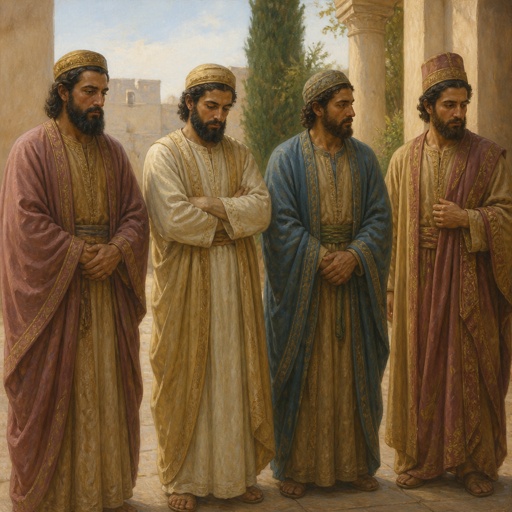
"And Parmashta, and Arisai, and Aridai, and Vajezatha," - Esther 9:9

"So the king and Haman came to banquet with Esther the queen." - Esther 7:1

Esther 8:7 - "¶ Then the king Ahasuerus said unto Esther the queen and to Mordecai the Jew, Behold, I have given Esther the house of Haman, and him they have hanged upon the gallows, because he laid his hand upon the Jews."
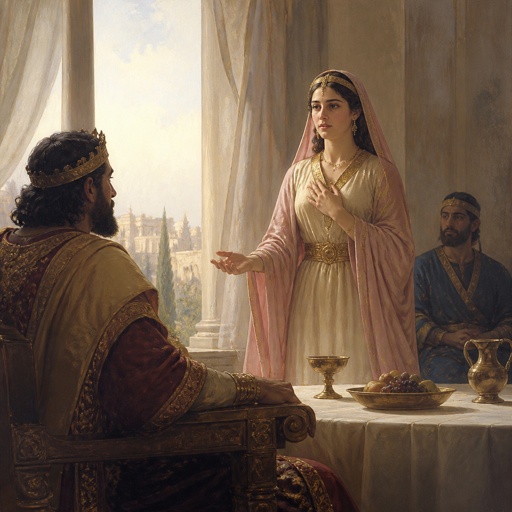
"Then answered Esther, and said, My petition and my request is;" - Esther 5:7

Esther 7:5 - "¶ Then the king Ahasuerus answered and said unto Esther the queen, Who is he, and where is he, that durst presume in his heart to do so?"

Esther 9:31 - "To confirm these days of Purim in their times appointed, according as Mordecai the Jew and Esther the queen had enjoined them, and as they had decreed for themselves and for their seed, the matters of the fastings and their cry."

Esther 9:13 - "Then said Esther, If it please the king, let it be granted to the Jews which are in Shushan to do to morrow also according unto this day's decree, and let Haman's ten sons be hanged upon the gallows."
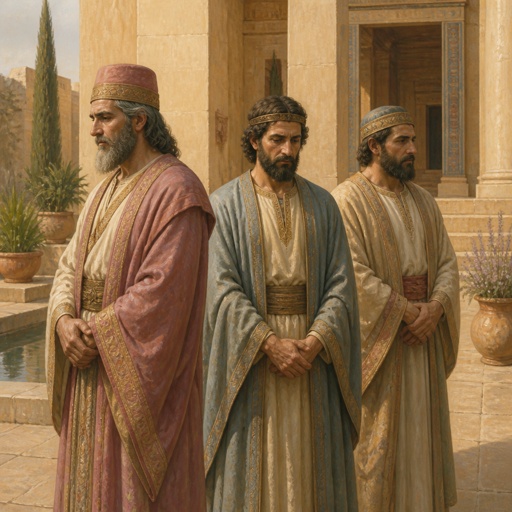
"And Poratha, and Adalia, and Aridatha," - Esther 9:8

Esther 9:6 - "And in Shushan the palace the Jews slew and destroyed five hundred men."

Esther 6:7 - "And Haman answered the king, For the man whom the king delighteth to honour,"

"And Esther said, The adversary and enemy is this wicked Haman. Then Haman was afraid before the king and the queen." - Esther 7:6

Esther 7:3 - "Then Esther the queen answered and said, If I have found favour in thy sight, O king, and if it please the king, let my life be given me at my petition, and my people at my request:"

Esther 9:25 - "But when Esther came before the king, he commanded by letters that his wicked device, which he devised against the Jews, should return upon his own head, and that he and his sons should be hanged on the gallows."

Esther 9:10 - "The ten sons of Haman the son of Hammedatha, the enemy of the Jews, slew they; but on the spoil laid they not their hand."