Remembering God's Faithfulness: The Significance of Purim
"And that these days should be remembered and kept throughout every generation, every family, every province, and every city; and that these days of Purim should not fail from among the Jews, nor the memorial of them perish from their seed." - Esther 9:28
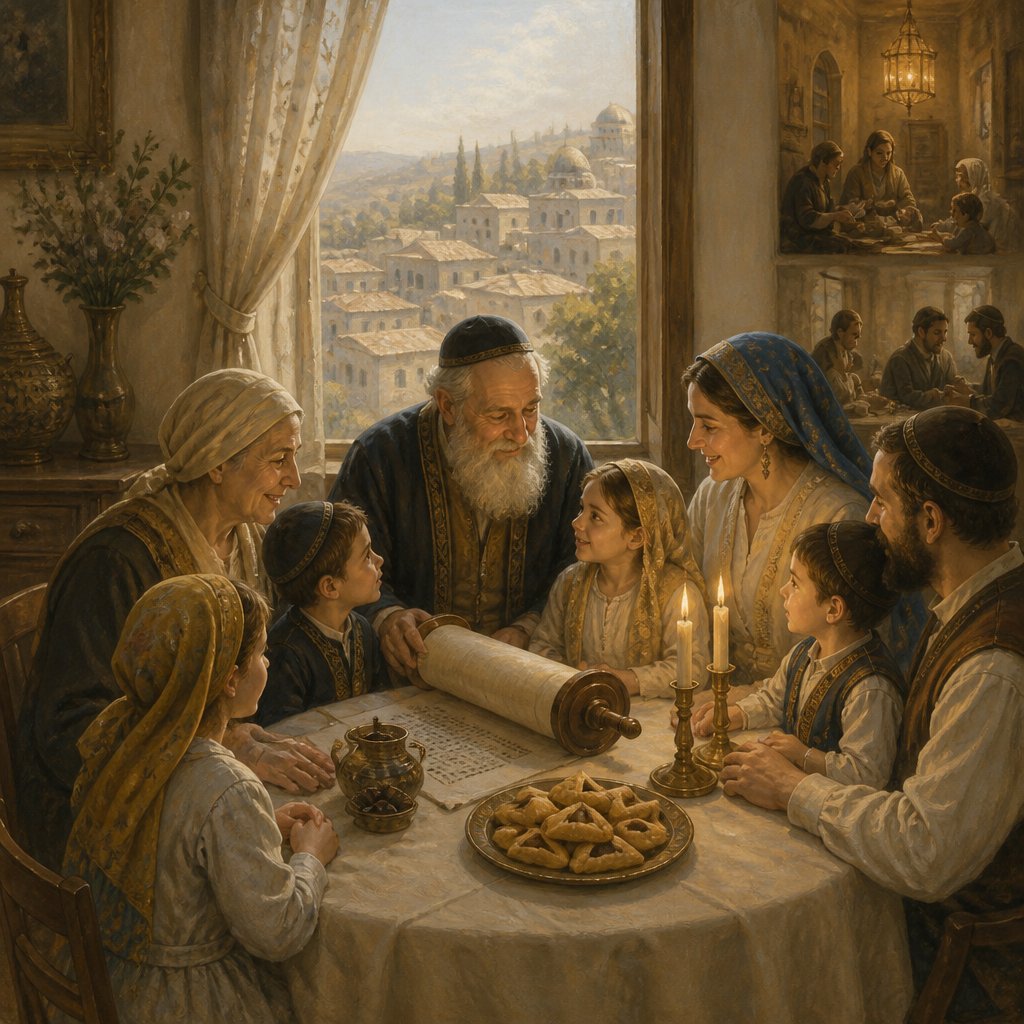
The book of Esther is a poignant narrative that highlights the sovereignty of God amidst adversity and the importance of remembrance in our spiritual lives. Esther 9:28 states, "And that these days should be remembered and kept throughout every generation, every family, every province, and every city; and that these days of Purim should not fail from among the Jews, nor the memorial of them perish from their seed." In this verse, we find a powerful mandate directed toward the Jewish people to celebrate the festival of Purim, a day that commemorates their deliverance from a sinister plot against them.
To grasp the full weight of this scripture, we first reflect on the historical context of Esther's story. The Jews faced annihilation under a decree orchestrated by Haman, an advisor to King Ahasuerus. Through a series of divine interventions, Esther, a Jewish queen, and her cousin Mordecai successfully thwarted the plan, leading to a great reversal of fortune for their people. The establishment of Purim served not only as a celebration of survival but also as an assertion of identity—a reminder that God never abandons His people, even when they find themselves in unimaginable circumstances.
The phrase "should be remembered and kept" carries significant weight in spiritual practice. Remembrance is a core element of the Judeo-Christian tradition. It is woven into the fabric of the Bible; God frequently instructs His people to remember His deeds, His commandments, and His faithfulness. For example, in Psalms, we are reminded to recount the wonderful works of the Lord, and in Exodus, the Passover is established as a remembrance of liberation from bondage in Egypt.
On a personal level, the act of remembering can safeguard our hearts from despair. When we recollect the ways in which God has intervened in our lives, we strengthen our faith for current and future struggles. Our modern-day 'Purim' moments—times of deliverance, provision, or miraculous turnaround—serve as testimonials of God's faithfulness. When we recount these instances, we not only honor God but also inspire others in our families and communities. This act of remembrance should transcend mere acknowledgment; it should ignite a consistent celebration of God's goodness.
Moreover, Esther 9:28 emphasizes that this remembrance spans generations, families, provinces, and cities. This collective aspect of remembrance encourages us to share our stories, unite as a community, and nurture our future generations in the faith. It beckons us to create traditions that instill in our children the understanding that God is a deliverer and sustainer.
As we observe holidays and commemorative events, we ought to ask ourselves: Do we recognize the hand of God in our lives? Are we creating spaces for remembrance and gratitude within our families? The celebration of Purim adds a vibrant dimension to our spirituality—as much about joy as it is about reverence for God's unfolding narrative in history, which we too are a part of.
In our contemporary context, the fight against oppression, injustice, and complacency rages on. As followers of Christ, we are invited to remember the significance of our spiritual heritage and embrace the call to action that follows remembrance. Just as Mordecai and Esther took a bold stand for their people, we are encouraged to be voices for the voiceless, advocates against injustice, and champions of faith in a world that often seeks to silence both.
In conclusion, Esther 9:28 serves as a clarion call to remember not only the events of the past but also the ever-present workings of God in our lives. As we reflect on our own journey, let us commit to keeping alive the stories of our faith—celebrating moments of deliverance, even as we anticipate the many miracles yet to unfold.
Want to reflect more on Esther 9:28?
Continue your spiritual journey with Bible Chat — an AI-powered tool for exploring God's Word through conversation. Ask questions, discover connections, and deepen your understanding.
Get Our Apps


Esther 9:28 Artwork

Esther 9:28 - "And that these days should be remembered and kept throughout every generation, every family, every province, and every city; and that these days of Purim should not fail from among the Jews, nor the memorial of them perish from their seed."
"And that these days should be remembered and kept throughout every generation, every family, every province, and every city; and that these days of Purim should not fail from among the Jews, nor the memorial of them perish from their seed." - Esther 9:28

Esther 4:9 - "And Hatach came and told Esther the words of Mordecai."

Esther 9:32 - "And the decree of Esther confirmed these matters of Purim; and it was written in the book."

Esther 9:9 - "And Parmashta, and Arisai, and Aridai, and Vajezatha,"

Esther 9:29 - "Then Esther the queen, the daughter of Abihail, and Mordecai the Jew, wrote with all authority, to confirm this second letter of Purim."

"And Hatach came and told Esther the words of Mordecai." - Esther 4:9

Esther 9:8 - "And Poratha, and Adalia, and Aridatha,"

Esther 9:7 - "And Parshandatha, and Dalphon, and Aspatha,"

"And the decree of Esther confirmed these matters of Purim; and it was written in the book." - Esther 9:32
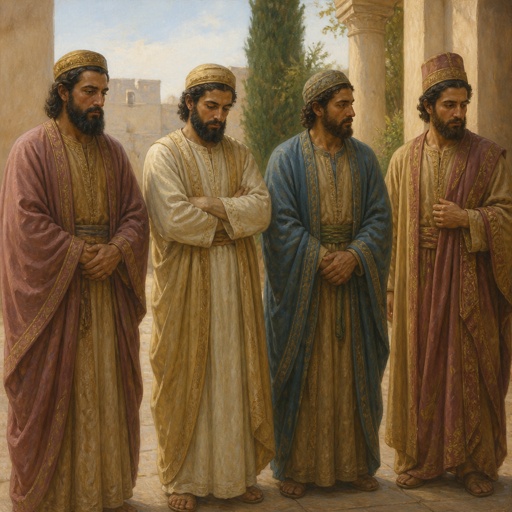
"And Parmashta, and Arisai, and Aridai, and Vajezatha," - Esther 9:9

Esther 9:31 - "To confirm these days of Purim in their times appointed, according as Mordecai the Jew and Esther the queen had enjoined them, and as they had decreed for themselves and for their seed, the matters of the fastings and their cry."

Esther 9:13 - "Then said Esther, If it please the king, let it be granted to the Jews which are in Shushan to do to morrow also according unto this day's decree, and let Haman's ten sons be hanged upon the gallows."

"And Parshandatha, and Dalphon, and Aspatha," - Esther 9:7
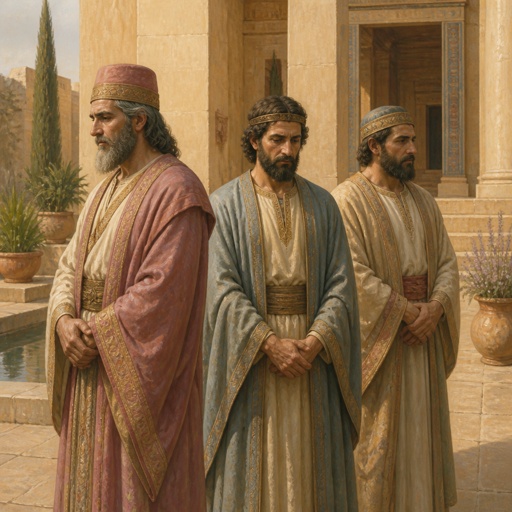
"And Poratha, and Adalia, and Aridatha," - Esther 9:8

Esther 9:6 - "And in Shushan the palace the Jews slew and destroyed five hundred men."

Esther 9:25 - "But when Esther came before the king, he commanded by letters that his wicked device, which he devised against the Jews, should return upon his own head, and that he and his sons should be hanged on the gallows."

Esther 9:10 - "The ten sons of Haman the son of Hammedatha, the enemy of the Jews, slew they; but on the spoil laid they not their hand."

Esther 9:11 - "On that day the number of those that were slain in Shushan the palace was brought before the king."

Esther 9:23 - "And the Jews undertook to do as they had begun, and as Mordecai had written unto them;"

"Then Esther the queen, the daughter of Abihail, and Mordecai the Jew, wrote with all authority, to confirm this second letter of Purim." - Esther 9:29

Esther 9:17 - "On the thirteenth day of the month Adar; and on the fourteenth day of the same rested they, and made it a day of feasting and gladness."

Esther 1:9 - "Also Vashti the queen made a feast for the women in the royal house which belonged to king Ahasuerus."

Esther 9:14 - "And the king commanded it so to be done: and the decree was given at Shushan; and they hanged Haman's ten sons."

Esther 9:21 - "To stablish this among them, that they should keep the fourteenth day of the month Adar, and the fifteenth day of the same, yearly,"

Esther 9:3 - "And all the rulers of the provinces, and the lieutenants, and the deputies, and officers of the king, helped the Jews; because the fear of Mordecai fell upon them."

Esther 9:30 - "And he sent the letters unto all the Jews, to the hundred twenty and seven provinces of the kingdom of Ahasuerus, with words of peace and truth,"

Esther 9:12 - "¶ And the king said unto Esther the queen, The Jews have slain and destroyed five hundred men in Shushan the palace, and the ten sons of Haman; what have they done in the rest of the king's provinces? now what is thy petition? and it shall be granted thee: or what is thy request further? and it shall be done."

Esther 9:4 - "For Mordecai was great in the king's house, and his fame went out throughout all the provinces: for this man Mordecai waxed greater and greater."

Esther 9:5 - "Thus the Jews smote all their enemies with the stroke of the sword, and slaughter, and destruction, and did what they would unto those that hated them."