The Legacy of Purim: A Call to Remember and Reflect
"To confirm these days of Purim in their times appointed, according as Mordecai the Jew and Esther the queen had enjoined them, and as they had decreed for themselves and for their seed, the matters of the fastings and their cry." - Esther 9:31
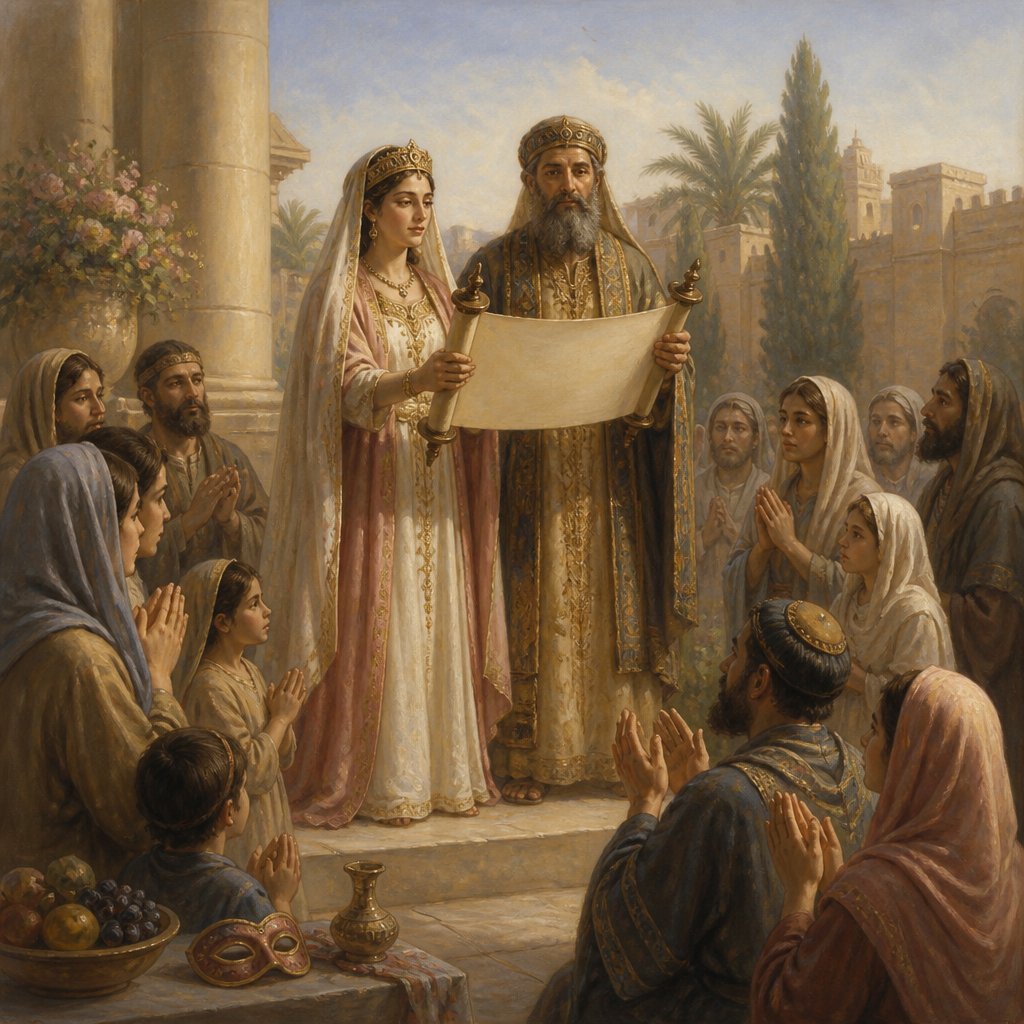
The story of Purim, recounted in the book of Esther, holds a timeless importance that transcends its historical context. Our focal verse, Esther 9:31, states: "To confirm these days of Purim in their times appointed, according as Mordecai the Jew and Esther the queen had enjoined them, and as they had decreed for themselves and for their seed, the matters of the fastings and their cry." This profound verse encapsulates the essence of remembering, celebrating, and passing down faith through generations.
To understand the importance of this verse, we must first reflect on the events that led to the celebration of Purim. Esther and Mordecai faced extermination at the hands of Haman, who plotted to annihilate the Jewish people. Through faith, bravery, and strategic planning, Esther, as queen, and Mordecai united the Jewish people to fast, pray, and seek divine intervention. Their actions, rooted in a deep trust of God's providence, led to the deliverance of their people.
The term "to confirm" in our verse indicates a commitment not only to remember a past deliverance but to institutionalize the celebration of God's faithfulness. It begs the question: how often do we confirm God’s past mercies in our lives? Just as Mordecai and Esther ensured their people set aside specific times to celebrate their deliverance, we too can create regular rhythms of remembrance—times for testimony, thanksgiving, and reflection on God’s faithfulness in personal histories.
Mordecai and Esther’s decree aimed to solidify the observance of Purim for future generations. This is significant as it reinforces the principle that our faith is not solely for our own benefit but should permeate our families and communities. The phrase "for their seed" is an invitation to consider how we communicate faith to those who come after us. How are we enjoining others to reflect upon God’s goodness? Are we creating traditions—be it through family gatherings, discussions around the table, or special commemorative practices—that serve to recount and rejoice in God’s interventions in our lives?
Furthermore, the mention of "fastings and their cry" invokes the idea of heartfelt worship and communal lamentation. Embedded in the joy of celebration is an acknowledgment of struggles, mourning, and supplication to God. The observance of Purim thus encapsulates a duality: a celebration of victory intertwined with a remembrance of the suffering which preceded it. As we partake in worship, do we allow space for our cries? Do we bring our burdens to God, mirroring the vulnerability that Esther displayed?
Continuing in this vein, consider the collective aspect of their faith. Mordecai and Esther’s actions were not only vital for their own well-being but intricately connected to the community they represented. The Jewish people were called to unite in fasting and prayer, demonstrating how collective faith strengthens the body of believers. As part of the body of Christ, our individual walk with God is essential, but our communal life amplifies our witness to the world. How can we foster unity in our local church, rejoicing together in God’s provision while entering into each other's struggles with compassion?
Lastly, the celebration of Purim serves a profound reminder of God’s providential hand over all history, a theme that whispers throughout Scripture. In our darkest moments, God’s light breaks through, often in ways we least expect, underscoring His sovereignty. The observance of Purim is an act of faith, shaping our identity as God’s people, as we remember the miracles yet to come.
In your own life, may you seek to confirm God’s faithfulness, passing down His stories to the next generation, fostering community in prayer and celebration, and recognizing the dual nature of our spiritual journey—the joy intertwined with challenges. Let us hold fast to the decree of remembrance that Mordecai and Esther established, understanding that our stories and faith are instrumental in God’s ongoing narrative through time.
Want to reflect more on Esther 9:31?
Continue your spiritual journey with Bible Chat — an AI-powered tool for exploring God's Word through conversation. Ask questions, discover connections, and deepen your understanding.
Get Our Apps


Esther 9:31 Artwork

Esther 9:31 - "To confirm these days of Purim in their times appointed, according as Mordecai the Jew and Esther the queen had enjoined them, and as they had decreed for themselves and for their seed, the matters of the fastings and their cry."
"To confirm these days of Purim in their times appointed, according as Mordecai the Jew and Esther the queen had enjoined them, and as they had decreed for themselves and for their seed, the matters of the fastings and their cry." - Esther 9:31

Esther 4:9 - "And Hatach came and told Esther the words of Mordecai."

Esther 9:32 - "And the decree of Esther confirmed these matters of Purim; and it was written in the book."

Esther 9:9 - "And Parmashta, and Arisai, and Aridai, and Vajezatha,"

Esther 9:29 - "Then Esther the queen, the daughter of Abihail, and Mordecai the Jew, wrote with all authority, to confirm this second letter of Purim."

"And Hatach came and told Esther the words of Mordecai." - Esther 4:9

Esther 9:8 - "And Poratha, and Adalia, and Aridatha,"

Esther 9:7 - "And Parshandatha, and Dalphon, and Aspatha,"

"And the decree of Esther confirmed these matters of Purim; and it was written in the book." - Esther 9:32
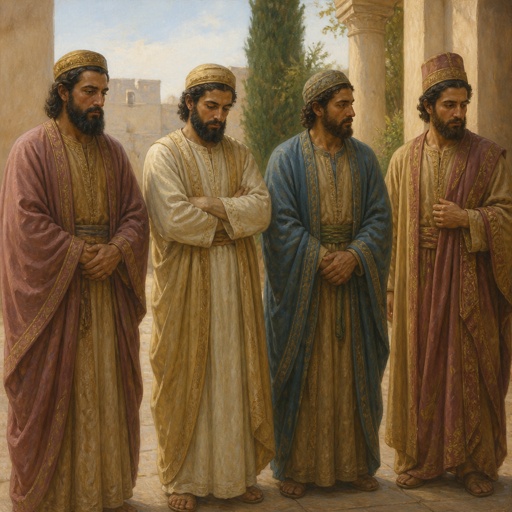
"And Parmashta, and Arisai, and Aridai, and Vajezatha," - Esther 9:9

Esther 9:13 - "Then said Esther, If it please the king, let it be granted to the Jews which are in Shushan to do to morrow also according unto this day's decree, and let Haman's ten sons be hanged upon the gallows."
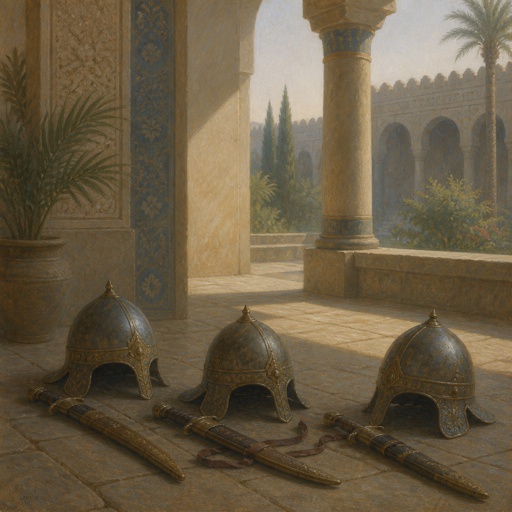
"And Parshandatha, and Dalphon, and Aspatha," - Esther 9:7
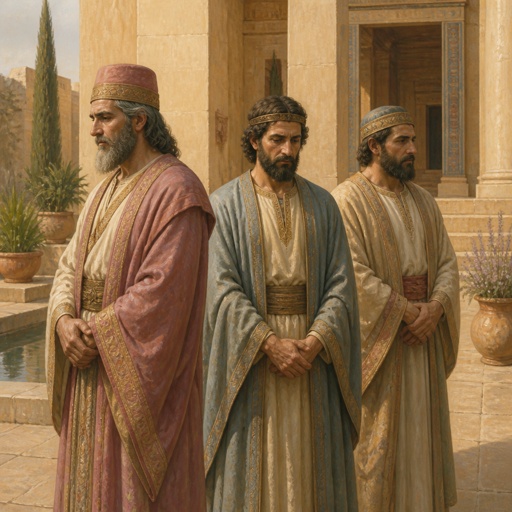
"And Poratha, and Adalia, and Aridatha," - Esther 9:8

Esther 9:6 - "And in Shushan the palace the Jews slew and destroyed five hundred men."

Esther 9:25 - "But when Esther came before the king, he commanded by letters that his wicked device, which he devised against the Jews, should return upon his own head, and that he and his sons should be hanged on the gallows."

Esther 9:11 - "On that day the number of those that were slain in Shushan the palace was brought before the king."

Esther 9:23 - "And the Jews undertook to do as they had begun, and as Mordecai had written unto them;"

Esther 9:10 - "The ten sons of Haman the son of Hammedatha, the enemy of the Jews, slew they; but on the spoil laid they not their hand."
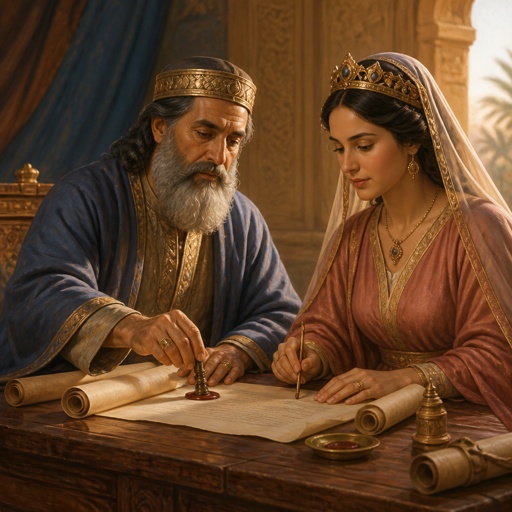
"Then Esther the queen, the daughter of Abihail, and Mordecai the Jew, wrote with all authority, to confirm this second letter of Purim." - Esther 9:29

Esther 9:17 - "On the thirteenth day of the month Adar; and on the fourteenth day of the same rested they, and made it a day of feasting and gladness."

Esther 1:9 - "Also Vashti the queen made a feast for the women in the royal house which belonged to king Ahasuerus."

Esther 9:14 - "And the king commanded it so to be done: and the decree was given at Shushan; and they hanged Haman's ten sons."

Esther 9:21 - "To stablish this among them, that they should keep the fourteenth day of the month Adar, and the fifteenth day of the same, yearly,"

Esther 9:3 - "And all the rulers of the provinces, and the lieutenants, and the deputies, and officers of the king, helped the Jews; because the fear of Mordecai fell upon them."

Esther 9:30 - "And he sent the letters unto all the Jews, to the hundred twenty and seven provinces of the kingdom of Ahasuerus, with words of peace and truth,"

Esther 9:12 - "¶ And the king said unto Esther the queen, The Jews have slain and destroyed five hundred men in Shushan the palace, and the ten sons of Haman; what have they done in the rest of the king's provinces? now what is thy petition? and it shall be granted thee: or what is thy request further? and it shall be done."

Esther 9:4 - "For Mordecai was great in the king's house, and his fame went out throughout all the provinces: for this man Mordecai waxed greater and greater."

Esther 9:5 - "Thus the Jews smote all their enemies with the stroke of the sword, and slaughter, and destruction, and did what they would unto those that hated them."

Esther 9:20 - "¶ And Mordecai wrote these things, and sent letters unto all the Jews that were in all the provinces of the king Ahasuerus, both nigh and far,"