The Power of Perseverance and Divine Justice
“On that day the number of those that were slain in Shushan the palace was brought before the king.” — Esther 9:11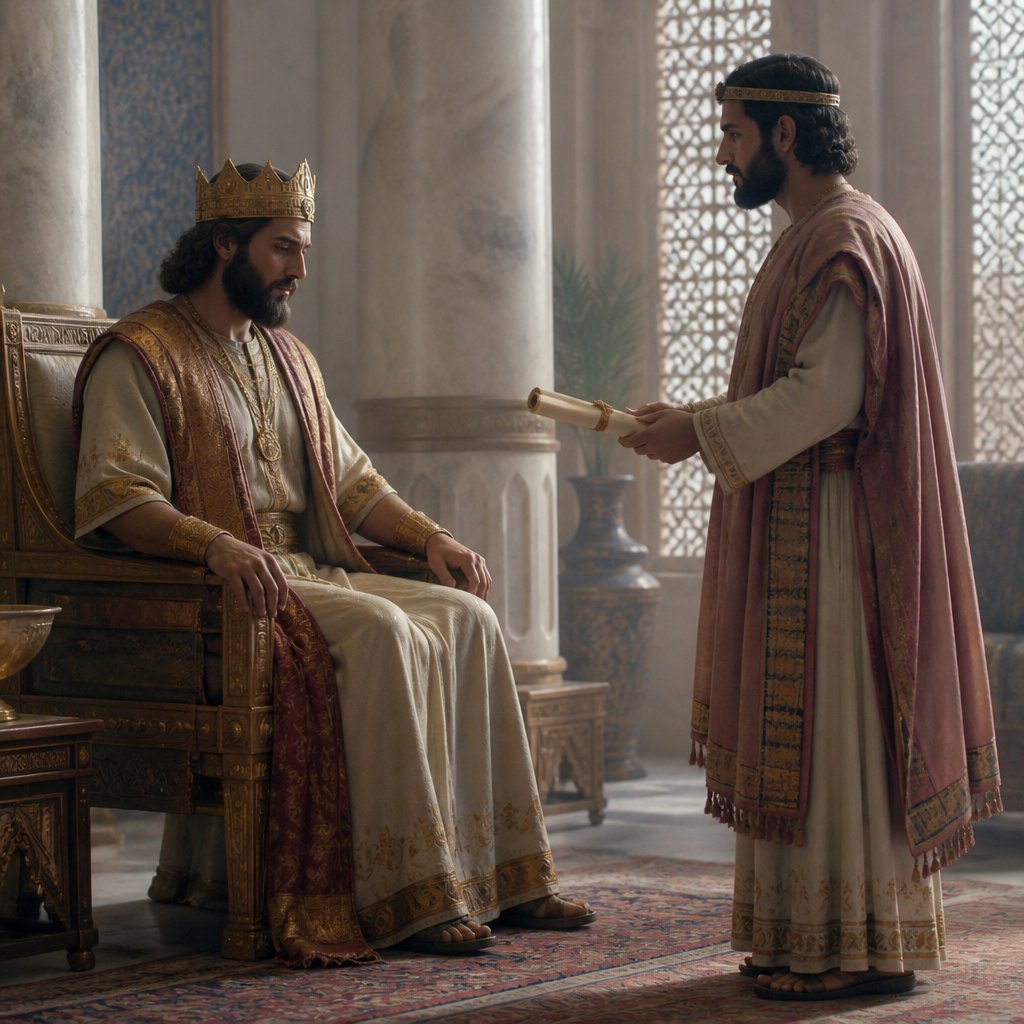
In Esther 9:11 we find a crucial moment that encapsulates the tension and climax of a story that reaches far beyond mere historical account; it is a narrative of faith, courage, and divine intervention. The verse states, "On that day the number of those that were slain in Shushan the palace was brought before the king." In this brief yet powerful statement, we witness the aftermath of a confrontation between good and evil, a narrative that ultimately teaches us about the importance of perseverance and the nature of divine justice.
This verse occurs after a period of intense turmoil and uncertainty for the Jewish people in the Persian Empire. Quite often, in our lives, we face dark moments where the odds seem insurmountable—where the script of our lives appears penned with despair. Just like Esther and Mordecai, we may find ourselves in situations that require us to stand firm in our faith and summon an inner strength we did not know we had.
Esther’s story is uncertain until her pivotal act of courage. She risked her life to approach the king uninvited, a bold move that could have cost her everything. Yet, her bravery did not go unnoticed. Throughout the book of Esther, we see how God’s providential hand is at work, stirring hearts and shifting events in favor of His people. This reminder that God is orchestrating our lives even when we feel neglected, alone, or fearful can provide solace during our own trying times.
The report of those slain in Shushan reflects the culmination of a plan intricately crafted by God through the faith and actions of His chosen vessels—modestly powerful individuals who were once hidden figures, yet who rose to lead a movement against injustice. In verses leading up to this moment, we see that Esther had been given authority as queen, and Mordecai had stepped up as a leader. Their responses to the crisis reveal to us that our involvement is critical; we each play a part in a larger narrative that can either advance or thwart God’s purpose.
When the number of those slain was brought before the king, it immediately draws us to think about accountability. The king’s role in this scenario symbolizes the ultimate authority overseeing justice. In our lives, we likewise must come before the King of Kings, who assesses our trials, triumphs, and the battles we face daily. Despite how bleak or dark our circumstances may appear, we can hold steadfast to the assurance that God sees us and is aware of the challenges we confront.
Furthermore, the report points us to the theme of justice. As we reflect on the meaning of this verse, we must ask ourselves: how do we pursue justice in our own lives? Are we actively standing up against oppression? Are we using our voices as Esther did to speak up for those who face injustice? The call to act doesn’t just rest on grand gestures; often, it’s our quiet determination and everyday decisions that mirror our integrity and commitment to righteousness.
Finally, let us not overlook the vital role of prayer and fasting which preceded Esther’s influence. These spiritual disciplines were the bedrock of her strategy, illustrating that while we engage in the fight against evil, we must remain connected to the source of our strength. The purpose of our battles is often twofold; we are not only fighting for our victory but also for the glory of God, ensuring that all we do ultimately reflects back towards Him.
As we meditate on Esther 9:11, let us hold tightly to God’s promise that He is always at work behind the scenes of our lives. Our struggles may bear witness to victories not yet seen, and like Esther, may we also rise for such a time as this—not just as empowered individuals but as a collective force for good, striving towards justice, continually trusting in God’s divine plan.
Get our apps


Artwork for Esther 9:11

Esther 9:11 - "On that day the number of those that were slain in Shushan the palace was brought before the king."
"On that day the number of those that were slain in Shushan the palace was brought before the king." - Esther 9:11

Esther 4:9 - "And Hatach came and told Esther the words of Mordecai."

Esther 9:32 - "And the decree of Esther confirmed these matters of Purim; and it was written in the book."

Esther 9:9 - "And Parmashta, and Arisai, and Aridai, and Vajezatha,"

Esther 9:29 - "Then Esther the queen, the daughter of Abihail, and Mordecai the Jew, wrote with all authority, to confirm this second letter of Purim."

"And Hatach came and told Esther the words of Mordecai." - Esther 4:9

Esther 2:11 - "And Mordecai walked every day before the court of the women's house, to know how Esther did, and what should become of her."

Esther 9:8 - "And Poratha, and Adalia, and Aridatha,"

Esther 9:7 - "And Parshandatha, and Dalphon, and Aspatha,"

"And the decree of Esther confirmed these matters of Purim; and it was written in the book." - Esther 9:32
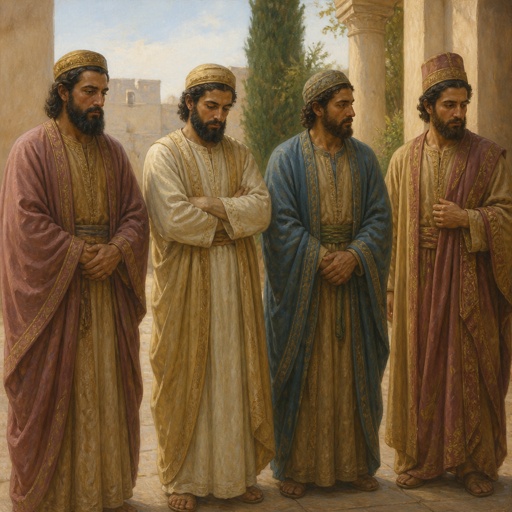
"And Parmashta, and Arisai, and Aridai, and Vajezatha," - Esther 9:9

Esther 9:31 - "To confirm these days of Purim in their times appointed, according as Mordecai the Jew and Esther the queen had enjoined them, and as they had decreed for themselves and for their seed, the matters of the fastings and their cry."

Esther 9:13 - "Then said Esther, If it please the king, let it be granted to the Jews which are in Shushan to do to morrow also according unto this day's decree, and let Haman's ten sons be hanged upon the gallows."

"And Parshandatha, and Dalphon, and Aspatha," - Esther 9:7
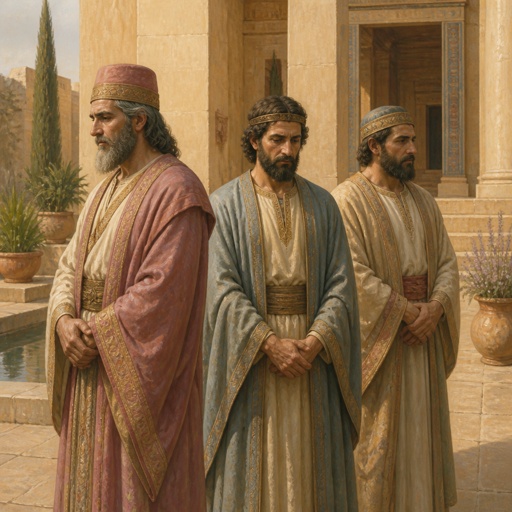
"And Poratha, and Adalia, and Aridatha," - Esther 9:8

Esther 9:6 - "And in Shushan the palace the Jews slew and destroyed five hundred men."

Esther 9:25 - "But when Esther came before the king, he commanded by letters that his wicked device, which he devised against the Jews, should return upon his own head, and that he and his sons should be hanged on the gallows."

Esther 9:10 - "The ten sons of Haman the son of Hammedatha, the enemy of the Jews, slew they; but on the spoil laid they not their hand."

Esther 9:23 - "And the Jews undertook to do as they had begun, and as Mordecai had written unto them;"

"Then Esther the queen, the daughter of Abihail, and Mordecai the Jew, wrote with all authority, to confirm this second letter of Purim." - Esther 9:29

Esther 9:17 - "On the thirteenth day of the month Adar; and on the fourteenth day of the same rested they, and made it a day of feasting and gladness."

Esther 1:9 - "Also Vashti the queen made a feast for the women in the royal house which belonged to king Ahasuerus."

Esther 9:14 - "And the king commanded it so to be done: and the decree was given at Shushan; and they hanged Haman's ten sons."

Esther 9:21 - "To stablish this among them, that they should keep the fourteenth day of the month Adar, and the fifteenth day of the same, yearly,"

Esther 1:11 - "To bring Vashti the queen before the king with the crown royal, to shew the people and the princes her beauty: for she was fair to look on."

Esther 3:11 - "And the king said unto Haman, The silver is given to thee, the people also, to do with them as it seemeth good to thee."

Esther 9:3 - "And all the rulers of the provinces, and the lieutenants, and the deputies, and officers of the king, helped the Jews; because the fear of Mordecai fell upon them."

Esther 9:30 - "And he sent the letters unto all the Jews, to the hundred twenty and seven provinces of the kingdom of Ahasuerus, with words of peace and truth,"

Esther 9:12 - "¶ And the king said unto Esther the queen, The Jews have slain and destroyed five hundred men in Shushan the palace, and the ten sons of Haman; what have they done in the rest of the king's provinces? now what is thy petition? and it shall be granted thee: or what is thy request further? and it shall be done."