The Gallows of Justice: A Divine Turnaround
“Then said Esther, If it please the king, let it be granted to the Jews which are in Shushan to do to morrow also according unto this day’s decree, and let Haman’s ten sons be hanged upon the gallows.” — Esther 9:13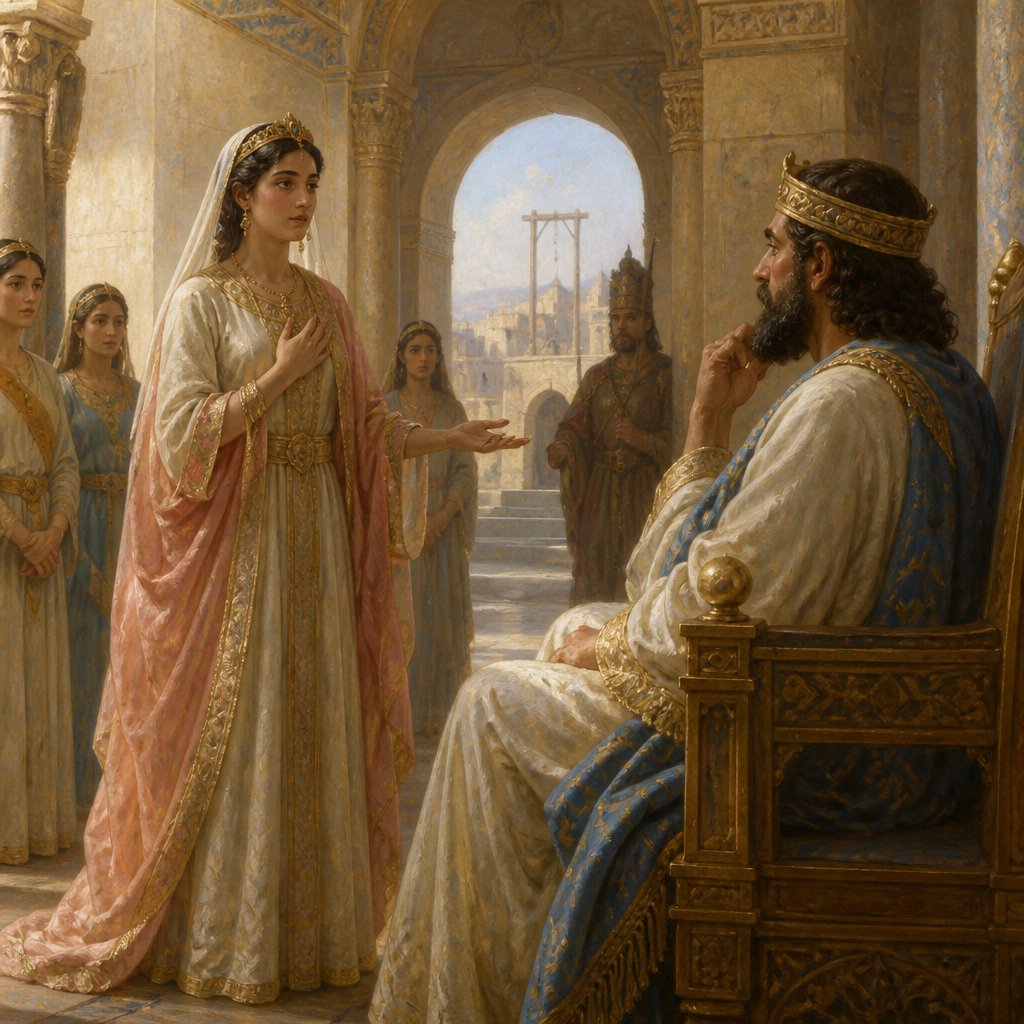
In the poignant story of Esther, we witness the extraordinary providence of God amidst seemingly dire circumstances. Esther 9:13 reveals a significant moment in which Esther boldly approaches King Ahasuerus, requesting that the Jews in Shushan be allowed to continue the fight against their enemies and that the ten sons of Haman be hanged upon the gallows—a grim request that symbolizes justice and the end of evil.
First, let us consider the context surrounding this verse. Haman, a high-ranking official, had plotted the annihilation of the Jewish people, driven by unbridled hatred and ambition. However, through Esther's courageous intervention and the faithfulness of God, a divine reversal occurred—turning the tide from impending doom to victorious salvation. This transformation aptly illustrates how God can turn a situation that seems hopeless into a narrative of triumph for His people.
When Esther requests the continued assault against Haman's followers, we see a boldness rooted in necessity and authority. Esther, a Jewish queen, was not merely acting out of personal vendetta but is ensuring the protection of her people. Her bravery serves as a reflection of the spiritual warfare that we, as believers, often face. Just as Esther stood for her people, we too are called to stand firm in our faith, defending truth with tenacity and courage.
"If it please the king, let it be granted to the Jews..." speaks of a plea made with deference yet confidence. In our prayers and requests, may we remember that we approach a Sovereign King infinitely greater than any earthly ruler. Our requests should be bathed in humility but approached with full assurance of faith. Scripture reminds us in Hebrews 4:16 (KJV), "Let us therefore come boldly unto the throne of grace, that we may obtain mercy, and find grace to help in time of need." Esther's boldness mirrors our own ability to petition God, knowing He is able to do exceedingly abundantly above all that we ask or think (Ephesians 3:20, KJV).
Moreover, the command to hang Haman's ten sons upon the gallows acts as a significant act of justice. In biblical terms, the gallows symbolize death, but here they also signify the triumph over evil and the justice of God. The ten sons of Haman represent not only the lineage of hatred but also the consequence of his actions. This reminds us that evil will not prosper forever—that God will ultimately execute justice, whether in this life or the next.
As we ponder Esther 9:13, we must also reflect on the deeper implication of our requests and the battles we fight. The Jews faced the threat of genocide, but they were granted an extension to defend themselves. Similarly, we often encounter situations in life resembling battles against overwhelming adversity. Here lies a profound lesson: our struggles are not simply ours to bear, but opportunities to witness God's magnificence.
As believers, it is essential to recognize that the battles we face are not fought in vain. Romans 8:31 says, "If God be for us, who can be against us?" Even in the shadows of despair, we must remind ourselves that God orchestrates our outcomes, equipping us with all that we need to face each day empowered by His Spirit. In times when we feel outmatched, we can draw strength from Esther's example, relying on God’s wisdom to lead our actions.
In conclusion, let us take away from Esther 9:13 a conviction to remain steadfast in our faith and actions. May we embrace the courage to stand for justice, to rally for our people in prayer, and to boldly approach the throne of grace. Let us remember that the gallows, once symbols of impending defeat, can also be instruments of justice, pointedly illustrating God’s redemptive sovereignty. As we navigate our lives, may we continually seek His will, anticipating His mighty hand at work, transforming our challenges into testimonies of His grace.
Get our apps


Artwork for Esther 9:13

Esther 9:13 - "Then said Esther, If it please the king, let it be granted to the Jews which are in Shushan to do to morrow also according unto this day's decree, and let Haman's ten sons be hanged upon the gallows."
"Then said Esther, If it please the king, let it be granted to the Jews which are in Shushan to do to morrow also according unto this day's decree, and let Haman's ten sons be hanged upon the gallows." - Esther 9:13

Esther 4:9 - "And Hatach came and told Esther the words of Mordecai."

Esther 9:32 - "And the decree of Esther confirmed these matters of Purim; and it was written in the book."

Esther 9:9 - "And Parmashta, and Arisai, and Aridai, and Vajezatha,"

Esther 9:29 - "Then Esther the queen, the daughter of Abihail, and Mordecai the Jew, wrote with all authority, to confirm this second letter of Purim."

Esther 4:13 - "Then Mordecai commanded to answer Esther, Think not with thyself that thou shalt escape in the king's house, more than all the Jews."

"And Hatach came and told Esther the words of Mordecai." - Esther 4:9

Esther 9:8 - "And Poratha, and Adalia, and Aridatha,"

Esther 9:7 - "And Parshandatha, and Dalphon, and Aspatha,"

"And the decree of Esther confirmed these matters of Purim; and it was written in the book." - Esther 9:32
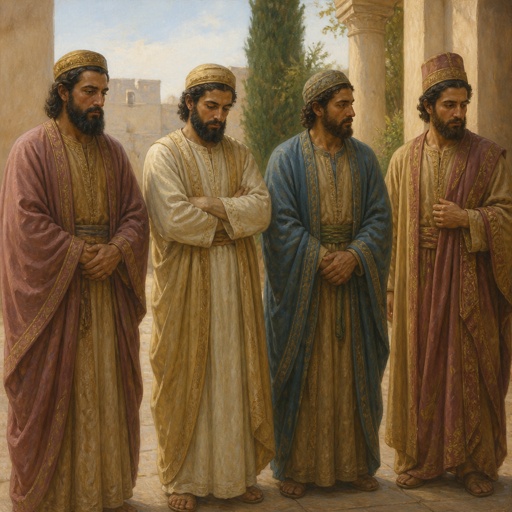
"And Parmashta, and Arisai, and Aridai, and Vajezatha," - Esther 9:9

Esther 5:9-13 - "Esther 5:9-13: Then Haman went out that day joyful and with a glad heart; but when Haman saw Mordecai in the king’s gate, and that he did not stand or tremble before him, he was filled with indignation against Mordecai. Nevertheless Haman restrained himself and went home, and he sent and called for his friends and his wife Zeresh. Then Haman told them of his great riches, the multitude of his children, everything in which the king had promoted him, and how he had advanced him above the officials and servants of the king. Moreover Haman said, “Besides, Queen Esther invited no one but me to come in with the king to the banquet that she prepared; and tomorrow I am again invited by her, along with the king. Yet all this avails me nothing, so long as I see Mordecai the Jew sitting at the king’s gate.”"

Esther 9:31 - "To confirm these days of Purim in their times appointed, according as Mordecai the Jew and Esther the queen had enjoined them, and as they had decreed for themselves and for their seed, the matters of the fastings and their cry."
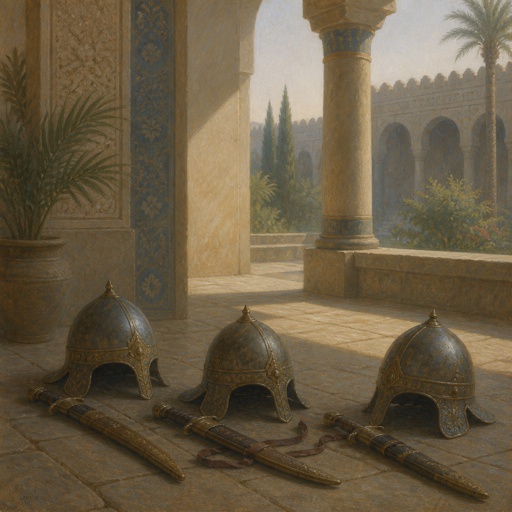
"And Parshandatha, and Dalphon, and Aspatha," - Esther 9:7
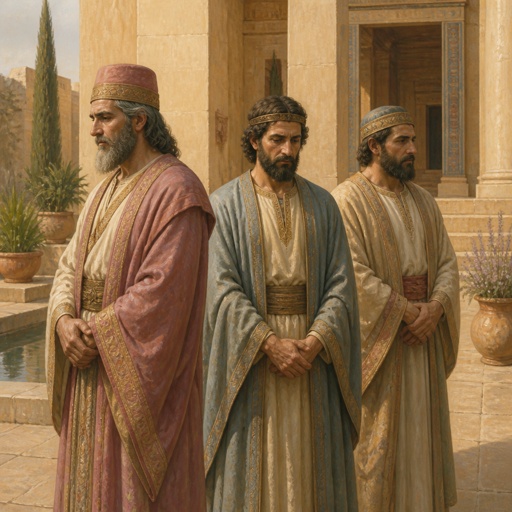
"And Poratha, and Adalia, and Aridatha," - Esther 9:8

Esther 9:6 - "And in Shushan the palace the Jews slew and destroyed five hundred men."

Esther 9:25 - "But when Esther came before the king, he commanded by letters that his wicked device, which he devised against the Jews, should return upon his own head, and that he and his sons should be hanged on the gallows."

Esther 9:10 - "The ten sons of Haman the son of Hammedatha, the enemy of the Jews, slew they; but on the spoil laid they not their hand."

Esther 9:11 - "On that day the number of those that were slain in Shushan the palace was brought before the king."

Esther 9:23 - "And the Jews undertook to do as they had begun, and as Mordecai had written unto them;"

"Then Esther the queen, the daughter of Abihail, and Mordecai the Jew, wrote with all authority, to confirm this second letter of Purim." - Esther 9:29

Esther 9:17 - "On the thirteenth day of the month Adar; and on the fourteenth day of the same rested they, and made it a day of feasting and gladness."

Esther 1:9 - "Also Vashti the queen made a feast for the women in the royal house which belonged to king Ahasuerus."

Esther 9:14 - "And the king commanded it so to be done: and the decree was given at Shushan; and they hanged Haman's ten sons."

Esther 5:13 - "Yet all this availeth me nothing, so long as I see Mordecai the Jew sitting at the king's gate."
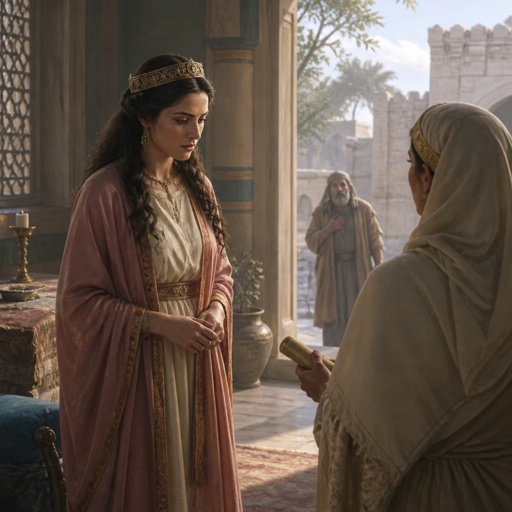
"Then Mordecai commanded to answer Esther, Think not with thyself that thou shalt escape in the king's house, more than all the Jews." - Esther 4:13

Esther 9:21 - "To stablish this among them, that they should keep the fourteenth day of the month Adar, and the fifteenth day of the same, yearly,"
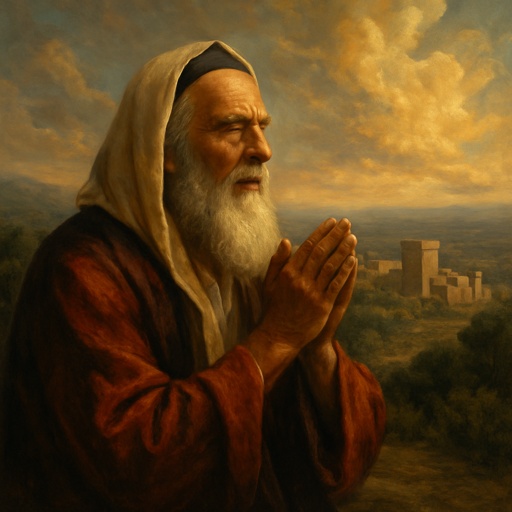
Esther 13:8-9 KJVA Then Mardocheus thought upon all the works of the Lord, and made his prayer unto him, (9) Saying, O Lord, Lord, the King Almighty: for the whole world is in thy power, and if thou hast appointed to save Israel, there is no man that can gainsay thee:

Esther 9:3 - "And all the rulers of the provinces, and the lieutenants, and the deputies, and officers of the king, helped the Jews; because the fear of Mordecai fell upon them."