Courage in Unity: A Reflection on Esther 9:23
“And the Jews undertook to do as they had begun, and as Mordecai had written unto them;” — Esther 9:23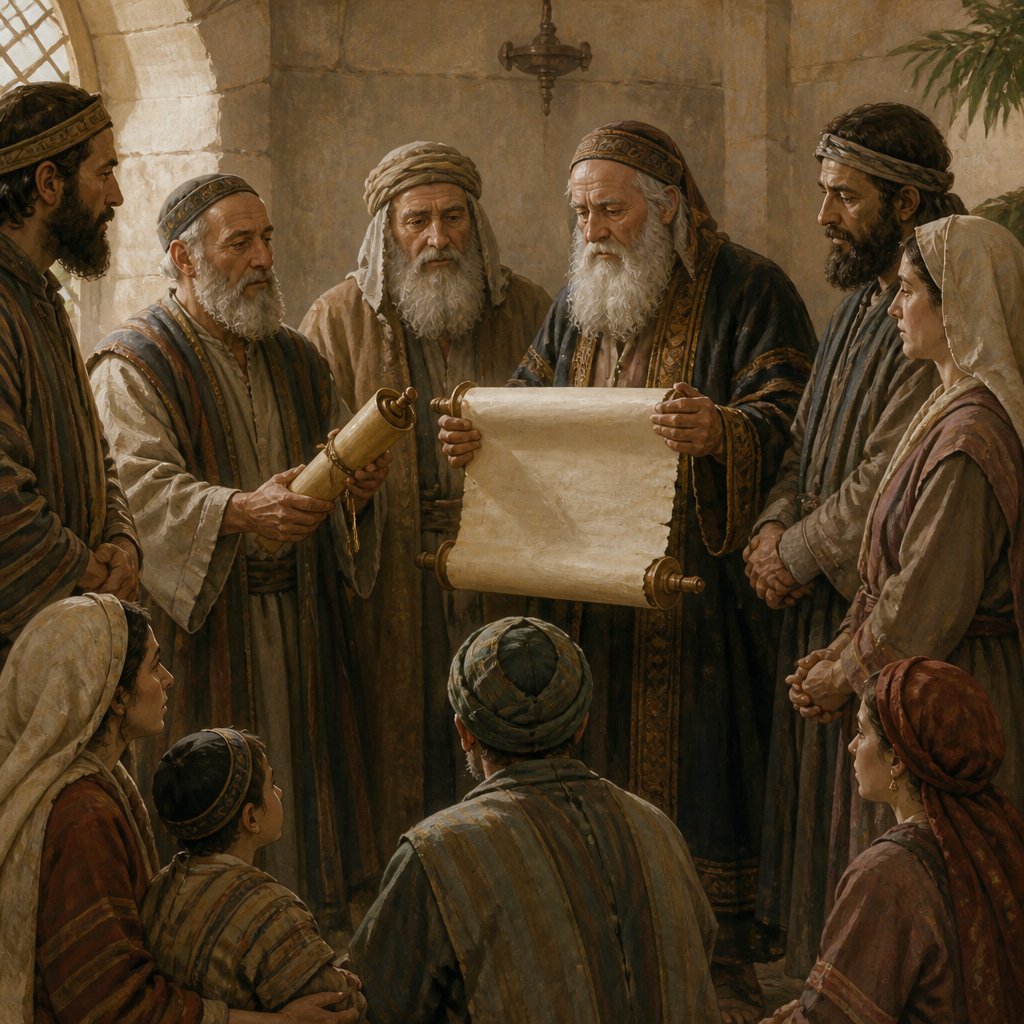
As we delve into the narrative of Esther, a captivating story emerges around loyalty, faith, and divine providence that carried the Jewish people through a formidable trial. The verse that stands out in this particular moment of their history is Esther 9:23, which states, "And the Jews undertook to do as they had begun, and as Mordecai had written unto them;" This encapsulates the spirit of communal dedication and obedience to God’s plans as expressed through Mordecai’s guidance.
The Book of Esther takes place during a time when the Jews of Persia were facing eradication through the nefarious plans of Haman. With royal authority granted to him, Haman devised a plan to destroy all the Jews, blissfully unaware that Esther, a Jew herself, had risen to become the queen. It signifies how God’s hand was at work, even when all appeared lost, working through Esther’s bravery and Mordecai’s strategic counsel.
When we consider the essence of Esther 9:23, we see a reflection of resolve. The Jews, under the threat of destruction, had rallied together, responding to Mordecai’s leadership and inspiration. This notion of undertaking an action 'as they had begun' speaks volumes about the principles of faith and unity. They were not just reacting with fear; rather, they were taking initiative, weaving their fates together through communal resolve.
The words "to do as they had begun" prompt us to ponder what we might have started in faith that needs continuation. Each of us embarks on various journeys throughout our lives—journeys of faith, projects, relationships, and commitments. Just as the Jews had started something significant and were encouraged to persevere, we too are called to reflect on our beginnings and seek the strength to continue despite the adversities we face.
Mordecai, the wise leader, wrote to them, giving them a plan and reminding them of their heritage, values, and the significance of their trust in God. When leadership is rooted in the truth of God’s word, it inspires others to action. Mordecai’s message was not merely about survival; it was deeply interwoven with their identity as God’s chosen people. Thus, under his directive, the Jews recognized that their unity was pivotal. They were not mere individuals; they were a collective people bound by covenant and purpose.
The act of undertaking is transformative. It implies not just desire but determination. The Jews 'undertook' to stand firm, prepared to defend themselves. It is paramount to understand that in our Christian walk, undertaking a task for God often means stepping into the fray, armed with the knowledge that we are not alone. God goes ahead, alongside, and behind us in every battle. This promises us strength and assurance—"For the Lord your God, He it is that doth go with thee; He will not fail thee, nor forsake thee" (Deuteronomy 31:6).
As modern-day believers, the message from Esther 9:23 urges us to engage deeply with our foundational values, recognize our collective strength, and act with responsibility. It challenges us to ask: how do we respond when faced with trials? Do we seek wise counsel as Mordecai offered? Do we unite with fellow believers, drawing strength from our community of faith?
In conclusion, Esther 9:23 calls out to us, asking whether we are willing to continue what we have begun in faith—our journey with Christ. It’s a gentle nudge, an encouragement, to remain steadfast, working together, undeterred by life’s challenges. As we reflect on this verse, let us commit to undertaking our divine assignment with courage, unity, and a deep-seated conviction to honor God.
Get our apps


Artwork for Esther 9:23

Esther 9:23 - "And the Jews undertook to do as they had begun, and as Mordecai had written unto them;"
"And the Jews undertook to do as they had begun, and as Mordecai had written unto them;" - Esther 9:23

Esther 4:9 - "And Hatach came and told Esther the words of Mordecai."

Esther 9:32 - "And the decree of Esther confirmed these matters of Purim; and it was written in the book."

Esther 9:9 - "And Parmashta, and Arisai, and Aridai, and Vajezatha,"

Esther 9:29 - "Then Esther the queen, the daughter of Abihail, and Mordecai the Jew, wrote with all authority, to confirm this second letter of Purim."

"And Hatach came and told Esther the words of Mordecai." - Esther 4:9

Esther 9:8 - "And Poratha, and Adalia, and Aridatha,"

Esther 9:7 - "And Parshandatha, and Dalphon, and Aspatha,"

"And the decree of Esther confirmed these matters of Purim; and it was written in the book." - Esther 9:32
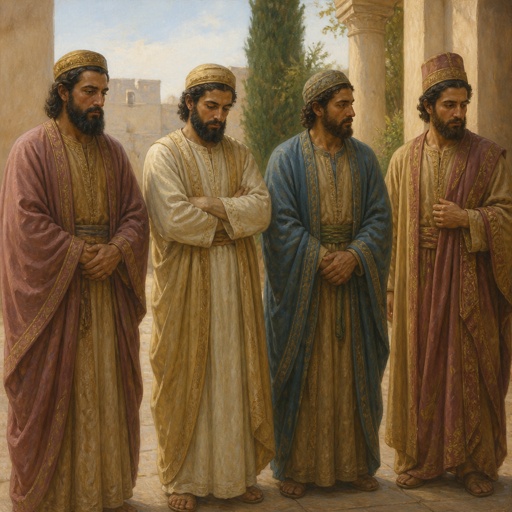
"And Parmashta, and Arisai, and Aridai, and Vajezatha," - Esther 9:9

Esther 9:31 - "To confirm these days of Purim in their times appointed, according as Mordecai the Jew and Esther the queen had enjoined them, and as they had decreed for themselves and for their seed, the matters of the fastings and their cry."

Esther 9:13 - "Then said Esther, If it please the king, let it be granted to the Jews which are in Shushan to do to morrow also according unto this day's decree, and let Haman's ten sons be hanged upon the gallows."

"And Parshandatha, and Dalphon, and Aspatha," - Esther 9:7
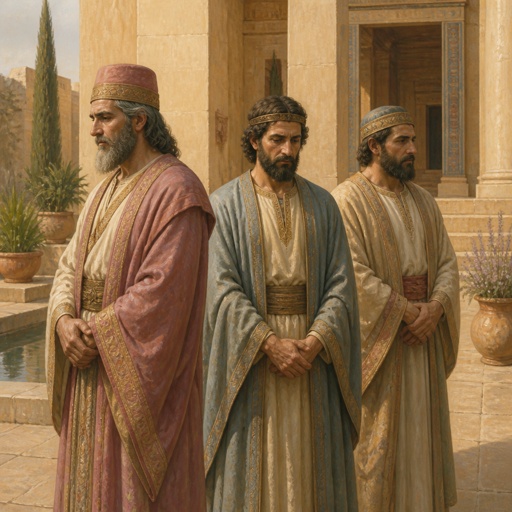
"And Poratha, and Adalia, and Aridatha," - Esther 9:8

Esther 9:6 - "And in Shushan the palace the Jews slew and destroyed five hundred men."

Esther 9:25 - "But when Esther came before the king, he commanded by letters that his wicked device, which he devised against the Jews, should return upon his own head, and that he and his sons should be hanged on the gallows."

Esther 9:10 - "The ten sons of Haman the son of Hammedatha, the enemy of the Jews, slew they; but on the spoil laid they not their hand."

Esther 9:11 - "On that day the number of those that were slain in Shushan the palace was brought before the king."
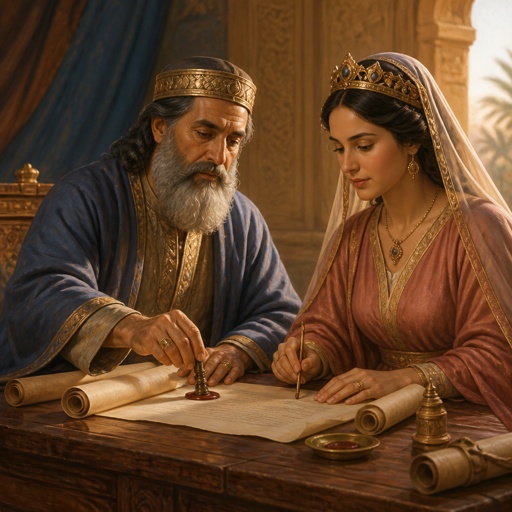
"Then Esther the queen, the daughter of Abihail, and Mordecai the Jew, wrote with all authority, to confirm this second letter of Purim." - Esther 9:29

Esther 2:23 - "And when inquisition was made of the matter, it was found out; therefore they were both hanged on a tree: and it was written in the book of the chronicles before the king."

Esther 9:17 - "On the thirteenth day of the month Adar; and on the fourteenth day of the same rested they, and made it a day of feasting and gladness."

Esther 1:9 - "Also Vashti the queen made a feast for the women in the royal house which belonged to king Ahasuerus."

Esther 9:14 - "And the king commanded it so to be done: and the decree was given at Shushan; and they hanged Haman's ten sons."

Esther 9:21 - "To stablish this among them, that they should keep the fourteenth day of the month Adar, and the fifteenth day of the same, yearly,"

Esther 9:3 - "And all the rulers of the provinces, and the lieutenants, and the deputies, and officers of the king, helped the Jews; because the fear of Mordecai fell upon them."

Esther 9:30 - "And he sent the letters unto all the Jews, to the hundred twenty and seven provinces of the kingdom of Ahasuerus, with words of peace and truth,"

Esther 9:12 - "¶ And the king said unto Esther the queen, The Jews have slain and destroyed five hundred men in Shushan the palace, and the ten sons of Haman; what have they done in the rest of the king's provinces? now what is thy petition? and it shall be granted thee: or what is thy request further? and it shall be done."

Esther 9:4 - "For Mordecai was great in the king's house, and his fame went out throughout all the provinces: for this man Mordecai waxed greater and greater."

Esther 9:5 - "Thus the Jews smote all their enemies with the stroke of the sword, and slaughter, and destruction, and did what they would unto those that hated them."