The Power of Legacy: Understanding the Decree of Esther
“And the decree of Esther confirmed these matters of Purim; and it was written in the book.” — Esther 9:32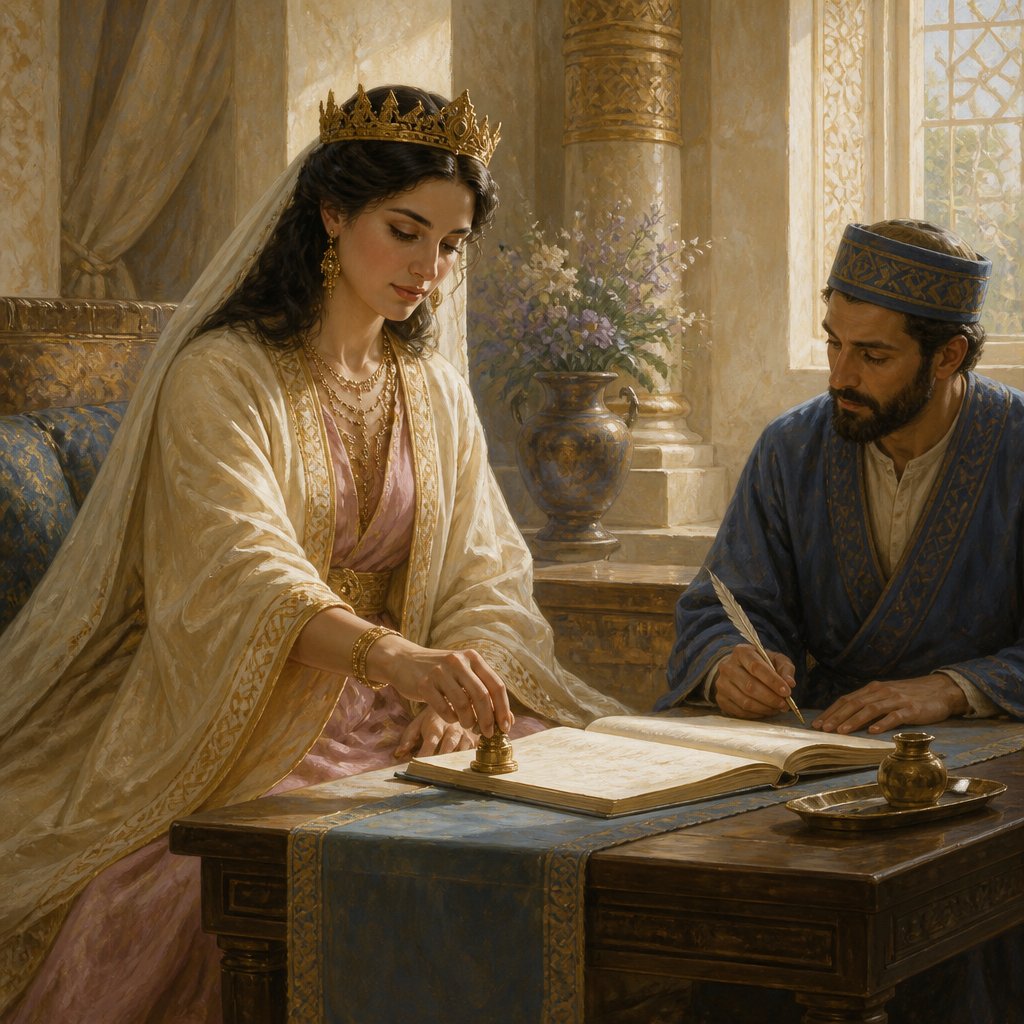
The verse Esther 9:32 (KJV) reads, "And the decree of Esther confirmed these matters of Purim; and it was written in the book." This statement encapsulates a significant moment in the story of Esther, a moment that not only establishes the festival of Purim but also emphasizes the enduring nature of her courage, resolve, and the importance of written legacies.
In the narrative leading up to this verse, we witness the incredible transformation of a young Jewish woman who rises from relative obscurity to the heights of power within the Persian Empire. Esther's journey is a significant testament to how God orchestrates events behind the scenes for a greater purpose. When her people faced annihilation through the treacherous plot of Haman, it was Esther's bravery that turned the tide. She risked her life by approaching King Xerxes without summons, fully aware that doing so could cost her everything. But her love for her people and her reliance on God drove her to action.
The decree she confirmed serves not only as a legal and formal arrangement but also as a message of hope and triumph over despair. The festival of Purim, initiated by Esther’s decree, marks the Jewish people’s victory over oppression and reminds us of the power of faith, unity, and purpose. The phrase, "the decree of Esther confirmed these matters of Purim," signifies not merely the act of establishing a celebration but the confirmation of an identity rooted in deliverance.
When Esther confirmed the matters of Purim, she solidified a collective memory that would resonate through generations. Our memories play a crucial role in shaping our identity and collective history. They allow us to remember who we are and whose we are. Esther’s decree encouraged the Jewish people to celebrate their deliverance, allowing them to pass down stories of their survival and faith in God through ages. It highlights the importance of creating a legacy rooted in faith and resilience, one that future generations can lean into during their own trials.
As we reflect on this verse, we are invited to consider what legacies we are creating. What are the things we stand for and pass on to the next generation? Are we writing decrees in the story of our lives that reflect our trust in God? Esther’s confidence to confirm her decree was a reflection of her own faith, and it poses a critical question for us: Are we living in a way that honors our convictions?
Moreover, the very act of writing in the book signifies permanence. In today’s digital age, we have countless forms of documenting our lives and beliefs. However, the essence remains the same spiritually. What we choose to write—through our actions, our decisions, and our faith—creates records that those around us will remember. In this light, our daily lives are akin to inscriptions in a sacred book that will be read by our children and their children, echoing our values, beliefs, and faithfulness.
Esther’s decree reminds us that in the face of our modern challenges, we too can craft a narrative of triumph and hope. When we stand for truth, justice, and compassion, we are not just living for ourselves but are laying the groundwork for a collective faith that will echo through time. As we step into our responsibilities, let us be patterns of Esther—a blend of bravery, strategy, and faith—revealing the love and sovereignty of God in our lives. May our decrees of faith confirm the matters of our own Purims, testifying to God’s unfailing faithfulness and inviting others to join in the celebration of deliverance.
Get our apps


Artwork for Esther 9:32

Esther 9:32 - "And the decree of Esther confirmed these matters of Purim; and it was written in the book."

"And the decree of Esther confirmed these matters of Purim; and it was written in the book." - Esther 9:32

Esther 4:9 - "And Hatach came and told Esther the words of Mordecai."

Esther 9:9 - "And Parmashta, and Arisai, and Aridai, and Vajezatha,"

Esther 9:29 - "Then Esther the queen, the daughter of Abihail, and Mordecai the Jew, wrote with all authority, to confirm this second letter of Purim."

"And Hatach came and told Esther the words of Mordecai." - Esther 4:9

Esther 9:8 - "And Poratha, and Adalia, and Aridatha,"

Esther 9:7 - "And Parshandatha, and Dalphon, and Aspatha,"
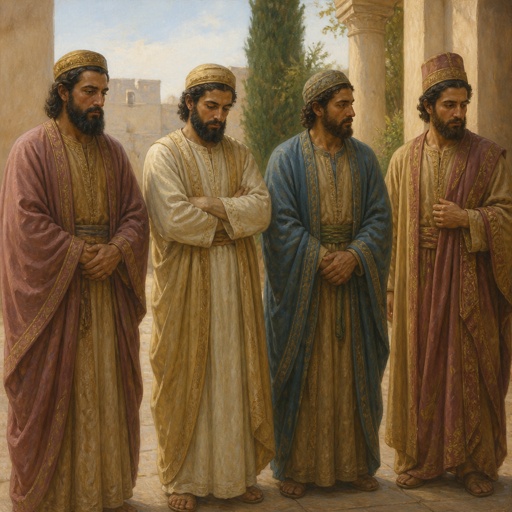
"And Parmashta, and Arisai, and Aridai, and Vajezatha," - Esther 9:9

Esther 9:31 - "To confirm these days of Purim in their times appointed, according as Mordecai the Jew and Esther the queen had enjoined them, and as they had decreed for themselves and for their seed, the matters of the fastings and their cry."

Esther 9:13 - "Then said Esther, If it please the king, let it be granted to the Jews which are in Shushan to do to morrow also according unto this day's decree, and let Haman's ten sons be hanged upon the gallows."
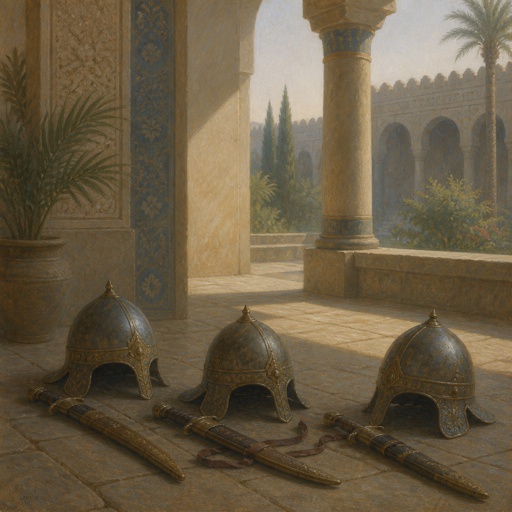
"And Parshandatha, and Dalphon, and Aspatha," - Esther 9:7
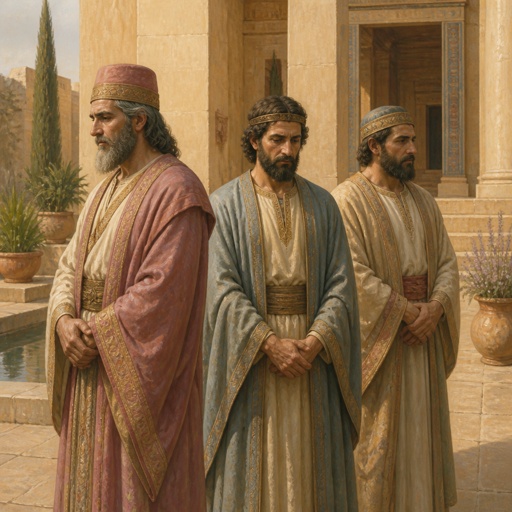
"And Poratha, and Adalia, and Aridatha," - Esther 9:8

Esther 9:6 - "And in Shushan the palace the Jews slew and destroyed five hundred men."

Esther 9:25 - "But when Esther came before the king, he commanded by letters that his wicked device, which he devised against the Jews, should return upon his own head, and that he and his sons should be hanged on the gallows."

Esther 9:10 - "The ten sons of Haman the son of Hammedatha, the enemy of the Jews, slew they; but on the spoil laid they not their hand."

Esther 9:11 - "On that day the number of those that were slain in Shushan the palace was brought before the king."

Esther 9:23 - "And the Jews undertook to do as they had begun, and as Mordecai had written unto them;"
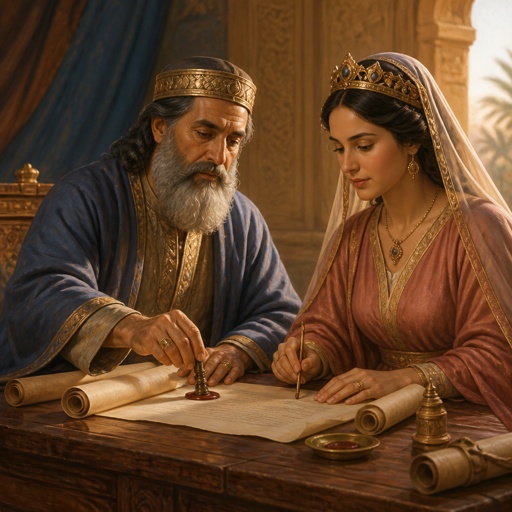
"Then Esther the queen, the daughter of Abihail, and Mordecai the Jew, wrote with all authority, to confirm this second letter of Purim." - Esther 9:29

Esther 9:17 - "On the thirteenth day of the month Adar; and on the fourteenth day of the same rested they, and made it a day of feasting and gladness."

Esther 1:9 - "Also Vashti the queen made a feast for the women in the royal house which belonged to king Ahasuerus."

Esther 9:14 - "And the king commanded it so to be done: and the decree was given at Shushan; and they hanged Haman's ten sons."

Esther 9:21 - "To stablish this among them, that they should keep the fourteenth day of the month Adar, and the fifteenth day of the same, yearly,"

Esther 9:3 - "And all the rulers of the provinces, and the lieutenants, and the deputies, and officers of the king, helped the Jews; because the fear of Mordecai fell upon them."

Esther 9:30 - "And he sent the letters unto all the Jews, to the hundred twenty and seven provinces of the kingdom of Ahasuerus, with words of peace and truth,"

Esther 9:12 - "¶ And the king said unto Esther the queen, The Jews have slain and destroyed five hundred men in Shushan the palace, and the ten sons of Haman; what have they done in the rest of the king's provinces? now what is thy petition? and it shall be granted thee: or what is thy request further? and it shall be done."

Esther 9:4 - "For Mordecai was great in the king's house, and his fame went out throughout all the provinces: for this man Mordecai waxed greater and greater."

Esther 9:5 - "Thus the Jews smote all their enemies with the stroke of the sword, and slaughter, and destruction, and did what they would unto those that hated them."

Esther 9:20 - "¶ And Mordecai wrote these things, and sent letters unto all the Jews that were in all the provinces of the king Ahasuerus, both nigh and far,"

"And in Shushan the palace the Jews slew and destroyed five hundred men." - Esther 9:6