The Feast of Deliverance: A Divine Preparation
"And they shall eat the flesh in that night, roast with fire, and unleavened bread; and with bitter herbs they shall eat it." - Exodus 12:8
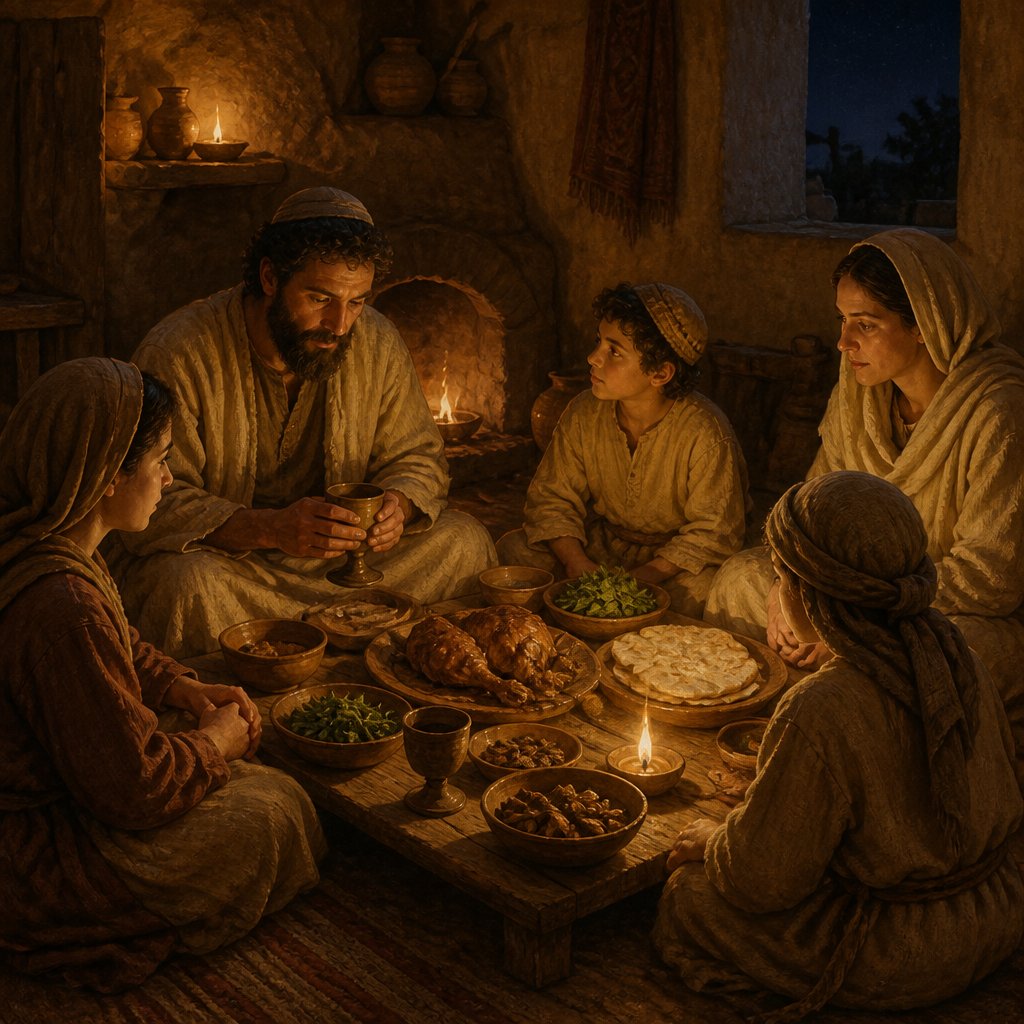
In Exodus 12:8, the Lord instructs the Israelites on how to partake of the Passover meal: "And they shall eat the flesh in that night, roast with fire, and unleavened bread; and with bitter herbs they shall eat it." This verse, although simple in its command, carries profound theological significance and speaks to the heart of God’s salvific plan for His people.
As we delve into this passage, we are transported to a pivotal moment in Israel's history — the night of their deliverance from slavery in Egypt. The Israelites had endured years of oppression, their cries for freedom reaching the ears of the Almighty. Now, as God's chosen people prepare to escape the clutches of Pharaoh, He provides them with both the means and the manner in which to remember their deliverance.
The specific instructions to roast the lamb with fire, to eat unleavened bread, and to use bitter herbs offers rich symbolism that invites us to reflect on the nature of our own deliverance in Christ.
**Eating the Lamb**
Firstly, the directive to eat the lamb signifies a deep and intimate participation in the sacrificial act. The lamb represents innocence taking the place of guilt, a powerful foreshadowing of Jesus Christ — the Lamb of God who takes away the sin of the world (John 1:29). As we partake of Christ, we acknowledge His sacrifice and the intimate relationship he desires with us. When we eat of Him, as He instructed us to do during the Last Supper, we are reminded that His body was broken for us, emphatically demonstrating the depth of His love and commitment to deliver us from sin.
The act of roasting it with fire further emphasizes purification and judgment. The fire, a symbol throughout Scripture of quality, refinement, and God’s consuming presence, reminds us that the cost of our redemption was fiery and brutal. It adds a layer of gravity to our understanding of Christ’s suffering — it was in the fire of severe anguish and pain that our price was paid.
**Unleavened Bread**
Next, the observation of unleavened bread calls to mind the themes of purity and haste. Leaven in Biblical terms often signifies sin, corruption, and pride. By consuming unleavened bread, the Israelites were reminded to walk in righteousness, avoiding the leaven of the world that could lead them astray. In essence, they were to be a people marked by a new identity and new purpose, freed from the corrupt influence of Egypt.
Likewise, for us today, the unleavened bread is a call to examine our lives, to purge ourselves of sin, and to seek holiness. As we partake of the bread representing His body, we commit ourselves to align our hearts and actions with the Lord’s will, asking Him to cleanse us from all unrighteousness (1 John 1:9).
**Bitter Herbs**
Finally, the bitter herbs serve as a poignant reminder of the harshness of slavery and the suffering endured in Egypt. Each bite would invoke memories of the bitterness of oppression and the longing for liberation. In this way, the bitter herbs are not just an element of the meal; they are a memorial of pain and suffering, ultimately transforming into a celebration of salvation and freedom.
In our spiritual journey, we too encounter moments of bitterness and sorrow. The experiences of life often carry weighty burdens that seem hard to bear. Yet, through these hardships, we are invited to taste of the bitter herbs — to live in the reality of our struggles, while simultaneously rejoicing in the hope of deliverance that is found in Christ. He invites us to pour out our pain before Him and allow His redemptive work to bring about healing and joy.
In conclusion, the Passover meal commanded in Exodus 12:8 was not only a ritual for the Israelites; it was an early prophetic picture of the ultimate sacrifice of Jesus Christ. As we reflect on each component — the lamb, the unleavened bread, and the bitter herbs — we find a comprehensive narrative of redemption, purity, and resilience amid suffering. May our hearts rejoice in the God who delivers, and may we always remember the great price of our freedom.
Want to reflect more on Exodus 12:8?
Continue your spiritual journey with Bible Chat — an AI-powered tool for exploring God's Word through conversation. Ask questions, discover connections, and deepen your understanding.
Get Our Apps


Exodus 12:8 Artwork

Exodus 12:8 - "And they shall eat the flesh in that night, roast with fire, and unleavened bread; and with bitter herbs they shall eat it."
"And they shall eat the flesh in that night, roast with fire, and unleavened bread; and with bitter herbs they shall eat it." - Exodus 12:8

The Plague of Boils - Exodus 9:8-12

The Plague of Boils - Exodus 9:8-12

The Plague of Boils - Exodus 9:8-12

The Plague of Boils - Exodus 9:8-12

The Plague of Boils - Exodus 9:8-12

The Plague of Boils - Exodus 9:8-12.

The Plague of Boils - Exodus 9:8-12

The Plague of Boils - Exodus 9:8-12

Exodus 8:12 - "And Moses and Aaron went out from Pharaoh: and Moses cried unto the LORD because of the frogs which he had brought against Pharaoh."

Exodus 12:12

Exodus 3:12

Exodus 3:12

Exodus 3:12

Exodus 3:12

Exodus 3:12

Exodus 12:33

Exodus 12:7

Exodus 10:12
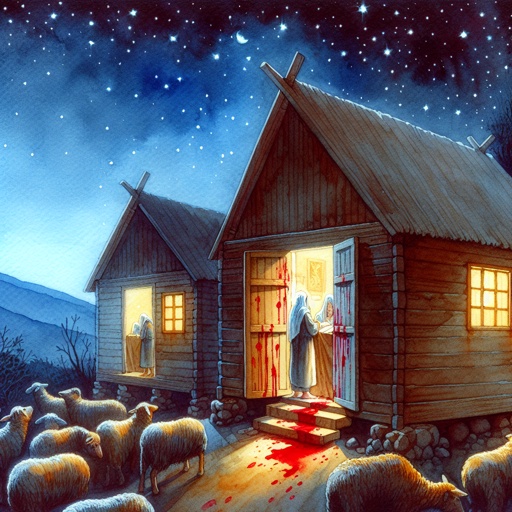
Exodus 12:13

Exodus 10:12

Exodus 3:12

Exodus 10:12

Exodus 3:12

Exodus 12:7

Exodus 25:8

Exodus 12:1-19

Exodus 27:1-8

Exodus 8:1-15