The Unblemished Lamb: A Call to Sacrifice and Redemption
“And ye shall keep it up until the fourteenth day of the same month: and the whole assembly of the congregation of Israel shall kill it in the evening.” — Exodus 12:6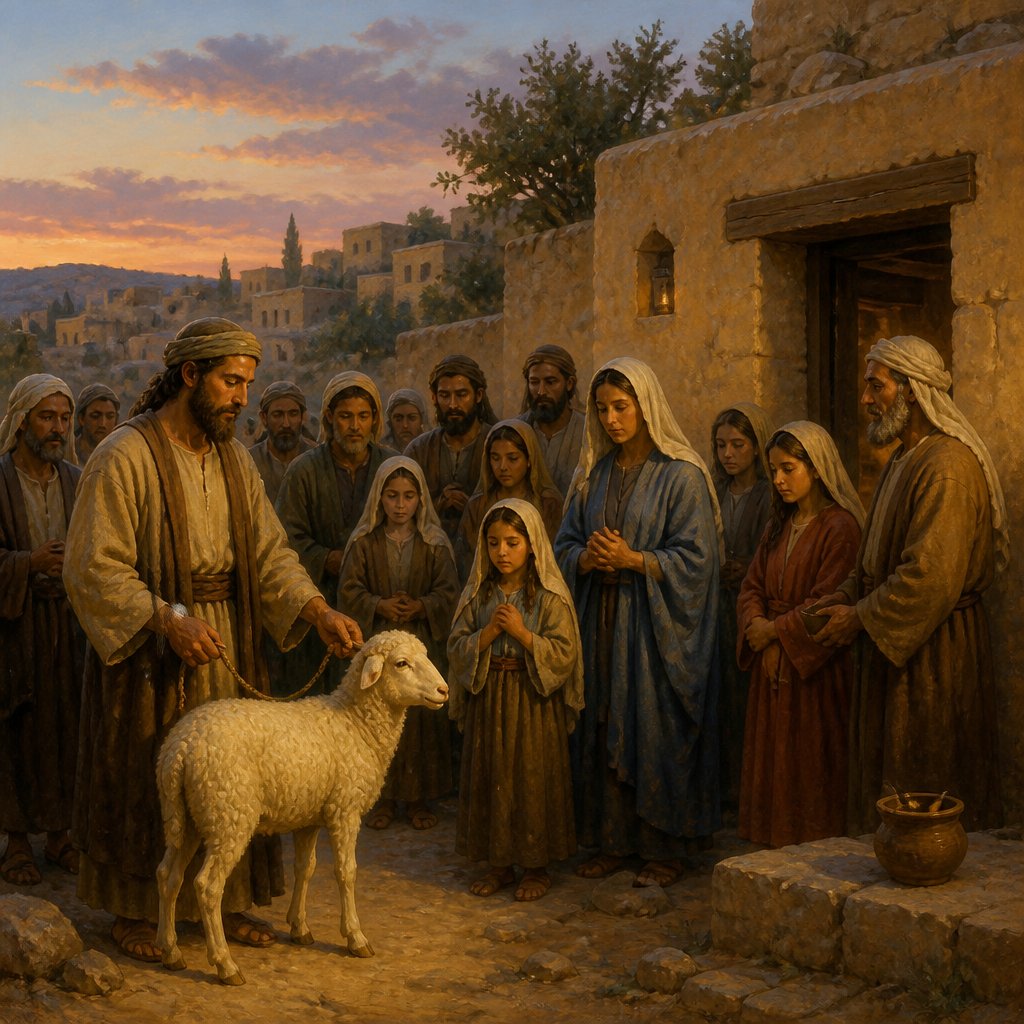
The verse Exodus 12:6 states, "And ye shall keep it up until the fourteenth day of the same month: and the whole assembly of the congregation of Israel shall kill it in the evening." This passage, derived from the chapter that narrates the Passover, invites us into a deeper reflection on sacrifice, redemption, and the hope found in obedience to God’s commands.
The context of this verse cannot be overstated. God was preparing to deliver Israel from centuries of oppression and a life bound in slavery in Egypt. Yet, the delivery was not to be sudden or without preparation; it necessitated both obedience and a profound understanding of what was at stake. The timing and ritual surrounding the Passover lamb were not mere formalities; they represented a divine plan of salvation that was both powerful and prophetic.
**The Lamb: A Symbol of Innocence**
In the ancient Israelite community, the lamb was to be selected on the 10th day of the month and kept until the 14th. This four-day period was significant for several reasons. First, it allowed time for the lamb to be examined and chosen. The lamb had to be without blemish or defect, a symbol of purity. This principle of the unblemished lamb echoes through Scripture, culminating in Christ, the Lamb of God, who was without sin.
John the Baptist recognized Jesus in this light when he proclaimed, "Behold the Lamb of God, which taketh away the sin of the world" (John 1:29). The careful selection process for the Passover lamb mirrors the scrutiny Christ faced leading to His crucifixion. He was examined, scrutinized, and yet found innocent, just as the lamb was.
**Community and Unity: The Whole Assembly**
The instruction that the entire assembly of the congregation of Israel was to participate in the killing of the lamb points to the necessity of community in the journey of faith. This shared act reinforced the bond among the people; they were united in a significant moment of salvation history. Just as the Israelites were called to come together, we, too, are called to gather as a body of believers in Christ. We sharpen each other, bear witness to the power of salvation, and encourage one another in sacrificial love.
In a time where individualism often reigns supreme, we must remember that we are part of a “whole assembly.” Our faith is communal; we are encouraged and uplifted when we share in the rituals of worship, the breaking of bread, and prayer.
**Evening: A Time of Reflection and Anticipation**
The verse concludes by directing that the lamb be killed in the evening. Evening, symbolically, is a turning point; it represents the end of one day and the commencement of another. In Scripture, evening often signifies a time of reflection and transition. As we consider Jesus’ crucifixion, the metaphor of the evening emerges again. It was in the shadows of night that sin and darkness seemed to overshadow the Light of the World. Yet, it was exactly at that moment of despair that the greatest event in salvation history unfolded—the sacrifice of Christ who would redeem humanity from sin and death.
As we meditate on Exodus 12:6, let us ponder the layers of meaning encased in this verse. It is not merely an ancient directive but a beautiful portrait of God’s love and justice. Each element—the unblemished lamb, the community gathering, and the symbolic evening hour—intertwines to reveal a divine narrative of redemption that is as relevant today as it was thousands of years ago.
Let us pause in gratitude for our own Passover Lamb, Jesus Christ, who offers Himself as the ultimate sacrifice. In responding to this great love, may we embody sacrificial living, drawing our communities together and reflecting God’s light into a world still darkened by sin. As we embrace this call, we participate afresh in God's unfolding story of salvation.
Get our apps


Artwork for Exodus 12:6

Exodus 12:6 - "And ye shall keep it up until the fourteenth day of the same month: and the whole assembly of the congregation of Israel shall kill it in the evening."

"And ye shall keep it up until the fourteenth day of the same month: and the whole assembly of the congregation of Israel shall kill it in the evening." - Exodus 12:6

Exodus 6:12 - "And Moses spake before the LORD, saying, Behold, the children of Israel have not hearkened unto me; how then shall Pharaoh hear me, who am of uncircumcised lips?"

Exodus 12:12

Deuteronomy 6:12 - "Then beware lest thou forget the LORD, which brought thee forth out of the land of Egypt, from the house of bondage."
![Exodus 6:12 KJVAAE
[12] And Moses spake before the Lord, saying, Behold, the children of Israel have not hearkened unto me; how then shall Pharaoh hear me,](https://media.bible.art/ba659b6c-b89d-4b46-974b-8bddd98fe898-thumbnail.jpg)
Exodus 6:12 KJVAAE [12] And Moses spake before the Lord, saying, Behold, the children of Israel have not hearkened unto me; how then shall Pharaoh hear me,

Exodus 3:12

Exodus 3:12

Exodus 3:12

Exodus 3:12

Exodus 3:12

Exodus 12:33

Exodus 10:12

Exodus 12:7
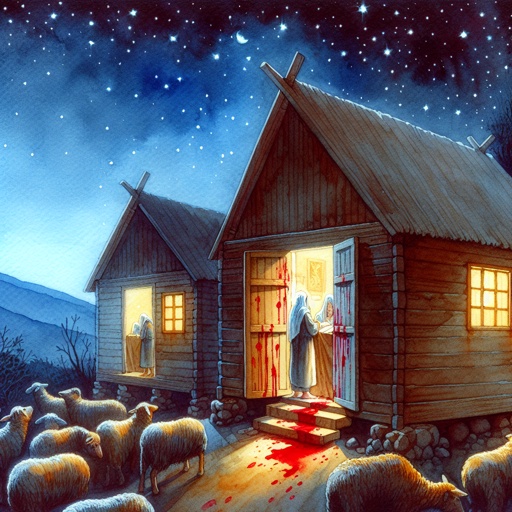
Exodus 12:13

Exodus 10:12

Exodus 10:12

Exodus 3:12

Exodus 3:12

Exodus 12:7

Exodus 17:6

Exodus 17:6

Exodus 17:6

Exodus 17:6

Exodus 12:1-19

Exodus 39:12 - "And the third row, a ligure, an agate, and an amethyst."

Exodus 31:12 - "¶ And the LORD spake unto Moses, saying,"

Exodus 12:47 - "All the congregation of Israel shall keep it."

Exodus 12:45 - "A foreigner and an hired servant shall not eat thereof."

Exodus 6:21 - "¶ And the sons of Izhar; Korah, and Nepheg, and Zichri."