The Omer of Manna: A Testament of God’s Provision
“And Moses said unto Aaron, Take a pot, and put an omer full of manna therein, and lay it up before the LORD, to be kept for your generations.” — Exodus 16:33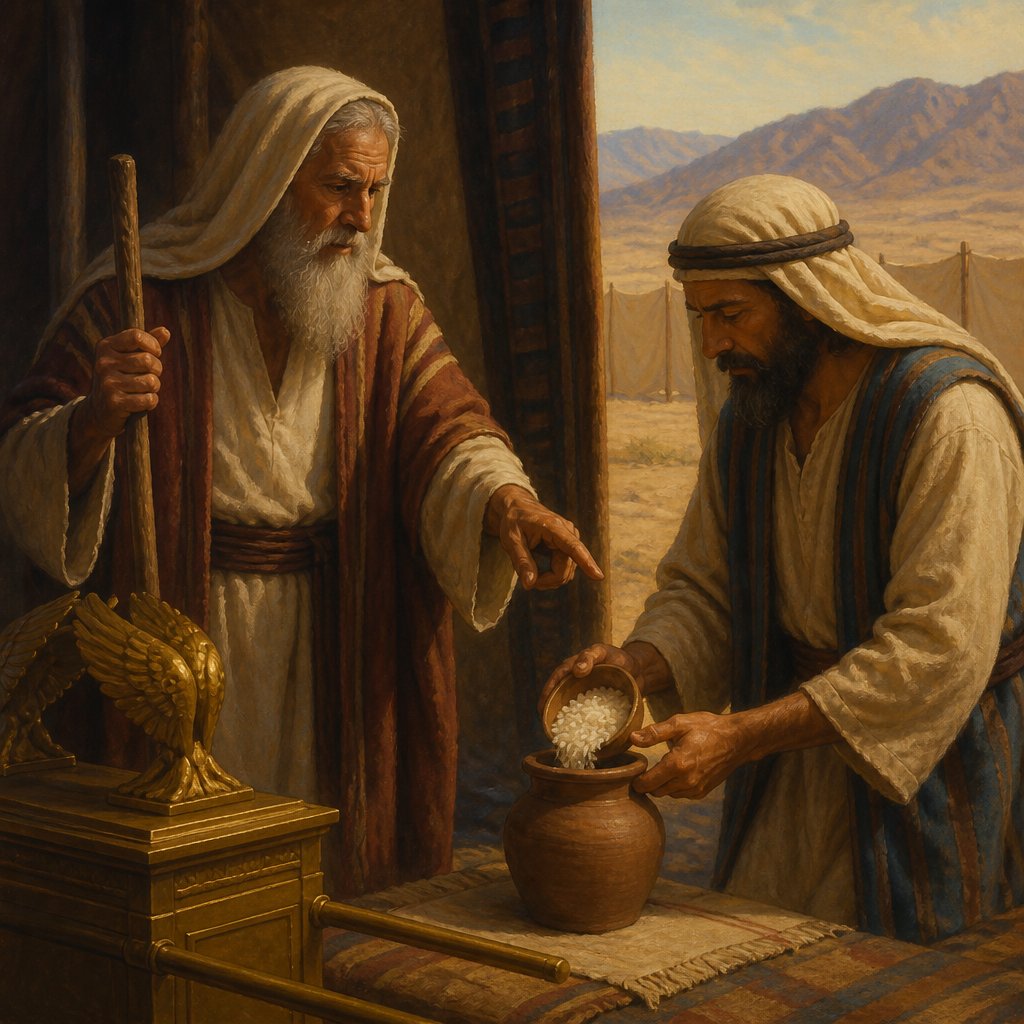
In Exodus 16:33, we read, "And Moses said unto Aaron, Take a pot, and put an omer full of manna therein, and lay it up before the LORD, to be kept for your generations." This simple yet profound command encapsulates a grand narrative of God’s faithfulness and provision for His people.
The backdrop of this verse is a critical moment in the life of the Israelites. Having escaped slavery in Egypt, they wandered in the wilderness, confronted with uncertainty and the harsh realities of desert life. They faced physical need, invoked by hunger and fatigue, and began to grumble against Moses and Aaron. In this desolate landscape, God intervened, providing manna—“bread from heaven”—to sustain His chosen people.
Manna was not merely food; it was a miraculous provision that symbolized God’s constant care and love. Each morning, the Israelites found this sustenance scattered on the ground, yet remarkably, they could gather only as much as they needed for that day. God instructed them not to store it up, for it would spoil, except on the sixth day when they were commanded to gather enough for two days to prepare for the Sabbath (Exodus 16:29). This divine lesson taught them reliance on the rhythmic cycles of God’s grace—trusting Him for daily needs and honoring Him with their rest.
Now in verse 33, when Moses instructs Aaron to take an omer of manna and preserve it for future generations, he points us to the importance of remembering God’s past provisions. This act served as a reminder for Israel, solidifying the people’s collective memory of God's faithfulness amid their trials. But it also serves a deeper purpose: to illustrate an eternal truth that transcends time and context.
As our lives unfold in a world that often feels like a wilderness, we may often experience our own moments of need where we question God’s provision. We might find ourselves consumed by anxiety over our daily bread, both literally and metaphorically, wondering if He will sustain us through our trials. Yet, God's instruction to preserve the manna reminds us to cultivate a heart of remembrance.
The pot containing the omer of manna was ultimately more than a physical exhibit; it became a legacy. It was a testament to God’s faithfulness, encouraging generations to trust in the God who provides. In Deuteronomy 8:3, we read, "And he humbled thee, and suffered thee to hunger, and fed thee with manna... that he might make thee know that man doth not live by bread only, but by every word that proceedeth out of the mouth of the LORD." This teaching encourages us to consider that God does not just provide for our physical needs but nourishes our souls through His wisdom and Word.
In our own lives, how do we preserve the memories of God’s faithfulness? It is crucial to establish practices of remembrance—to journal our prayers and the ways they are answered, to recount stories of God’s provision in our community, and to share with others how God has been good to us. We can easily forget in the face of new challenges, but remembering helps us to stand firm in faith when storms arise.
As we cultivate gratitude and remembrance of God’s past provisions, we also prepare ourselves for the future. We activate faith, acknowledging that if God has been faithful in the past, He will be faithful again. Let the omer of manna remind us of God’s unchanging character and His commitment to our journey.
By preserving such memories, we become vessels of hope for future generations. Like Aaron’s pot, we are called to lay up stories and testimonies before the Lord—to inspire others to recognize and honor His work in their lives. God invites us to participate actively in remembering and sharing the goodness and provision He has shown, transforming our struggles into testimonies, and our needs into opportunities for faithfulness.
May we approach our own wilderness experiences with eyes wide open to His provision, building a legacy of remembrance in our hearts and in our communities.
Get our apps


Artwork for Exodus 16:33

Exodus 16:33 - "And Moses said unto Aaron, Take a pot, and put an omer full of manna therein, and lay it up before the LORD, to be kept for your generations."
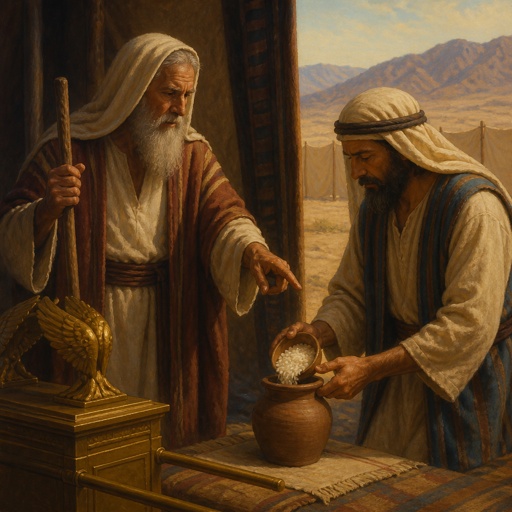
"And Moses said unto Aaron, Take a pot, and put an omer full of manna therein, and lay it up before the LORD, to be kept for your generations." - Exodus 16:33

Exodus 33:16 - "For wherein shall it be known here that I and thy people have found grace in thy sight? is it not in that thou goest with us? so shall we be separated, I and thy people, from all the people that are upon the face of the earth."

Exodus 12:33

John 16:33

John 16:33

John 16:33

John 16:33
John 16:33

John 16:33

Exodus 26:31-33

John 16 : 33

Exodus 33:6 - "And the children of Israel stripped themselves of their ornaments by the mount Horeb."

Exodus 33:18 - "And he said, I beseech thee, shew me thy glory."

Job 33:16 - "Then he openeth the ears of men, and sealeth their instruction,"

Exodus 33:21 - "And the LORD said, Behold, there is a place by me, and thou shalt stand upon a rock:"

Exodus 33:14 - "And he said, My presence shall go with thee, and I will give thee rest."

Exodus 34:33 - "And till Moses had done speaking with them, he put a vail on his face."

Exodus 35:33 - "And in the cutting of stones, to set them, and in carving of wood, to make any manner of cunning work."

Exodus 36:33 - "And he made the middle bar to shoot through the boards from the one end to the other."

Proverbs 16:33 - "The lot is cast into the lap; but the whole disposing thereof is of the LORD."
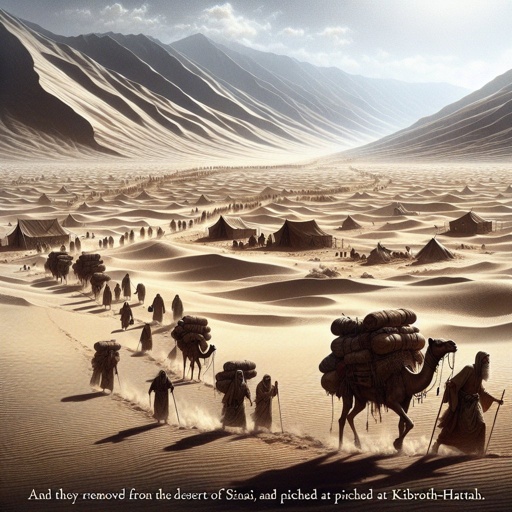
Numbers 33:16 - "And they removed from the desert of Sinai, and pitched at Kibroth-hattaavah."

Exodus 33:15 - "And he said unto him, If thy presence go not with me, carry us not up hence."

Exodus 33:4 - "¶ And when the people heard these evil tidings, they mourned: and no man did put on him his ornaments."

Exodus 33:20 - "And he said, Thou canst not see my face: for there shall no man see me, and live."

Genesis 33:16 - "¶ So Esau returned that day on his way unto Seir."

Exodus 24:16

Exodus 25:16

Exodus 21:33 - "¶ And if a man shall open a pit, or if a man shall dig a pit, and not cover it, and an ox or an ass fall therein;"

Psalms 33:16 - "There is no king saved by the multitude of an host: a mighty man is not delivered by much strength."