Sacred Integrity: Honoring God’s Altar
"And if thou wilt make me an altar of stone, thou shalt not build it of hewn stone: for if thou lift up thy tool upon it, thou hast polluted it." - Exodus 20:25
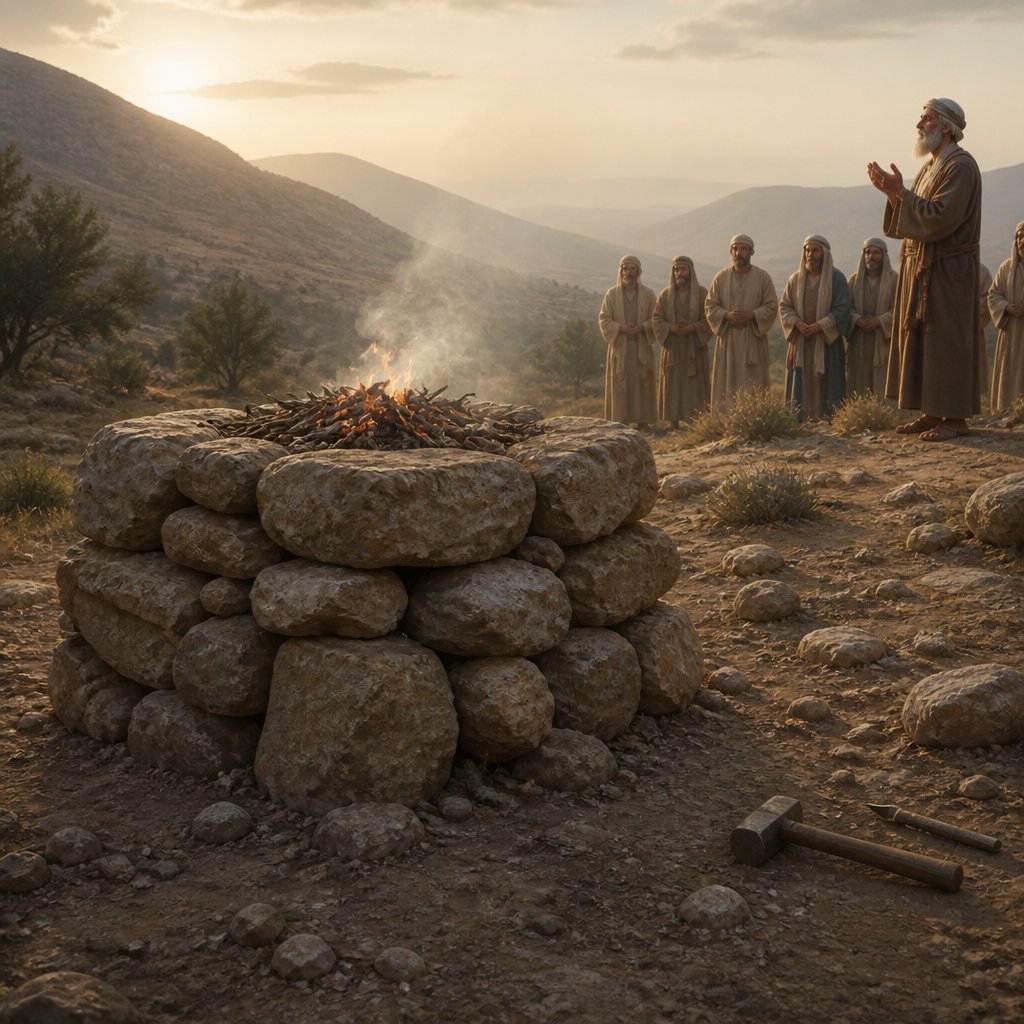
**Introduction**
Exodus 20:25 presents a profound commandment from God to the people of Israel, declaring, "And if thou wilt make me an altar of stone, thou shalt not build it of hewn stone: for if thou lift up thy tool upon it, thou hast polluted it." To fully comprehend the significance of this instruction, we must explore the implications of the materials chosen for the altar, the dimensions of worship, and what it means for our personal service to God in the present day.
**The Nature of God’s Holiness**
God’s holiness is foundational to understanding His nature and the worship He deserves. When He instructs the Israelites not to use hewn stones, He is emphasizing that His altar must be a pure reflection of His divine essence. The very act of carving or manipulating stone signifies the human inclination to control and shape things to our desires. Yet, God desires a raw, untainted expression of worship that reflects His unadulterated glory. This act of setting apart the altar demonstrates that worship is not about what we can craft with our hands, but rather what flows from our hearts.
**The Role of Tools in Worship**
The term "lift up thy tool" suggests the idea of human ingenuity and craftsmanship. Humanity has an unfortunate tendency to think that we can improve on God's designs through our skills. Although skills and talents are blessings from God, when we approach worship with a mindset of personal achievement or ambition, we risk polluting our offering. The altar, crafted purely from unshaped stone, reflects a place of surrender where we acknowledge that our efforts are insufficient without the grace of God. In worship, it’s vital to remember that all tools, talents, and techniques are rendered meaningless if our hearts are not wholly focused on God.
**The Importance of Intentions**
This commandment urges us to reflect on the intentions with which we approach God. Are we coming before Him with hearts and motives that are aligned with His purposes? Genuine worship stems from a desire for relationship rather than ritual. In our modern context, the temptation can be to design our worship experiences to fit our ideas or trends. But true worship is about honoring God in the way He has outlined, allowing Him to mold and shape our hearts rather than seeking to mold our worship spaces.
**A Traditional Altar vs. A Personal Heart**
The altar in the biblical times served as a physical representation of sacrifice and communion with God. Today, our ‘altars’ take many forms—be it in church sanctuaries, homes, or solitary prayer spaces. However, they share a common need for purity and authenticity rooted in humbleness. It is essential that we do not allow them to become merely traditional practices unaccompanied by heartfelt devotion. Just as the altar of stone must not be hewn, our worship should be free from pretense or artificiality.
**A Call to Humility**
Ultimately, God’s directive in Exodus 20:25 is a call to humility. God seeks worshipers who will worship in spirit and truth (John 4:24). Our lives should echo this tenet; our actions, thoughts, and prayers should all reflect an unblemished reverence for who He is. When we approach God in humility, recognizing His sovereignty and glory, we establish a foundation of relationship built on trust and reverence.
**Conclusion**
Exodus 20:25 serves as a poignant reminder of how critical it is to worship God as He desires, not as we choose. It beckons us to offer up ourselves as living sacrifices (Romans 12:1) and to cultivate altars in our lives characterized by the raw and unrefined worship that only humility can bring forth. Let us, therefore, ensure that our 'altars' remain untouched by human desire and instead resonate with pure love and adoration for the God who commands our attention and affection.
Want to reflect more on Exodus 20:25?
Continue your spiritual journey with Bible Chat — an AI-powered tool for exploring God's Word through conversation. Ask questions, discover connections, and deepen your understanding.
Get Our Apps


Exodus 20:25 Artwork

Exodus 20:25 - "And if thou wilt make me an altar of stone, thou shalt not build it of hewn stone: for if thou lift up thy tool upon it, thou hast polluted it."
"And if thou wilt make me an altar of stone, thou shalt not build it of hewn stone: for if thou lift up thy tool upon it, thou hast polluted it." - Exodus 20:25

Exodus 25:20 - "And the cherubims shall stretch forth their wings on high, covering the mercy seat with their wings, and their faces shall look one to another; toward the mercy seat shall the faces of the cherubims be."

Exodus 36:25 - "And for the other side of the tabernacle, which is toward the north corner, he made twenty boards,"

Exodus 25:16

Exodus 25:31

Exodus 25:16

Exodus 25:8

Exodus 25:16

Exodus 25:10-22

Exodus 23:20

Exodus 20:2

Exodus 27:20

Exodus 27:20

Exodus 27:20

Exodus 20:14

Exodus 25:1 - "And the LORD spake unto Moses, saying,"

Exodus 25:7 - "Onyx stones, and stones to be set in the ephod, and in the breastplate."

Exodus 21:25 - "Burning for burning, wound for wound, stripe for stripe."

Exodus 20:13 - "Thou shalt not kill."

Exodus 20:15 - "Thou shalt not steal."

Exodus 25:38 - "And the tongs thereof, and the snuffdishes thereof, shall be of pure gold."

Exodus 25:4 - "And blue, and purple, and scarlet, and fine linen, and goats' hair,"

Exodus 25:6 - "Oil for the light, spices for anointing oil, and for sweet incense,"

Exodus 27:19-20

Exodus 25:25 - "And thou shalt make unto it a border of an hand breadth round about, and thou shalt make a golden crown to the border thereof round about."

Exodus 19:16-20

Exodus 25:15 - "The staves shall be in the rings of the ark: they shall not be taken from it."

Exodus 25:31-40 This is an oil lampstand.

Exodus 20:14 - "Thou shalt not commit adultery."