The Gift of Time: A Devotional Reflection on Exodus 22:30
“Likewise shalt thou do with thine oxen, and with thy sheep: seven days it shall be with his dam; on the eighth day thou shalt give it me.” — Exodus 22:30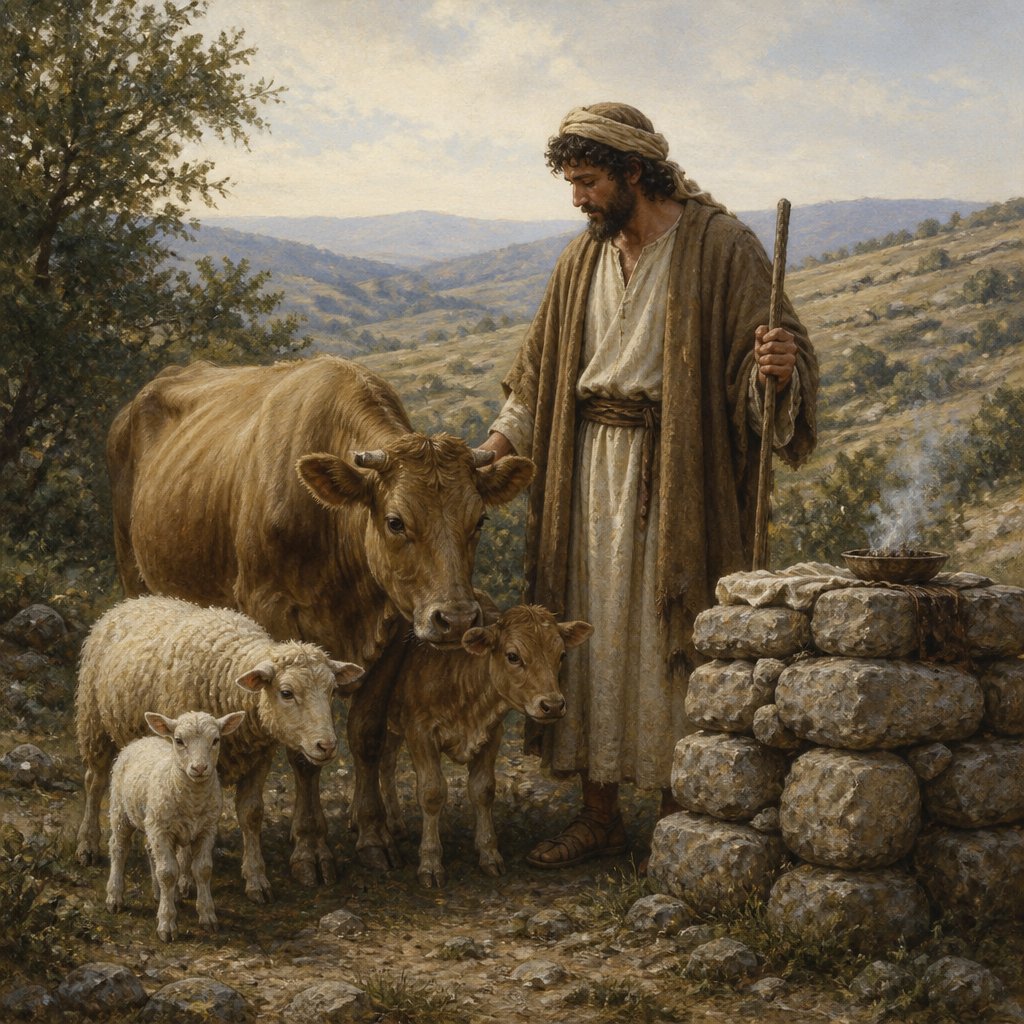
Exodus 22:30 states: "Likewise shalt thou do with thine oxen, and with thy sheep: seven days it shall be with his dam; on the eighth day thou shalt give it me." This verse emerges from God’s laws regarding how to treat animals, especially in relation to sacrificial practices. At first glance, it may seem like mere instruction on livestock management; however, it encompasses profound symbols of relationship, sacrifice, and divine order that extend far beyond agricultural guidelines.
God’s law here prescribes a waiting period of seven days for the newborn animals to remain with their mothers. This period is significant for several reasons. First, it emphasizes the aspect of nurturing. Just as any worthy mother would care for her young, God illustrates His understanding of life’s natural rhythms. In life, there are epochs of patience and nurturing; we stand to gain sublime lessons if we observe and honor these cycles. In our fast-paced society, the care we are called to offer, not only to our offspring but also to our relationship with God, can often be neglected in favor of expedience. This serves as a pointed reminder that maturation requires time.
The symbolism of seven days can also be tied to the Biblical significance of this number; it represents completion and wholeness (as seen in the creation narrative of Genesis). Just as God took the entire week to create the world and deemed it very good, we too must recognize that there is a time for every purpose under heaven.
As the eight day approaches, we see a transition from nurturing to giving. The directive instructs that on the eighth day, the young animal is to be given to God. Up until then, the calf or lamb is to experience the love of its mother; it develops, grows stronger, and matures into a state where it can honorably fulfill its purpose as an offering. This serves as a beautiful metaphor for how God often allows us to grow in life and relationships before we are called to sacrificial service or ministry. Through intentional nurturing, we find our spiritual gifts and create a greater devotion to Him.
This verse can guide us in various aspects of our lives today; in our relationships, our service, and in our worship. We are reminded that both relationships and sacrifices require time to be meaningful. Each moment spent in preparation represents investment in our faith, in our character, and in our relationships with those we love. It teaches us the value of the waiting process. In our walk with Christ, we inevitably face seasons of waiting. We may be awaiting answers to prayers, healing from affliction, or clarity on our paths. In those moments, we must lean into the knowledge that a waiting season is a productive season. Just as a newborn stays with its dam for vital nurturing, we too must rest in our faith and in God’s timing.
Moreover, the act of giving our first fruits, or our best offerings, as commanded when the young is separated from its mother, calls for our attention to personal sacrifice. God seeks from us not just any offering, but our very best, post-formation. As we ponder the young animal’s journey through the first week of life towards sacrificial service, we realize the importance of being prepared to give our best to God. Are we prepared to serve after nurturing our talents, relationships, and calling? Are we in tune with what God expects from us in our service? Our offerings can be in the form of time, talent, or treasure; regardless, they must first be nurtured and then joyfully given.
In conclusion, Exodus 22:30 teaches us about the beauty embedded in the cycle of nurturing and offering. It underscores the human condition and depicts our relationship with God, infused with love and purpose. As we embrace this unveiling of divine wisdom, let us commit ourselves to be patient in our growth and faithful in our giving. May we realize that the waiting periods are not times of absence but rather times of preparation to faithfully fulfill His will.
Get our apps


Artwork for Exodus 22:30

Exodus 22:30 - "Likewise shalt thou do with thine oxen, and with thy sheep: seven days it shall be with his dam; on the eighth day thou shalt give it me."
"Likewise shalt thou do with thine oxen, and with thy sheep: seven days it shall be with his dam; on the eighth day thou shalt give it me." - Exodus 22:30

Exodus 30:22 - "¶ Moreover the LORD spake unto Moses, saying,"
"¶ Moreover the LORD spake unto Moses, saying," - Exodus 30:22

Jehoiachin in Jeremiah 22:22-30

Exodus 26:30

Exodus 28:30-43

Exodus 28:15-30

Exodus 30:30 - "And thou shalt anoint Aaron and his sons, and consecrate them, that they may minister unto me in the priest's office."

Exodus 16:30 - "So the people rested on the seventh day."

Exodus 30:17 - "¶ And the LORD spake unto Moses, saying,"

Exodus 30:11 - "¶ And the LORD spake unto Moses, saying,"

Exodus 22:22 - "¶ Ye shall not afflict any widow, or fatherless child."

Exodus 8:30 - "And Moses went out from Pharaoh, and intreated the LORD."

Exodus 15:22

Exodus 22:28

Exodus 22:28

Exodus 22:28

Exodus 22:28

Exodus 22:28

Exodus 30:26 - "And thou shalt anoint the tabernacle of the congregation therewith, and the ark of the testimony,"

Exodus 22:28

Exodus 22:28

Exodus 22:5

Exodus 22:28

Exodus 22:28

Exodus 22:28

Exodus 22:28

Exodus 22:28

Exodus 22:5