Carrying the Presence: A Reflection on Exodus 25:13
“And thou shalt make staves of shittim wood, and overlay them with gold.” — Exodus 25:13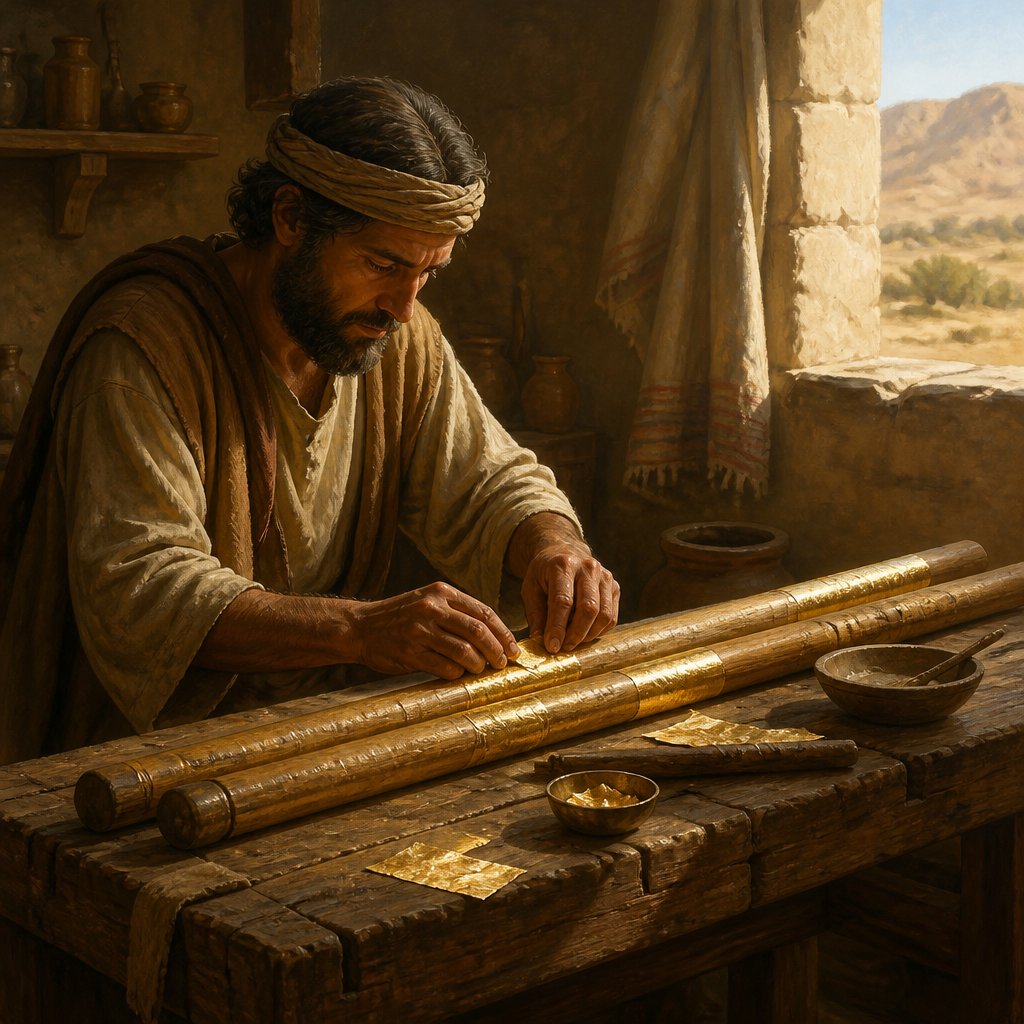
In Exodus 25:13, we read, "And thou shalt make staves of shittim wood, and overlay them with gold." This seemingly straightforward instruction from God to Moses carries profound spiritual significance that invites us to explore and understand our own journey with Him.
At first glance, the directive to construct staves (or poles) from shittim wood and overlay them with gold may appear mundane. However, the details reveal layers of meaning drawn from the nature of the materials used, the purpose of the staves, and the implications for our spiritual lives. Shittim wood, known for its durability and resilience, is a picture of strength. In the Bible, it represents the enduring nature of God’s grace. As we reflect on its characteristics, we are reminded that we too must build our lives on foundations of enduring faith that can withstand the trials and tribulations we face.
The principle of using wood implies humanity and earthly qualities, while the gold signifies divinity and holiness. Gold, a symbol of purity and glory, serves as an essential element in the construction of the Ark of the Covenant, which carried the very presence of God among His people. Overlaying the staves with gold highlights a beautiful truth: God chooses to dwell with those who are both human and divine. In our lives, God invites us to be vessels of His presence as well, despite our imperfections. He calls us to embody His light in a world that often feels dark and heavy.
The act of carrying the Ark, which was intrinsic to Israel’s identity as the people of God, came with the staves attached. The poles were crucial because they allowed the priests to transport the Ark during their journeys, signifying that the presence of God was to be moved and shared. For us today, this carries an important lesson about the responsibility we have to carry God’s presence into every situation we find ourselves in. We are now the bearers of Christ’s light. Just as the priests were charged with shifting the Ark, so are we commanded to be witnesses, sharing the love and grace of God wherever we go.
Moreover, the act of overlaying the shittim wood with gold illustrates the transformation that occurs when we yield ourselves to God. Our common, unrefined nature (the wood) is enhanced and made beautiful through the grace of our Lord (the gold). When we fully surrender ourselves to His will, He invests His glory within us and permits us to shine forth His light into the world. This transformation is key; it reminds us to pursue a life that reflects His character, love, and righteousness. We must allow our human experiences to be infused with God's spirit to become effective ambassadors for His kingdom.
As we operate in our daily lives, we face numerous opportunities to choose between reflecting our own nature or allowing God to shine through us. The choice is continuously before us—to be merely wood, or to be wooden staves overlaid with gold. Our spiritual journey is not merely about personal attainment; it is intrinsically linked to how we interact with others, addressing their needs, and sharing the hope that we possess in Christ.
In conclusion, the instruction in Exodus 25:13 is more than a blueprint for the materials used in constructing the Ark of the Covenant; it is a poignant reminder of our calling and purpose. We are invited to remember that we are made from dust (shittim wood), yet embroidered with divine grace (the gold). As we move forward, let us commit ourselves to be the living staves through which the Ark of God’s presence is carried. May we strive to live in such a way that the glory of God is manifested in our actions and interactions, declaring to the world that the God who resides in us is indeed the God who reigns over us. Amen.
Get our apps


Artwork for Exodus 25:13

Exodus 25:13 - "And thou shalt make staves of shittim wood, and overlay them with gold."
"And thou shalt make staves of shittim wood, and overlay them with gold." - Exodus 25:13

Exodus 25:16

Exodus 25:31

Exodus 25:16

Exodus 25:8

Exodus 25:16

Exodus 25:10-22

Exodus 25:1 - "And the LORD spake unto Moses, saying,"

Exodus 25:7 - "Onyx stones, and stones to be set in the ephod, and in the breastplate."

Exodus 21:25 - "Burning for burning, wound for wound, stripe for stripe."

Exodus 25:38 - "And the tongs thereof, and the snuffdishes thereof, shall be of pure gold."

Exodus 25:4 - "And blue, and purple, and scarlet, and fine linen, and goats' hair,"

Exodus 25:6 - "Oil for the light, spices for anointing oil, and for sweet incense,"

Exodus 25:25 - "And thou shalt make unto it a border of an hand breadth round about, and thou shalt make a golden crown to the border thereof round about."

Genesis 25-13

Exodus 25:15 - "The staves shall be in the rings of the ark: they shall not be taken from it."

Exodus 25:31-40 This is an oil lampstand.

Exodus 14:13

Exodus 14:13

Exodus 14:13

Exodus 14:13

Exodus 14:13

Exodus 14:13

Exodus 14:13
Exodus 14:13

Exodus 14:13

Exodus 14:13
Exodus 14:13
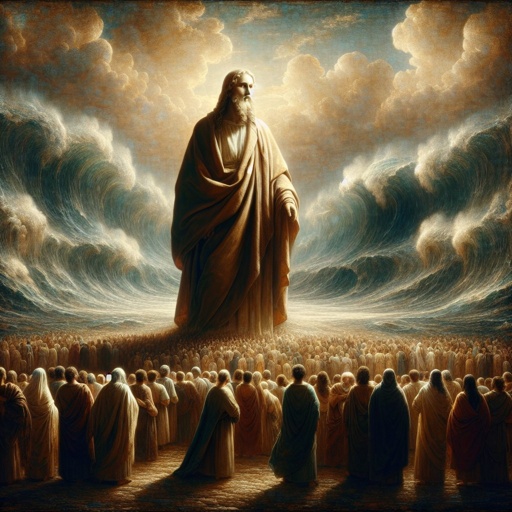
Exodus 14:13